Birth into Eminent Lineage
Born on the 7th day of the 5th month in Shengshe, Wucheng; his father Ling Dizhi was an accomplished Jinshi scholar-official.
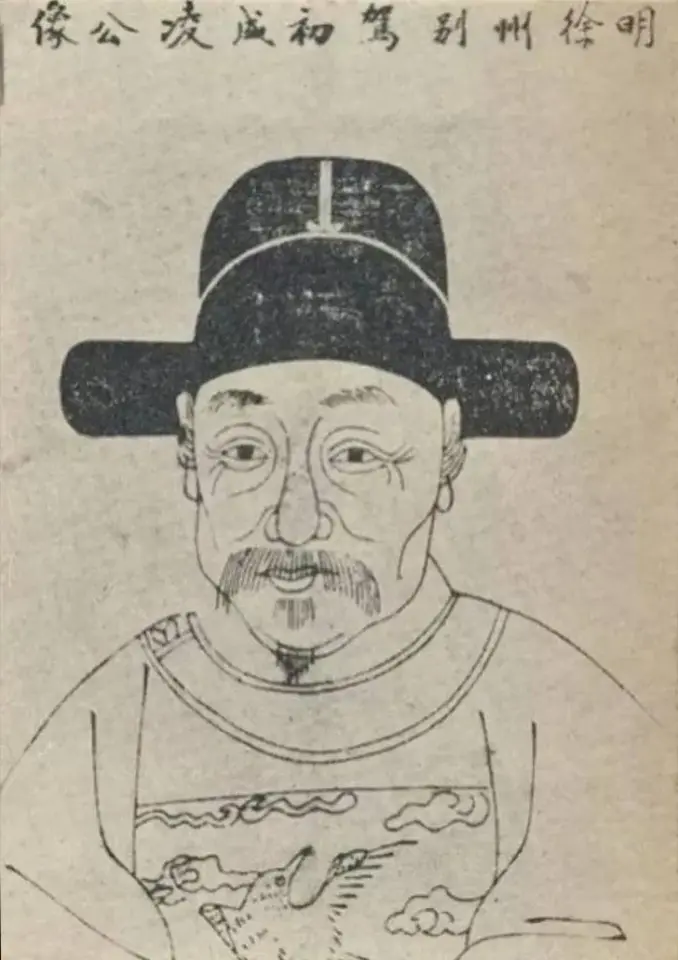
凌濛初
Ling Mengchu (凌濛初, 1580–1644), courtesy name Xuanfang and art name Chucheng, also known by the pseudonym Master of Jikongguan, was an eminent Chinese writer, dramatist, publisher, and government official of the late Ming dynasty. Hailing from Shengshe in Wucheng County of Huzhou Prefecture, an illustrious lineage renowned for pioneering multi-color woodblock printing, Ling showed exceptional erudition in Confucian classics…
Ling Mengchu (凌濛初, 1580–1644), courtesy name Xuanfang and art name Chucheng, also known by the pseudonym Master of Jikongguan, was an eminent Chinese writer, dramatist, publisher, and government official of the late Ming dynasty. Hailing from Shengshe in Wucheng County of Huzhou Prefecture, an illustrious lineage renowned for pioneering multi-color woodblock printing, Ling showed exceptional erudition in Confucian classics and historical treatises from his youth. However, constrained by the rigid imperial examination system, he failed four times on the provincial supplementary lists and never attained the highest degrees. Channeling his intellect into popular vernacular literature and theatre amidst the socio-economic transformations of the late Ming period, he compiled the monumental short story collections Slapping the Table in Amazement (Pai'an Jingqi) and Second Collection of Slapping the Table in Amazement (Erke Pai'an Jingqi), collectively celebrated as the Two Slappings (Er Pai). Along with Feng Menglong's Three Words (San Yan), his work represents the absolute artistic zenith of pre-modern Chinese vernacular short fiction, offering vivid insights into the emerging merchant culture, urban life, and shifting moral values of late imperial society. Entering bureaucratic service in his late fifties via recommendation as a tribute student during the Chongzhen reign, Ling served with distinction as Assistant County Magistrate of Shanghai, overseeing local administration, coastal defense, and the grain tribute. He introduced the celebrated "well-character grid method" to eliminate embezzlement in coastal salt reserves and standardized tribute transport logistics. Transferred as Vice Prefect of Xuzhou in 1642 to oversee Yellow River water conservancy and river transport garrisons, he confronted the intensifying turbulence of late Ming peasant rebellions. Ling fortified Fangcun, formulated the strategic Ten Strategies for Pacifying Rebels, and organized civic militias. When insurgent forces besieged the fortress in early 1644, Ling refused surrender, directed defensive operations to the final ramparts, and perished from severe physical exhaustion and hemorrhage, earning enduring renown as a steadfast scholar-martyr.
Born on the 7th day of the 5th month in Shengshe, Wucheng; his father Ling Dizhi was an accomplished Jinshi scholar-official.
Entered formal schooling at age twelve, demonstrating precocious memory and literary talent.
Admitted as a government-subsidized stipendiary student (Linshengsheng) at age eighteen, earning scholarly respect.
Entered filial mourning following the death of his father Ling Dizhi; devoted the seclusion to rigorous classical reading.
Completed nine Yuan-style Zaju plays, including The Curly-Bearded Hero, and compiled the southern opera anthology Three Sounds of Southern Music.
Suffered another failure in the Nanjing provincial examinations and resolved to dedicate his creative energy to vernacular fiction.
His landmark forty-chapter vernacular collection Slapping the Table in Amazement was published by the Shangyoutang studio in Suzhou.
Completed the sequel Second Collection of Slapping the Table in Amazement, expanding narratives of merchant enterprise and urban life.
Entered the secretarial staff of his maternal relative Pan Zenghong, touring Jiangxi and Fujian to assess southeast administrative conditions.
Appointed Assistant County Magistrate of Shanghai; administered coastal defense and introduced the innovative well-character grid salt regulation.
Promoted to Vice Prefect of Xuzhou in charge of Yellow River conservancy and grain logistics; stationed at the strategic post of Fangcun.
Besieged by insurgent forces at Fangcun in the first month; directed the defense until collapsing and vomiting blood in heroic martyrdom.
Ling Mengchu was born on June 18, 1580, in Shengshe hamlet of Wucheng County, Huzhou Prefecture, Zhejiang Province. The Ling lineage of Shengshe stood among the most culturally prominent families in the Jiangnan region, boasting generations of academic distinction. His grandfather Ling Yueyan was a provincial graduate who served as Vice Director in the Ministry of Justice in Nanjing. His father Ling Dizhi was an imperial Jinshi scholar of 1556 who rose to Vice Prefect of Changzhou Prefecture, widely celebrated for uncorrupted administration, encyclopedic lexicographical scholarship, and phonological expertise. Ling Mengchu was born when his father was already over fifty years of age. Surrounding him was an extraordinary domestic library and a thriving family enterprise; the Ling clan, in collaboration with the neighboring Min family, pioneered advanced multicolor woodblock printing in Huzhou, creating an enduring epicenter of late Ming publishing culture.
Immersed in this rigorous intellectual atmosphere, Ling Mengchu demonstrated exceptional academic aptitude from childhood. In 1591, at the age of twelve, he was enrolled in formal academy studies, mastering the Confucian Four Books and Five Classics, the dynastic standard histories, and classical poetry. His talent in rhetorical composition and prose earned him widespread admiration among local scholars, leading to his qualification as a subsidized stipendiary student at the age of eighteen in 1597. In 1600, his father passed away at seventy-two. Ling dutifully observed the three-year filial mourning period, during which he retreated from mundane society to engage in intensive textual criticism, classical philology, and historical research, establishing the formidable intellectual foundation that would nourish his subsequent creative output.
Upon concluding his mourning obligations, Ling Mengchu embarked on the path of the imperial civil service examinations, harboring ambitions to apply his scholarship in statecraft. However, the rigid stylistic constraints and political factionalism of late Ming eight-legged essay examinations repeatedly thwarted his aspirations. Between 1603 and 1612, he traveled to the provincial examinations in Nanjing on multiple occasions, yet each time failed to achieve official provincial graduation. Although his literary excellence earned him placement on the prestigious supplementary honor roll four separate times, the formal provincial degree eluded him. This sustained cycle of disappointment fostered in Ling a profound realization of the structural malaise of late Ming bureaucratic recruitment and deepened his sympathy for disenfranchised scholars and ordinary townsfolk.
Refusing to succumb to bitterness, Ling redirected his creative vitality toward independent writing, dramatic criticism, and intellectual fellowship. He journeyed through Suzhou, Hangzhou, Nanjing, and Beijing, immersing himself in the vanguard intellectual movements of the era. Strongly drawn to Li Zhi's philosophy of the Childlike Mind and critical skepticism toward conventional moral dogmatism, Ling maintained vibrant intellectual exchanges with leading figures such as Yuan Zhongdao of the Gong'an School, the legendary playwright Tang Xianzu, literary patron Feng Mengzhen, grand master painter Dong Qichang, renowned scholar Li Weizhen, and drama anthologist Zang Maoxun. Within these literary circles, he embraced the progressive principles that celebrated genuine emotional expression, vernacular authenticity, and contemporary urban sensibilities, while compiling commentaries on Su Shi's writings in Dongpo Chanxi Ji alongside Chen Jiru.
During the Tianqi reign, recognizing that conventional officialdom remained closed to him, Ling resolved to achieve cultural immortality through the flourishing media of theatre and vernacular fiction. Around 1626, he composed nine Yuan-style northern Zaju dramas, including The Curly-Bearded Hero (Qiuran Weng), Song Jiang Disrupts the Lantern Festival, and Hongfu Selects Her Match, alongside southern Chuanqi plays such as Qiaohe Shanjin Ji. Concurrently, he collected southern musical airs and folk melodies from the Jiajing through Tianqi eras, compiling the three-part musicological compendium Three Sounds of Southern Music (Nanyin Sanlai). In 1629, dramatist Shen Tai anthologized Ling's The Curly-Bearded Hero in the Second Collection of Flourishing Ming Zaju, praising its harmonious meter and heroic artistic temperament.
In the autumn of 1627, having faced yet another failure in the provincial examination at Nanjing, Ling returned home inspired by the phenomenal popular reception of Feng Menglong's Three Words short story anthologies. Convinced that vernacular novellas possessed unmatched potency to enlighten the public and depict contemporary realities, Ling locked his studio doors and commenced an ambitious campaign of independent prose fiction. Rather than merely editing older prompt-books, he drew motifs from classical Tang and Song tales, local hearsay, and contemporary social scandals, transforming them into entirely original vernacular novellas with realistic dialogue and complex plotting. In the winter of 1628, his landmark collection Slapping the Table in Amazement (Pai'an Jingqi) in forty chapters (thirty-six extant) was issued by the Shangyoutang publishing house in Suzhou, achieving instantaneous acclaim across China.
Spurred by widespread reader demand and enthusiastic publishers, Ling drafted and refined the companion collection Second Collection of Slapping the Table in Amazement (Erke Pai'an Jingqi) by the winter of 1632, comprising another forty chapters (thirty-nine extant). Together, these seventy-eight novellas formed the immortal canon known as Er Pai. Centering on merchants, craftsmen, scholars, monks, and urban women navigating the vibrant cash economy of the late Ming, Ling explored maritime ventures, financial intrigue, legal dilemmas, and romantic negotiations. The immense success of Er Pai elevated Ling Mengchu to the pinnacle of pre-modern Chinese narrative prose, solidifying his joint legacy alongside Feng Menglong as the co-creator of the golden age of classical vernacular short fiction.
Beyond his literary fame, Ling Mengchu was an extraordinary figure in the history of East Asian printing and textual bibliography. The Ling and Min lineages of Shengshe achieved a historic technological breakthrough by developing practical multi-color woodblock printing, releasing Chinese typography from centuries of monochromatic black ink. Ling served as editor, annotator, and publisher for dozens of exquisitely crafted multi-color editions. By carving separate blocks for black, cinnabar red, azure blue, and malachite green, he printed ancient masterworks such as the Records of the Grand Historian (Shiji), Zhuangzi, Laozi, and A New Account of the Tales of the World (Shishuo Xinyu), allowing readers to effortlessly differentiate between the base classical text and multi-layered critical commentaries on a single page.
During the Chongzhen reign, Ling further devoted his bibliographical acumen to Confucian philological studies. In 1630, he published Winged Explanations on the Poetry Commentary by Two Disciples of Confucius, collated by his relative Ling Yingchu. In 1631, supported by his kinsman Pan Zenghong, he secured a preface from Fujian Education Vice Commissioner He Wanhua for his sixteen-volume critical masterwork Legitimate Transmission of the Odes from the Sage's School (Shengmen Chuanshi Dizhong), accompanied by his study on Han dynasty Master Shen's interpretation of the Classic of Poetry. In his publishing ventures, Ling employed master carvers of the Huizhou Huang clan, ensuring that the Ling editions featured elegant calligraphy and intricate woodcut illustrations, thereby advancing the aesthetic standards of late imperial book culture.
In 1634, at fifty-five, Ling was invited to join the military staff of his maternal relative Pan Zenghong, who was appointed Right Assistant Censor-in-Chief and Governor of Southern Gan. In Pan's headquarters, Ling aided in strategic coordination across Jiangxi, Fujian, and Guangdong, gaining invaluable administrative and military logistical experience. In 1636, when Later Jin cavalry raided toward the capital, Pan led relief forces northward, and Ling accompanied the army with patriotic fervor, yearning to deploy his talents in crisis management, though his subsequent examination attempt in Beijing once more ended without success.
In 1639, entering official civil administration at the age of sixty through his status as a tribute student, Ling was formally appointed Assistant County Magistrate of Shanghai in Songjiang Prefecture. During his tenure, he served as acting county magistrate for eight months, harmonizing tax quotas and civic welfare without burdening the populace. When tasked with superintending the transport of local tribute grain northward to Beijing—a perilous assignment that had resulted in criminal prosecution for several predecessors—Ling accepted with confidence, personally inspecting logistics and delivering the grain reserves ahead of schedule. Upon returning, he composed the First Rhapsody on Northern Transport and Second Rhapsody on Northern Transport, which regional superiors officially adopted as standard administrative regulations for Songjiang Prefecture.
Simultaneously appointed to superintend coastal defense and the salt monopoly, Ling confronted rampant maritime contraband and entrenched embezzlement between salt producers and corrupt clerks. To resolve this, he devised the celebrated "well-character grid method" (Jingzifa). He ordered harvested sea salt to be piled into uniform mounds arranged in grids resembling the nine sections of the Chinese character for well (Jing). Because each mound was constructed to identical dimensions and overseen by a designated yard official, an inspector needed only to weigh a single sample mound to verify the precise quantity of all nine mounds in the unit. This straightforward yet ingenious inspection system enabled inspectors to audit dozens of salt grids in a single day, thoroughly eliminating clandestine pilfering and bureaucratic bribery along the coast, while restoring naval patrol boat discipline across the river estuaries.
In 1642, following enthusiastic recommendations from regional inspectors citing his administrative integrity in Shanghai, the Chongzhen Emperor promoted Ling Mengchu to Vice Prefect of Xuzhou. Situated at the strategic nexus between northern and southern communication arteries, Xuzhou was a vital junction for the Grand Canal and the Yellow River, and its sub-district Fangcun served as an indispensable granary and water transport choke point. Ling assumed responsibility for Yellow River flood prevention, levee repairs, and grain fleet security. At this juncture, the late Ming peasant rebellions under Li Zicheng swept through Henan, spreading insurgent contingents into the Huai-Xu river basin, while local garrisons suffered from severe supply shortages and low morale.
Recognizing the existential threat, Ling drafted his renowned strategic memorial, the Ten Strategies for Pacifying Rebels (Jiaokou Shice), detailing concrete measures for clearing the countryside, drilling local militia, strengthening fortresses, and disrupting enemy movements. Finding imperial field forces unavailable for regional defense, Ling took matters into his own hands at Fangcun. He contributed his personal savings to recruit over a thousand local volunteers, excavated deep trenches, built earthen ramparts, accumulated defensive missiles and firearms, and coordinated round-the-clock watches, transforming Fangcun into an isolated yet resilient citadel along the Yellow River.
In early 1644, several rebel detachments totaling tens of thousands surrounded Fangcun by land and water. The insurgent leaders repeatedly dispatched envoys demanding his capitulation with promises of rank and wealth, but Ling sternly rejected every offer, swearing to defend the ramparts unto death. On the night of the eleventh day of the first lunar month, the rebel host launched an all-out assault with artillery and siege ladders. Despite his advanced age of sixty-five, Ling stood at the defensive ramparts wielding his sword and directing counter-attacks throughout the night. On the morning of the twelfth day, as the defenses finally collapsed under overwhelming numbers, Ling retreated to an isolated platform, continuing to berate the rebel commanders. Overwhelmed by moral outrage and physical exhaustion, he vomited blood and perished on the battlefield. Deeply moved by his unyielding loyalty, the citizens of Xuzhou and Huzhou mourned his passing, honoring his legacy in dynastic histories and local ancestral shrines.
In the history of pre-modern Chinese fiction, Ling Mengchu's most monumental achievement was the independent authoring of Slapping the Table in Amazement (Pai'an Jingqi) and Second Collection of Slapping the Table in Amazement (Erke Pai'an Jingqi), collectively known as the Two Slappings (Er Pai). Unlike Feng Menglong's Three Words, which primarily collected, revised, and expanded preexisting prompt-books from the Song and Yuan periods, Er Pai stands as the first comprehensive collection of vernacular short stories conceived and executed entirely by a single author in Chinese literary history.
Comprising seventy-eight individual stories, the collection spans a vast canvas of late Ming urban society, encompassing merchant trade, marriage negotiations, commercial litigation, literary companionship, and maritime exploration. Ling broke free from the conventional focus on dynastic battles and mythological heroes, directing his perceptive gaze toward ordinary townsfolk, maritime traders, craftsmen, and women. Characters like the resourceful merchant Wen Ruoxu exemplifying prudent initiative in market transactions reflected the ascendance of early modern commercial values, marking the definitive transition of vernacular fiction into an expressive individual art form.
Artistically, Er Pai substantially developed the narrative structure of the vernacular novella. Ling skillfully balanced introductory verse prologues, main narrative arcs, and moralizing epilogues to create symmetrical and cohesive literary compositions. His adept psychological characterization, deployment of dramatic tension, and fluent incorporation of urban idioms provided a panoramic mirror of the social reality and collective consciousness of the late Ming urban populace.
Through extensive creative practice, Ling Mengchu articulated a coherent and innovative aesthetic framework for narrative fiction. In his prefaces to both volumes of Pai'an Jingqi, he expounded the core artistic principle of "seeking the extraordinary within the ordinary" (Changzhong Qiuqi), asserting that compelling literature arises not from absurd mythological wonders, but from unexpected yet psychologically plausible encounters in everyday life.
He argued that the true power of fiction lies in identifying remarkable moral choices and dramatic conflicts embedded within ordinary domestic affairs and market transactions. By combining realistic storytelling with thoughtful social critique, literature could achieve its highest didactic and aesthetic potential without falling into empty fantasy.
This realist narrative theory established the critical legitimacy of vernacular fiction as a serious medium for reflecting contemporary society. Ling's emphasis on natural human sentiment and verisimilitude exerted a profound influence on subsequent Ming and Qing literary developments, providing important aesthetic precedents for Pu Songling's Strange Tales from a Chinese Studio (Liaozhai Zhiyi), Ji Yun's Notes of the Thatched Cottage of Close Scrutiny (Yuewei Caotang Biji), and later Qing scholar-beauty and courtroom novellas.
Ling Mengchu made significant contributions to the fields of traditional Chinese drama and musical musicology. Possessing deep expertise in northern and southern melodic suites and modal tuning, he authored nine Yuan-style Zaju dramas, including The Curly-Bearded Hero and Hongfu Selects Her Match, which demonstrated rigorous metric structure and poetic vigor. He systematically assembled southern musical airs and folk melodies from the Jiajing through Tianqi eras, compiling the three-part musicological compendium Three Sounds of Southern Music (Nanyin Sanlai), which preserved invaluable scores and textual fragments of Ming southern drama.
In dramatic theory, Ling strongly opposed the overly ornate and pedantic tendencies of the cabinet school, which prioritized elaborate parallel prose at the expense of theatrical performability. Drawing inspiration from Yuan masters Guan Hanqing and Wang Shifu, Ling championed the ideal of "unadorned natural authenticity" (Tianran Bense). He insisted that dramatic poetry must accommodate vocal projection, lyrical fluidity, and authentic spoken dialogue, directly reflecting the progressive late Ming artistic ethos of prioritizing natural human emotion over rigid dogmatic rules.
Furthermore, Ling's individual Sanqu song suites, such as Mourning the Departed (Shangshi) and Bidding Farewell (Xibie), earned high praise and were included in Zhang Xuchu's noted anthology Wu Sao Hebian. His meticulous scholarship in dramatic rhyme schemes and melodic restoration established vital theoretical bridges for the performance practice of southern drama during the Ming-Qing transition.
As a towering figure in late Ming publishing history, Ling Mengchu propelled multi-color woodblock printing into a sophisticated and widely distributed art form. Working within the print networks of the Ling and Min lineages in Shengshe, he directed the publication of dozens of high-quality multi-color editions of historical and philosophical masterpieces, including the Shiji, Zhuangzi, Laozi, and Shishuo Xinyu.
Ling introduced the innovative technique of printing the original canonical text in primary ink (usually black) while superimposing critical commentaries, phonological glosses, and annotations from various historical scholars in contrasting colors such as cinnabar red, azure blue, and malachite green. This advancement allowed readers to differentiate between canonical text and successive layers of critical interpretation at a single glance, uniting philological precision with visual elegance.
In addition to multi-color printing, Ling published important Confucian philological treatises of his own, including Winged Explanations on the Poetry Commentary by Two Disciples of Confucius and Legitimate Transmission of the Odes from the Sage's School. Through his rigorous collation, refined typography, and collaboration with master woodblock carvers from Huizhou, Ling's editions became celebrated collector's treasures and cemented Huzhou's standing as a paramount center of the late imperial publishing enterprise.
During his service as Assistant County Magistrate of Shanghai, Ling Mengchu demonstrated exceptional administrative acumen and institutional creativity. In the face of chronic coastal smuggling and widespread tax fraud in local salt yards, he discarded ineffective checkpoint inspections and formulated the pioneering "well-character grid method" (Jingzifa).
By standardizing harvested salt into nine identical conical mounds laid out in the configuration of the Chinese character for well (Jing), monitored by an accountable yard official, auditing inspectors needed only to verify the weight of a single sample mound to determine the total yield of the entire grid. This inspection procedure enabled officials to audit dozens of salt storage yards in a single day, eliminating opportunities for illicit diversion by corrupt clerks and dishonest salt-boilers.
Concurrently, Ling resolved the long-standing crisis surrounding the conveyance of Songjiang tribute grain to the imperial capital. By conducting rigorous surveys of inland waterways, combating transport extortion, and ensuring punctual grain delivery, he drafted the First Rhapsody on Northern Transport and Second Rhapsody on Northern Transport. These documents codified administrative guidelines that balanced fiscal demands with popular livelihoods, establishing models of tax administration that were formally instituted throughout Songjiang Prefecture.
In his final appointment as Vice Prefect of Xuzhou, Ling exhibited supreme moral fortitude and civic devotion amidst dynastic collapse. Confronting the vulnerable river junction of Fangcun with minimal regular forces, he submitted the Ten Strategies for Pacifying Rebels (Jiaokou Shice), formulating an integrated regional defense strategy based on fortified hamlets, organized militia corps, and proactive logistical control.
When hostile forces laid siege to Fangcun and external relief was cut off, Ling refused to abandon his post. He expended his personal wealth to recruit and arm over a thousand local defenders, constructed layered ditch defenses, and personally oversaw watchtowers day and night alongside the local populace.
When the ramparts were breached after days of relentless assault, Ling continued to denounce the insurgent leaders from his command platform, refusing captivity until he collapsed from hemorrhage. His unyielding sacrifice exemplified the highest traditional Confucian ideal of sacrificing one's life in defense of the realm and its people, earning him enduring reverence across Jiangnan and northern Jiangsu.
FIGURES ASSOCIATED WITH THIS DYNASTY