Chivalric Avenger
Avenged a friend by assassinating Li Yong in broad daylight, walking away through a crowd of hundreds.
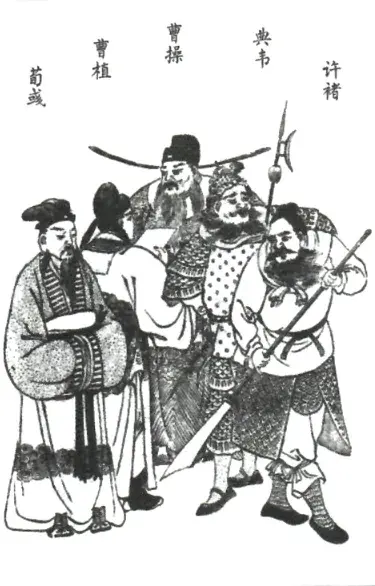
典韦
Dian Wei (典韦, died 197 CE), a native of Jiwu in Chenliu Commandery (modern Jiwucheng Village, Ningling County, Shangqiu, Henan), was an eminent general and personal bodyguard commander serving Cao Cao during the late Eastern Han Dynasty. Celebrated for his Herculean physical strength and fearless loyalty, he was hailed by Cao Cao as the "Elai of Antiquity" after the mythical strongman of the Shang Dynasty. In his youth, he…
Dian Wei (典韦, died 197 CE), a native of Jiwu in Chenliu Commandery (modern Jiwucheng Village, Ningling County, Shangqiu, Henan), was an eminent general and personal bodyguard commander serving Cao Cao during the late Eastern Han Dynasty. Celebrated for his Herculean physical strength and fearless loyalty, he was hailed by Cao Cao as the "Elai of Antiquity" after the mythical strongman of the Shang Dynasty. In his youth, he gained renown as a chivalric avenger, assassinating an enemy in broad daylight and carrying the severed head through a crowded marketplace without anyone daring to obstruct him. During the Chuping era, he enlisted under Zhang Miao against Dong Zhuo, hoisting an enormous command banner with a single arm when multiple soldiers could not hold it erect. During the Xingping era, Dian Wei transferred his allegiance to Cao Cao, serving under Xiahou Dun and earning distinction as a major. At the Battle of Puyang against Lu Bu, with Cao Cao trapped in heavy encirclement, Dian Wei donned double-layered heavy armor without a shield, led dozens of daredevil assault troops into the arrows, and threw small halberds within a lethal range of five paces, killing an enemy with every throw and breaking the siege. Appointed commandant and later colonel, he was entrusted with Cao Cao's personal security, maintaining strict vigilance around the command tent day and night. In early 197 CE, during Cao Cao's campaign against Wan, surrendered warlord Zhang Xiu staged a sudden nighttime rebellion. As the camp fell into chaos, Dian Wei barred the front gates with a handful of guards, snapping ten spears with a single swing of his twin halberds and slaughtering dozens of assailants. Though suffering multiple wounds and losing all his men, he fought on with the bodies of fallen foes until he succumbed, enabling Cao Cao to escape on horseback. Cao Cao wept bitterly upon learning of his death, sent scouts to retrieve his body, and enshrined him in the imperial ancestral temple in 243 CE.
Avenged a friend by assassinating Li Yong in broad daylight, walking away through a crowd of hundreds.
Joined Zhang Miao's anti-Dong Zhuo army and hoisted a massive military banner with one arm.
Transferred to Cao Cao's command under Xiahou Dun, fighting in Yan Province and promoted to Major.
Led an assault squad in double armor, routing Lu Bu's cavalry with throwing halberds at five paces.
Promoted to Colonel, commanding hundreds of elite guards circling Cao Cao's headquarters day and night.
Zhang Xiu rebelled; Dian Wei defended the camp gate with ten guards, killing dozens before dying of wounds.
Cao Cao wept over his death, sent scouts to retrieve his corpse for burial in Xiangyi, appointed his son a Court Gentleman, and later enshrined him in the imperial ancestral temple.
Dian Wei was born in Jiwu County, Chenliu Commandery. Endowed with a towering, muscular frame and extraordinary physical strength, he possessed an audacious temperament and a chivalric sense of justice. In his youth, the Liu clan of neighboring Xiangyi had a blood feud with Li Yong of Suiyang. Li Yong, a former magistrate of Fuchun, was wealthy and guarded his fortified estate with armed retainers, making vengeance impossible for the Liu family, who turned to Dian Wei for assistance.
Dian Wei readily agreed. Disguising himself as a common merchant, he drove a cart loaded with chickens and wine, parking outside Li Yong's mansion as though waiting for a customer. When the front gate opened and Li Yong emerged with his entourage, Dian Wei lunged forward with a concealed dagger, killing Li Yong on the steps before bursting inside to slay his wife. Afterward, Dian Wei retrieved his long saber and halberds from his cart and walked slowly away.
Because the mansion was adjacent to a busy market, thousands of bystanders were thrown into panic. Several hundred retainers pursued Dian Wei, but awed by his blood-soaked weapons and ferocious demeanor, none dared to close the distance. After walking several li, Dian Wei encountered dozens of Li Yong's confederates, killed several in a running skirmish, and escaped, earning widespread acclaim among regional outlaws and gentlemen.
During the Chuping era, when warlord Dong Zhuo seized power in Luoyang, Grand Administrator Zhang Miao of Chenliu raised troops in coalition with Cao Cao. Dian Wei enlisted and was assigned to Major Zhao Chong. In the camp stood an immense command banner whose pole was so massive that several soldiers could not keep it steady against the northern gales. Stepping forward, Dian Wei seized the pole with a single arm and planted it firmly in the ground, keeping it motionless in the wind. Awed by his strength, Zhao Chong promoted him within his ranks.
In 194 CE, Zhang Miao and Chen Gong conspired with Lu Bu to seize control of Yan Province, betraying Cao Cao. Dian Wei renounced Zhang Miao and joined Cao Cao's loyal forces, serving under General Xiahou Dun. Fighting across Fan and Dong'e, Dian Wei repeatedly spearheaded assault columns and was promoted to Major.
In the same year, Cao Cao confronted Lu Bu at the Battle of Puyang. Lu Bu stationed a separate division forty li west of the city. Cao Cao launched a nocturnal raid, capturing the outpost at dawn, but before his troops could withdraw, Lu Bu arrived with his main cavalry force, encircling the Han forces on three sides. With Lu Bu personally leading the charges, the two sides clashed from dawn until dusk in desperate combat.
As his western flank began to buckle under volleys of arrows, Cao Cao issued an emergency appeal for shock volunteers. Dian Wei stepped forward to lead a squad of dozens of volunteers. Stripping off their shields, Dian Wei and his men donned double-layered heavy armor and armed themselves solely with spears and short throwing halberds. As Lu Bu's cavalry surged forward beneath arrows, Dian Wei ordered his runners: "Tell me when the enemy is within ten paces." When the terrified runner shouted that the horsemen were ten paces away, Dian Wei snapped: "Tell me at five paces!" Moments later, as the horsemen closed within five paces, Dian Wei bounded forward with a roar, hurling small iron halberds with deadly force. Every halberd struck home, unseating enemy riders. Terrified by his savagery, Lu Bu's cavalry retreated, allowing Cao Cao's army to withdraw safely in the dusk.
Recognizing Dian Wei's supreme battlefield valor and unswerving fidelity, Cao Cao promoted him to Commandant and appointed him commander of his personal security, assigning him hundreds of elite troops to encircle and patrol his central command pavilion. Dian Wei was promoted to Colonel.
Despite his fearsome martial exterior, Dian Wei was remarkably circumspect, modest, and loyal. By day, he stood erect beside Cao Cao through long administrative conferences; by night, he slept on a simple bedroll outside the entrance to Cao Cao's tent, rarely returning to his private quarters in the rear camp. His devotion won the admiration of the entire officer corps.
Dian Wei possessed a prodigious appetite, eating and drinking twice as much as ordinary men. Whenever Cao Cao hosted military banquets, Dian Wei consumed wine and meat with gusto, requiring several servers to keep his cup filled, which amused Cao Cao. Dian Wei favored heavy custom weaponry, carrying a pair of iron halberds and a long forged saber. His halberds were unusually long, prompting troops to coin a camp ballad: "Beneath the tent stands Dian, the mighty warrior; he carries twin halberds weighing eighty catties!" Cao Cao frequently remarked that his bodyguard was the living reincarnation of Elai, the warrior of the Shang Dynasty.
In early 197 CE, Cao Cao led a punitive expedition south against Wan in Jing Province. Warlord Zhang Xiu surrendered without resistance, and Cao Cao celebrated by hosting a banquet for Zhang Xiu and his generals. As Cao Cao moved among the guests offering wine, Dian Wei stood directly behind him grasping a broadax with a one-foot-wide blade, glaring down at each commander. Throughout the evening, not a single officer dared raise his eyes.
However, Cao Cao's appropriation of the widow of Zhang Xiu's late uncle, Zhang Ji, coupled with secret rewards bestowed on Zhang Xiu's subordinate Hu Che'er, provoked Zhang Xiu's fury. Conspiring with strategist Jia Xu, Zhang Xiu launched a surprise night attack on Cao Cao's camp.
Caught completely unprepared, Cao Cao fled through the rear of his tent as his personal mount was slain by arrows, leaving his eldest son Cao Ang to provide his own horse. At the front entrance of the camp, Dian Wei took up position with a dozen remaining guards to block the main gateway. Wielding his long halberds, Dian Wei swept through ranks of rebel cavalry, snapping ten hostile spears with a single swing and felling dozens of attackers.
As wave after wave of rebel cavalry assaulted the gate, the dozen bodyguards were killed. Dian Wei, struck by dozens of arrows and spear thrusts, continued to fight with his saber. When his weapons shattered, rebel soldiers rushed forward to capture him alive. Roaring with fury, Dian Wei seized two enemy soldiers beneath his muscular arms, using their bodies as clubs to batter down approaching assailants. Stunned by the sight, the remaining troops fell back. Dragging his wounded frame forward, Dian Wei killed several more attackers before collapsing from blood loss, glaring fiercely and cursing his foes with his dying breath. Only after he remained motionless for a long time did rebel soldiers summon the courage to sever his head, while the entire rebel army gathered in awe to view his corpse.
Dian Wei's desperate rearguard stand bought the time Cao Cao needed to break through the encirclement and reach safety in Wuyin. When Cao Cao regrouped his forces and learned that his eldest son Cao Ang, his nephew Cao Anmin, and his bodyguard commander Dian Wei had all perished, he broke down and wept bitterly.
Cao Cao dispatched spies behind enemy lines at great personal risk to retrieve Dian Wei's corpse. When the body arrived at Wuyin, Cao Cao donned mourning robes, weeping before the casket, and arranged for an honorable burial in Dian Wei's ancestral home in Xiangyi, appointing his son Dian Man as Court Gentleman. In subsequent years, whenever Cao Cao's military carriage passed Xiangyi, he halted the army to conduct formal sacrifices. Later, he elevated Dian Man to Major, retaining him as an imperial bodyguard.
Following the establishment of the Cao Wei Dynasty, Emperor Wen (Cao Pi) appointed Dian Man as Commandant and created him a secondary marquis. In the autumn of 243 CE, under the reign of Cao Fang, the imperial court decreed that Dian Wei be granted sacrificial honors alongside Xiahou Dun, Cao Ren, Cheng Yu, and Guo Jia within the imperial ancestral temple of Cao Cao.
At the Battle of Puyang in 194 CE, Dian Wei demonstrated singular battlefield focus and audacity. With Cao Cao's army encircled on three sides by Lu Bu's cavalry, Dian Wei led a volunteer assault squad clad in double armor without shields.
Confronting volleys of arrows, he instructed his spotters to withhold warnings until the enemy was within five paces. At that lethal distance, he unleashed a barrage of throwing halberds, unseating a rider with every toss and routing the opposing vanguard. His nerve broke the encirclement, preserving the survival of the fledgling Cao Wei leadership.
Dian Wei established the gold standard for personal bodyguard command in ancient Chinese military history. As Commandant and Colonel, he oversaw hundreds of elite guards circling Cao Cao's central pavilion.
He stood beside his commander throughout the day and slept outside his tent at night, maintaining an unblemished record of vigilance. During formal banquets, his presence with a broadax deterred potential treachery, providing personal security that allowed Cao Cao to conduct campaigns without fear of assassination.
The Battle of Wan in 197 CE was Dian Wei's final heroic sacrifice. Caught in a surprise night raid, he refused to flee, stationing himself and a dozen guards at the camp's entrance.
Severing ten spears with a single blow, he killed dozens of enemy troops, and continued to fight using the corpses of his foes after his weapons broke. His stand held the gateway long enough for Cao Cao to escape, establishing his reputation as a model of rearguard sacrifice.
Dian Wei represents one of the archetypal symbols of martial prowess in Chinese culture. Renowned for his strength, he assassinated a fortified magistrate in broad daylight, hoisted an unyielding military banner with one hand, and wielded twin iron halberds weighing eighty catties.
Cao Cao praised him as the "Elai of Antiquity," comparing him to the legendary strongman of the Shang Dynasty, while the historian Chen Shou ranked him alongside Xu Chu as the Cao Wei equivalent of Fan Kuai.
FIGURES ASSOCIATED WITH THIS DYNASTY