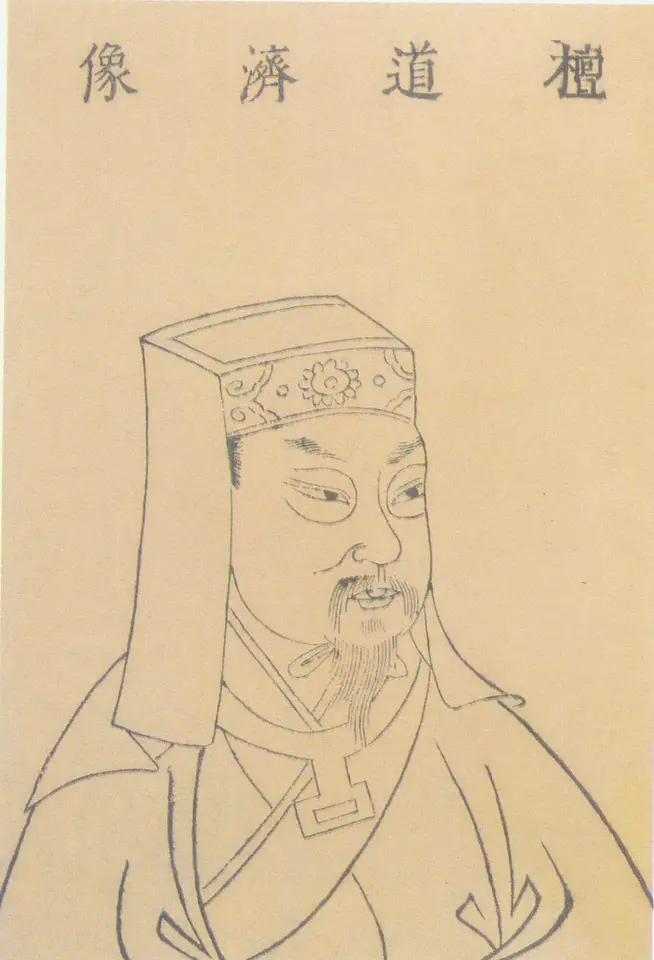
Biography
Imperial Youth and Regional Administration
Liu Yikang was born in 409 (the fifth year of Yixi in the Eastern Jin Dynasty), given the childhood name Chezi. At the time of his birth, his father Liu Yu exercised supreme authority across the southern empire, laying the foundations of the Liu Song Dynasty. Liu Yikang demonstrated keen natural intelligence and administrative sharpness from an early age. When he was only twelve years old, the imperial court appointed him Champion General and Regional Inspector of Yuzhou, commanding military affairs across Yuzhou, Sizhou, Yongzhou, and Bingzhou. Due to his youth, regional governance was entrusted to his Chief of Staff, Liu Zhan, a capable administrator with whom Liu Yikang developed deep trust and lifelong intimacy.
In the sixth month of 420 (the first year of Yongchu), Liu Yu ascended the throne, establishing the Liu Song Dynasty. On the twenty-second day of the sixth month, the founder enfeoffed his fourth son Liu Yikang as the Prince of Pengcheng with an estate of 3,000 households, concurrently commissioning him General of the Right. In 422, he was promoted to Commander of Military Affairs in South Yuzhou, Yuzhou, Sizhou, Yongzhou, and Bingzhou, concurrently assuming the governorship of South Xuzhou.
In 424, Emperor Wen (Liu Yilong) ascended the throne following the deposition of Emperor Shao. The new sovereign elevated his brother Liu Yikang to General of Agile Cavalry, Palace Attendant, and Commissioner with Equal Dignity to the Three Excellencies, adding 2,000 households to his fief. In the first month of 426 (Yuanjia 3), Liu Yikang was transferred to govern the strategic upper Yangtze region as Regional Inspector of Jingzhou, commanding military affairs across eight southern provinces. During his tenure at Jiangling, Liu Yikang immersed himself in fiscal and military paperwork, showing remarkable efficiency and improving local administration.
Central Leadership and Ministerial Omnipotence
In 429 (Yuanjia 6), Chancellor Wang Hong, plagued by chronic illness, petitioned the throne to retire and vigorously recommended the young Prince of Pengcheng to assist in guiding the dynasty. Emperor Wen issued an imperial decree summoning twenty-one-year-old Liu Yikang to the capital, appointing him Palace Attendant, Minister of Works (Situ), and Recorder of the Masters of Writing (Lu Shangshu Shi), commanding military forces across South Xuzhou, Yanzhou, and the Jinling district of Yangzhou. Wang Hong yielded operational control of the government, and the daily machinery of state fell into Liu Yikang's hands.
Following Wang Hong's death in 432 (Yuanjia 9), Liu Yikang assumed the governorship of Yangzhou, becoming the sole chief executive of the realm. In 435, he was concurrently appointed Grand Preceptor to the Crown Prince. Liu Yikang possessed an extraordinary passion for administrative bureaucracy, applying himself indefatigably to state documents and judicial cases without showing weariness. Every morning, hundreds of carriages belonging to civil officials and military officers thronged the gates of his residence; regardless of social status, minor clerks and high ministers were received with equal warmth.
Liu Yikang possessed a photographic memory, never forgetting a name, face, or bureaucratic precedent heard even once. His judicial rulings were penetrating, and Emperor Wen deferred to his administrative judgments, endorsing his recommendations without exception. Throughout this period, Emperor Wen suffered from chronic debility and agonizing headaches whenever he overexerted himself. Liu Yikang attended his royal brother day and night, personally tasting all medicines and broths before presenting them to the throne, and occasionally spending consecutive nights in full attire by the sickbed. This fraternal intimacy and efficient division of labor fostered the remarkable peace and economic recovery known to history as the "Yuanjia Governance."
Factional Bitterness and Imperial Estrangement
Despite his administrative diligence, Liu Yikang lacked deep historical learning and constitutional prudence, failing to grasp the perilous chasm separating fraternal affection from imperial sovereignty. When scholar Yuan Shu visited his residence and referred to his age through classical allusions to Deng Yu and Lu Ji, Liu Yikang candidly confessed his ignorance of literary texts and urged guests not to use classical expressions. Treating the emperor purely as an elder brother, he observed few courtly boundaries. Provincial officials routinely sent premier tributes to Liu Yikang's Eastern Residence while delivering secondary goods to the imperial palace. When Emperor Wen once remarked on the poor quality of imperial tangerines, Liu Yikang casually had prime fruit fetched from his mansion, which proved three inches larger than those in the palace, leaving the monarch quietly mortified.
Meanwhile, Liu Yikang's foremost counselor, Liu Zhan, returned to the capital as Supervisor of the Household of the Crown Prince, developing a venomous rivalry with the emperor's trusted confidant, Vice Director of the Secretariat Yin Jingren. While Yin Jingren feigned illness and communicated secretly with Emperor Wen from his sickbed, Liu Zhan, Liu Bin, Wang Lu, and Kong Yinxiu formed a faction around the Prince of Pengcheng.
During a severe illness that brought Emperor Wen close to death, Liu Bin and his associates, fearful of dynastic instability under a minor sovereign, secretly investigated the historical precedent of Emperor Kang of Jin to advocate enthroning an adult ruler—specifically Liu Yikang. Although Liu Yikang was largely uninformed of their treasonable maneuvers, his failure to sternly repress their whispering alarmed Emperor Wen upon his recovery, convincing the emperor that his brother's clique presented a mortal threat to his dynasty.
Removal from Power and Exile to Yuzhang
Recognizing that the minister's faction had grown dangerously pervasive, Emperor Wen struck decisively in the tenth month of 440 (Yuanjia 17). Summoning loyal garrison troops under Regional Inspector Du Ji to secure the palace, the emperor ordered the simultaneous arrest and execution of Liu Zhan, Liu Bin, Kong Yinxiu, and six other confederates, banishing dozens of family members.
Liu Yikang, then on duty inside the Secretariat, received the imperial proclamation with terror and immediately submitted memorials pleading for retirement. Emperor Wen stripped him of the offices of Minister of Works and Recorder of the Masters of Writing, transferring him to serve as Regional Inspector of Jiangzhou stationed at Yuzhang (modern Nanchang, Jiangxi). After being detained for ten days, Liu Yikang parted from the emperor amidst mutual weeping.
Before his departure, Emperor Wen sent the eminent Buddhist monk Huilin to console him. When Liu Yikang tearfully inquired whether he might ever return to Jiankang, Huilin replied with telling insight: "I only regret that Your Highness never read the Biography of Liu Chang, Prince of Huainan!"—pointing directly to his failure to maintain ministerial deference. In Yuzhang, Liu Yikang appointed Xiao Bin as his advisor and entrusted regional administration to trusted associates, subsequently petitioning to resign his governorship to signify political compliance.
The Fan Ye Conspiracy and Banishment to Ancheng
Although living peacefully in retirement, Liu Yikang's stature as the senior imperial prince made him an irresistible banner for disaffected courtiers. In 445 (Yuanjia 22), Supervisor of the Household Fan Ye (the celebrated author of the Book of the Later Han) and judicial officer Kong Xixian plotted a palace coup to assassinate Emperor Wen and crown Liu Yikang.
The plot was uncovered when co-conspirator Xu Zhanzhi betrayed the cabal, leading to the immediate execution of Fan Ye and his associates. Although investigation confirmed that Liu Yikang had no active part in the conspiracy, the enraged Emperor Wen deemed his existence an unacceptable hazard. Sparing his life out of deference to maternal memory, the emperor degraded Liu Yikang and his sons to commoner status, expelled them from the imperial clan registry, and exiled them under armed guard to remote Ancheng Commandery.
Confined in Ancheng, Liu Yikang spent his days reading the Book of Han. Upon reaching the tragic downfall of Prince Liu Chang of Huainan, who starved to death after defying his brother Emperor Wen of Han, Liu Yikang threw down the scroll and sighed: "The Han dynasty witnessed such calamities long ago; that His Majesty condemns me today is entirely justified!"
Frontier Crisis and Tragedy at Ancheng
In 447, regional rebels under Hu Danshi plotted to seize Ancheng and proclaim Liu Yikang emperor, prompting high ministers to propose banishing him to the far south, though the order went unexecuted due to logistic instability.
In 450 (Yuanjia 27), Emperor Wen launched a massive northern expedition that ended in catastrophic defeat. Northern Wei Emperor Taiwu (Tuoba Tao) led a counter-offensive of several hundred thousand cavalry to the banks of the Yangtze at Guabu, placing Jiankang under siege panic. With widespread rumors circulating that rebellious elements intended to liberate Liu Yikang, Prince Liu Jun and Vice Director He Shangzhi warned Emperor Wen that domestic insurrection was imminent unless the prince was removed.
In the first month of 451, Emperor Wen broke the solemn "Oath of Mount Jiang" previously sworn before his late elder sister, the Princess of Kuaiji, and dispatched Secretarial Attendant Yan She with lethal poison to Ancheng.
Facing the executioner, Liu Yikang invoked his devout Buddhist faith, declaring: "Buddhist scripture teaches that those who take their own lives cannot be reborn as human beings; I will not drink poison!" Thereupon, Yan She ordered imperial attendants to smother the prince under a heavy quilt. Liu Yikang perished at the age of forty-three and was interred at Ancheng with the ceremonial rites of a marquis.
Key Achievements
Sustaining the Yuanjia Governance
Assuming the chancellorship at age twenty-one, Liu Yikang exercised executive leadership over the Liu Song state for eleven crucial years. Following Wang Hong's decline and death, he coordinated national finances, judicial appeals, and provincial appointments.
His practical administrative governance supported Emperor Wen's policies of light taxation and social recovery, providing the stable political framework that enabled the economic, cultural, and demographic renaissance known as the "Yuanjia Governance."
Administrative Industry and Bureaucratic Reform
Liu Yikang possessed exceptional bureaucratic aptitude, personally reviewing administrative rolls and judicial sentences with exacting precision, executing capital cases through his authority as Recorder of the Masters of Writing.
He introduced an open and accessible administrative atmosphere, receiving hundreds of petitioners each morning regardless of aristocratic birth. Endowed with a photographic memory for official careers and administrative precedents, he bypassed the aloof elitism typical of Six Dynasties aristocrats.
Fraternal Devotion and Imperial Care
During Emperor Wen's repeated bouts of severe illness, Liu Yikang demonstrated exceptional fraternal devotion, personally tasting all medicines and meals before serving them to his brother.
He spent days and nights without removing his court robes beside the royal sickbed, managing state affairs while weeping over his brother's health, representing a rare moment of genuine familial intimacy within Southern Dynasties imperial annals.
Tragic Hubris and Political Overreach
Lacking classical erudition and political wariness, Liu Yikang failed to maintain constitutional deference toward imperial majesty, allowing provincial tributes to bypass the throne and enter his own mansion.
His blind reliance on factional subordinates such as Liu Zhan allowed deep-seated palace conspiracies to take root, irrevocably poisoning his relationship with Emperor Wen and precipitating his tragic downfall.
Symbolic Martyr of Imperial Autocracy
Following his exile to Yuzhang and Ancheng, Liu Yikang remained an unwitting figurehead for aristocratic resistance against imperial autocracy, repeatedly targeted by conspirators such as Fan Ye.
His final execution during the Northern Wei invasion of 451 marked the brutal prioritization of dynastic preservation over fraternal affection, providing a poignant historical symbol of the merciless realities of Six Dynasties palace politics.
Historical Evaluation
As a high prince who governed during the peak of the Yuanjia reign, Liu Yikang has been assessed by historians as a remarkably capable administrator whose tragedy stemmed from intellectual shallowness and political blindness.
Shen Yue recorded in the Book of Song: "Liu Yikang was fond of administrative office, devoted to paperwork, and scrupulous in investigating rights and wrongs. Exercising supreme authority, decisions emanated from him... Yet the Prince of Pengcheng lacked classical learning and extraordinary vision; perceiving only fraternal affection, he failed to comprehend the deference owed between sovereign and subject. Projecting private family sentiment onto state governance, he offended while his master grew suspicious, transforming minor friction into the catastrophe of familial slaughter."
Li Yanshou observed in the History of the Southern Dynasties: "From youth he was intelligent and observant; governing regional posts, affairs were well-ordered... He was tireless and energetic, endowed with prodigious memory, never forgetting what he encountered even once... If placed within a humble cottage, fraternal love might have been preserved without the cruelty of exile and death."
Ming-Qing philosopher Wang Fuzhi offered sharp criticism in Reading the Comprehensive Mirror for Aid in Government: "When taking leave, Liu Yikang could only weep without uttering a single word... When Liu Zhan openly proclaimed that a minor sovereign could not govern the empire, did Liu Yikang truly harbor no usurpation in his heart? Sovereign and subject, brother and kin—this is the foundation of moral standing; how can one blame one's downfall merely on the seduction of conspirators?"
Qing scholar Tang Peng observed in Fuqiu Zi: "Liu Yikang failed to learn from the Prince of Huainan and therefore met disaster; Kou Zhun did not study the Biography of Huo Guang and failed to sustain his work: both suffered from shallow learning and narrow vision."