Filial Devotion
Mourned his deceased mother so poignantly that neighborhood festivals ceased; nursed an ailing host family through an epidemic in Nanyang.
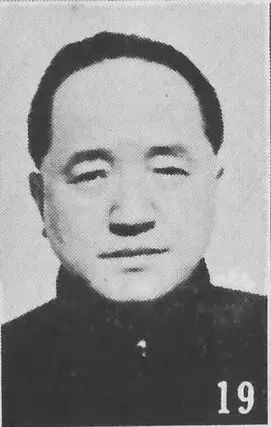
王脩
Wang Xiu (王脩, dates unknown), also written as Wang Xiu (王修), courtesy name Shuzhi, was a native of Yingling County in Beihai Commandery (present-day southeast of Changle County, Shandong Province). He was an eminent righteous statesman, moral exemplar, and cabinet minister during the late Eastern Han dynasty and Cao Wei period, celebrated throughout Chinese history for his unbending personal integrity, fearless local…
Wang Xiu (王脩, dates unknown), also written as Wang Xiu (王修), courtesy name Shuzhi, was a native of Yingling County in Beihai Commandery (present-day southeast of Changle County, Shandong Province). He was an eminent righteous statesman, moral exemplar, and cabinet minister during the late Eastern Han dynasty and Cao Wei period, celebrated throughout Chinese history for his unbending personal integrity, fearless local administration, and profound loyalty to fallen masters. Renowned in his youth for extraordinary filial piety and selfless benevolence, Wang Xiu cared for an entire plague-stricken household in Nanyang without seeking reward. Entering official service under Beihai Chancellor Kong Rong, he curbed lawless magnates, executed the entrenched warlord Gongsha Lu in a daring personal assault, and repeatedly rode alone through enemy territory to rescue Kong Rong from insurgent sieges. While serving under Yuan Tan in Qingzhou, Wang Xiu demonstrated supreme magnanimity by acquitting an envious rival of a capital charge and earnestly counseled Yuan Tan against fraternal warfare with Yuan Shang, famously warning that brother fighting brother was akin to severing one's own right hand. Following Yuan Tan's defeat and death at Nanpi in 205 AD, while other subordinates fled, Wang Xiu traveled to Cao Cao's camp in tears, offering his own life in exchange for the right to properly bury his deceased master. Awed by his sublime righteousness, Cao Cao pardoned him, entrusted him with supervising grain supplies, and later recruited him into central service. Wang Xiu served as General of Metal Operations, Grand Administrator of Weijun, Minister of Agriculture, Prefect of the Gentlemen of the Household, and Minister of Ceremonies. He successfully persuaded Cao Cao against reintroducing mutilating physical punishments and famously rushed on foot to defend the imperial gates during Yan Cai's palace coup while other ministers barricaded themselves in their offices. He died in office in modest poverty, leaving a legacy of unblemished moral courage.
Mourned his deceased mother so poignantly that neighborhood festivals ceased; nursed an ailing host family through an epidemic in Nanyang.
Appointed Master of Records in Beihai and acting Magistrate of Gaomi; curbed predatory Sun magnates and slew brigand Gongsha Lu.
Repeatedly broke through insurgent lines at personal risk to rescue Chancellor Kong Rong from deadly ambushes.
Rushed to rescue Yuan Tan at Nanpi; admonished him against fraternal strife with Yuan Shang using the parable of the severed arm.
Begged Cao Cao for permission to bury the slain Yuan Tan, offering his own life; secured imperial clemency for loyalist Guan Tong.
Commissioned Director in the Excellency of Works and General of Metal Operations, overseeing weapons manufacture and metallurgy.
Appointed Grand Administrator of Weijun, curbing regional despots; subsequently elevated to Minister of Agriculture and Prefect of the Gentlemen.
Advanced on foot with junior staff to defend imperial gates during Yan Cai's rebellion; passed away peacefully in office shortly thereafter.
Wang Xiu belonged to the reputable Yingling Wang lineage of Beihai Commandery in Qingzhou. From childhood, he was characterized by exceptional filial devotion, moral rectitude, and disregard for personal wealth. When he was only seven years old, his mother passed away on the day of the traditional She autumn harvest sacrifice, leaving young Wang Xiu in inconsolable sorrow.
When the festival arrived the following autumn, local villagers gathered according to custom to slaughter livestock and conduct musical rites. Seven-year-old Wang Xiu was overwhelmed by memories of his mother and prostrated himself upon the courtyard grass, weeping with heartbreaking grief. Hearing his poignant lamentations, the neighboring families were so deeply moved by his genuine filial devotion that they immediately extinguished their festive lamps and canceled the seasonal feast. Wang Xiu's filial piety became celebrated throughout the commandery.
At the age of twenty, Wang Xiu traveled south to Nanyang to pursue classical scholarship, lodging at the estate of fellow provincial Zhang Feng. An infectious epidemic swept through the region, and all ten members of the Zhang household fell critically ill. Terrified of contagion, neighboring townsmen barred their doors, and no one dared to offer assistance.
Wang Xiu disregarded the mortal danger to his own life, remaining steadfastly within the afflicted home. He personally brewed herbal medicines, prepared daily broth, and tended the sickbeds day and night, even selling his own travel garments and manuscripts to purchase medical supplies. He nursed the entire family continuously for several months until every member made a complete recovery. Upon their recovery, Wang Xiu packed his modest belongings and departed quietly without accepting any repayment, earning the universal admiration of Nanyang scholars.
During the Chuping era, celebrated literary scholar Kong Rong was appointed Chancellor of Beihai. Hearing of Wang Xiu's pristine reputation, Kong Rong recruited him as Master of Records and appointed him acting Magistrate of Gaomi. At that time, Gaomi was dominated by the Sun clan, a predatory local lineage that sheltered hundreds of fugitives and outlaws in fortified estates, extorting local trade and terrorizing peasantry.
When a major armed banditry case occurred and the culprits sought sanctuary within the Sun clan's compound, local constables were intimidated into inaction. Learning of this, Wang Xiu donned armor, mobilized all county clerks, and led several thousand civilian militia to encircle the fortress. The Sun clan manned the ramparts with archers, threatening armed resistance, causing the militia to hesitate.
Standing in the line of arrow fire, Wang Xiu shouted sternly: "Any man who hesitates to advance against these traitors shall be executed as an accomplice to banditry!" Galvanized by his unyielding resolve, the militia surged forward. Realizing that the new magistrate would not bend to aristocratic intimidation, the Sun clan opened their gates, surrendered the fugitives, and submitted to imperial law. From that moment onward, predatory magnates across Beihai ceased their lawless predation.
Impressed by his governance, Kong Rong recommended Wang Xiu as a Filial and Incorrupt candidate. Believing that fellow scholar Bing Yuan possessed superior moral virtue, Wang Xiu submitted multiple petitions requesting that the nomination be transferred to Bing Yuan. Kong Rong sent a personal letter declining the request: "Bing Yuan is indeed an eminent scholar who will inevitably find high appointment in time. But you have conducted yourself with spotless purity, braved numerous perils, and consistently delivered sound counsel. The imperial throne needs an upright pillar of state like you—how can you decline!"
As civil war erupted across the empire, Beihai was frequently struck by local rebellions. Whenever rebel bands endangered Kong Rong's encampments, Wang Xiu rode day and night to the front, even if he was on medical leave in a distant county. Kong Rong often remarked to his attendants during crises: "In moments of mortal danger, the only man who will brave death to come to my side is Wang Shuzhi!" Before his words were finished, Wang Xiu would arrive at the head of a relief troop, repeatedly saving Kong Rong from ruin. Later, when the warlord Gongsha Lu fortified an autonomous stockade in Jiaodong, Wang Xiu rode into the compound accompanied by only a few horsemen, drew his sword, executed the Gongsha brothers on the spot, and pacified the followers without widespread slaughter.
Yuan Shao's eldest son, Yuan Tan, subsequently assumed governance over Qingzhou and recruited Wang Xiu as Attendant Officer. Provincial Assistant Liu Xian grew envious of Wang Xiu's towering reputation and repeatedly slandered him before Yuan Tan. Wang Xiu maintained quiet dignity without harboring resentment. When Liu Xian subsequently committed a capital offense regarding official embezzlement, Wang Xiu presided over the tribunal, carefully reviewing the facts and securing Liu Xian's acquittal on legal grounds. Scholars throughout the empire commended his magnanimous conduct.
Following Yuan Shao's death in 202 AD, court factionalism provoked a bitter succession conflict between Yuan Tan and his younger brother Yuan Shang. In 203 AD, open warfare erupted outside Liyang, and Yuan Tan suffered heavy defeat, retreating to Nanpi. Informed of his master's crisis, Wang Xiu gathered several thousand civilian volunteers and marched to his defense.
As neighboring commanderies defected to Yuan Shang, Yuan Tan lamented that all of Qingzhou had abandoned him. Wang Xiu predicted with absolute confidence: "Administrator Guan Tong of Donglai is an upright loyalist. Though stranded across the sea, he will never betray you; he will arrive shortly." A dozen days later, Guan Tong broke through rebel cordons to join Yuan Tan, having lost his wife and children to insurgent massacres.
When Yuan Tan resolved to launch a retaliatory attack against Yuan Shang, Wang Xiu wept and remonstrated: "Brothers are like a man's left and right hands! If a man is about to engage a ferocious adversary in combat, yet cuts off his own right hand while boasting that he will prevail, how can he avoid destruction? If you discard your own flesh and blood, who in the entire realm will ever trust you? Sycophantic flatterers foment this strife purely to reap private gain. If you execute these treacherous schemers and reconcile with your brother, you can unite your forces to dominate the realm!" Although Yuan Tan understood his wisdom, he succumbed to bad advice and ignored the plea.
In 205 AD, Cao Cao captured Jizhou and marched on Nanpi, executing Yuan Tan and hanging his severed head above the city gate while former retainers scattered in fear. Wang Xiu was supervising grain transport in Le'an when news of Yuan Tan's death arrived. Dismounting from his horse, he prostrated himself and wept bitterly: "With my lord dead, where shall I turn!" He proceeded directly to Cao Cao's military pavilion, kneeling before the victorious general to plead for permission to bury Yuan Tan's corpse.
To test his fortitude, Cao Cao maintained a stern, intimidating silence. Wang Xiu looked up and proclaimed with fearless composure: "I received profound kindness from the Yuan house. If Your Excellency permits me to inter Lord Yuan's remains, I will submit to execution without the slightest regret!" Deeply moved by his sublime loyalty, Cao Cao exclaimed: "This is truly a righteous gentleman of the empire!" Cao Cao granted permission for an honorable burial and appointed Wang Xiu Director of Grain Supplies.
Following Yuan Tan's downfall, all commanderies across Qingzhou surrendered to Cao Cao except Guan Tong, who held Le'an in defiance. Cao Cao ordered Wang Xiu to retrieve Guan Tong's head. Arriving at Le'an, Wang Xiu recognized Guan Tong as a loyal minister serving a lost cause. Rather than executing him, Wang Xiu untied Guan Tong's bonds and escorted him personally to Cao Cao to plead for clemency. Delighted by Wang Xiu's integrity, Cao Cao pardoned Guan Tong on the spot.
When Cao Cao surveyed the confiscated wealth of Yuan Shao's former officers, administrators like Shen Pei were found to possess immense stockpiles of gold and grain. When inspectors examined Wang Xiu's modest residence in Nanpi, however, they discovered less than ten bushels of grain and a few hundred classical volumes. Cao Cao sighed with profound admiration: "Wang Shuzhi truly lives up to the spotless reputation of a Confucian scholar!" Cao Cao appointed him Director in the Excellency of Works and acting General of Metal Operations.
Serving as General of Metal Operations for seven years, Wang Xiu reorganized state ironworks and weapon arsenals, manufacturing tens of thousands of superior blades, siege bows, and armor suits for the imperial army. Later appointed Grand Administrator of Weijun, he suppressed arrogant aristocratic clans, protected impoverished peasants, and adjudicated countless wrongful indictments, earning widespread acclaim.
When Cao Cao debated reviving ancient mutilating physical punishments such as amputating feet and severing noses, most courtiers voiced obsequious approval. Wang Xiu stepped forward to oppose the measure with uncompromising logic, arguing that in a period of ongoing warfare, restoring barbaric mutilations would alienate the people and damage imperial moral authority. Persuaded by his counsel, Cao Cao abandoned the proposal.
In 216 AD, insurgent Yan Cai led dozens of desperate mutineers in an assault against the side gates of the imperial palace in Ye, attempting to breach the inner apartments. As emergency alarms echoed throughout the capital, Chancellor Zhong Yao ordered all nine ministerial bureaus to shut their gates and defend their own compounds according to ancient precedent.
Learning of the emergency, Wang Xiu—then serving as Minister of Ceremonies—refused to wait for carriage escorts. Drawing his sword, he led several dozen clerks on foot, charging directly toward the palace gates to defend the sovereign. Observing the smoking battleground from the heights of the Bronze Bird Terrace, Cao Cao pointed down at the advancing formation and remarked to his advisors: "That man racing into danger must be Wang Shuzhi!" When Zhong Yao questioned him for breaching procedural isolation, Wang Xiu replied with dignified conviction: "Receiving the state's salary, how can a minister hide from the state's peril? Shutting gates may be an ancient regulation, but rushing to the aid of the sovereign represents the supreme moral duty of a subject!" The court was deeply humbled by his noble words. Shortly thereafter, Wang Xiu passed away in office. Upon ascending the throne in 220 AD, Emperor Wen (Cao Pi) issued an imperial decree honoring Wang Xiu's incorruptible loyalty, elevating his son to Court Gentleman.
Mourning his deceased mother in childhood with such poignant devotion that neighborhood festivals were suspended, Wang Xiu established an unblemished standard of filial virtue.
In youth, he selflessly nursed an entire epidemic-stricken family in Nanyang through months of mortal peril, embodying the purest Confucian humanitarian ideals.
Serving as magistrate of Gaomi and Jiaodong under Kong Rong, Wang Xiu refused to bend to powerful aristocratic clans, successfully compelling the predatory Sun clan to surrender outlaws.
Leading a solitary charge into the heavily fortified stronghold of Gongsha Lu, he slew the bandit chieftain with his own blade and pacified the district without extensive bloodshed.
Confronted with the civil war between Yuan Tan and Yuan Shang, Wang Xiu delivered the timeless parable equating fraternal discord to cutting off one's own right hand.
Following Yuan Tan's death at Nanpi, Wang Xiu fearlessly traveled to Cao Cao's camp to plead for his master's burial, offering his own life in exchange and winning imperial admiration.
Tasked with executing defiant loyalist Guan Tong, Wang Xiu honored his adversary's fidelity by releasing his bonds and securing his pardon from Cao Cao.
Living in austere poverty with only books and modest grain while fellow administrators hoarded fortunes, he stood as a peerless model of civil probity.
Serving as Minister of Ceremonies and Minister of Agriculture, Wang Xiu successfully dissuaded Cao Cao from restoring cruel mutilating penalties.
During Yan Cai's palace insurrection, he discarded procedural confinement and marched on foot to defend the imperial gates, immortalizing his reputation for heroic civil valor.
FIGURES ASSOCIATED WITH THIS DYNASTY