Imperial Birth
Born in Liaodong with the Jurchen name Hutuwa, grandson of Wanyan Zongyao and eldest legitimate son of Wanyan Yong.
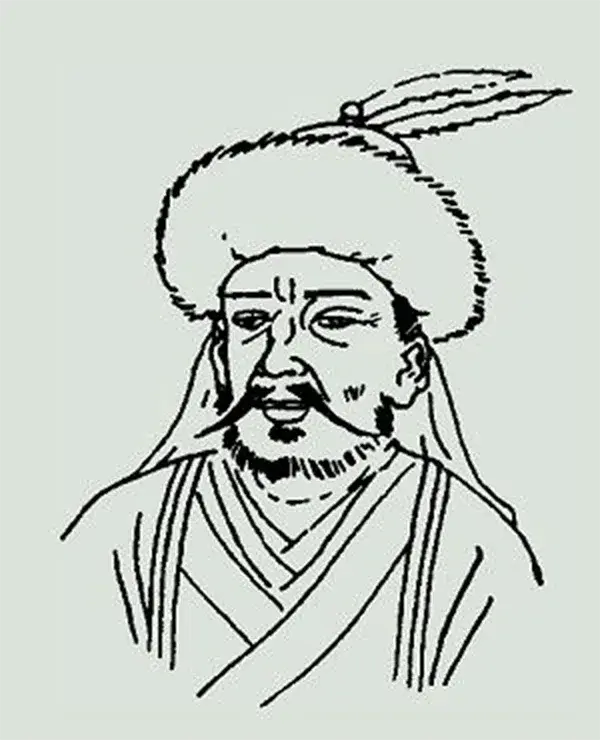
完颜允恭
Wanyan Yungong (完颜允恭, December 12, 1146 – July 12, 1185), Jurchen birth name Hutuwa, later renamed Yundi before adopting Yungong, was a native of the Superior Capital Huining Prefecture (present-day Acheng District, Harbin, Heilongjiang Province). He was a renowned crown prince and posthumously honored sovereign (Emperor Xianzong, Wanyan Yungong) of the Jurchen Jin dynasty, the eldest legitimate son of Emperor Shizong (Wanyan…
Wanyan Yungong (完颜允恭, December 12, 1146 – July 12, 1185), Jurchen birth name Hutuwa, later renamed Yundi before adopting Yungong, was a native of the Superior Capital Huining Prefecture (present-day Acheng District, Harbin, Heilongjiang Province). He was a renowned crown prince and posthumously honored sovereign (Emperor Xianzong, Wanyan Yungong) of the Jurchen Jin dynasty, the eldest legitimate son of Emperor Shizong (Wanyan Yong) and Empress Mingde (Lady Ulinda). Born in 1146 during the reign of Emperor Xizong, he possessed an imposing physical stature and a gentle, filial, and prudent disposition. In 1161, when Emperor Shizong ascended the throne in Tokyo (Liaoyang), Yungong was created Prince of Chu; in 1162, he was officially invested as Crown Prince. Shizong selected distinguished Confucian scholars to instruct the heir, enabling Yungong to master Jurchen scripts, Chinese classical texts, and traditional equestrian archery. During his twenty-four years as Crown Prince, Wanyan Yungong served with exemplary devotion, assisting his father in achieving the Dading-era prosperity. Revering Confucian governance and agrarian welfare, he was also an accomplished painter of landscapes and figures, displaying rare artistic refinement. In 1184, when Emperor Shizong conducted an imperial tour to Huining Prefecture to honor the ancestral tombs, Yungong remained at the Central Capital (modern Beijing) as regent. During his regency, he resolved complex judicial grievances, managed severe flood relief along the Yellow River, and curbed official misconduct, earning high praise from Emperor Shizong and the court. In the summer of 1185, Wanyan Yungong succumbed to illness caused by overwork at age forty. Grief-stricken, Emperor Shizong granted him the posthumous title Crown Prince Xuanxiao. Following his eldest son Emperor Zhangzong's accession, he was elevated to Emperor Xianzong, and his lineage established the orthodox imperial succession throughout the mid-to-late Jin dynasty.
Born in Liaodong with the Jurchen name Hutuwa, grandson of Wanyan Zongyao and eldest legitimate son of Wanyan Yong.
Emperor Shizong assumed the throne in Liaoyang, toppling Wanyan Liang's tyrannical regime, creating the sixteen-year-old Hutuwa Prince of Chu.
Decreed to change his name to Wanyan Yungong; officially invested as Crown Prince of the Great Jin, accompanied by general amnesties.
The Crown Prince's eldest son Wanyan Jing was born in the Eastern Palace; Emperor Shizong personally raised him within the palace.
Accompanied Emperor Shizong in reviewing state affairs, urging ministers toward integrity and integrating Jurchen martial heritage with Confucian institutions.
Shizong toured Huining to sacrifice at ancestral tombs; Yungong remained at the Central Capital as regent, managing state affairs with wisdom.
Succumbed to illness caused by exhaustion during his regency; passed away in the Eastern Palace on July 12 at age forty, plunging Shizong into deep mourning.
Emperor Shizong conferred the posthumous title Crown Prince Xuanxiao and interred him beside Yuling Mausoleum in Mount Dafang.
Imperial Grandson Wanyan Jing ascended the throne as Emperor Zhangzong, posthumously elevating his father to Emperor Xianzong.
Wanyan Yungong was born on December 12, 1146, with the Jurchen birth name Hutuwa. His father, Wanyan Yong (Emperor Shizong), then Prince of Ge, was a grandson of Jin founder Wanyan Aguda and son of Wanyan Zongyao. His mother, Lady Ulinda (posthumously Empress Mingde), belonged to a prominent Jurchen aristocratic clan and was celebrated for wisdom and virtue. During Yungong's childhood, Prince Hailing (Wanyan Liang) usurped the throne, indulging in tyranny and repeatedly summoning Lady Ulinda to enter his harem. To safeguard her husband and infant son from execution, Lady Ulinda threw herself into a river to drown near Liangxiang, preserving her honor.
His mother's heroic sacrifice and his father's cautious vigilance instilled enduring resilience in the young prince. After ascending the throne, Emperor Shizong never appointed another empress, bestowing profound parental love upon Yungong. Tall and commanding in appearance, Yungong was gentle, filial, and modest. Whether interacting with his father or palace attendants, he conducted himself with strict propriety, winning admiration throughout the imperial house.
In October 1161, supported by loyal commanders in Tokyo (Liaoyang), Wanyan Yong ascended the imperial throne, declaring the Dading era and marching south to crush Wanyan Liang's tyrannical regime. In November, Shizong created his sixteen-year-old eldest son Prince of Chu, establishing his princely household. In December, Hutuwa accompanied Shizong into the Central Capital (Yanjing), assisting in reassuring former officials and pacifying the northern territories.
In May 1162, with domestic revolts suppressed and dynastic stability restored, Emperor Shizong promulgated an imperial decree designating the succession according to primogeniture. Hutuwa was renamed Wanyan Yundi (and soon Wanyan Yungong) and invested as Crown Prince. The imperial proclamation stated that the heir apparent is the foundation of the state, and that Yungong's benevolence and fortitude made him worthy to inherit the dynastic altars. A magnificent ceremony was held, marked by amnesties and universal congratulations from the court.
Throughout his tenure as Crown Prince, Wanyan Yungong attended Emperor Shizong with filial devotion. Whenever Shizong inspected Datong, Kaifeng, or nearby hunting parks, Yungong personally oversaw camp guards and imperial meals. During freezing weather, Yungong inspected perimeter watches through the night. When Shizong suffered minor indispositions, Yungong remained by the antechambers without unfastening his robes, testing the temperature of medicinal broths before serving them.
Emperor Shizong was deeply moved by his son's devotion, frequently observing to close courtiers that while imperial history was filled with suspicion between fathers and sons, he and the Crown Prince shared total mutual understanding. Yungong also treated his younger half-brothers, including Prince of Gao Wanyan Yongzhong, with affection and patience, smoothing over infractions before the throne and preserving family unity.
Emperor Shizong recognized that an empire won on horseback could not be governed from horseback alone, placing immense emphasis on the Crown Prince's education. Following the investiture, Shizong appointed eminent scholars including Hanlin Academicians Pang Xu and Yila Zimin as tutors, establishing the Xiuwen Institute within the Eastern Palace. Guided by these scholars, Yungong mastered Jurchen large and small scripts, while systematically absorbing the Classic of History, Analects, Mencius, Zhenguan Zhengyao, and Zizhi Tongjian, developing a deep understanding of governance.
Simultaneously, Emperor Shizong was determined to preserve Jurchen traditions, admonishing the prince not to be corrupted by effeminate practices. Shizong visited the Eastern Palace and instructed Yungong that their ancestors founded the dynasty through frugality and hardihood, and that riding and hunting remained the lifeblood of the realm. Testing the prince's discernment, Shizong asked about Right Vice Chancellor Shi Ju; Yungong replied that Shi Ju was upright, incorruptible, and fearless before powerful grandees, exemplifying a true minister of state. Shizong commended his judgment. Balancing scholarship with physical training, Yungong led guards in archery drills daily, becoming an expert marksman.
Yungong also cultivated distinguished artistic talents. Versed in musical theory, he was an accomplished painter. The Yuan dynasty treatise Tuhui Baojian celebrated his artistry, noting that the Crown Prince excelled in landscapes, flora, fauna, and figures, capturing the ethereal elegance of northern masters Li Cheng and Guo Xi, reflecting remarkable cultural sophistication.
In early 1184, Emperor Shizong departed for Huining Prefecture to conduct ancestral sacrifices at imperial tombs. Because this journey spanned thousands of li and required over a year, central administration needed capable leadership. In March, Shizong issued an edict appointing Crown Prince Wanyan Yungong regent in the Central Capital, entrusting him with the Department of State Affairs and Privy Council.
During his year-long regency, Wanyan Yungong demonstrated exceptional governing competence. Sitting in court each morning, he reviewed memorials submitted by chancellors. When severe Yellow River floods struck Shandong and Henan, displacing hundreds of thousands of refugees, Yungong acted swiftly, opening granaries for famine relief, remitting taxes across flooded districts, and dispatching censors to inspect dikes and punish corrupt officials, rapidly restoring social stability.
Furthermore, Yungong followed principles of judicial leniency. He personally examined death sentence dossiers from the Court of Judicial Review, overturning dozens of wrongful convictions. When Emperor Shizong returned to the Central Capital in early 1185 and inspected administrative registers, he found the realm peaceful and the administration orderly, warmly praising the prince for relieving his anxieties and blessing the empire.
However, prolonged administrative burdens took a heavy toll on Wanyan Yungong's health. In May 1185, during sudden summer heat, Yungong collapsed while reviewing state papers in the Eastern Palace. Alarmed, Emperor Shizong ordered court physicians to attend him, personally visiting his bedside multiple times a day.
Concealing his suffering, Yungong smiled to console his anxious father, urging him to preserve his health and expressing sorrow only for failing to repay imperial kindness. On July 12, 1185, Wanyan Yungong passed away in Chenghua Hall at the age of forty.
Yungong's untimely death devastated the elderly Emperor Shizong. The emperor wept uncontrollably over the body, refusing food for days while civil and military officials mourned openly. In July, Shizong conferred the posthumous title Crown Prince Xuanxiao and interred him near Yuling Mausoleum on Mount Dafang. To honor his memory, Shizong raised Yungong's eldest son Wanyan Jing (Emperor Zhangzong) in the palace, designating him Imperial Grandson and heir apparent in 1186.
In January 1189, Emperor Shizong passed away, and Imperial Grandson Wanyan Jing ascended the throne as Emperor Zhangzong. Upholding filial legitimacy, Zhangzong posthumously elevated his father to emperor in February 1189, conferring the temple name Emperor Xianzong and the posthumous title Emperor Tidao Hongren Yingwen Ruide Guangxiao, while honoring Lady Tudan as Empress Xiaoyi and dedicating imperial shrines to his memory.
In 1208, Emperor Zhangzong died without surviving sons, and the throne passed briefly to his uncle Wanyan Yongji, Prince of Weishao. In 1213, general Hushahu staged a coup, enthroning Xianzong's second son Wanyan Xun as Emperor Xuanzong. Consequently, through Zhangzong, Xuanzong, and Emperor Aizong Wanyan Shouxu, all subsequent Jin sovereigns descended directly from Wanyan Yungong, cementing his paramount status in the dynastic temple.
Wanyan Yungong's regency in the Central Capital between 1184 and 1185 stands as an exemplary model of heir-apparent governance in Jin history. During Shizong's prolonged absence in the north, Yungong directed central affairs, skillfully handling major Yellow River inundations and refugee crises while maintaining judicial order. His capable leadership ensured domestic stability, providing crucial support that sustained the Dading-era prosperity.
Wanyan Yungong represented the peak of cultural assimilation and intellectual sophistication among the Jurchen nobility. Understanding the complexities of governing a multi-ethnic empire, he promoted Confucian rites and benevolent administration to reassure Han populations, while faithfully observing his father's admonition to preserve martial horsemanship and ancestral vigor, establishing an enduring standard of cultural synthesis.
During his years in government, Wanyan Yungong championed judicial reform and civil integrity. He scrutinized capital cases submitted by the Court of Judicial Review, prohibiting torture and overturning wrongful convictions. In evaluating civil officials, he favored incorruptible administrators versed in jurisprudence, curbing bureaucratic venality and elevating the legal fairness of the Jin state.
Unlike nomadic heirs who focused solely on martial pursuits, Wanyan Yungong was celebrated as an accomplished master in painting. Synthesizing the techniques of Five Dynasties and early Song masters, his landscape and figure compositions displayed remarkable elegance, earning him preeminence in the Yuan dynasty art record Tuhui Baojian. His refined aesthetic inspired court artistic patronage and nurtured the cultural flourishing of Emperor Zhangzong's reign.
In a dynastic system where succession rivalries often produced familial bloodshed, Wanyan Yungong provided an inspiring model of filial piety and fraternal affection. Respectful and tender toward his father, he was equally generous toward his half-brothers, resolving palace tensions before they festered into intrigue. His moral rectitude profoundly influenced Emperor Shizong and fostered an atmosphere of harmony within the court.
Though dying before ascending the throne, Wanyan Yungong played a pivotal role in the continuity of the Jin dynasty. His disciplined moral education prepared his sons Emperor Zhangzong and Emperor Xuanzong for sovereign responsibility. Their reigns ensured that Yungong's lineage remained the orthodox core of the Jin empire until its conclusion, securing his enduring veneration as Emperor Xianzong.
FIGURES ASSOCIATED WITH THIS DYNASTY