Birth in the Steppes
Born into the Choros nobility as the eldest son of Grand Preceptor Toghan.
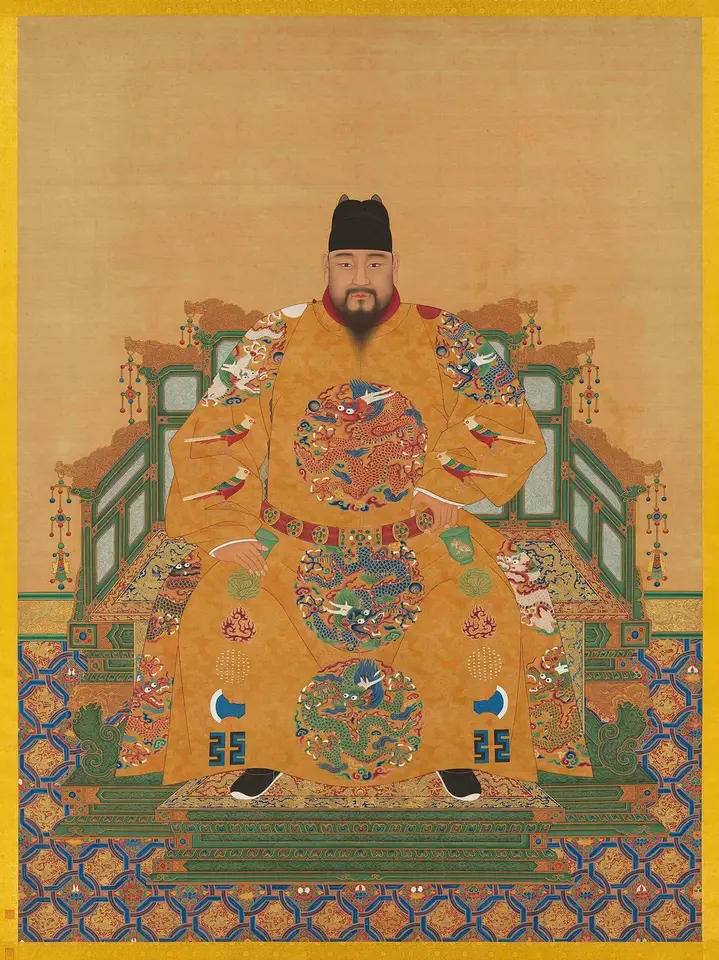
也先
Esen Taishi (绰罗斯·也先, 1407–1454) of the Choros clan was the paramount chieftain of the Oirat Mongols, son of Toghan Taishi, and the supreme nomadic hegemon of mid-fifteenth-century Eurasia. In 1439, Esen succeeded his father as Grand Preceptor (Taishi), maintaining Tayisung Khan (Toghtoa Bukha), a descendant of Genghis Khan, as nominal khagan while wielding undivided military and executive authority. Gifted with strategic…
Esen Taishi (绰罗斯·也先, 1407–1454) of the Choros clan was the paramount chieftain of the Oirat Mongols, son of Toghan Taishi, and the supreme nomadic hegemon of mid-fifteenth-century Eurasia. In 1439, Esen succeeded his father as Grand Preceptor (Taishi), maintaining Tayisung Khan (Toghtoa Bukha), a descendant of Genghis Khan, as nominal khagan while wielding undivided military and executive authority. Gifted with strategic vision and tactical brilliance, Esen subjugated the eastern Tatar tribes, subjugated the Uriankhai Three Commanderies, and annexed Hami and Shazhou along the Silk Road, reunifying the eastern and western Mongols from the borders of Korea to the Kazakh steppes. In 1449, provoked by the Ming court's reduction of trade subsidies directed by chief eunuch Wang Zhen, Esen launched an invasion across the northern frontier. In the catastrophic Battle of Tumu Fortress, Esen encircled and annihilated a half-million-strong Ming imperial expeditionary force, capturing Emperor Yingzong of Ming (Zhu Qizhen). Esen advanced on Beijing, but Minister of War Yu Qian enthroned the Jingtai Emperor and repelled the Oirat assault during the Defense of Beijing. In 1450, facing an economic blockade, Esen returned Yingzong to China. In 1453, Esen assassinated Tayisung Khan and broke the two-and-a-half-century taboo reserving the imperial title for the Borjigin clan, proclaiming himself "Tiansheng Great Khan of the Great Yuan." His usurpation incited rebellion across the nomadic nobility. In 1454, his disgruntled lieutenant Alag Chingsang assassinated Esen, precipitating the immediate fragmentation of the Oirat empire.
Born into the Choros nobility as the eldest son of Grand Preceptor Toghan.
Succeeded Toghan as Grand Preceptor, wielding supreme military executive authority.
Subjugated the Uriankhai Three Commanderies and Jurchen tribes, controlling Hami and the Hexi corridor.
Annihilated the Ming imperial army at Tumu Fortress, capturing Emperor Yingzong on the battlefield.
Advanced to the walls of Beijing; repelled by imperial artillery organized by Minister of War Yu Qian.
Reconciled with the Ming court, escorting Retired Emperor Yingzong back to Beijing.
Slain Tayisung Khan, proclaiming himself "Tiansheng Great Khan of the Great Yuan."
Attacked and slain by his rebel lieutenant Alag Chingsang at age forty-eight.
Esen was born in 1407 during the Yongle reign of the Ming Dynasty into the Choros aristocratic clan of the Western (Oirat) Mongols. His father, Toghan Taishi, had consolidated Oirat dominance over the steppes by defeating the Eastern Mongols (Tatars) and enthroning Tayisung Khan (Toghtoa Bukha), a descendant of the Yuan imperial house, while monopolizing the real executive office of Grand Preceptor (Taishi). From youth, Esen accompanied his father on campaigns, mastering mounted archery and frontier geopolitical maneuvering.
In 1439, upon Toghan's death, Esen assumed the office of Grand Preceptor. More aggressive than his father, Esen initiated relentless expansionist campaigns. He subjugated the eastern Tatar chieftains, bringing the Khorchin nobility under his sway. Turning eastward, he coerced the Uriankhai Three Commanderies and the Jurchen chieftains along the Yalu River into vassal tributary status.
In the west, Esen campaigned across Central Asia, seizing control of the strategic garrisons of Hami, Shazhou, and Chijin along the Hexi Corridor. His influence expanded to the borders of the Chagatai Khanate in Moghulistan. Within a single decade, Esen forged a nomadic confederation extending from the borders of Joseon Korea in the east to the Kazakh steppes in the west, and from Lake Baikal in the north to the Great Wall, establishing the zenith of Oirat imperial power.
With the rapid expansion of his domain, Esen grew increasingly dependent on the Ming tributary trade system. The Oirats exported horses and furs in exchange for grain, silks, ironware, and silver subsidies from Beijing.
However, Esen inflated diplomatic rosters to maximize profit. In the winter of 1448, Esen dispatched an embassy of two thousand five hundred delegates, falsely reporting three thousand to demand inflated imperial gifts. Wang Zhen, the arrogant and corrupt chief eunuch who dominated the court of young Emperor Yingzong (Zhu Qizhen), ordered auditors to count the delegates, distributing gifts only to those verified while slashing official purchase prices for Oirat horses by eighty percent.
Enraged by this financial rebuff, Esen declared war in July 1449, dividing his cavalry into four assault armies. While secondary divisions attacked Liaodong and Xuanfu, Esen commanded a strike force of fifty thousand veteran cavalry against Datong, routing the regional garrisons.
Terrified by the frontier emergency, Wang Zhen persuaded the twenty-two-year-old Emperor Yingzong to lead a punitive expedition in person, hoping to emulate the martial triumphs of Emperor Yongle. Despite desperate protests from civil ministers, Yingzong departed Beijing on August 4, 1449, with a poorly provisioned imperial host numbering nearly half a million men.
Reaching Datong amid monsoon deluges, the imperial army found dead bodies littering the roads. Panicking, Wang Zhen ordered an immediate retreat. However, fearing that military columns would trample his private ancestral estates in Weixian, Wang repeatedly redirected the march, leaving the exhausted soldiers circling aimlessly between Xuanfu and Huailai.
On August 30, Esen's advance scouts caught up with the imperial rearguard at Yao'erling, slaughtering covering forces under Duke Zhu Yong. On August 31, the main Ming army was trapped at Tumu Fortress, twenty li southwest of Huailai. The fortress occupied high, barren terrain without water, while the nearby river was fortified by Oirat horsemen. The imperial army endured two days of thirst, with soldiers digging thirty feet into dry rock in vain.
On the morning of September 1, 1449, Esen staged a tactical retreat, sending envoys into the camp to propose a truce. Believing the enemy had departed, Wang Zhen ordered his troops to rush the riverbank. The half-million men broke formation in a frantic stampede for water. Emerging from hidden valleys, Esen's cavalry enveloped the disorganized host, executing a catastrophic massacre. More than fifty senior civil and military ministers—including Minister of War Kuang Ye and the venerable Duke of Yingguo Zhang Fu—perished in the fray. General Fan Zhong bludgeoned the treacherous eunuch Wang Zhen to death with a mace. Surrounded by slaughter, Emperor Yingzong sat cross-legged on the ground and was taken prisoner. Esen placed the captive monarch in his personal headquarters, achieving the most shocking military triumph in nomadic history: the Tumu Crisis.
Holding the Ming emperor hostage, Esen anticipated extracting immense territorial and financial concessions from Beijing. However, upon news of the disaster reaching the capital, Vice-Minister of War Yu Qian and Empress Dowager Sun resolutely rejected proposals to flee south to Nanjing. Instead, they enthroned Yingzong's younger brother, Zhu Qiyu, as the Jingtai Emperor, demoting Yingzong to Retired Emperor and establishing the doctrine that "the dynastic altars outweigh the life of an individual sovereign."
Realizing that diplomacy had failed, Esen marched on Beijing in October 1449, dragging Yingzong before the gates to demand admittance. Having mobilized two hundred and twenty thousand provincial troops, Yu Qian deployed his army outside the nine city gates with backs to the walls. When Esen assaulted the Desheng and Xizhi gates on October 27, Yu Qian unleashed synchronized musket and artillery batteries, slaying Esen's brother Boro and senior general Maonahai. Suffering heavy casualties and fearing that relief columns would encircle his retreat, Esen withdrew into the steppes on October 30.
Following his defeat at Beijing, Esen recognized that the enthronement of the Jingtai Emperor rendered Yingzong politically useless. Furthermore, the complete closure of frontier markets devastated the pastoral economy, breeding discontent among nomadic chieftains.
In August 1450, Esen concluded a truce with Ming envoys, formally escorting Retired Emperor Yingzong back to the Great Wall, returning the sovereign without ransom.
However, internal rivalry within the steppes escalated. Tayisung Khan, the legitimate Genghisid sovereign, deeply resented Esen's autocratic monopoly over state affairs. In 1451, war erupted between the two leaders. Esen forged an alliance with Alag Chingsang, defeating Tayisung Khan, who was murdered during his flight.
With the Genghisid ruler eliminated, Esen's ambition destroyed the ancient customs of the steppes. For two hundred and fifty years since Genghis Khan, nomadic law mandated that only patrilineal descendants of the Borjigin clan could assume the title of Khagan. In the winter of 1453, Esen discarded this ancestral code, proclaiming himself "Tiansheng Great Khan of the Great Yuan," designating his son crown prince and sending diplomatic notices to Beijing.
Esen's usurpation shocked the Mongol aristocracy, who viewed a non-Genghisid khagan as an intolerable affront to heaven. When his chief general Alag Chingsang demanded the office of Grand Preceptor, Esen refused. In 1454, Alag Chingsang launched a surprise rebellion with thirty thousand cavalry. Abandoned by his troops, Esen fled into the wilderness, where he was ambushed and slain by personal enemies at the age of forty-eight.
With Esen's death, the Oirat empire fractured immediately, and the eastern Tatars reasserted dominance, plunging the Mongolian steppes into another century of fragmentation.
Esen achieved the highest concentration of nomadic military power in East Asia between the fall of the Yuan Dynasty and the rise of the Qing. By subordinating the eastern Tatar clans, annexing the Uriankhai borderlands, and dominating the Hexi Corridor, he established an empire that rivaled the early Mongol realm in geographic reach, dominating trade routes across Eurasia.
The 1449 Battle of Tumu Fortress stands as a masterpiece of nomadic operational mobility and psychological warfare. Capitalizing on the incompetence of imperial eunuch Wang Zhen, Esen outmaneuvered, trapped, and annihilated a half-million-strong imperial army with minimal casualties, capturing the ruling son of heaven. The engagement permanently altered Ming strategic defense, shifting Chinese imperial foreign policy from offensive expansion to defensive fortification along the Great Wall.
During his hegemony, Esen reformed the fragmented tribal structure of the nomadic steppes into a standardized decimal military organization. He organized Oirat and submitted Tatar banners into units of tens, hundreds, and thousands under trusted commanders, establishing an elite bodyguard brigade directly accountable to the Grand Preceptor. In military tactics, Esen excelled at long-range envelopment, deceptive feigned retreats, and water-supply blockades that exhausted heavily armored sedentary armies.
Economically, Esen protected trans-continental caravan corridors across Central Asia and the Hexi Corridor. By regulating tariffs on merchant guilds and securing regional trade fairs, he sustained the fiscal expenditures of his expanding armies, endowing a pastoral society with the organizational resilience necessary to challenge the Ming empire.
FIGURES ASSOCIATED WITH THIS DYNASTY