Entity Type: Historical Figure Dynasty: Qing Dynasty
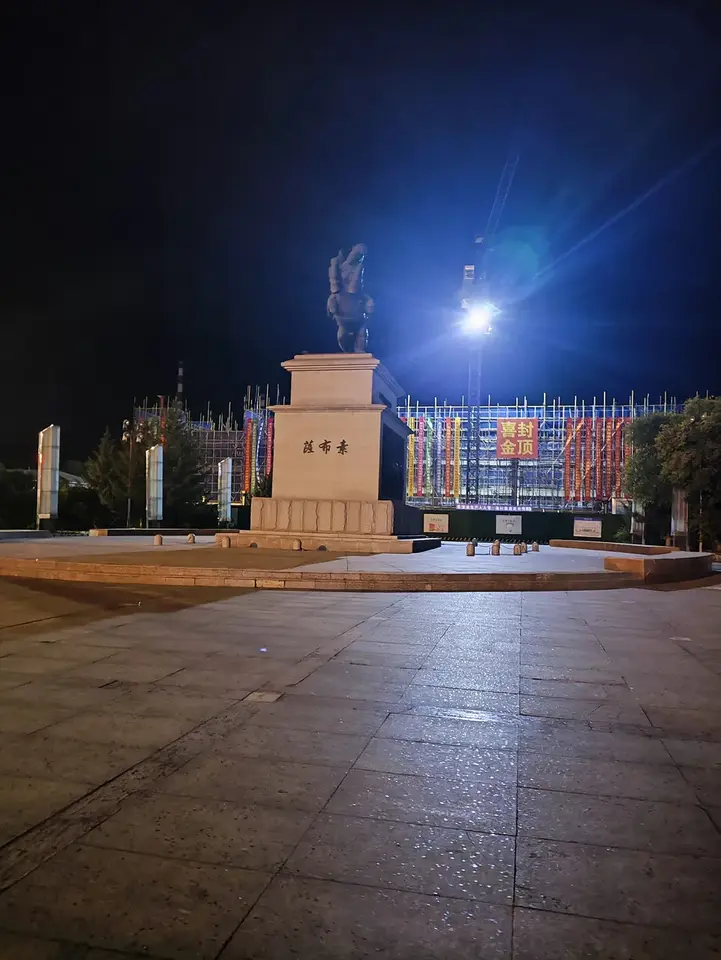
Historical figure
Sabsu (萨布素)
萨布素
Fuca Sabsu (富察·萨布素, 1635–1701), belonging to the Fuca clan and a member of the Manchu Bordered Yellow Banner with ancestral roots in Aigun along the Amur River, was an eminent military general and frontier statesman during the Kangxi reign of the Qing Dynasty, renowned as the inaugural General of Heilongjiang. Rising from the ranks, Sabsu was raised in the rugged northern borderlands, mastering equestrian archery and…
Era not stated
PROFILE
Fuca Sabsu (富察·萨布素, 1635–1701), belonging to the Fuca clan and a member of the Manchu Bordered Yellow Banner with ancestral roots in Aigun along the Amur River, was an eminent military general and frontier statesman during the Kangxi reign of the Qing Dynasty, renowned as the inaugural General of Heilongjiang. Rising from the ranks, Sabsu was raised in the rugged northern borderlands, mastering equestrian archery and developing intimate familiarity with northeastern rivers and mountains. Beginning his career as a clerk (bithesi) at Ningguta, he campaigned tirelessly against invading Cossack raiders across the Amur basin, earning advancement to Deputy Lieutenant General of Ningguta through personal valor. Confronting the illegal occupation of fortified strongholds by Tsarist Russian Cossacks, Sabsu formulated the enduring strategy of "establishing permanent fortified garrisons, cultivating agricultural colonies for rations, and severing hostile reinforcements," constructing the fortress of Aigun on the northern bank of the Amur River to anchor northern defenses. In 1683, the Qing court established the military government of the General of Heilongjiang, appointing Sabsu as the inaugural general headquartered at Aigun. During the Siege of Albazin in 1685 and 1686, Sabsu served as the principal operational commander alongside Pengchun, directing Eight Banners infantry, rattan shield shock troops, and Da'ur and Solon warriors in two campaigns against the Russian fortress. Coordinating amphibious flotillas on the Amur with artillery redoubts on land, Sabsu's forces surrounded the stronghold, killed Russian fortress commander Aleksei Tolbuzin with artillery fire, and forced Tsar Peter I to seek a diplomatic settlement. In 1689, Sabsu commanded an escort fleet of over a thousand crack troops accompanying Grand Minister Songgotu to Nerchinsk, providing decisive military and cartographic support that secured the Treaty of Nerchinsk, which established China's legal sovereignty over the Amur and Ussuri basins. Over his subsequent career, Sabsu promoted military farming colonies, constructed the city of Qiqihar as the provincial administrative capital, founded schools, and opened postal relay lines, laying the foundation for modern northeastern China.
- Noble Title
- First-Class Adaha Hafan (Light Chariot Commander / 一等阿达哈哈番)
- Native Place
- Aigun, Heilongjiang (modern Aihui District, Heihe City, Heilongjiang Province)
- Date of Birth
- 1635 (Ming Chongzhen 8 / Qing Tiancong 9)
- Date of Death
- 1701 (Qing Kangxi 40)
- Age at Death
- 66
- Highest Office
- General of Heilongjiang (Inaugural General of Heilongjiang)
- Major Offices
- Deputy Lieutenant General of Ningguta, General of Heilongjiang, Grand Director of Wuying Palace
- Historical Identity
- Renowned frontier commander of the Kangxi reign, inaugural General of Heilongjiang, supreme frontline commander of the Albazin Campaigns, indispensable military guarantor of the Treaty of Nerchinsk
LIFE TIMELINE
Relationship graph
BIOGRAPHY
Chronology
- 1635 (Ming Chongzhen 8 / Qing Tiancong 9) | Northern Birth | Born in Aigun along the Amur River, practicing archery and studying regional watercourses from childhood.
- 1652 (Qing Shunzhi 9) | Enlistment as Clerk | Appointed bithesi under the commander of Ningguta at eighteen, demonstrating decisiveness in frontier administrative duties.
- 1662 (Qing Kangxi 1) | Martial Elevation | Promoted to cavalry lieutenant and later to regiment commander (xieling) for gallantry against raiding Cossack bands.
- 1678 (Qing Kangxi 17) | Command at Ningguta | Promoted to Deputy Lieutenant General of Ningguta, directing frontier fortifications, agricultural colonization, and border surveillance.
- 1682 (Qing Kangxi 21) | Construction of Aigun | Built the fortress of Aigun on the Amur River, stocking tens of thousands of bushels of grain and establishing naval shipyards.
- 1683 (Qing Kangxi 22) | Inaugural General | Appointed the first General of Heilongjiang upon the establishment of the military government, presiding over regional defense.
- 1685 (Qing Kangxi 24) | First Siege of Albazin | Led combined amphibious forces to besiege Albazin, bombarding wooden walls with red-coat artillery and compelling Tolbuzin to surrender.
- 1686 (Qing Kangxi 25) | Second Siege of Albazin | Besieged the reconstructed fortress with circumvallation trenches for eight months, slaying Tolbuzin and neutralizing hostile forces.
- 1689 (Qing Kangxi 28) | Treaty of Nerchinsk | Escorted Songgotu to Nerchinsk with a naval detachment, providing military deterrence that secured the Treaty of Nerchinsk.
- 1696 (Qing Kangxi 35) | Northern Flank at Urhoi | Deployed Heilongjiang cavalry to the Urhoi River during Kangxi's expedition against Galdan, cutting off western rebel retreat routes.
- 1701 (Qing Kangxi 40) | Passing in Capital | Succumbed to chronic illness in Beijing after decades of border service; honored by Emperor Kangxi with imperial funeral sacrifices.
Life and Career
Frontier Service and Strategic Vision
Sabsu was born into the Fuca clan at Aigun along the banks of the middle Amur River. His early life coincided with the turbulence of the Ming-Qing transition, when northern border communities faced profound disruption. From the mid-seventeenth century onward, armed Russian Cossack expeditions pushed across the Stanovoy Mountains, raiding native settlements along the Amur, Zeya, and Songhua rivers, burning villages and plundering local Da'ur, Evenk, and Hezhen communities. Growing up amid these frontier violences, Sabsu resolved to dedicate his life to expelling foreign invaders and protecting his ancestral homeland.
In 1652, the eighteen-year-old Sabsu entered service as a bithesi (clerk) at Ningguta, the primary Qing military headquarters in northern Manchuria. Fluent in Manchu and Mongolian and endowed with practical energy, Sabsu went beyond administrative desk work, frequently riding along the banks of the Songhua and Amur rivers to survey terrain, inspect tribal settlements, and map mountain defiles and seasonal river currents.
Throughout the late Shunzhi and early Kangxi reigns, Cossack detachments took advantage of Qing military entanglements in southern China to construct fortified outposts at Albazin (Yakesa) and Nerchinsk. Sabsu participated in numerous expeditions to repel Cossack probes, displaying tactical composure in skirmishes and amphibious boarding actions. He advanced steadily from cavalry lieutenant to regiment commander (xieling). In 1678, the Qing court promoted him to Deputy Lieutenant General of Ningguta, placing him in direct charge of frontline operations along the Amur.
Observing that Qing forces had previously conducted seasonal expeditions that withdrew every winter, allowing Russian raiders to return and rebuild their posts, Sabsu submitted a landmark memorial to Emperor Kangxi. He urged the adoption of a permanent defensive doctrine: "building permanent fortified garrisons, stationing year-round troops, cultivating grain colonies, and training river naval units." Convinced by this reasoning, Emperor Kangxi ordered Sabsu to construct Aigun on the northern bank of the Amur, establish naval shipyards to build hundreds of rivercraft, and recruit local hunters into agricultural colonies, creating the indispensable logistical foundation for the reconquest of Albazin.
Founding the Heilongjiang Command and the Battles of Albazin
In 1683, having suppressed the Revolt of the Three Feudatories and integrated Taiwan, Emperor Kangxi turned his full attention to securing the northeastern frontier. To unify military and civil authority across the Amur basin, the court instituted the office of General of Heilongjiang, appointing Sabsu as the inaugural general. Establishing his headquarters at Aigun, Sabsu assumed jurisdiction over the vast territory extending from the Greater Khingan Mountains to the Sea of Okhotsk.
In May 1685, the First Siege of Albazin commenced. Emperor Kangxi designated Lieutenant General Pengchun as supreme commander and Sabsu as frontline commander and naval leader, commanding over three thousand banner soldiers, Fujian rattan-shield shock troops, and local hunters. Sabsu led the river fleet to blockade the Amur, severing the fortress's waterborne supply line, while land forces dug trenches and brought forward heavy red-coat cannons to bombard the timber defenses. Overwhelmed by artillery fire, Russian commander Aleksei Tolbuzin surrendered. In accordance with imperial directives, Qing forces razed the fortifications, released the prisoners, and returned south.
However, after Qing forces withdrew, the Russian authorities broke their pledge. Tolbuzin returned the following winter with over eight hundred heavily armed Cossacks, using frozen waterways to transport artillery and rebuilding Albazin as a reinforced earth-and-timber bastion. In June 1686, the Second Siege of Albazin began as Sabsu led over two thousand veteran troops back to the stronghold, determined to resolve the conflict permanently.
Adopting an unyielding strategy of encirclement, Sabsu dug triple rings of deep circumvallation trenches and erected elevated artillery redoubts around the walls. During an intense bombardment, Sabsu directed artillery fire against an elevated observation post, scoring a direct hit that killed Tolbuzin instantly. Deprived of leadership and ravaged by scurvy and starvation, the garrison dwindled from over eight hundred men to several dozen survivors. Alarmed by the imminent collapse of the post, the Russian government dispatched couriers to Beijing petitioning for a ceasefire and diplomatic negotiations.
Demarcation at Nerchinsk and Securing the Border
In the summer of 1689, diplomatic delegations met at Nerchinsk to conclude a formal boundary settlement. The Qing delegation was led by Grand Minister Songgotu and Imperial Uncle Tong Guogang, with Sabsu designated chief military advisor in command of an escort fleet of over a thousand crack troops.
During the conference, Russian envoy Fyodor Golovin attempted to employ Cossack detachments to intimidate the Chinese delegation and claim extensive territories north of the Amur. In response, Sabsu anchored dozens of armed river gunboats along the Shilka River and deployed cavalry regiments in battle formation along the riverbanks. Possessing intimate topographical knowledge of every stream and ridge in the region, Sabsu used detailed border charts to dismantle Russian territorial pretensions, providing unassailable diplomatic leverage for the Qing negotiators.
On September 7, 1689 (Kangxi 28, 7th Month, 24th Day), the landmark Treaty of Nerchinsk was formally signed. The treaty established the Argun River, the Gorbitsa River, and the Stanovoy Mountains to the sea as the boundary between China and Russia. Lands south of the Stanovoy range were recognized as belonging to China, while Albazin was dismantled and its garrison evacuated. As China's first formal international border treaty, the Treaty of Nerchinsk confirmed imperial sovereignty over the Amur and Ussuri basins and Sakhalin Island, ensuring more than a century of frontier stability.
Development of Heilongjiang and Historical Legacy
Following the treaty, Sabsu dedicated his energies to the economic development and administrative reorganization of Heilongjiang. In 1690, calculating that Aigun was positioned too far northeast to oversee regional administration, he transferred his headquarters to Mergen (modern Nenjiang). In 1699, he directed the construction of a permanent administrative fortress at Qiqihar, completing a city wall nearly ten li in circumference. Qiqihar served as the administrative, military, and cultural center of Heilongjiang Province for the next two centuries.
To develop the fertile wilderness, Sabsu encouraged immigration from Zhili and Shandong, establishing military farming colonies and official farmsteads that brought tens of thousands of acres under cultivation and made the northern frontier self-sufficient in food. He constructed a network of postal roads and relay stations linking Qiqihar with Jilin and Beijing, drastically reducing communication times between the capital and the frontier. Moreover, Sabsu established public schools in Qiqihar and Aigun, inviting classical tutors from central China to instruct Manchu, Da'ur, and Han youths in Confucian texts, promoting cultural integration across the region.
In 1696, when Galdan Khan of the Dzungar Khanate invaded Khalkha Mongolia, Emperor Kangxi led an expeditionary force north, ordering Sabsu to deploy Heilongjiang cavalry to the Urhoi River to block any eastward retreat or contact with Russian outposts. Sabsu's vigilance secured the northeastern flank, contributing directly to the imperial victory at the Battle of Jao Modo.
In 1700, after nearly five decades of frontier service, the aging commander was summoned to Beijing. In 1701, Sabsu passed away at his capital residence at sixty-six. Deeply saddened, Emperor Kangxi granted imperial funeral funds in honor of his lifelong service. Border communities mourned his passing, erecting memorial shrines in Aigun and Qiqihar to honor the builder of northern defenses.
Major Achievements
Supreme Commander of the Albazin Campaigns
Sabsu's leadership during the two Albazin campaigns represents one of the most successful defensive operations in early modern Chinese history. As frontline commander, he integrated heavy artillery fire, siege circumvallation, and naval interdiction, neutralizing the Cossack stronghold and eliminating Tolbuzin. His operational execution halted Tsarist expansion into the Amur valley, safeguarding imperial frontiers.
Military Guarantor of the Treaty of Nerchinsk
During the 1689 negotiations at Nerchinsk, Sabsu provided the decisive military backing that prevented Russian intimidation. His decades of surveying northern waterways furnished the Qing delegation with accurate cartographic intelligence, enabling Chinese negotiators to secure favorable terms that affirmed sovereign rights over the vast Amur basin and the Stanovoy Mountains.
Founding Architect of Heilongjiang Administration
Sabsu's tenure as inaugural General of Heilongjiang laid the structural foundation of modern northeastern administration. Through the establishment of military headquarters at Aigun, Mergen, and Qiqihar, he created a triangular military administration alongside Shengjing and Jilin, institutionalizing imperial governance across northern Manchuria.
Pioneer of Northern Frontier Colonization
Sabsu transformed Heilongjiang from a remote borderland into a developed frontier province. By promoting military farming colonies, opening postal relay highways, and establishing classical schools, he fostered regional economic self-sufficiency and integrated border peoples into the cultural and administrative framework of the Qing Empire.
Personal Relationships
- Imperial Sovereign: The Kangxi Emperor, who placed profound trust in Sabsu, established the General of Heilongjiang, and appointed him to the office.
- Albazin Co-Commander: Pengchun, Lieutenant General of the Plain Red Banner who served as supreme commander during the first siege of Albazin, working closely with Sabsu.
- Nerchinsk Plenipotentiary: Songgotu, Grand Secretary and Chief Imperial Envoy, escorted and advised by Sabsu during the 1689 border negotiations.
- Early Superior: Bahai, General of Ningguta under whom Sabsu served during his early career along the Amur.
- Russian Adversary: Aleksei Tolbuzin, Cossack military leader and governor of Albazin, killed by Sabsu's artillery during the second siege.
- Diplomatic Counterpart: Fyodor Golovin, Russian ambassador at Nerchinsk, whose territorial demands were countered by Sabsu's military presence.
Historical Evaluation
- The Kangxi Emperor: "Sabsu is experienced, steadfast, and deeply versed in frontier warfare. Demonstrating martial prestige along the Amur and recovering Albazin, he is truly the foremost bulwark of our northern border." (Veritable Records of Emperor Shengzu of Qing)
- Zhao Erxun et al., Draft History of Qing, Biographies 67: "Sabsu rose from the ranks and mastered frontier affairs. In pacifying Albazin, his comprehensive planning earned him primary merit. Establishing the military government of Heilongjiang, fortifying outposts, and settling the border populations, he ensured perpetual peace throughout his tenure, demonstrating the true accomplishments of a great general."
- Wei Yuan, Military History of the Holy Dynasty, Volume 8: "In the Battle of Albazin, Sabsu severed land and river communications, dug deep trenches to besiege the fortress, and used artillery to dismantle their redoubts. For over a century thereafter, the Russians dared not threaten the Amur; Sabsu's contributions were magnificent."
- Tong Guogang et al. (Imperial Memorial): "Sabsu is loyal, prudent, and brave, thoroughly familiar with the rivers and passes of Heilongjiang; his soldiers revere him, and his fame resounds across the northernmost frontiers."
Related Entries
- Battles of Albazin
- Treaty of Nerchinsk
- General of Heilongjiang
- Aigun
- Qiqihar
- Pengchun
- Songgotu
FIGURES ASSOCIATED WITH THIS DYNASTY
Bibliography
- Zhao Erxun et al., Draft History of Qing, Volume 280, Biography 67: Biography of Sabsu, Zhonghua Book Company punctuated edition.
- Qing Gui et al. (eds.), Veritable Records of Emperor Shengzu of Qing, Zhonghua Book Company photographic reprint.
- Wei Yuan, Military History of the Holy Dynasty, Volume 8: Kangxi's Record of Northeastern Russia, Zhonghua Book Company punctuated edition.
- Fang Shiji, Brief Record of Longsha, Heilongjiang People's Publishing House punctuated edition.
- Yang Bin, Brief Record of the Willow Palisade, Liaoning University Department of History punctuated edition.