Bannerman Birth
Born into the Plain Yellow Banner of the Imperial Household Department Han Army, later purchasing imperial student status.
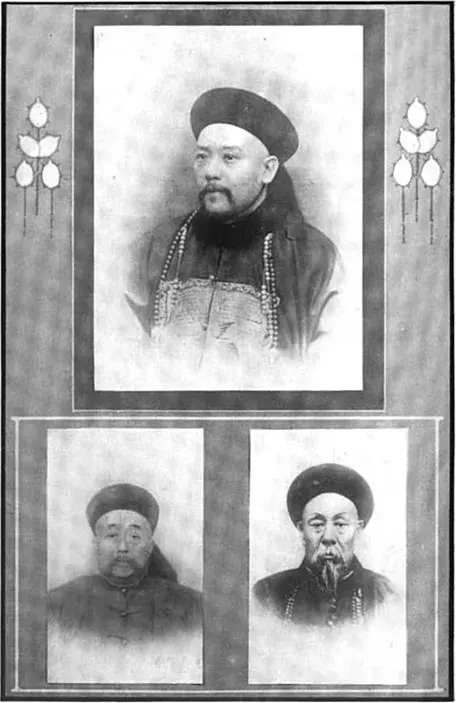
毓贤
Yuxian (毓贤, 1842–1901), courtesy name Zuochen, was an imperial bannerman belonging to the Plain Yellow Banner of the Imperial Household Department Han Army. He was a prominent late Qing regional official, a notorious representative of draconian bureaucracy, and a chief architect of violent anti-foreign extremism. Entering government through purchased student status, he rose through the ranks of prefect, circuit intendant,…
Yuxian (毓贤, 1842–1901), courtesy name Zuochen, was an imperial bannerman belonging to the Plain Yellow Banner of the Imperial Household Department Han Army. He was a prominent late Qing regional official, a notorious representative of draconian bureaucracy, and a chief architect of violent anti-foreign extremism. Entering government through purchased student status, he rose through the ranks of prefect, circuit intendant, judicial commissioner, and financial commissioner, becoming Governor of Shandong in 1899 and Governor of Shanxi in 1900. Yuxian's administrative career in Shandong was characterized by ruthless brutality. While serving as Prefect of Caozhou, he executed thousands of suspects under the pretext of eradicating banditry, earning the gruesome moniker "The Butcher" (Tu Bo) and inspiring the fictional character Yu Xian in Liu E's novel The Travels of Lao Can. As Governor of Shandong, facing escalating clashes between rural populations and foreign missionaries, he institutionalized the Boxer movement by renaming the secret Boxer societies into lawful community militias (Yihetuan) and adopting a policy of appeasement and patronage. Transferred to Shanxi in 1900, he escalated violent hostility, orchestrating the massacre of dozens of Western missionaries and numerous Chinese converts at the Taiyuan provincial yamen during the Taiyuan Massacre. Following the capture of Beijing by the Eight-Nation Alliance, foreign powers identified Yuxian as a foremost war criminal. In February 1901, under intense diplomatic coercion, the Qing court ordered his immediate execution in Lanzhou, Gansu.
Born into the Plain Yellow Banner of the Imperial Household Department Han Army, later purchasing imperial student status.
Purchased prefect rank status and was dispatched to Shandong as an expectant prefect.
Appointed acting Prefect of Caozhou, employing brutal torture and mass executions that earned him the nickname "The Butcher."
Promoted to Intendant of the Yanzhou-Yizhou-Caozhou-Jining Circuit, continuing aggressive suppression of local unrest.
Elevated to Judicial Commissioner of Shandong, leading troops to crush Big Sword Society uprisings in Cao and Shan counties.
Promoted to Financial Commissioner of Shandong; transferred to Hunan and later appointed Acting General of Jiangning in November.
Appointed Governor of Shandong in April, patronizing the martial boxers and renaming them Yihetuan (Boxer Militias).
Stripped of his governor post in December and recalled to Beijing following strong protests from foreign ministers over missionary deaths.
Appointed Governor of Shanxi in March, aggressively enforcing anti-foreign decrees, demolishing churches, and persecuting Christians.
Lured foreign missionaries and their families to the provincial yamen in July, presiding over their summary execution.
Led troops toward Beijing following the Eight-Nation Alliance invasion and joined Empress Dowager Cixi's flight to Xi'an.
Dismissed from his governorship in September under Alliance pressure and sentenced to military exile in Xinjiang.
Intercepted by imperial couriers with orders for summary execution; beheaded in Lanzhou on February 22 at age sixty.
Yuxian was born into an Imperial Household Department Han Army bannerman family in 1842. Lacking the scholarly training required to pass metropolitan civil examinations, he obtained the status of imperial student through cash purchase. In 1879, he purchased the status of expectant prefect and was dispatched to Shandong province. Over a decade of provincial apprenticeship, Yuxian observed late Qing bureaucratic dynamics, cultivating a self-righteous persona of incorruptibility while relying on extreme punitive measures to build a reputation for efficiency.
In 1889, Yuxian became acting Prefect of Caozhou in southwestern Shandong, an area characterized by rural impoverishment, secret societies, and rampant banditry. Claiming to restore law and order, Yuxian initiated indiscriminate purges. He arrested commoners on mere suspicion, torturing detainees into confessions and executing more than two thousand suspects within several months. He erected twelve wooden standing cages fitted with protruding iron nails in front of the prefectural yamen. Suspended in these cages with bricks barely supporting their toes, victims endured agony as clerks removed one brick each day until they suffocated or bled to death. His brutality horrified local commoners, who labeled him "The Butcher." Author Liu E modeled the ruthless character Yu Xian in his classic satirical novel The Travels of Lao Can on Yuxian's horrific standing cages in Caozhou.
Due to his ruthless suppression of local unrest, Yuxian won the favor of conservative superiors, advancing rapidly through the provincial hierarchy. In 1895, he was promoted to Intendant of the Yanzhou-Yizhou-Caozhou-Jining Circuit, and in 1896, he became Judicial Commissioner of Shandong. When the Big Sword Society staged anti-tax rebellions in Cao and Shan counties, Yuxian led government troops in merciless crackdowns, executing captured leaders and dispersing insurgents.
In 1898, Yuxian was elevated to Financial Commissioner of Shandong, briefly transferred to Hunan, and appointed Acting General of Jiangning. Aligning himself with conservative Manchus like Prince Duan (Zaiyi) and Grand Secretary Gangyi, who opposed the Hundred Days' Reform and Western modernization, Yuxian gained their patronage. In April 1899, the court appointed him Governor of Shandong, granting him civil and military leadership over the province.
Yuxian returned to Shandong as imperialist encroachment reached unprecedented levels. Germany had occupied Jiaozhou Bay and was constructing the Qingdao-Jinan Railway, while foreign missionaries used treaty privileges to intervene in local lawsuits, inciting resentment among villagers. Secret martial groups like the Spirit Boxers and Big Sword Society multiplied rapidly. Initially, Yuxian issued bans against illicit martial assemblies, sending troops to disperse gatherings at Senluodian and executing boxer leaders like Zhu Hongdeng and Monk Xincheng in Jinan.
However, Yuxian soon concluded that foreign ecclesiastical interference posed a far greater threat to dynastic rule than grassroots boxing cults. Dogmatically anti-foreign, Yuxian submitted memorials to Beijing asserting that popular anti-missionary sentiment was righteous. He formulated the strategy of converting private martial clubs into public village militias (Gai Quan Yong Wei Min Tuan), formally conferring the title Yihetuan (Society of Righteous and Harmonious Fists). He issued official flags and weapons to Boxer leaders and opened the governor's yamen in Jinan for Boxers to demonstrate their martial arts and claimed invulnerability to bullets.
Yuxian's patronage of the Boxers caused anti-foreign violence to spiral out of control across Shandong. Boxers burned churches, destroyed telegraph lines, and killed Christian converts and Western missionaries. Foreign diplomats in Beijing issued ultimatums demanding Yuxian's dismissal. Yielding to international pressure, the Qing court dismissed Yuxian in December 1899, replacing him with Yuan Shikai, commander of the modernized Right Division of the Wuwei Corps.
Returning to Beijing, Yuxian actively lobbied Manchu aristocrats, including Prince Duan (Zaiyi), Prince Zhuang (Zaixun), and Grand Secretary Gangyi. He assured them that the Boxers possessed supernatural invulnerability to firearms and could purge foreign influence from China. Persuaded by these assertions, the imperial court aligned with the anti-foreign faction. In March 1900, through Gangyi's sponsorship, Yuxian was appointed Governor of Shanxi.
In Shanxi, Yuxian unleashed unrestrained hostility against Western presence and Christianity. Proclaiming that all foreigners and converts must be exterminated, he mobilized Boxer groups, tore down churches, and forbade locals from harboring Christians. On July 9, 1900, Yuxian lured all foreign missionaries in Taiyuan, along with their wives and children, to the provincial yamen under false promises of safe escort to Tianjin.
Under Yuxian's direct supervision, provincial guards and Boxers carried out a brutal purge in the yamen courtyard. Forty-six Westerners—including Roman Catholic bishops Gregorio Grassi and Francesco Fogolla, Protestant missionaries, nuns, and young children—were summarily beheaded. Over subsequent weeks, hundreds of local Chinese Christians were massacred across the province. Under Yuxian's governorship, Shanxi suffered the highest casualties of foreign missionaries and domestic converts during the entire Boxer crisis, with over two hundred foreign nationals and thousands of Chinese Christians killed.
In August 1900, the Eight-Nation Alliance invaded Beijing, forcing Empress Dowager Cixi and Emperor Guangxu to flee west. Yuxian led Shanxi troops to provide escort for the imperial court as it retreated through Taiyuan to Xi'an. However, the international community was outraged by the atrocities. The allied powers advanced toward Baoding and the Shanxi border, demanding the death penalty for primary instigators—chief among them Yuxian—as a non-negotiable prerequisite for peace negotiations led by Li Hongzhang and Prince Qing.
Desperate to preserve dynastic survival, Empress Dowager Cixi abandoned her conservative supporters. On September 26, 1900, the court stripped Yuxian of his governorship and sentenced him to military exile in Xinjiang. However, allied negotiators rejected exile as inadequate, insisting on capital punishment.
On February 13, 1901, as final terms for the Boxer Protocol were drafted, the Qing court issued a decree ordering Yuxian's summary execution. Imperial messengers intercepted the exile party in Lanzhou, Gansu. On February 22, 1901, sixty-year-old Yuxian was publicly beheaded in Lanzhou. Facing execution, he composed a tragic self-elegy lamenting his misspent service, marking the ignominious end of a career defined by bureaucratic cruelty and xenophobic disaster.
Yuxian was notorious for using extreme judicial violence to establish administrative authority. During his tenure as Prefect of Caozhou from 1889 to 1895, he operated under the principle that societal order could only be maintained through physical terror. Discarding conventional Confucian moderation, he instituted summary executions for criminal suspects.
His standing cages (zhanlong) became an enduring symbol of late Qing administrative brutality. By suspending suspects with iron spikes protruding into the cages and gradually removing footboards, he inflicted agonizing deaths without formal trial. These methods established his reputation as a ruthless enforcer, facilitating his rise through the provincial administration despite widespread revulsion among the populace.
Yuxian played a pivotal role in transforming the Boxers from an outlawed secret sect into an officially sanctioned anti-foreign militia. In 1898 and 1899, while serving as Financial Commissioner and Governor of Shandong, he sought to co-opt rural grievances against Western missionaries to serve imperial defense.
He coined the formula "converting private clubs into public militias" (gai quan yong wei min tuan), giving the movement its formal name, Yihetuan. By providing official banners, weapons, and legal immunity to Boxer leaders, he fostered the rapid expansion of Boxer shrines across northern China. This policy legitimized religious extremism, creating the momentum that culminated in the 1900 siege of the foreign legations in Beijing.
As Governor of Shanxi in 1900, Yuxian executed the most extreme anti-foreign policy in modern Chinese history. While southern viceroys like Li Hongzhang, Zhang Zhidong, and Liu Kunyi established the Southeast Mutual Protection pact to maintain neutrality and preserve peace, Yuxian implemented a scorched-earth campaign against all foreign and Christian institutions across Shanxi.
His calculated betrayal and slaughter of forty-six Western missionaries, including women and children, in the Taiyuan yamen on July 9, 1900, shocked international public opinion. The massacre provoked fierce retribution from allied expeditionary forces and established Yuxian as the primary culprit in diplomatic negotiations, leading directly to his execution in Lanzhou.
FIGURES ASSOCIATED WITH THIS DYNASTY