王小波
Classical woodblock edition / text (Wang Xiaobo)
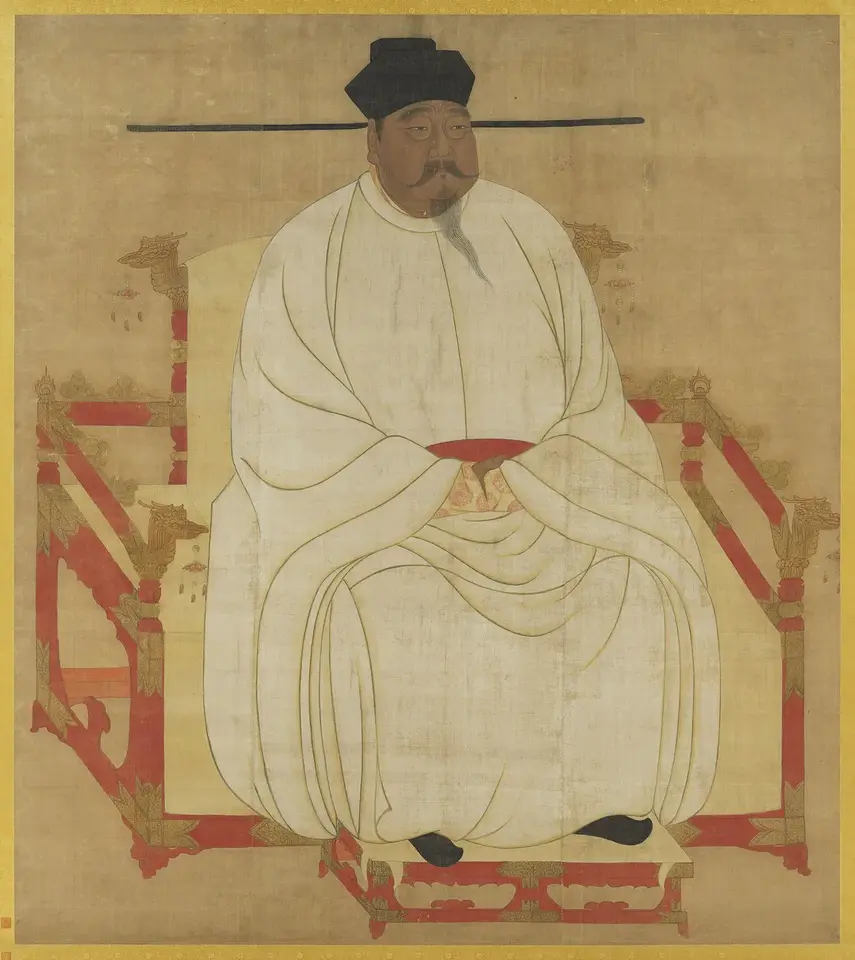
Image creditsAnonymousUnknown author · Public domainImage source

Historical figure

Wang Xiaobo (王小波)

王小波

Wang Xiaobo (王小波, ?–993) was a native of Qingcheng County, Yizhou (modern Dujiangyan, Sichuan Province). He was the pioneering initiator and founding commander of the major peasant rebellion in the Sichuan-Xia region during the early Northern Song Dynasty. Born into an impoverished tea-farming family, he spent his youth cultivating and marketing tea. Following the Song conquest of Later Shu, the imperial government subjected…

Northern Song Dynasty

PROFILE

Wang Xiaobo (王小波, ?–993) was a native of Qingcheng County, Yizhou (modern Dujiangyan, Sichuan Province). He was the pioneering initiator and founding commander of the major peasant rebellion in the Sichuan-Xia region during the early Northern Song Dynasty. Born into an impoverished tea-farming family, he spent his youth cultivating and marketing tea. Following the Song conquest of Later Shu, the imperial government subjected the Sichuan region to severe fiscal extortion, establishing state monopolies (Bomai) over tea distribution. Private commercial transactions were banned, forcing growers to sell to imperial monopolies at depressed prices and reducing thousands of farming families to penury. In the second month of 993, Wang Xiaobo and his brother-in-law Li Shun assembled over a hundred desperate peasants at Qingcheng, swearing a solemn oath and proclaiming the historic revolutionary manifesto: "I resent the disparity between the rich and the poor; now I shall equalize it on your behalf." His force opened imperial granaries and distributed stored wealth, gaining popular support across western Sichuan. The insurgents captured Qingcheng and Pengyuan, routing regional patrols. In the twelfth month, Wang Xiaobo personally slew Song commander Qi Yuanzhen during the Battle of Jiangyuan, but was mortally wounded by a stray arrow. Following his death, his followers chose Li Shun to assume command, escalating the movement into the Great Shu regime.

Native Place
Qingcheng County, Yizhou (Modern Dujiangyan, Sichuan)
Death Date
993 (Twelfth Month of the Fourth Year of Chunhua)
Dynasty
Northern Song Dynasty
Highest Office
Initiator and Supreme Commander of the Sichuan-Xia Peasant Uprising
Major Offices
Rebel Commander of the Qingcheng Tea Farmers
Accurate Identity Positioning
Founding Leader of the Sichuan Peasant Uprising in the Early Northern Song, Historical Pioneer of the "Equalization of Wealth" Doctrine

LIFE TIMELINE

Relationship graph

BIOGRAPHY

Chronology

  • 980s (Taiping Xingguo Reign) | Frontier Hardship | Cultivated tea beneath the Qingcheng Mountains, experiencing the extortion of state commercial monopolies.
  • 993 (Second Month of the Fourth Year of Chunhua) | The Qingcheng Revolt | Assembled over a hundred tea farmers to revolt, formulating the principle of equalizing wealth.
  • 993 (Third Month of the Fourth Year of Chunhua) | Granary Redistribution | Captured Qingcheng county seat, executed corrupt officials, and distributed state grain reserves to starving peasants.
  • 993 (Fifth Month of the Fourth Year of Chunhua) | Operations in Western Sichuan | Campaigned across the borderlands of Pengyuan and Hanzhou, repeatedly repelling imperial patrol garrisons.
  • 993 (Twelfth Month of the Fourth Year of Chunhua) | Battle of Jiangyuan and Martyrdom | Besieged Jiangyuan, killed imperial commander Qi Yuanzhen, and fell mortally wounded by an arrow.
  • 993 (Late Fourth Year of Chunhua) | Successive Leadership | Insurgents acclaimed Li Shun to succeed him, carrying forward the mission to found the Great Shu Kingdom.

Life and Career

Economic Extraction and the State Tea Monopoly

Following the establishment of the Northern Song, Emperor Taizu conquered the Later Shu Kingdom in 965. The imperial chancellery treated Sichuan as a fiscal reservoir, seizing palace reserves and shipping decades of accumulated silk, silver, and gold to Kaifeng. Under Emperor Taizong, state expenditure mounted due to military campaigns against the Liao dynasty. To finance these wars, the Song court instituted the State Tea Monopoly Bureau in Sichuan, strictly prohibiting private sales of tea and compelling local farmers to deliver their crops at sub-market official prices.

Wang Xiaobo resided at the foot of Mount Qingcheng, where his household relied entirely upon tea cultivation and processing. Local magistrates coerced quotas, manipulated balances, and levied arbitrary surcharges. Even during bountiful harvest years, tea farmers were driven into insolvency, facing penal servitude or starvation. In 992 and 993, intense drought struck western Sichuan, causing complete harvest failures. As magistrates redoubled tax collections with flogging and confiscation, agrarian discontent reached a boiling point.

The Qingcheng Uprising and Equalization of Wealth

In the second month of 993, witnessing mass starvation across the valleys, Wang Xiaobo convened his brother-in-law Li Shun and trusted neighbors in the forests of Mount Qingcheng. Mounting an earthen altar, Wang Xiaobo issued his famous declaration: "I resent the disparity between the rich and the poor; now I shall equalize it on your behalf!" This declaration struck directly at the economic roots of feudal oppression, mobilizing rural labor across the region.

The insurgents, armed with scythes and wooden staves, stormed the Qingcheng magistrate compound, executing corrupt officers and opening imperial granaries to distribute grain to the starving population. They expropriated the accumulated treasures and fabrics of wealthy landlords, redistributing them to destitute peasants. Wang Xiaobo enforced iron discipline, forbidding harassment of ordinary civilians. Impoverished farmers, salt-well workers, and displaced vagrants flocked to the banner, expanding the ranks to over ten thousand fighters within weeks.

Campaigning in Western Sichuan and Death at Jiangyuan

With momentum surging, Wang Xiaobo advanced north, capturing Guankou and Pengyuan and dismantling Song patrol fortifications across the Chengdu Plain. The Prefect of Yizhou mobilized imperial detachments to encircle the insurgents, but Wang Xiaobo routed the imperial columns through coordinated mountain ambushes.

In the twelfth month of 993, Wang Xiaobo led his army to attack Jiangyuan County (modern Chongzhou, Sichuan). Song garrison commander Qi Yuanzhen deployed hundreds of elite crossbowmen and cavalry to defend the approaches. Charging at the head of his troops through showers of arrows, Wang Xiaobo personally engaged and decapitated Qi Yuanzhen, throwing the imperial forces into chaos. However, during the pursuit of the retreating enemy, a stray arrow struck Wang Xiaobo in the chest, inflicting mortal wounds. Carried back to his camp by his men, he succumbed to his injuries. Grieved by the loss of their leader, the rebel host unanimously elected Li Shun as supreme commander, carrying the revolutionary momentum eastward to capture Chengdu and establish the Great Shu regime the following year.

Major Achievements

Initiation of the Qingcheng Peasant Insurrection

Wang Xiaobo ignited the largest peasant war of the Northern Song Dynasty, breaking imperial monopolies in southwest China and demonstrating the power of organized rural resistance against fiscal extraction.

Pioneering Formulation of the Equalization of Wealth Doctrine

Wang Xiaobo revolutionary declaration—"I resent the disparity between the rich and the poor; now I shall equalize it on your behalf"—marked the first time in Chinese agrarian history that an uprising went beyond opposing corrupt individuals to articulate a systematic demand for socioeconomic equality.
Character Relations

  • Successor: Li Shun (Brother-in-law and chief lieutenant of Wang Xiaobo, who assumed supreme leadership upon his death to establish Great Shu)
  • Primary Adversary: Qi Yuanzhen (Song Patrol Commander of Jiangyuan, slain in single combat by Wang Xiaobo during the Battle of Jiangyuan)
  • Enemy Sovereign: Emperor Taizong of Song (Song monarch whose monopolistic tea decrees caused the economic collapse that sparked the uprising)

Historical Evaluation

  • History of Song (Biographies of Wang Xiaobo and Li Shun): "Wang Xiaobo and his followers rose in Qingcheng, declaring: 'I resent the disparity between the rich and the poor; now I shall equalize it on your behalf.' Impoverished peasants rallied by tens of thousands, eventually capturing Chengdu."
  • Xu Zizhi Tongjian Changbian: "Wang Xiaobo mobilized the multitude under the banner of wealth equalization. The people of Shu, long oppressed by state extraction, joined him en masse. Although Xiaobo fell at Jiangyuan, the rebel momentum grew into the Great Shu rebellion."
  • Fan Wenlan (General History of China): "The uprising of Wang Xiaobo and Li Shun explicitly raised the banner of equalizing wealth. This represented a qualitative breakthrough in Chinese peasant warfare, demonstrating that agrarian class struggles had reached a higher level of socioeconomic consciousness."

Related Entries

  • Wang Xiaobo and Li Shun Uprising
  • Li Shun
  • State Tea Monopoly
  • Equalization of Wealth
  • Emperor Taizong of Song

FIGURES ASSOCIATED WITH THIS DYNASTY

Bibliography

  • History of Song, Volume 276, Biographies 35, Biography of Wang Ji'en
  • Xu Zizhi Tongjian Changbian, Volume 34, Song Annals 34
  • Xu Zizhi Tongjian Changbian, Volume 35, Song Annals 35
  • Fan Wenlan, General History of China, Part IV, Class Contradictions of Northern Song