Birth in Imperial Capital
Born into a cultured gentry household in Luoyang, nurtured in the intellectual traditions of Zhengshi Xuanxue.
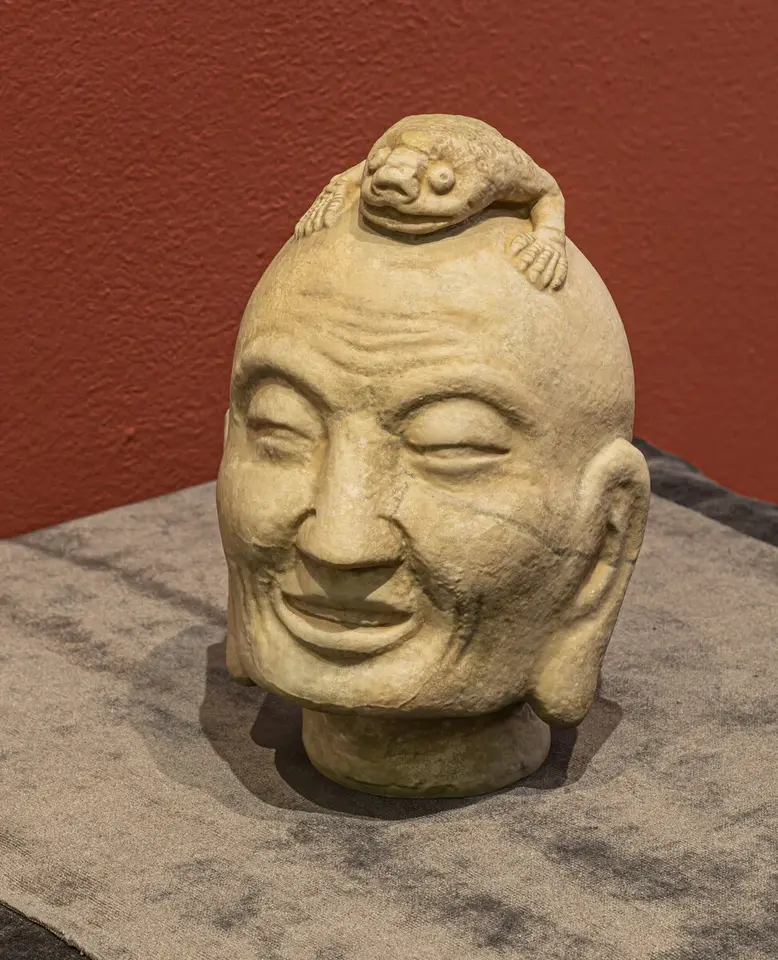
郭象
Guo Xiang (郭象, c. 3rd–4th century), courtesy name Zixuan, was a preeminent philosopher, thinker, and the consummate synthesizer of Neo-Daoist Xuanxue (Dark Learning) during the Western Jin dynasty. Hailing from Luoyang in Henan Commandery, he showed extraordinary philosophical acumen in his youth, studying the Laozi and Zhuangzi while excelling in metaphysical discourse. Grand Defender Wang Yan praised his eloquence as…
Guo Xiang (郭象, c. 3rd–4th century), courtesy name Zixuan, was a preeminent philosopher, thinker, and the consummate synthesizer of Neo-Daoist Xuanxue (Dark Learning) during the Western Jin dynasty. Hailing from Luoyang in Henan Commandery, he showed extraordinary philosophical acumen in his youth, studying the Laozi and Zhuangzi while excelling in metaphysical discourse. Grand Defender Wang Yan praised his eloquence as resembling a torrential river that cascades without ceasing, an expression that inspired the classical Chinese idiom for uninhibited eloquence. In his earlier years, Guo Xiang repeatedly declined provincial summons, devoting himself to private scholarship. Entering the civil service later in life, he served as Attendant to the Minister over the Masses, Gentleman of the Yellow Gate, and ultimately Senior Clerk to Sima Yue, Prince of Donghai and Grand Tutor, wielding immense administrative power during the late Western Jin. Developing and expanding the unfinished scholarship of Xiang Xiu, Guo Xiang edited, abridged, and annotated the Zhuangzi into its definitive thirty-three-chapter recension, creating the standard commentary that endured for two millennia. Systematically introducing the ontology of solitary self-transformation (duhua), the ethical reconciliation of moral status and spontaneous nature (mingjiao as ziran), and the epistemology of dark unity transcending phenomenal traces, Guo Xiang brought medieval Chinese ontology to its zenith.
Born into a cultured gentry household in Luoyang, nurtured in the intellectual traditions of Zhengshi Xuanxue.
Dedicated himself to the Daodejing and Zhuangzi, declining official appointments and gaining renown in Luoyang salon debates.
Collected and collated ancient manuscripts of the Zhuangzi, synthesizing Xiang Xiu's draft notes into a comprehensive theoretical work.
Concluded his reclusion to accept civil office, serving successively as Attendant in the Ministry of Education and Gentleman of the Yellow Gate.
Deepened his philosophy of natural capacity and yielding to circumstance during the turmoil of the War of the Eight Princes, finalizing his Zhuangzi Commentary.
Recruited by Sima Yue, Prince of Donghai and Grand Tutor, to manage confidential military and administrative correspondence as Senior Clerk.
Exercised paramount ministerial authority within Sima Yue's headquarters, drawing sharp censure from detached literati who criticized his involvement in power politics.
Passed away from illness in Luoyang amid catastrophic military disasters shortly before the collapse of Western Jin.
Guo Xiang was born in Luoyang, the political and cultural capital of the Western Jin dynasty. During his youth, the intellectual landscape of central China was shaped by the legacy of early Xuanxue philosophers He Yan and Wang Bi, as well as the non-conformist ethos of the Seven Sages of the Bamboo Grove. Born into an educated literati family, Guo Xiang displayed exceptional logical rigor and intellectual independence from an early age. He immersed himself in the Book of Changes and Daodejing, developing a lifelong dedication to the sweeping philosophical prose of the Zhuangzi.
In the vibrant salon culture of the imperial capital, Guo Xiang quickly distinguished himself through rigorous dialectic and penetrating conceptual analysis. Wang Yan, the foremost arbiter of metaphysical discourse and Grand Defender of the realm, was profoundly impressed by Guo Xiang's ability to unravel complex philosophical paradoxes. Wang Yan famously observed that listening to Guo Xiang speak was like witnessing a hanging river pouring forth its waters in an inexhaustible torrent. This remark became the historical source of the idiom describing fluent, unstoppable eloquence.
On another memorable occasion, Pei Xia, a scholar celebrated for brilliant dialectical skill, engaged Guo Xiang in a public debate before a distinguished gathering of ministers and literati. Guo Xiang maintained unwavering logical coherence, dismantling his opponent's premises step by step until Pei Xia was left entirely without rebuttal. The assembly of aristocrats and scholars erupted in unanimous admiration. Despite this widespread acclaim and repeated invitations from provincial and commandery governors, the young Guo Xiang steadfastly refused official appointments, preferring to study and write in scholarly seclusion.
During the Taikang and Yuankang eras, intellectual interest in Daoist classics reached a new peak. However, contemporary editions of the Zhuangzi were severely fragmented and corrupted. Dynastic bibliographies such as the Han Shu recorded fifty-two chapters of the Zhuangzi, which had absorbed numerous late Warring States and Han-dynasty interpolations regarding yin-yang cosmology, esoteric alchemy, and agriculturalist treatises. The resulting inconsistencies obscured the core philosophy of the ancient sage.
Prior to Guo Xiang, the Bamboo Grove thinker Xiang Xiu had composed an innovative commentary that sought to harmonize Daoist thought with contemporary metaphysics. However, Xiang Xiu died before completing his work, leaving an unfinished manuscript that circulated in corrupt copies. Recognizing the urgent necessity of restoring the authentic text, Guo Xiang embarked on a comprehensive textual and philosophical reconstruction. He collected diverse copies of the fifty-two-chapter recension, applying rigorous philological standards to excise nineteen chapters of spurious and incoherent material.
Abridging the work to thirty-three coherent chapters, Guo Xiang used Xiang Xiu's draft notes as a springboard while incorporating his own original ontological framework. He supplied missing commentaries for the Autumn Floods and Supreme Joy chapters, revised the Horse's Hoofs chapter, and polished the prose throughout. Although later writers in the Shishuo Xinyu accused Guo Xiang of plagiarizing Xiang Xiu, prominent scholars from Lu Deming to modern historians have recognized that Guo Xiang absorbed earlier drafts to construct a fully autonomous, groundbreaking philosophical system.
During the Yuankang era, the Western Jin state descended into violent factional warfare driven by palace cabals and the murderous ambitions of consort clans. The prolonged conflict known as the War of the Eight Princes devastated central China, turning Luoyang into an embattled city. Concluding his period of scholarly reclusion, Guo Xiang entered administrative service to assist in imperial governance.
He initially served as Attendant in the Ministry of Education before advancing to Gentleman of the Yellow Gate within the Palace Secretariat, an office responsible for drafting imperial edicts and reviewing memorials. In 307, the first year of the Yongjia era, Sima Yue, Prince of Donghai, emerged victorious from the civil war and assumed the office of Grand Tutor, taking control of central administration. Recognizing Guo Xiang's intellectual stature and pragmatic acumen, Sima Yue appointed him Senior Clerk in his headquarters. In this post, Guo Xiang managed confidential state papers, official commissions, and administrative policies, becoming the principal civilian advisor to the de facto ruler of Western Jin.
Guo Xiang's transition from secluded scholar to powerful administrator created sharp tension with contemporary literati conventions. The Western Jin gentry cultivated a culture of detached nonchalance, disdaining administrative duties and viewing the pursuit of political authority as vulgar. In contrast, Guo Xiang governed with energetic purpose, enforcing administrative discipline within Sima Yue's administration.
Historical chronicles record that Guo Xiang exercised paramount authority, his influence permeating inner and outer courts. This active engagement provoked bitter resentment among the capital's aristocratic literati, who accused him of hypocrisy for preaching the detachment of the Zhuangzi while wielding ministerial power. The Book of Jin noted that high society turned away from him in disapproval. Yet Guo Xiang remained unperturbed, having articulated a philosophy of inner transcendence in his writings: a true sage could participate fully in court governance while maintaining internal spiritual freedom, proving that the halls of state and the mountain forests were fundamentally one.
During the late Yongjia era, the military defenses of Western Jin collapsed before the northern nomadic confederations of Han-Zhao led by Liu Yuan and Shi Le. Trapped in a besieged capital and crippled by mutual suspicion with Emperor Huai, Sima Yue marched his primary army out of Luoyang in 310, only to die of illness and grief in 311. His retreating column of over one hundred thousand soldiers and courtiers was subsequently surrounded and annihilated by Shi Le's cavalry at Ningpingcheng.
Remaining in Luoyang, Guo Xiang witnessed the ruin of his society and the execution of many colleagues. Weakened by advancing age and illness, he passed away in Luoyang around 312, shortly before nomadic forces breached the city walls, captured Emperor Huai, and slaughtered thirty thousand imperial subjects. While the Western Jin empire perished in the flames of the Yongjia disaster, Guo Xiang's monumental writings were carried southward across the Yangtze by migrating gentry clans, securing his enduring legacy as a giant of medieval Chinese philosophy.
Guo Xiang's editorial work on the Zhuangzi represents one of the most consequential achievements in classical Chinese textual history. The fifty-two-chapter editions recorded in the Han dynasty were burdened with spurious interpolations from esoteric and eclectic schools that diluted the philosophical clarity of the text. Applying keen philosophical discernment, Guo Xiang excised nineteen incoherent chapters, standardizing the work into thirty-three chapters divided into seven Inner Chapters, fifteen Outer Chapters, and eleven Miscellaneous Chapters. This editorial division was adopted universally across East Asia, establishing the canonical foundation for all subsequent editions, including Guo Qingfan's Qing-dynasty Zhuangzi Jishi.
Guo Xiang's primary philosophical breakthrough was his doctrine of solitary self-transformation (duhua), which resolved the protracted ontological debate between the early Xuanxue school of Non-Being (guizhi) and Pei Wei's school of Being (chongyou). Overcoming both positions, Guo Xiang formulated the radical proposition that non-being, being truly nothing, cannot generate being, nor can being produce itself out of nothing before it exists. Consequently, all things in the universe emerge spontaneously and independently out of their own nature. Rejecting the existence of a transcendent Creator, supreme deity, or metaphysical prime mover, Guo Xiang established a thoroughgoing naturalist ontology asserting that all entities exist in uncaused, unhindered self-generation.
During the Western Jin, the conflict between Confucian institutional norms (mingjiao) and Daoist individual spontaneity (ziran) caused deep societal alienation. Radical thinkers such as Ji Kang and Ruan Ji had rejected institutional norms in favor of untamed nature. Guo Xiang bridged this chasm by arguing that spontaneous nature does not reside outside human society, but is realized directly through social institutions. He asserted that human societal hierarchies, moral duties, and political roles are natural outgrowths of human coexistence. By demonstrating that moral order is inherently natural, Guo Xiang provided a profound metaphysical justification for social responsibility within a Daoist framework.
In his ethical and existential philosophy, Guo Xiang introduced the theory of natural capacity and endowment (xingfen). He posited that nature endows every individual and living creature with a unique, unalterable measure of physical capacity, cognitive talent, and life circumstance. In his commentary on the Carefree Wandering chapter, he argued that genuine freedom does not require all beings to emulate the giant Peng bird soaring ninety thousand leagues into the sky. A tiny quail hopping among the bushes achieves the exact same state of absolute spiritual fulfillment, provided both fulfill their inherent natures without futile envy of external conditions. This doctrine provided a resilient spiritual sanctuary of contentment and acceptance amid chaotic times.
In his epistemological and political philosophy, Guo Xiang drew a vital distinction between phenomenal traces (ji) and that which leaves the traces (suoyi ji). The traces represent the external laws, ritual institutions, and historical actions implemented by ancient sages, whereas that which leaves the traces denotes the formless, tranquil wisdom of the sage acting in harmony with the cosmos. Criticizing pedants who blindly venerated historical rules while forgetting the underlying spirit, Guo Xiang advocated for forgetting traces to unite directly with the cosmic source. This enabled him to champion an ideal of governance where the sovereign practices non-action by accommodating the natural self-activity of his subjects.
Beyond his monumental Zhuangzi Commentary, Guo Xiang authored an extensive body of philosophical and classical scholarship. Dynastic bibliographies record his Lunyu Tilüe (Outline of the Analects) in two fascicles and Lunyu Yin in one fascicle, fragments of which were preserved in Huang Kan's Lunyu Yishu, illustrating his application of Xuanxue principles to Confucian canonical texts. He also composed a commentary on the Daodejing preserved in the Daoist Canon, twelve fascicles of commemorative essays and philosophical treatises, and a collected literary work in five fascicles, confirming his stature as a comprehensive master of both Confucian and Daoist traditions.
FIGURES ASSOCIATED WITH THIS DYNASTY