吴世璠
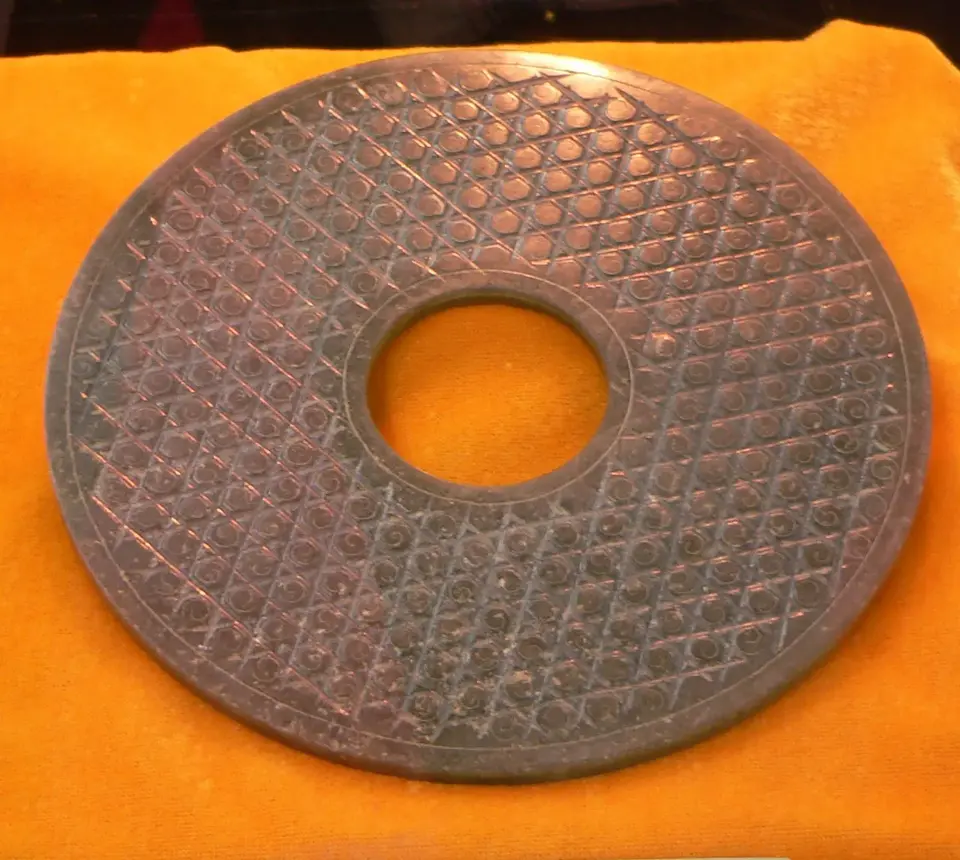
Museum artifact / seal / rubbing (Wu Shifan)
Image creditsWikimedia Commons contributor · CC BY-SA 3.0Image source

Historical figure

Wu Shifan (吴世璠)

吴世璠

Wu Shifan (吴世璠, ?–1681) was a native of Gaizhou in Liaodong. He was the second and final emperor of the insurgent Wu Zhou regime during the Revolt of the Three Feudatories, the grandson of Wu Sangui, and the son of Wu Yingxiong. In 1673, when Wu Sangui launched his anti-Qing rebellion in Yunnan, Wu Yingxiong was executed in Beijing as a hostage. Wu Shifan was escorted secretly through warzones to Kunming. In March 1678, Wu…

Qing Dynasty

PROFILE

Wu Shifan (吴世璠, ?–1681) was a native of Gaizhou in Liaodong. He was the second and final emperor of the insurgent Wu Zhou regime during the Revolt of the Three Feudatories, the grandson of Wu Sangui, and the son of Wu Yingxiong. In 1673, when Wu Sangui launched his anti-Qing rebellion in Yunnan, Wu Yingxiong was executed in Beijing as a hostage. Wu Shifan was escorted secretly through warzones to Kunming. In March 1678, Wu Sangui declared himself Emperor of the Great Zhou in Hengzhou, creating Wu Shifan Imperial Grandson. Following Wu Sangui death in August 1678, the young Wu Shifan ascended the throne in Guiyang, adopting the reign title Honghua. Wu Shifan inherited a collapsing regime. Imperial field armies under Princes Yolo and Tu Hai mounted coordinated counter-offensives, liberating Hunan, Jiangxi, and Guangxi. In 1680, imperial columns broke into Guizhou, compelling Wu Shifan and his father-in-law Guo Zhuangtu to retreat into their final bastion at Kunming. In early 1681, Qing generals Zhao Liangdong, Laita, and Janggtai encircled Kunming. Besieged for months until food was exhausted, the garrison mutinied. On December 7, 1681, Qing assault columns breached the northern battlements. Wu Shifan committed suicide with his sword inside the Wuhuashan palace at age under twenty, terminating the eight-year Revolt of the Three Feudatories.

Native Place
Gaizhou, Liaodong (Modern Gaizhou, Liaoning)
Dynasty
Qing Dynasty
Death Date
1681 (Twentieth Year of Kangxi)
Highest Identity
Second Emperor of the Wu Zhou Dynasty (Reign Title Honghua)
Accurate Identity Positioning
Final Sovereign of the Wu Zhou Regime during the Revolt of the Three Feudatories, Grandson of Wu Sangui, Son of Wu Yingxiong

LIFE TIMELINE

Relationship graph

BIOGRAPHY

Chronology

  • 1674 (Thirteenth Year of the Kangxi Reign) | Ordeal in Capital | Escaped to Yunnan following the execution of his father Wu Yingxiong in Beijing.
  • 1678 (Seventeenth Year of the Kangxi Reign - Spring) | Imperial Grandson | Designated Imperial Grandson when Wu Sangui proclaimed the Great Zhou dynasty at Hengzhou.
  • 1678 (Seventeenth Year of the Kangxi Reign - Winter) | Accession in Guiyang | Ascended the throne in Guiyang following Wu Sangui death, adopting the reign era Honghua.
  • 1680 (Nineteenth Year of the Kangxi Reign) | Retreat to Kunming | Evacuated Guizhou ahead of converging Qing armies, retreating to the Yunnan capital of Kunming.
  • 1681 (Twentieth Year of the Kangxi Reign - Spring) | Siege of Kunming | Encircled in Kunming by three Qing field armies under General Zhao Liangdong.
  • 1681 (Twentieth Year of the Kangxi Reign - Winter) | Breach and Suicide | Committed suicide by his sword as imperial troops breached the city gates, ending the rebellion.

Life and Career

Hostage Heritage and Designation as Imperial Heir

Wu Shifan was born in the early Kangxi reign as the grandson of Wu Sangui, Prince of Pingxi. His father, Wu Yingxiong, resided in the capital of Beijing with imperial princesses as a political hostage. In November 1673, Wu Sangui executed the Yunnan governor, proclaiming rebellion under the slogan of reviving the Ming Dynasty. In April 1674, to display resolve, the Kangxi Emperor ordered the execution of Wu Yingxiong.

Being an infant son by a secondary concubine residing in Jiangnan, Wu Shifan was smuggled across military lines by loyal officers, traversing thousands of miles to reach Wu Sangui headquarters in Kunming. In Kunming, Wu Shifan was raised under the protection of Wu Sangui and Empress Zhang, eventually marrying the daughter of senior general Guo Zhuangtu.

In March 1678, facing military stalemate in central China, Wu Sangui proclaimed himself Emperor of the Great Zhou at Hengzhou in Hunan, adopting the reign title Zhaowu. Having lost his eldest son, Wu Sangui issued an imperial decree designating Wu Shifan as Imperial Grandson, establishing him as legal heir to the insurgent throne.

Succession at Guiyang and Encirclement

On October 2, 1678, after reigning for only five months, Wu Sangui died of dysentery at his Hengzhou headquarters at age sixty-seven. Generals Hu Guozhu and Guo Zhuangtu concealed the death, escorting the imperial casket westward into Guizhou.

In November 1678, the young Wu Shifan was enthroned at Guiyang, adopting the reign title Honghua. He appointed his father-in-law Guo Zhuangtu as Grand Secretary directing central affairs. However, the Wu Zhou regime faced imminent destruction. The Kangxi Emperor deployed elite Manchu Banner forces and Green Standard field armies under Prince Yolo and General Tu Hai, executing a synchronized counter-offensive across southern China.

Internally, the rebel leadership splintered. Guo Zhuangtu monopolized civilian governance and hoarded military funds in Guiyang, alienating veteran front-line commanders like Hu Guozhu, Wu Guogui, and Ma Bao. In 1679, Qing divisions recaptured Yuezhou and Hengzhou, precipitating the collapse of rebel lines in Hunan. In early 1680, imperial columns forced the mountain passes of Guizhou. Abandoning Guiyang, Wu Shifan and Guo Zhuangtu fled across the Wumeng Mountains into Yunnan, retreating into Kunming.

The Last Stand at Kunming and Suicide

In Kunming, the rebellion entered its terminal phase. The Qing court mobilized three field armies into Yunnan: General Zhao Liangdong advanced south from Sichuan, General Laita marched from Guangxi, and Prince Janggtai crossed from Guizhou. In early 1681, over fifty thousand imperial troops invested Kunming.

Imperial forces constructed siege lines around the perimeter, blockading food and supplies for months. Kunming was reduced to horrific famine; military horses, saddles, leather armor, and tree bark were consumed, culminating in instances of cannibalism. Rebel discipline evaporated, and senior officers opened secret negotiations with the besiegers.

On December 7, 1681, Qing forces launched a coordinated general assault. General Zhao Liangdong scaled the ramparts of the northern gate, while local defenders surrendered the gates. Imperial shock troops flooded the streets. Seeing that all was lost and refusing to suffer execution in Beijing, Wu Shifan entered the throne room of his palace on Mount Wuhua and slit his throat with his sword at age under twenty. Guo Zhuangtu also committed suicide.

Imperial commanders severed Wu Shifan head, transporting it alongside the exhumed remains of Wu Sangui to Beijing, where they were exhibited at the marketplace. Surviving male relatives were executed, and the eight-year Revolt of the Three Feudatories was extinguished, consolidating unified Qing rule across China.
Interpersonal Connections

  • Grandfather: Wu Sangui (Prince of Pingxi and founding emperor of the Wu Zhou regime)
  • Father: Wu Yingxiong (Wu Sangui eldest son, executed in Beijing in 1674)
  • Father-in-Law and Grand Secretary: Guo Zhuangtu (Senior minister of Wu Zhou who dominated the court)
  • Conquering Imperial General: Zhao Liangdong (Qing General for Pacifying the Distant Regions who breached Kunming)

Historical Evaluations

  • The Draft History of Qing (Qing Shi Gao), Biography of Wu Sangui, recorded: "Wu Shifan was weak while Guo Zhuangtu dominated the court, breeding internal discord. When imperial armies invested Kunming, supplies failed; Zhao Liangdong broke the gates, Shifan committed suicide, and the Wu clan was extinguished, bringing peace to the four seas."
  • Wei Yuan in Sheng Wu Ji noted: "Wu Shifan was an adolescent youth who received his crown amid catastrophic defeat, possessing merely a hollow title. Guo Zhuangtu tyranny alienated the army, ensuring Kunming fell swiftly. Yet in taking his own life on Mount Wuhua, Shifan preserved something of tragic dignity."
  • Historian Xiao Yishan commented: "Wu Shifan assumed leadership over Wu Sangui broken pieces at a tender age, retreating into Yunnan merely to delay the inevitable. Yet in choosing suicide over humiliating submission when the citadel fell, he displayed personal fortitude."

Related Entries

  • Wu Sangui
  • Zhao Liangdong
  • Guo Zhuangtu

FIGURES ASSOCIATED WITH THIS DYNASTY

Bibliography

  • Zhao Erxun et al., Draft History of Qing (Qing Shi Gao), Volume 474, Biographies 261: Biography of Wu Sangui and Wu Shifan.
  • Wei Yuan, Sheng Wu Ji (Military History of the Sacred Dynasty), Volume 2: Kangxi Pacification of the Three Feudatories.
  • Jiang Liangqi, Donghua Lu (Records from the Donghua Gate), Kangxi Reign, Volumes 20–25.