Humble Birth
Born into poverty in Chiping, Bozhou; orphaned at an early age but devoted himself to classical learning.
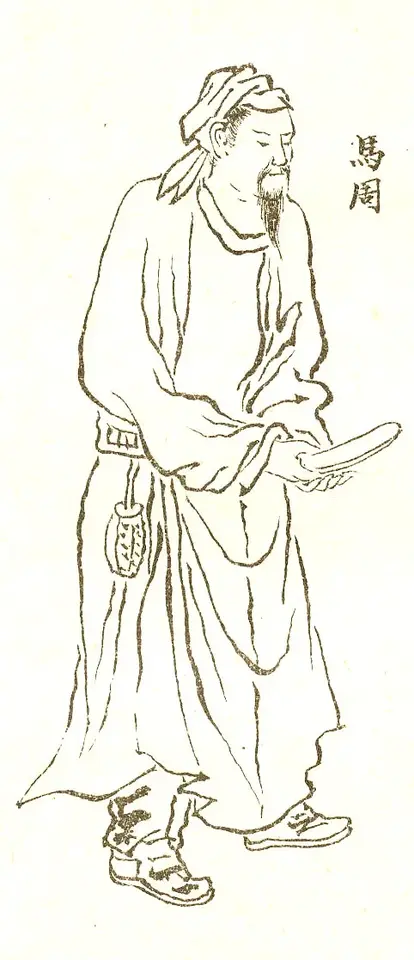
马周
Ma Zhou (马周, 601–648), courtesy name Binwang (宾王), was an eminent chancellor and statesman of the early Tang dynasty, hailing from Chiping in Bozhou (modern Chiping, Shandong). Born into destitute poverty and orphaned in early childhood, he was celebrated for his uninhibited temperament and passion for wine, yet he studied with unyielding diligence, acquiring profound mastery of the Classic of Poetry and the *Zuo…
Ma Zhou (马周, 601–648), courtesy name Binwang (宾王), was an eminent chancellor and statesman of the early Tang dynasty, hailing from Chiping in Bozhou (modern Chiping, Shandong). Born into destitute poverty and orphaned in early childhood, he was celebrated for his uninhibited temperament and passion for wine, yet he studied with unyielding diligence, acquiring profound mastery of the Classic of Poetry and the Zuo Tradition. Arriving in Chang'an without resources, he found shelter as a retainer in the household of Middle Guard General Chang He. In 631, when Emperor Taizong commanded all civil and military officials to submit sealed memorials evaluating imperial administration, Ma Zhou drafted a comprehensive twenty-point reform proposal on Chang He's behalf. Struck by its penetrating insight, Emperor Taizong dispatched four successive couriers in a single day to summon Ma Zhou to court, immediately inducting him into the Chancellery. Ma Zhou subsequently rose rapidly through the bureaucratic hierarchy, serving as Investigating Censor, Palace Remonstrance Official, Secretariat Drafter, and Vice President of the Censorate, before being elevated to Director of the Secretariat in 644. Throughout his chancellorship, Ma Zhou offered candid remonstrances against hereditary enfeoffment, advocated fiscal frugality, and elevated the status of regional magistrates; in urban governance, he established the Chang'an street-drum curfew and formulated the landmark traffic regulation requiring vehicles and pedestrians to enter city gates by the left and exit by the right. His institutional innovations served as vital pillars of the peaceful and prosperous Reign of Zhenguan.
Born into poverty in Chiping, Bozhou; orphaned at an early age but devoted himself to classical learning.
Served as Teaching Assistant in Bozhou; reprimanded for excessive drinking, he resigned and traveled through Caozhou and Bianzhou.
Traveled westward through Xinfeng, where he serenely drank wine despite an innkeeper's disdain; lodged with General Chang He in Chang'an.
Drafted a brilliant twenty-point memorial on statecraft for Chang He; Emperor Taizong summoned him with four consecutive couriers and appointed him to the Chancellery.
Appointed Investigating Censor; performed regional inspection tours with distinction, promoted to Attendant Censor and Grandee for Closing Court.
Submitted his famous Memorial on Contemporary Governance, advising Taizong on imperial family harmony, opposing hereditary enfeoffment, and promoted to Palace Remonstrance Official.
Promoted to Vice President of the Censorate and Policy Advisor, concurrently serving as Chief of Staff to Prince of Jin Li Zhi.
Appointed Director of the Secretariat and enfeoffed as Duke of Gaotang County; assisted Crown Prince Li Zhi in overseeing the rearguard at Dingzhou.
Concurrently supervised the Ministry of Personnel, establishing the standardized winter-to-spring official selection cycle.
Burned all his personal draft memorials before dying of illness at age forty-eight; posthumously granted Grand Commander of Youzhou and buried at Zhaoling.
Ma Zhou traced his distant ancestry to the prominent Ma lineage of Fufeng, though his branch had long resided in Chiping of Bozhou. Losing both parents during his early childhood, he grew up in severe deprivation. Despite his poverty, Ma Zhou possessed extraordinary intellectual capacity and an unquenchable thirst for knowledge. He studied relentlessly, achieving deep command over the Classic of Poetry, the Zuo Tradition, and classical military treatises. In his young adulthood, he was uninhibited, fond of heavy drinking, and indifferent to petty social conventions, which earned him the disdain of conservative local villagers.
During the Wude era of Emperor Gaozu, local magistrates appointed Ma Zhou as Teaching Assistant in the Bozhou academy to instruct students in the Confucian classics. However, chafing under bureaucratic monotony, Ma Zhou drank heavily every day and neglected his administrative duties. Da Xi Shu, the Regional Inspector of Bozhou, repeatedly censured him with harsh reproaches. Offended by this public humiliation, Ma Zhou abruptly resigned his post and departed. Wandering through Caozhou and Bianzhou, he faced continued condescension from Cui Xianshou, Magistrate of Junyi. Embittered by the rigid social prejudice of provincial elites, Ma Zhou determined to travel west to the imperial capital of Chang'an to seek his fortune.
On his journey westward, Ma Zhou lodged at a tavern in Xinfeng. The mercenary innkeeper, observing his ragged clothes and travel-worn appearance, fawned over wealthy traveling merchants while treating Ma Zhou with contemptuous coldness. Unperturbed by this slight, Ma Zhou casually ordered a large quantity of wine and drank leisurely by himself, radiating dignified composure that left the tavern master astonished and ashamed. Upon reaching Chang'an, having exhausted his funds, Ma Zhou was introduced to Middle Guard General Chang He and was accepted as a resident houseguest in the general's private residence.
In the fifth year of the Zhenguan era (631), Emperor Taizong issued an imperial edict instructing all civil and military officials to submit sealed memorials evaluating administrative successes and deficiencies, soliciting concrete recommendations for effective statecraft. General Chang He, a valiant soldier trained solely in martial strategy, was incapable of classical composition and turned to his resident scholar Ma Zhou for guidance. Recognizing the supreme opportunity of his life, Ma Zhou drafted a comprehensive memorial on Chang He's behalf, articulating more than twenty practical policies covering imperial ethics, judicial prudence, fiscal moderation, and bureaucratic recruitment.
When Emperor Taizong examined the memorial, he was astounded by its incisive analysis and profound strategic vision. The proposals addressed the most difficult governance dilemmas confronting the young dynasty with unmatched clarity. Knowing that Chang He lacked literary and philosophical sophistication, Taizong summoned the general to court to question him. Chang He truthfully confessed: "This memorial was not written by your servant, but by Ma Zhou, a destitute scholar lodging in my residence. Though impoverished, whenever he discusses state affairs with your servant, he invariably places loyalty to the sovereign and the welfare of the people above all else."
Taizong was deeply thrilled by the discovery of this hidden talent and dispatched an imperial courier on horseback to summon Ma Zhou to the palace. Because of his intense eagerness to meet this gifted thinker, Taizong dispatched four successive messengers in rapid succession to hasten his arrival. When Ma Zhou entered the audience hall, Taizong engaged him in deep conversation on historical governance and administrative reform. Delighted by his encyclopedic memory, swift intellect, and balanced judgment, Taizong immediately appointed him to a probationary post in the Chancellery and awarded Chang He three hundred bolts of silk for discovering and recommending a pillar of the state.
Following his induction into imperial service, Ma Zhou rapidly distinguished himself through administrative brilliance. In 632, he was formally appointed as an Investigating Censor. Charged with conducting regional inspection tours across various circuits, he uncovered local malfeasance, addressed civilian grievances, and submitted reports that precisely mirrored Taizong's administrative ideals. He was swiftly promoted to Attendant Censor and awarded the prestigious rank of Grandee for Closing Court.
In 637, observing signs of emerging luxury and dangerous proposals to revive feudalism, Ma Zhou presented his famous Memorial on Contemporary Governance. Offering a sweeping historical analysis of dynastic stability, he urged Taizong to remain steadfast in the frugal principles of early Zhenguan. Profoundly moved by his sincere counsel, Taizong elevated him to Palace Remonstrance Official in the Chancellery. The following year, Ma Zhou was transferred to the position of Secretariat Drafter in the Secretariat.
In 641, Ma Zhou was promoted to Vice President of the Censorate and Policy Advisor, concurrently appointed as Chief of Staff to Prince of Jin Li Zhi. Taizong placed immense faith in Li Zhi and deliberately chose Ma Zhou to mentor him. In 643, when Crown Prince Li Chengqian was deposed for conspiracy and Li Zhi was installed as Crown Prince, Ma Zhou was elevated to Deputy Director of the Secretariat and Junior Mentor of the Crown Prince. Taizong ordered Ma Zhou, Liu Ji, Cen Wenben, and Chu Suiliang to visit the Eastern Palace on alternate days to instruct the heir apparent in statecraft and classical wisdom.
In the eighth month of 644, Ma Zhou reached the summit of his career when he was appointed Director of the Secretariat, entering the ranks of chancellors with the noble title of Duke of Gaotang County. Serving concurrently in the imperial cabinet and the Crown Prince's administrative staff, Ma Zhou managed complex civil and military affairs with exceptional precision, fairness, and tireless diligence, winning the universal esteem of the bureaucracy.
In the winter of that year, Emperor Taizong launched his personal campaign against Goguryeo in Liaodong, stationing Crown Prince Li Zhi at Dingzhou to manage military logistics and rear supply lines. Taizong specifically entrusted Ma Zhou, alongside Minister of Works Gao Shilian and Chancellor Liu Ji, with the critical responsibility of staying behind to assist the Crown Prince. For over a year, Ma Zhou coordinated the transport of grain and weapons, secured domestic peace across northern China, and maintained the operational integrity of the empire's logistical network.
Upon Taizong's victorious return in 645, recognizing the chaotic state of bureaucratic recruitment, the Emperor commanded Ma Zhou to concurrently supervise the Ministry of Personnel as Director of the Secretariat. At the time, official examinations and evaluations were conducted irregularly throughout the four seasons, placing immense burdens on administrative bureaus and fostering corruption. Ma Zhou submitted a memorial instituting a strict operational calendar: civil recruitment was fixed to commence in the eleventh month and conclude by the third month of the following spring, leaving local officials and examination candidates free to attend to agricultural and administrative duties for the rest of the year. This institutional reform permanently rationalized the Tang civil selection system.
In 647, after years of unrelenting labor, Ma Zhou fell severely ill with diabetes. Deeply sorrowed by the failing health of his trusted chancellor, Emperor Taizong awarded him the honorary rank of Silver and Blue Grandee of Glorious Happiness. While vacationing at Cuiwei Palace, Taizong commissioned the construction of a scenic country residence near Chang'an for Ma Zhou's convalescence. Taizong sent imperial physicians daily, shared imperial banquets, and personally compounded herbal medicines for him, while Crown Prince Li Zhi visited his bedside frequently.
Despite imperial care, Ma Zhou's condition deteriorated. In the first month of 648, realizing that his death was imminent, Ma Zhou instructed his family to retrieve all the original drafts of his memorials and remonstrances submitted to Emperor Taizong throughout his lifetime. With his own hands, he threw the entire collection into a brazier, reducing them to ashes. When his distraught family pleaded with him to preserve them, Ma Zhou sighed and declared: "In antiquity, Guan Zhong and Yan Ying publicized the shortcomings of their sovereigns after retiring from court in order to win posthumous fame. Having received boundless grace and trust from the Son of Heaven, how could I ever commit such self-serving vanity!" Shortly thereafter, he passed away at the age of forty-eight.
Grief-stricken by the loss of his premier advisor, Emperor Taizong suspended court audiences in mourning, posthumously granted Ma Zhou the title of Grand Commander of Youzhou, and bestowed funeral accoutrements from the Eastern Park, according him the supreme honor of burial at Zhaoling. Upon his ascension, Emperor Gaozong posthumously elevated him to Vice Director of the Department of State Affairs. In 688, under Empress Wu's reign, Ma Zhou was officially enshrined in Emperor Gaozong's imperial ancestral temple.
Ma Zhou's foremost contribution to Chinese history lies in his profound statecraft memorials submitted in 632 and 637, which provided Emperor Taizong with essential ideological guidance that sustained the Zhenguan era.
First, Ma Zhou possessed the immense courage to address delicate imperial family tensions. Following the Xuanwu Gate Incident, Retired Emperor Gaozu lived in the modest Da'an Palace, while Taizong traveled to Jiucheng Palace during the summer heat. Ma Zhou risked imperial displeasure by candidly pointing out that Da'an Palace was cramped and that leaving the Retired Emperor in the sweltering capital while the reigning monarch enjoyed summer mountain breezes violated filial piety. Rather than taking offense, Taizong recognized Ma Zhou's absolute loyalty, leading directly to the initial architectural planning of Daming Palace to honor his father.
Second, Ma Zhou mounted an unyielding defense against the revival of hereditary feudalism. When Taizong contemplated granting hereditary fiefdoms to imperial princes and meritorious commanders, Ma Zhou cited the historical catastrophes of the Han, Wei, and Jin dynasties. He argued that hereditary privileges guaranteed that unworthy descendants would inherit executive power, oppressing commoners and destabilizing the throne. He urged that princes and generals be granted lavish material wealth, but that political offices be awarded strictly on the basis of verified administrative competence. His compelling arguments convinced Taizong to permanently abandon hereditary enfeoffment.
Furthermore, Ma Zhou cautioned Taizong against indulging imperial favorites, such as the court musician Bai Mingda and the archer Husi Zheng, arguing that entertainers must never be granted political influence. He urged the Emperor to practice personal frugality as in the early years of his reign, citing the frugal governance of Han Emperors Wen and Jing. Written in clear, direct classical prose unencumbered by artificial parallelisms, Ma Zhou's memorials were praised by Chancellor Cen Wenben as models of political insight and persuasive eloquence.
During his tenure as an Attendant Censor, Ma Zhou instituted an enduring system of urban security and timekeeping across the imperial capital of Chang'an. At the time, the sprawling metropolitan city relied on watchmen shouting curfew announcements through the wards, which was inefficient and prone to exploitation by criminals in the vast urban grid.
In 636, Ma Zhou submitted a memorial requesting the installation of street drums along the city's thoroughfares. Emperor Taizong approved the measure, ordering the construction of drum towers along the six principal avenues leading directly to the twelve city gates, synchronized with the great drum tower at Chengtian Gate. Under this system, at the fifth watch of dawn, the morning drums at Chengtian Gate sounded, followed by three thousand thunderous beats across the six avenues, signaling the opening of all palace, city, and ward gates. At dusk, the evening drum sounded eight hundred beats, prompting the immediate closure of all gates and the enforcement of the nightly curfew. This coordinated acoustic system governed the daily rhythm of Chang'an for two centuries and served as a prototype for subsequent imperial capitals in Song and Ming China.
Ma Zhou was also the pioneering architect of standardized urban traffic regulations in classical China. Prior to his administration, vehicles, horses, and pedestrians entered and exited city gates haphazardly, causing severe congestion, accidents, and obstructions to official dispatches.
Drawing upon classical ritual principles and modern organizational efficiency, Ma Zhou formulated the standard rule: "Enter palace and city gates by the left, exit by the right." Formally incorporated into the Tang legal code and preserved in the Six Codes of the Tang Dynasty, this statutory regulation required all civilian and official traffic to adhere strictly to directional separation. By channeling incoming travelers to the left and outgoing traffic to the right, the regulation eliminated dangerous bottlenecks at critical city gates. This protocol quickly expanded across major municipal avenues and imperial highways throughout the empire, establishing the historical origin of the right-hand traffic convention in East Asia.
In administrative recruitment, Ma Zhou championed the vital principle that local governance formed the indispensable foundation of dynastic stability. In his memorials, he declared: "Those who govern the empire must take the people as their root; and to ensure the people live in peace, everything depends upon the regional inspectors and county magistrates." He severely criticized the bureaucratic prejudice that concentrated talented ministers in the central ministries while sending incompetent personnel to provincial posts.
To reform this dysfunction, Ma Zhou introduced three major policy initiatives: first, local magistrates must be selected primarily on the basis of moral integrity and compassion for the peasantry; second, newly appointed local officials must undergo probationary evaluations to confirm their practical executive ability; third, central chancellors and imperial ministers must be recruited predominantly from regional inspectors who had achieved distinguished records in provincial administration. Emperor Taizong adopted these recommendations, establishing an imperial precedent wherein the Emperor personally interviewed and selected regional inspectors, while requiring court officials of the fifth rank and above to each nominate one capable county magistrate under joint accountability. This reform revitalized local governance across the empire.
FIGURES ASSOCIATED WITH THIS DYNASTY