Birth in the Northern Frontier
Born into the hereditary Qihu chieftain house of Xiurong, possessing immense pastoral wealth.
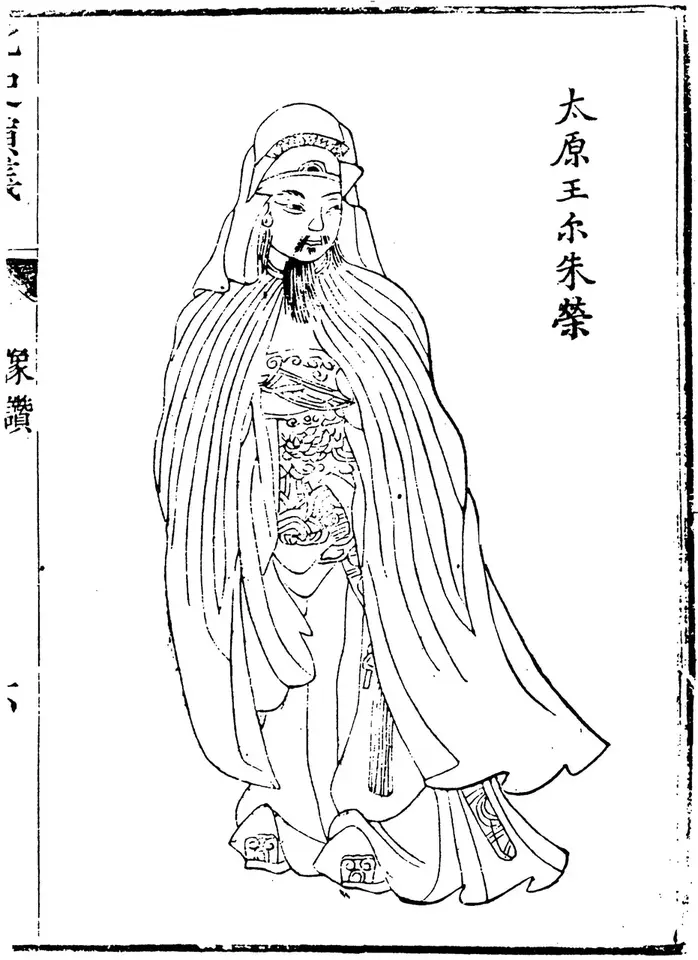
尔朱荣
Erzhu Rong (尔朱荣, 493 – November 1, 530), courtesy name Tianbao, was a prominent tribal chieftain of the Qihu ethnic group, supreme warlord, and military dictator of the late Northern Wei dynasty. Inheriting the hereditary chieftainship of Xiurong in northern Shanxi, he exploited the chaos of the Six Frontier Garrisons Rebellion to gather displaced nomadic warriors and northern elites, rapidly building a formidable cavalry…
Erzhu Rong (尔朱荣, 493 – November 1, 530), courtesy name Tianbao, was a prominent tribal chieftain of the Qihu ethnic group, supreme warlord, and military dictator of the late Northern Wei dynasty. Inheriting the hereditary chieftainship of Xiurong in northern Shanxi, he exploited the chaos of the Six Frontier Garrisons Rebellion to gather displaced nomadic warriors and northern elites, rapidly building a formidable cavalry army based in Jinyang. In 528, following Empress Dowager Hu's poisoning of Emperor Xiaoming, Erzhu marched south under the pretext of avenging the monarch. He enthroned Yuan Ziyou as Emperor Xiaozhuang and engineered the catastrophic Heyin Massacre on the northern banks of the Yellow River, drowning the empress dowager and the infant puppet emperor while putting over two thousand imperial princes, ministers, and courtiers to the sword, completely annihilating the traditional Luoyang bureaucracy. Possessing remarkable tactical genius, Erzhu personally led seven thousand elite horsemen through the Fukou pass to execute a surprise attack against rebel leader Ge Rong's army of hundreds of thousands, capturing Ge Rong and pacifying Hebei in a single stroke. He subsequently expelled the Southern Liang expeditionary force under Chen Qingzhi to recapture Luoyang, while his generals conquered the western and eastern provinces, briefly re-unifying the fractured realm. Elevated to Grand General of the Heavenly Pillar, Grand Chancellor, and Prince of Liang, his tyrannical overreach provoked Emperor Xiaozhuang to orchestrate an ambush in the Mingguang Palace on November 1, 530, where the sovereign personally struck him down at age thirty-eight.
Born into the hereditary Qihu chieftain house of Xiurong, possessing immense pastoral wealth.
Succeeded his father Erzhu Xinxing as First Chieftain, serving as an imperial palace officer.
Mobilized private cavalry upon the outbreak of the Six Garrisons Rebellion, recruiting frontier warriors.
Seized control of Sizhou, establishing independent warlord hegemony centered at Jinyang.
Invaded Luoyang, enthroned Emperor Xiaozhuang, drowned Empress Dowager Hu, and slaughtered the court at Heyin.
Led seven thousand shock cavalry to ambush Ge Rong's massive insurgent army, pacifying the Hebei plain.
Dispatched amphibious shock troops across the Yellow River, crushing Yuan Hao and routing Liang general Chen Qingzhi.
Pacified the Guanzhong region; appointed Grand Chancellor and Grand General of the Heavenly Pillar.
Lured into the palace on false pretexts; slain by Emperor Xiaozhuang in the Mingguang Palace at age thirty-eight.
Erzhu Rong was born in 493 into the foremost aristocratic family of the Qihu tribe, an ethnically distinct frontier population residing along the Erzhu River valley in northern Shanxi. Ever since his ancestor Yuzhen had joined the founding campaigns of Emperor Daowu of Northern Wei, the Erzhu clan had held the hereditary position of First Chieftain of the Region.
Over successive generations under Erzhu Daqin and Erzhu Houzhen, the family accumulated immense pastoral fortunes, with their herds of horses and cattle filling northern river valleys. Erzhu Rong's father, Erzhu Xinxing, presented over ten thousand warhorses and thousands of camels to Emperor Xuanwu, earning prestigious military appointments.
Endowed with commanding stature, pale skin, and an imposing countenance, Erzhu Rong displayed exceptional mastery in horsemanship, tactical terrain assessment, and archery. During seasonal communal hunts, he maintained ruthless military discipline; if a hunter broke formation to chase a stag, Erzhu executed him immediately, cultivating an obedient and battle-hardened tribal following. In 516, upon his father's retirement, Erzhu succeeded as chieftain.
In 523, the frontier exploded into the Six Frontier Garrisons Rebellion as displaced garrisons rebelled against court marginalization. Erzhu Rong recognized that dynastic authority was collapsing. Opening his granaries, he recruited thousands of battle-tested garrison fugitives and attracted seasoned military talents, including Gao Huan, Duan Rong, Dou Tai, and Cai Jun, transforming his tribal retinue into an invincible heavy cavalry force.
By 526, six-garrison rebel detachments ravaged the northern provinces. Erzhu launched a lightning strike to seize Sizhou, driving out the imperial governor and appointing trusted retainers to key prefectures. Unable to suppress him, the court conceded his autonomy, appointing him General of Chariots and Cavalry and Military Commander of Six Northern Provinces, establishing his administrative capital at Jinyang (Taiyuan).
In late 527, dynastic strife erupted between Empress Dowager Hu and her nineteen-year-old son, Emperor Xiaoming. Frustrated by the empress dowager's corrupt favorites, Emperor Xiaoming dispatched secret edicts summoning Erzhu Rong to lead his army toward Luoyang to compel the court's surrender.
Erzhu mobilized immediately, marching southward to Shangdang. However, the conspiracy leaked, and on March 31, 528, Empress Dowager Hu poisoned Emperor Xiaoming in the palace, enthroning a three-year-old imperial child, Yuan Zhao. Denouncing the regicide, Erzhu published an empire-wide manifesto, allied with Prince Changlo Yuan Ziyou, and crossed the Yellow River to proclaim him Emperor Xiaozhuang, marching directly upon the capital.
On May 15, 528, Erzhu's cavalry entered the capital outskirts as defense garrisons defected. Erzhu seized Empress Dowager Hu and the child emperor Yuan Zhao, transporting them to his encampment at Heyin on the northern bank of the Yellow River. Repudiating her tearful entreaties, Erzhu ordered them cast into the turbulent river to drown.
On May 17, Erzhu summoned over two thousand imperial princes, ministers, and civil dignitaries to the Taozhu traveling lodge under the pretext of holding an imperial sacrificial alliance. Once the courtiers assembled before the pavilions, Erzhu's cavalry surrounded the compound. Denouncing the aristocracy as corrupt parasites responsible for dynastic collapse, Erzhu waved his battle flag.
Thousands of Qihu cavalry charged into the unarmed crowd, slashing and trampling the assembled officials. More than one thousand three hundred senior dignitaries, including Prince of Gaoyang Yuan Yong and Chancellor Yuan Qin, were slaughtered within hours, turning the riverbanks crimson.
Erzhu briefly contemplated usurping the throne himself, forcing Censor Zhao Yuantze to draft an abdication decree and attempting four times to cast golden statues to divine Heaven's will. When each casting failed and commanders expressed alarm, Erzhu abandoned the attempt, escorting Emperor Xiaozhuang back into the decimated capital. The Heyin Massacre utterly wiped out the traditional Luoyang nobility, concentrating total political and military supremacy in the hands of the Erzhu military machine.
The slaughter at Heyin provoked mass defections across regional commands, while rebel leader Ge Rong expanded his insurgent coalition in Hebei, proclaiming the Qi state and surrounding the northern capital of Yecheng with hundreds of thousands of troops.
In August 528, Erzhu launched a counteroffensive to relieve Yecheng. Discarding conventional heavy transport, he selected only seven thousand veteran Qihu cavalry, each equipped with two horses, marching through the Fukou mountain pass. Aware that continuous sword-slashing against heavy armor would blunt steel blades, Erzhu ordered every horseman to carry a concealed hardwood truncheon to strike the faces and mounts of enemy combatants.
On October 16, 528, Erzhu's shock cavalry emerged from dense mountain forests like a thunderbolt, piercing the overextended rebel line. In the melee, Erzhu personally charged the enemy headquarters, seizing Ge Rong alive. Deprived of their commander, the insurgent army disintegrated, and more than two hundred thousand rebels surrendered.
Erzhu transported Ge Rong in an iron cage to Luoyang for public execution and distributed the captive families across regional estates. This stunning tactical victory eradicated the most dangerous rebellion in northern China, and Emperor Xiaozhuang rewarded Erzhu with the titles of Grand General and Prince of Taiyuan.
In spring 529, Emperor Wu of Liang sponsored Prince of Beihai Yuan Hao to claim the Northern Wei throne, dispatching southern general Chen Qingzhi with seven thousand white-robed soldiers to invade the north. Exhibiting brilliant maneuver warfare, Chen routed thirty-two northern cities and seized Luoyang in May 529, forcing Emperor Xiaozhuang to flee north to Erzhu's headquarters.
Enraged by the loss of the capital, Erzhu mobilized his northern armies and marched south to the Yellow River, facing Chen Qingzhi's entrenched garrison at the Beizhong fortress. Over eleven assaults, Chen's disciplined defense repelled Erzhu's frontal attacks with heavy losses.
Erzhu then altered his strategy: secretly constructing over a hundred river rafts, he dispatched vanguard commanders Erzhu Zhao and Yang Kan to execute a midnight amphibious crossing downstream at Mengjin. Landing undetected, the northern cavalry overwhelmed Yuan Hao's southern camps. Yuan Hao fled and was slain by local guards in Linying, while Chen Qingzhi's army was caught by summer flash floods in the Songshan mountains and routed, forcing Chen to shave his head and escape disguised as a Buddhist monk. Erzhu restored Emperor Xiaozhuang to Luoyang, confirming his status as the undisputed master of northern China.
Following the recapture of Luoyang, Erzhu dispatched Erzhu Tianguang and Heba Yue to pacify the western provinces, crushing Moqi Chounu and executing rebel prince Yuan Baoyin, restoring nominal unity to Northern Wei.
In early 530, the court invested Erzhu with the highest honors: Grand General of the Heavenly Pillar, Grand Chancellor, Grand Preceptor, and Prince of Liang, with an estate of two hundred thousand households, while his eldest daughter was elevated to Empress. Erzhu ruled the empire from Jinyang; no administrative appointment or law could take effect without his personal seal, while his relatives dominated regional governorships through unbridled extortion.
Emperor Xiaozhuang, a proud and courageous sovereign, refused to remain a helpless puppet. Resenting the slaughter of his brothers at Heyin and fearing eventual usurpation, Xiaozhuang covertly planned Erzhu's assassination alongside loyalist courtiers Yuan Hui, Yang Kan, and Li Yu.
In October 530, Erzhu arrived in Luoyang with his son Erzhu Poti, unconcerned by potential danger. Taking advantage of the empress giving birth to a prince, Xiaozhuang summoned Erzhu to the palace to celebrate the birth of his imperial grandson.
On November 1, 530, Erzhu, Yuan Tianmu, and Erzhu Poti entered the palace and were received in the eastern hall of the Mingguang Palace. As Xiaozhuang sat upon the imperial dais, hidden guards moved behind the curtains. Sensing an ambush, Erzhu sprang forward to seize the emperor. Xiaozhuang instantly drew his imperial sword, plunging the blade directly through Erzhu's chest.
Armored guards led by Lu An rushed from the side chambers, hacking the wounded dictator to death with their sabers. Erzhu Poti and Yuan Tianmu were slain simultaneously. News of Erzhu's demise sparked wild rejoicing in the streets of Luoyang. Although his nephew Erzhu Zhao subsequently stormed Luoyang and murdered the emperor, Gao Huan soon obliterated the clan at the Battle of Hanling, leading directly to the partition of Northern Wei into Eastern and Western Wei.
In May 528, Erzhu Rong executed the infamous Heyin Massacre, drowning the sovereign and slaughtering more than two thousand imperial clan members and high officials on the banks of the Yellow River.
This brutal purge systematically extinguished the traditional civil aristocracy that had sustained Northern Wei since the Sinicization reforms of Emperor Xiaowen. By transferring absolute executive authority to frontier military factions, the massacre irreversibly transformed the socio-political structure of medieval northern China, accelerating the collapse of the unified Northern Wei state.
In autumn 528, confronted by Ge Rong's army of hundreds of thousands besieging Yecheng, Erzhu achieved one of the most stunning tactical victories in Chinese military history. Leading only seven thousand elite horsemen through the Fukou pass, he pioneered shock tactics using wooden truncheons to avoid blade degradation.
His lightning thrust pierced the insurgent perimeter, capturing Ge Rong alive and prompting the immediate surrender of over two hundred thousand rebels. This victory liquidated the primary rebel threat in northern China and preserved the dynastic framework of the northern regimes.
FIGURES ASSOCIATED WITH THIS DYNASTY