Biographical Narrative
Renunciation in Eastern Zhejiang and Mastery of Diverse Learning
Shi Huijiao was born in 497 into the prominent Chen gentry clan in Shangyu County, Kuaiji Commandery (present-day Shangyu District, Shaoxing, Zhejiang). Since the Han, Wei, and Eastern Jin dynasties, Kuaiji had stood as a paramount cultural center of Jiangnan, renowned for philosophical discourse, literary salons, and thriving Buddhist communities. The serene mountains and ancient monasteries along the Cao'e River provided young Huijiao with a rich intellectual and spiritual environment.
Gifted with a perceptive, contemplative intellect and a detached, transcendent disposition, Huijiao felt an intuitive resonance with Buddhist compassion and monastic discipline during childhood. Upon reaching youth, he renounced secular attachments, received full monastic ordination, and formally committed his life to the Sangha.
Following ordination, Huijiao exhibited extraordinary scholarly breadth. Recognizing that propagating the Dharma required an intimate understanding of China's indigenous intellectual heritage, he not only immersed himself in the Tripitaka across both Mahayana and Hinayana traditions, but also read voraciously in the Confucian Five Classics, the pre-Qin masters, the Changes, Neo-Daoist metaphysics, dynastic histories, gazetteers, and philological works.
Within Buddhist scholasticism, Huijiao formed a deep affinity for the Mahāparinirvāṇa Sūtra, which had enjoyed enormous popularity in southern China since the Eastern Jin and Liu Song dynasties. He deeply analyzed the universality of Buddha-nature and the Four Virtues of Nirvāṇa (Permanence, Joy, Self, and Purity), while championing the Mahayana bodhisattva precepts found in the Brahmajāla Sūtra. In theoretical debates, Huijiao adhered firmly to the principle of "relying on the meaning rather than the letter," sharply criticizing dogmatic scholars who clung blindly to textual literalism as well as formalists who obsessed over empty ritual appearances.
Residence at Jiaxiang Monastery and Devotion to Teaching and Writing
During the Tianjian era of the Southern Liang, the youthful and accomplished Huijiao took up formal residence at Jiaxiang Monastery, an eminent Buddhist center in Kuaiji. For the next thirty years, Jiaxiang Monastery served as his primary sanctuary for doctrinal research, preaching, and historical writing.
At Jiaxiang Monastery, Huijiao established an unbending annual schedule attuned to the natural rhythm of the four seasons: "preaching the Dharma in spring and summer, and composing treatises in autumn and winter." Whenever spring breezes arrived and summer skies cleared, traveling monks, local officials, and literati converged on the monastery. Huijiao would ascend the high rostrum to elucidate Mahayana doctrines of emptiness, suchness, and compassionate altruism. His eloquence flowed like running water, inspiring deep awakening among his listeners.
When autumn winds turned cold and winter snow blanketed the mountain slopes, Huijiao closed his doors to outside guests, secluding himself in his humble meditation cell to write by the flicker of oil lamps.
During this period, he visited Hongpu Monastery in Kuaiji to examine its vast archival collection of Buddhist manuscripts and rare historical treatises brought south during earlier migrations. Drawing upon his lectures and research, Huijiao authored the ten-volume Commentary on the Meaning of the Nirvāṇa Sūtra and the three-volume Commentary on the Brahmajāla Sūtra. Through these works, he explained difficult doctrinal passages in refined, lucid Chinese prose, playing a crucial role in advancing Nirvāṇa scholasticism and establishing the practice of Mahayana bodhisattva precepts in the late Southern Dynasties.
Resisting Degeneracy and Resolving to Write History
When Emperor Wu of Liang ascended the throne, he promoted Buddhism with imperial fervor, commissioning temples, erecting stupas, sponsoring ordinations, and personally renouncing the palace three times to serve as a menial at Tongtai Monastery. Under imperial patronage, southern Buddhism enjoyed unprecedented institutional flourishing, with hundreds of thousands of ordained monastics and temples dotting every city and village.
Beneath this glittering exterior, however, Huijiao's penetrating historical vision discerned an alarming institutional crisis. Because entry into the monastic order was excessively easy and high aristocrats competed to bestow patronage, countless opportunists infiltrated the Sangha to pursue secular fame, wealth, and aristocratic connections. The capital and provinces teemed with self-styled "famous monks" who courted the powerful, while authentic recluses who practiced rigorous vinaya, plumbed profound doctrines, and sacrificed their lives for the Dharma remained forgotten in mountain obscurity.
Around this time, the Liang court monk Baochang, acting on Emperor Wu's command, completed a massive thirty-volume work entitled Biographies of Famous Monks (Mingseng Zhuan). After examining Baochang's text, Huijiao was filled with indignation and sorrow. He concluded that Baochang's work suffered from fatal historiographical defects: first, its organizational structure was haphazard, lacking coherent thematic classification; second, its historical verification was negligent, credulously accepting bizarre folklore and hearsay without critical scrutiny; third, and most egregiously, its criterion of selection was fundamentally corrupted, lavishing praise upon well-connected court favorites while ignoring saintly recluses of pristine moral integrity.
Confronted with this corrupt historiographical trend, Huijiao resolved to undertake an independent project: to author a comprehensive, authoritative chronicle of Chinese Buddhism marked by rigorous verification, uncompromising moral standards, and classical literary elegance.
Huijiao initiated a painstaking quest for primary documentation. He "consulted senior elders and sought out surviving masters," collecting every accessible record spanning over 450 years from the arrival of Kasyapa Matanga and Dharmaratna under Emperor Ming of Han (67 CE) to the 18th year of the Tianjian era of Liang (519 CE). He meticulously scrutinized dynastic histories, variant editions of Jin histories, the Shishuo Xinyu, local gazetteers, individual monastic biographies, stone stele inscriptions, Western Regions pilgrimage records, and translation catalogs, incorporating even private literary collections such as Wang Yan's Mingxiang Ji and Yan Yanzhi's Tinggao.
After years of relentless labor, collating sources and writing under the lamp, in 519 (the 18th year of Tianjian), the fourteen-volume masterpiece Biographies of Eminent Monks (Gaoseng Zhuan) was completed at Jiaxiang Monastery.
The Debate over "Eminent" versus "Famous" and Setting an Eternal Standard
In the preface appended to the final volume of Biographies of Eminent Monks, Huijiao articulated the philosophical core and moral rationale of his masterpiece, delivering his historic pronouncement on the distinction between the "eminent" (gao) and the "famous" (ming):
"Previous authors mostly titled their works Biographies of Famous Monks. Now, fame is merely the guest of reality. If a man conceals profound virtue and acts far above the vulgar world, though his renown does not shake the realm, he is truly eminent without being famous. If a man flaunts superficial eloquence and dazzles his contemporaries while his heart remains desolate and corrupt, he is merely famous without being eminent. What is there to admire in being famous without eminence? But those who are eminent without fame profoundly deserve to be recorded. What I have now compiled is entitled Biographies of Eminent Monks; wherever there were individuals of hidden virtue and noble conduct who remained unknown to their era, I have gathered them all, illuminating the hidden radiance of the worthy!"
Huijiao demonstrated that "famous monks" were often transient bubbles inflated by political favor and societal vanity. A true "eminent monk" had to possess spiritual virtue attuned to cosmic truth and unbending moral purity that transcended worldly compromise. If an ascetic cultivated pure virtue in remote mountains, even if his name never crossed his valley, he was genuinely eminent; conversely, an ambitious monk who secured worldly celebrity through intrigue was nothing more than an impostor.
Anchoring his work in this profound ethical distinction, Huijiao entitled his masterpiece Biographies of Eminent Monks, rejecting Baochang's fame-obsessed framework.
In structural design, Huijiao exhibited architectural genius comparable to Sima Qian's Records of the Grand Historian. Breaking away from simplistic chronological or geographic arrangements, he established the groundbreaking "Ten Categories" classification system, organizing biographies by functional monastic contribution:
- Translators (Yijing)
- Exegetes (Yijie)
- Theurgists / Divine Marvels (Shenyi)
- Meditators (Xichan)
- Disciplinarians (Minglü)
- Self-Sacrificers (Wangshen)
- Cantors (Songjing)
- Promoters of Merit (Xingfu)
- Hymnodists (Jingshi)
- Proselytizers (Changdao)
The entire work recorded 257 primary biographies and over 200 secondary biographies spanning four and a half centuries. At the conclusion of each category, Huijiao composed an incisive critical essay (lun), synthesizing the historical evolution of that discipline. Celebrated for its elegant prose, vivid characterization, and scrupulous historical accuracy, the work was universally hailed as an unmatched classic of Chinese historiography and biographical literature.
Wartime Flight to Jiangzhou and Peaceful Passing
While Huijiao was quietly teaching and writing in Kuaiji, admired throughout the south, catastrophic civil war erupted in 548 (the 2nd year of Taiqing). The renegade general Hou Jing, who had defected from Eastern Wei, rose in rebellion. The rebel forces stormed the imperial palace at Taicheng, starved Emperor Wu of Liang to death, and unleashed horrific looting, arson, and massacres across the wealthy commanderies of Sanwu and eastern Zhejiang. Fertile lands were transformed overnight into scorched earth littered with unburied corpses.
Confronted with this devastating calamity, Jiaxiang Monastery could not escape destruction. In his fifties, determined to safeguard his precious sutras and historical manuscripts, Huijiao embarked on an arduous, perilous journey, abandoning the homeland where he had resided for thirty years to flee westward up the Yangtze River.
In 553 (the 2nd year of Chengsheng), after enduring severe hardships, Huijiao arrived in Penchen, Jiangzhou (modern Jiujiang, Jiangxi). Even amid wartime exile and privation, Huijiao preserved the serene, unflinching dignity of a master monk. Securing temporary shelter in a local monastery, he immediately revived his teaching rostrum, gathering displaced monks and civilian refugees to preach the Nirvāṇa Sūtra, soothing traumatized souls with the calming compassion of the Dharma.
However, years of physical exhaustion and wartime trauma took a fatal toll on his health. In the second month of 554 (the 3rd year of Chengsheng of Emperor Yuan of Liang), Master Huijiao passed away peacefully in his guest quarters in Penchen at the age of fifty-eight.
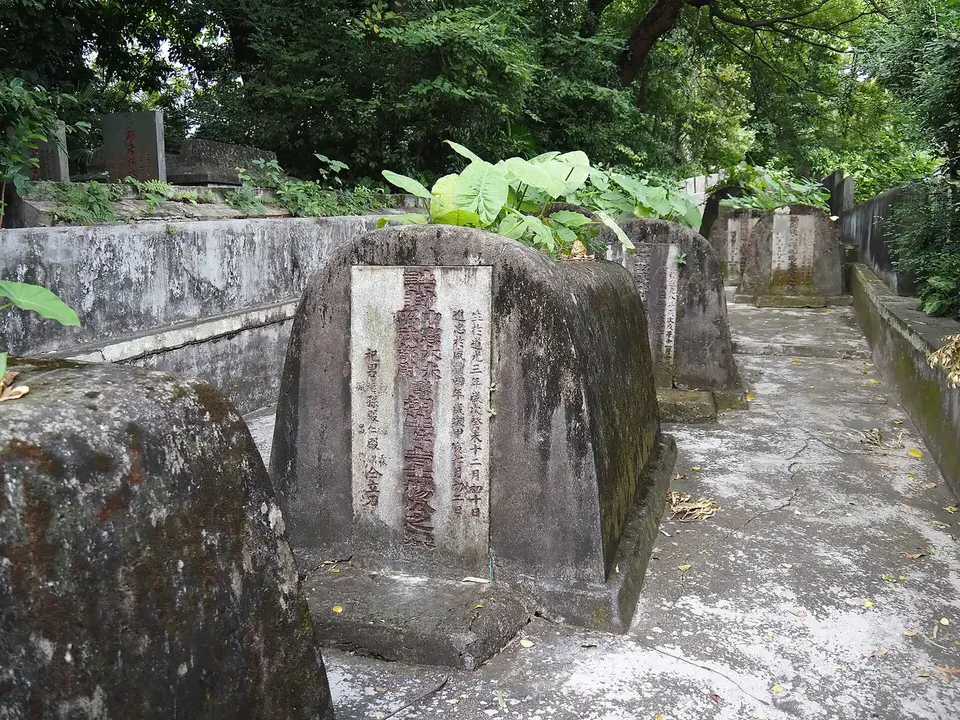
Upon his passing, Controller of Monks (Sengzheng) Huigong of Jiangzhou, filled with profound veneration, personally presided over his solemn funeral rites. Leading the monastic community and local gentry, Huigong escorted Huijiao's remains to sacred Mount Lu, entombing him in a funerary stupa beside Chan'ge Monastery for perpetual commemoration.
Though Huijiao passed away in exile, his fourteen-volume Biographies of Eminent Monks endured through the ages. His masterpiece eclipsed and ultimately caused the extinction of Baochang's flawed Biographies of Famous Monks, establishing the definitive model for monastic chronicles across East Asia.
In the Tang Dynasty, the Vinaya patriarch Daoxuan adopted Huijiao's structure to author the thirty-volume Continued Biographies of Eminent Monks; in the Song, Hanlin Academician Zanning composed the thirty-volume Song Biographies of Eminent Monks; and in the Ming, Ruxing authored the eight-volume Great Ming Biographies of Eminent Monks, forming the celebrated "Biographies of Eminent Monks Across Four Dynasties." Huijiao's pioneering path resonates through millennia, preserving the glorious history of Chinese Buddhist civilization.
Major Achievements
Composing the Fourteen-Volume Gaoseng Zhuan to Found Buddhist Historiography
Huijiao's compilation of the fourteen-volume Biographies of Eminent Monks in 519 represents a foundational milestone in Chinese Buddhist historiography and biographical literature.
Prior to Huijiao, although figures like Zhi Daolin, Wang Yan, and Lu Cheng had drafted fragmented monastic sketches, and Baochang had assembled his thirty-volume Mingseng Zhuan, their works suffered from disjointed formats, superficial verification, and sycophantic selection.
Synthesizing four and a half centuries of dynastic annals, literary anthologies, stone inscriptions, and gazetteers, Huijiao applied rigorous critical standards to document the lives of over four hundred eminent monks from the Han to the early Liang. His work permanently established the professional paradigm for Chinese Buddhist history, elevating monastic chronicles into the realm of serious, authoritative historiography.
Innovating the Ten Categories to Formulate Biographical Standards
Huijiao's invention of the "Ten Categories" classification system in the Gaoseng Zhuan was a brilliant structural breakthrough in Chinese biographical writing.
Closely aligning his framework with Buddhist doctrinal transmission, meditative praxis, and social functions, he categorized monastic achievements into Translators, Exegetes, Theurgists, Meditators, Disciplinarians, Self-Sacrificers, Cantors, Promoters of Merit, Hymnodists, and Proselytizers.
This categorization avoided the fragmentation of simple chronological or geographic catalogs, fully illuminating the comprehensive contributions of Buddhism across translation, philosophy, meditation, ethics, martyrdom, philanthropy, sacred music, and popular education. Each section concluded with a masterly critical essay (lun), providing the structural template universally adopted by imperial monastic chronicles in the Tang, Song, and Ming dynasties.
Formulating the "Eminent vs. Famous" Distinction to Reform Monastic Ethics
Confronted with the commercialization, political opportunism, and moral decay that accompanied the expansion of Buddhism during the Southern Liang, Huijiao issued his thunderous critique separating the "eminent" from the "famous."
He established the ethical standard that "those who are famous are not necessarily eminent, and those who are eminent are not necessarily famous," shifting the evaluation of monks from aristocratic patronage and popular celebrity back to inner spiritual virtue, intellectual profundity, and selfless devotion.
Breaking through aristocratic snobbery, Huijiao recorded obscure hermits who preserved immaculate integrity while decisively excluding celebrated impostors. This uncompromising ethical vision not only revitalized the spiritual core of Chinese Buddhism but also served as a lasting moral mirror for traditional Chinese intellectuals.
Preaching the Nirvāṇa and Brahmajāla Scriptures to Advance Southern Scholasticism
Alongside his historical achievements, Huijiao was an influential master of Nirvāṇa philosophy and monastic discipline who preached at Jiaxiang Monastery for thirty years.
He authored the ten-volume Commentary on the Meaning of the Nirvāṇa Sūtra and the three-volume Commentary on the Brahmajāla Sūtra, elucidating the universality of Buddha-nature and Mahayana ethics.
Throughout his teaching career, Huijiao championed the principle of "relying on the meaning rather than the letter," breaking through scholastic pedantry to guide practitioners toward direct experiential realization of true suchness. His lectures profoundly enriched the intellectual climate of eastern Zhejiang, laying the doctrinal groundwork for the emergence of the Tiantai and Sanlun schools in the Sui and Tang dynasties.