Birth into an Aristocratic Lineage
Born on January 26 into the prestigious Zhen clan of Wuji, Zhongshan; physiognomist Liu Liang prophesied her future imperial nobility.
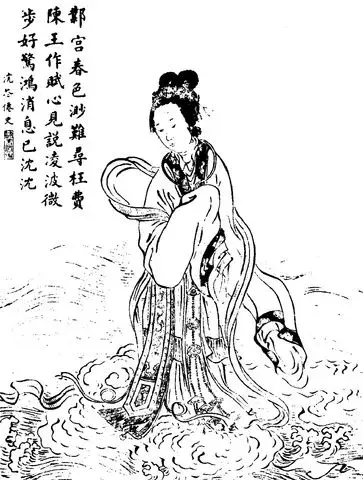
甄宓
Lady Zhen (甄氏, January 26, 183 – August 4, 221), posthumously honored as Empress Wenzhao (文昭皇后) and popularly known in folklore as Zhen Mi (甄宓) or Zhen Luo, was a native of Wuji County, Zhongshan Commandery (modern Wuji County, Hebei Province), the principal wife of Emperor Wen of Wei (Cao Pi), and the biological mother of Emperor Ming of Wei (Cao Rui) and Princess Dongxiang during the Three Kingdoms period. Descended from…
Lady Zhen (甄氏, January 26, 183 – August 4, 221), posthumously honored as Empress Wenzhao (文昭皇后) and popularly known in folklore as Zhen Mi (甄宓) or Zhen Luo, was a native of Wuji County, Zhongshan Commandery (modern Wuji County, Hebei Province), the principal wife of Emperor Wen of Wei (Cao Pi), and the biological mother of Emperor Ming of Wei (Cao Rui) and Princess Dongxiang during the Three Kingdoms period. Descended from Han Grand Tutor Zhen Han, she was celebrated from childhood for her beauty, intellect, and moral discernment. During the regional famines of the late Han Dynasty, she persuaded her family to distribute their stored grain to relieve starving neighbors, winning widespread acclaim across northern China. She originally married Yuan Xi, second son of the northern warlord Yuan Shao. Following the fall of Ye City to Cao Cao in 204, Cao Pi took Lady Zhen as his principal wife. She was renowned for her filial piety toward her mother-in-law, Empress Dowager Bian, and for her generous management of the inner quarters, encouraging Cao Pi to take concubines to ensure the continuity of his lineage. After Cao Pi established the Cao Wei Dynasty in 220 and relocated the court to Luoyang, Lady Zhen remained at Ye City and gradually fell out of imperial favor. Slandered by palace rivals, she was ordered to commit suicide in August 221. Following the accession of her son, Emperor Ming, she was posthumously consecrated as Empress Wenzhao and reburied in the Chaoyang Mausoleum. Her yuefu poem Tangshangxing (On the Pond) is recognized as an enduring masterpiece of Jian'an women's literature.
Born on January 26 into the prestigious Zhen clan of Wuji, Zhongshan; physiognomist Liu Liang prophesied her future imperial nobility.
Persuaded her mother to open clan granaries and distribute grain to starving villagers during the catastrophic Guandong famine.
Married Yuan Xi, second son of warlord Yuan Shao; remained in Ye City to care for her mother-in-law when Yuan Xi assumed command of Youzhou.
Following Cao Cao's capture of Ye City, Cao Pi married Lady Zhen; she gave birth to Cao Rui and Princess Dongxiang.
Remained in Ye City weeping day and night upon hearing that Lady Bian had fallen ill at Mengjin during Cao Cao's western expedition.
Stayed behind in Ye City due to illness while Cao Cao and Lady Bian campaigned east against Sun Quan, maintaining exemplary household decorum.
Cao Pi ascended the throne as Emperor Wen of Wei, moving the court to Luoyang while Lady Zhen was left behind in Ye City.
Slandered by favored consorts in Luoyang, she was ordered by Cao Pi to commit suicide on August 4 and was buried at Ye City.
Emperor Ming ascended the throne and immediately canonized his mother as Empress Wenzhao, dispatching Sikong Wang Lang to establish her ancestral shrine.
Emperor Ming re-interred her remains with supreme imperial honors at Chaoyang Mausoleum, establishing dedicated ancestral sacrifices.
Empress Wenzhao Lady Zhen was born on January 26, 183, in Wuji County, Zhongshan Commandery, into an illustrious official family descended from Western Han Grand Tutor Zhen Han. Her father, Zhen Yi, had served as magistrate of Shangcai, while her mother, Lady Zhang, was from a respected Changshan lineage. Lady Zhen was the youngest of three sons and five daughters. Her father died when she was three years old, and she mourned him with a solemnity that astonished her relatives.
During her childhood, auspicious signs were frequently reported; family members noted that as she slept, an ethereal jade robe seemed to rest over her form. The renowned physiognomist Liu Liang, examining the children of the Zhen household, pointed to Lady Zhen and remarked that her future nobility would surpass ordinary comprehension. As she grew, Lady Zhen avoided frivolous amusements. At age eight, when street acrobats performed outside her gates and her sisters hurried to the balcony to watch, Lady Zhen remained quietly reading in her chambers. When her sisters playfully teased her, she responded that ancient virtuous women studied historical chronicles to guide their moral conduct.
During the catastrophic famines of the 190s, when warfare devastated the central plains and starving peasants sold family heirlooms for handfuls of grain, the Zhen family accumulated vast stores of wealth by trading surplus grain for gold and jade. Ten-year-old Lady Zhen cautioned her mother that hoarding treasures during general famine was perilous, citing the classical proverb that possessing wealth without virtue invited disaster. She urged her mother to open the family granaries and distribute grain to neighboring villages. The family followed her advice, preserving both their community and their clan. When her elder brother Zhen Yan died at age fourteen, Lady Zhen assisted her widowed sister-in-law and gently mediated household tensions, earning renown for family piety.
During the Jian'an reign, northern warlord Yuan Shao controlled the four provinces of Hebei. Attracted by Lady Zhen's beauty and moral reputation, Yuan Shao arranged for her to marry his second son, Yuan Xi. Following the pacification of Youzhou, Yuan Xi was appointed regional inspector and departed to govern his frontier territory in the north.
Because Yuan Xi's mother, Lady Liu, was elderly and frail, Lady Zhen requested permission to remain behind in Ye City to attend to her mother-in-law's daily comfort. During the prolonged conflict between Yuan Shao and Cao Cao, Lady Zhen managed the household with calm restraint, treating domestic servants with kindness and maintaining domestic tranquility amidst escalating warfare.
In August 204, Cao Cao's forces captured Ye City after an arduous siege. Cao Cao's eldest surviving son, Cao Pi, was the first commander to enter Yuan Shao's official residence. He found Lady Liu and Lady Zhen seated together in the central hall. Terrified, Lady Zhen buried her face in her mother-in-law's lap, while Lady Liu bound her own wrists in surrender.
Cao Pi stepped forward to untie Lady Liu and gently ordered Lady Zhen to raise her head. Although her hair was disheveled and her cheeks stained with tears, her extraordinary grace and beauty captivated Cao Pi. With Cao Cao's formal consent, Cao Pi married Lady Zhen, taking her as his principal consort in Ye City.
Following her marriage to Cao Pi, Lady Zhen enjoyed deep imperial favor. In December 204, she gave birth to their first son, Cao Rui, followed by the birth of Princess Dongxiang. Despite holding primary influence within Cao Pi's inner household, Lady Zhen displayed remarkable modesty, never indulging in arrogance or vanity.
Within Cao Pi's expanding harem, Lady Zhen encouraged favored consorts to cultivate moral discipline, while extending gentle sympathy and counsel to those who felt neglected. She frequently urged Cao Pi to emulate the ancient Yellow Emperor by taking additional virtuous concubines to ensure the proliferation of imperial heirs. When Cao Pi, enraged by the impetuous temperament of his concubine Lady Ren, sought to expel her, Lady Zhen knelt and wept, pleading that repudiating a woman from an honorable regional lineage would subject Cao Pi to public accusations of capricious favoritism.
In 208, Cao Cao's beloved young son Cao Chong died prematurely. To honor his memory, Cao Cao arranged a posthumous marriage between Cao Chong and a deceased daughter of the Zhen clan, further solidifying the intimate dynastic alliance between the Cao and Zhen families.
In July 211, Cao Cao launched his western expedition against Han Sui and Ma Chao in Guanzhong, accompanied by his primary wife, Lady Bian. En route, Lady Bian fell ill and was forced to halt at Mengjin, while Cao Pi and Lady Zhen remained to guard Ye City.
In Ye City, Lady Zhen was overwhelmed with anxiety upon learning of her mother-in-law's illness. Deprived of the opportunity to attend Lady Bian in person, she wept day and night and refused food. When couriers arrived reporting that Lady Bian's condition had improved, Lady Zhen remained tearful, observing that chronic ailments could not be cured so abruptly and fearing that the attendants were merely attempting to comfort her.
In January 212, Cao Cao's army returned triumphantly to Ye City. Lady Zhen traveled miles outside the city walls to greet Lady Bian. Upon seeing her mother-in-law resting safely in her carriage, Lady Zhen wept with relief, moving all surrounding officers and attendants to tears. Lady Bian wept as well, embracing her daughter-in-law and proclaiming that her devotion surpassed that of a biological child.
In 216, when Cao Cao launched an expedition against Sun Quan, Lady Bian, Cao Pi, and the young children Cao Rui and Princess Dongxiang all accompanied the army south to Ruxu, while Lady Zhen remained behind in Ye City due to illness. When the army returned late in 217, attendants marveled that Lady Zhen appeared refreshed and radiant despite a year of solitary convalescence. Lady Zhen serenely replied that because her children were under the loving care of their grandmother, she had felt no anxiety. Lady Bian was deeply touched and praised her before the assembled court.
In January 220, Cao Cao died in Luoyang, and Cao Pi inherited the titles of King of Wei and Imperial Chancellor. In October of that year, Emperor Xian of Han abdicated, and Cao Pi ascended the throne as Emperor Wen, founding the Cao Wei Dynasty and establishing his capital in Luoyang. Emperor Xian offered his two daughters to Cao Pi's harem, while other consorts, notably Guo Nüwang (later Empress Guo), Lady Li, and Lady Yin, gained ascendancy in the emperor's affections.
Lady Zhen was left behind in the former palace at Ye City and was not summoned to Luoyang. Deprived of imperial favor and witnessing the elevation of newer concubines, she endured prolonged loneliness. During this period of isolation, she composed her renowned yuefu poem Tangshangxing, employing the metaphor of floating water lilies to express her sorrow over abandoned affection.
Palace rivals in Luoyang seized upon these verses, reporting to Emperor Wen that Lady Zhen harbored bitter resentment against the new dynasty and was employing occult curses. Known for his suspicious and vengeful nature, Emperor Wen fell into a rage. On August 4, 221 (the dingmao day of the sixth month of the second year of the Huangchu reign), he dispatched an imperial commissioner with a death decree to Ye City. Lady Zhen complied and drank poison, passing away at the age of thirty-nine. Under the instigation of court rivals, her corpse was subjected to ritual humiliation: her hair was draped over her face and her mouth stuffed with grain husks before she was buried in the southern outskirts of Ye City.
Following his hasty order for Lady Zhen's execution, Emperor Wen was tormented by unease. According to the Records of the Three Kingdoms, the emperor summoned the diviner Zhou Xuan and recounted a troubling dream in which two palace roof tiles fell to the ground and transformed into a pair of dancing mandarin ducks. Zhou Xuan grave replied that an imperial noblewoman of the inner palace would suffer a violent death.
Emperor Wen paled with remorse, having already dispatched the commissioner bearing the death decree. He immediately ordered rapid couriers to gallop to Ye City to revoke the execution. However, by the time the couriers arrived, the decree had already been carried out and Lady Zhen had perished. Constrained by imperial pride and dynastic decorum, Emperor Wen suppressed the matter, leaving Lady Zhen in a hastily prepared grave.
In May 226, Emperor Wen fell mortally ill and designated Lady Zhen's son, Cao Rui, as his heir. Following Emperor Wen's death, Cao Rui ascended the throne as Emperor Ming. Having harbored silent grief over his mother's tragic fate for five years, Emperor Ming immediately launched a comprehensive posthumous rehabilitation.
Emperor Ming conferred upon his deceased mother the posthumous title of Empress Wenzhao and dispatched Sikong Wang Lang to Ye City to conduct imperial sacrifices and build a dedicated ancestral shrine. Empress Dowager Guo, consumed by terror over Emperor Ming's investigations into the execution, soon died, and Emperor Ming ordered her buried with her hair disheveled and mouth stuffed with husks, mirroring his mother's mistreatment.
In 227, Emperor Ming enfeoffed Lady Zhen's deceased father, Zhen Yi, and deceased brother, Zhen Yan, as hereditary marquises, elevating Zhen Yan's son, Zhen Xiang, to senior military commands. In November 230, Emperor Ming ordered Zhen Xiang to excavate the original tomb at Ye City for reburial. During the excavation, an imperial seal was discovered bearing the inscription: "The Emperor Yearningly Remembers His Loving Mother." Cao Rui wept aloud upon receiving the relic. In December 230, Empress Wenzhao was re-interred with full imperial rites in the Chaoyang Mausoleum, enshrined in the dynastic temple alongside Emperor Wen.
Lady Zhen's most famous early action was her intervention during the Guandong famines of the 190s. When widespread chaos left thousands starving, her family accumulated wealth by trading food for civilian heirlooms. At age ten, Lady Zhen recognized that exploiting communal desperation invited banditry and ruin, persuasively urging her mother to open their granaries and distribute grain freely to the local populace.
Her foresight preserved countless lives and protected her clan from retribution. In managing family affairs following her brother's premature death, she demonstrated exceptional maturity, comforting her widowed sister-in-law and harmonizing household relationships with patient Confucian virtue.
Following her entry into Cao Pi's household, Lady Zhen maintained the highest standards of inner court governance. Rejecting the petty jealousies common among palace consorts, she treated both favored and neglected concubines with impartiality and kindness.
Her spirited defense of Lady Ren demonstrated that she placed imperial reputation and justice above personal advantage. She advocated for the expansion of the imperial lineage, winning the deep respect of Lady Bian and establishing an enduring standard of maternal dignity during the formative years of the Cao Wei state.
Lady Zhen's devotion to her mother-in-law, Empress Dowager Bian, was renowned throughout Han and Wei history. During the Guanzhong campaign of 211, when Lady Bian fell ill at Mengjin, Lady Zhen wept constantly in Ye City, refusing to be comforted until her mother-in-law returned safely.
Her emotional reunion with Lady Bian in 212 moved the entire court, while her calm acceptance of long separations during subsequent eastern campaigns reflected an unwavering trust in family elders. Her conduct established a model of filial respect that was celebrated in dynastic records.
Beyond her moral standing, Lady Zhen was an accomplished poet of the Jian'an literary era. Her surviving five-character yuefu poem, Tangshangxing (On the Pond), is an acclaimed classic of ancient Chinese women's poetry. Using the imagery of water lilies drifting upon a pond, the poem articulates the profound grief, isolation, and unmerited abandonment experienced by a repudiated wife.
Verses such as "Floating water lilies grow in my pond, their leaves drifting so lush and green; that I strove to walk in benevolence and righteousness, none knows better than my own heart" capture the tragic vulnerability of women under patriarchal palace structures. Preserved in early anthologies such as Yutai Xinyong and Yiwen Leiju, the poem stands alongside the works of Cai Yan as an enduring monument of Han-Wei literature.
In later folklore and romantic drama, it was widely asserted that Cao Zhi's famous rhapsody Luoshenfu (Rhapsody on the Goddess of the Luo) was an expression of secret romantic longing for Lady Zhen, inspiring tales of forbidden love and the famous pillow relic.
Rigorous historical research has thoroughly debunked this myth. Cao Zhi composed the rhapsody in 222 while journeying across the Luo River following an imperial audience in Luoyang. Following the allegorical tradition of Qu Yuan's Li Sao, Cao Zhi employed the elusive river goddess to express political frustration and sorrow over his strained relationship with his imperial brother, Emperor Wen. The original title, Gan Zhen Fu, referred to the fief of Juan (historically written with the same character as Zhen) and had no connection to Lady Zhen, who had already died in Ye City over a year earlier. Ming and Qing scholars unanimously dismissed the romantic legend as fictional embroidery.
The posthumous honors and ancestral sacrifices instituted for Empress Wenzhao established critical ritual precedents for the Wei and Jin dynasties. When her remains were relocated to Chaoyang Mausoleum in 230, Emperor Ming erected an independent ancestral shrine in Ye City, establishing seasonal sacrifices directed by ministers of state.
During discussions in 232 concerning mourning rites for her mother, Lady Zhang, senior ritual officials cited Western Han precedents to standardize maternal family honors. The archaeological discovery during the Northern Song of an inscribed box dedicated to Empress Wenzhao confirmed that her memory and shrine remained honored across northern China through subsequent dynasties.
Lady Zhen's life reflected the strategic survival of Guandong aristocratic clans during the chaotic transition from Han to Wei. The Zhongshan Zhen clan, tracing their status to the Western Han, secured their prominence through alliances with Yuan Shao and Cao Cao.
Despite Lady Zhen's tragic personal death, her son's accession ensured that the Zhen lineage remained among the premier aristocratic houses of Cao Wei and Western Jin. Her nephews and grandnephews attained marquisates, high ministerial commands, and marital alliances with the imperial Sima family, illustrating how maternal virtue and dynastic remembrance safeguarded aristocratic survival across generations.
Lady Zhen's death was not merely the result of domestic intrigue, but a manifestation of structural political transformations during the founding of Cao Wei. Cao Cao's marriage alliance with Lady Zhen in 204 was designed to conciliate the powerful regional gentry of Hebei.
When Emperor Wen ascended the throne in 220 and moved the capital south to Luoyang, the political center shifted toward the central plains factions. Favored consorts such as Guo Nüwang were aligned with the new Luoyang court, while Lady Zhen remained isolated in the northern base of Ye City. Emperor Wen's suspicious and autocratic nature converted her poetic expressions of grief into suspected political subversion. Historians such as Zhao Yi identified her execution as the tragic beginning of the Cao Wei court's internal cruelty toward kin, marking a sobering chapter in imperial history.
In official dynastic chronicles, Lady Zhen was designated simply as Lady Zhen or Empress Wenzhao; the popular names Zhen Mi and Zhen Luo emerged in later centuries. Influenced by romanticized interpretations of the Luo River goddess, Tang and Song poets and Yuan playwrights incorporated her persona into theatrical dramas, notably Bai Pu's northern dramas and Ming-Qing musical plays.
On the traditional opera stage, Lady Zhen was transformed into an idealized tragic heroine embodying supreme beauty, literary genius, and undeserved suffering. This cultural evolution demonstrated how popular historical memory reshaped dynastic tragedy into an enduring symbol of feminine grace, artistic excellence, and moral fortitude.
FIGURES ASSOCIATED WITH THIS DYNASTY