Birth in Kunshan
Born into a prominent literary clan on the second day of the eleventh lunar month; exhibited precocious talent and composed prose by age eight.
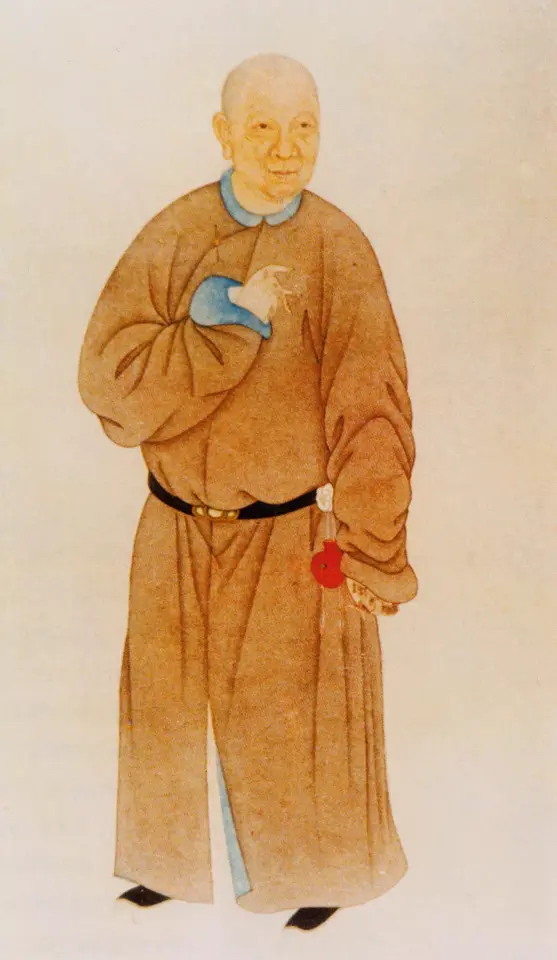
徐乾学
Xu Qianxue (徐乾学, November 24, 1631 – September 6, 1694), courtesy name Yuanyi (原一) and art name Jian'an (健庵), was a native of Kunshan, Suzhou Prefecture, Jiangnan. He was a prominent classical scholar, historian, bibliophile, and high-ranking minister during the Ming-Qing transition and the Kangxi reign, as well as a nephew of the illustrious Confucian master Gu Yanwu. Born into a prestigious scholarly lineage, Xu Qianxue,…
Xu Qianxue (徐乾学, November 24, 1631 – September 6, 1694), courtesy name Yuanyi (原一) and art name Jian'an (健庵), was a native of Kunshan, Suzhou Prefecture, Jiangnan. He was a prominent classical scholar, historian, bibliophile, and high-ranking minister during the Ming-Qing transition and the Kangxi reign, as well as a nephew of the illustrious Confucian master Gu Yanwu. Born into a prestigious scholarly lineage, Xu Qianxue, along with his younger brothers Xu Yuanwen (the top-ranking zhuangyuan in 1659) and Xu Bingyi (the third-ranking tanhua in 1673), earned top honors in the imperial examinations, a rare distinction celebrated throughout the empire as the "Three Xus of Kunshan." In 1670, Xu Qianxue placed third (tanhua) in the imperial palace examination and was appointed a compiler in the Hanlin Academy. Throughout his three decades of service under Emperor Kangxi, Xu Qianxue served in critical positions including Lecturer and Recorder of Imperial Diaries, Supervisor of the Household of the Heir Apparent, Grand Academician of the Grand Secretariat, Vice Minister of Rites, Senior Censor-in-Chief, and ultimately Minister of Punishments. Highly regarded by the emperor for his profound erudition in the Confucian classics and institutional history, he was assigned to the Southern Study and commissioned as chief director for imperial monumental compilations such as the History of Ming (Ming Shi), the Collected Statutes of the Great Qing (Da Qing Huidian), the Grand Unified Gazetteer of the Great Qing (Da Qing Yitongzhi), and Guwen Yuanjian. At Lake Tai's Dongting Mountain, he established a private editorial bureau, employing leading unranked scholars such as Gu Zuyu, Yan Ruoqu, and Wan Sitong. His celebrated private library, the Chuanshi Lou, housed tens of thousands of rare Song and Yuan dynasty volumes, ranking as the finest private book collection of the early Qing. Although deeply embroiled in court factional politics between northern and southern bureaucratic cliques and subject to periodic censorial impeachments, Xu Qianxue remained dedicated to scholarly compilation until his death in 1694, whereupon the throne posthumously restored his ministerial rank in recognition of his enduring literary contributions.
Born into a prominent literary clan on the second day of the eleventh lunar month; exhibited precocious talent and composed prose by age eight.
Joined eminent scholars including Wu Weiye and Zhu Yizun to establish the Grand Literary Society of Ten Prefectures in Jiangnan.
Entered the National Guozijian in Beijing, deepening his mastery of archaic ritual classics under the guidance of Gu Yanwu.
Won third place (tanhua) in the imperial palace examination and received an official appointment as compiler in the Hanlin Academy.
Served as associate examiner for the Shuntian provincial exams, discovering and selecting Han Tan from discarded papers, transforming examination prose style.
Mourned the successive passing of his parents and compiled the encyclopedic one-hundred-and-twenty-volume Duli Tongkao on traditional rites.
Assisted his student Nalan Xingde in compiling and carving the massive 1,795-volume Tongzhitang Jiujing Jie.
Commissioned as Chief Director of the Ming History Bureau, bringing unranked Zhejiang historian Wan Sitong to Beijing to supervise the draft.
Ranked first in Emperor Kangxi's imperial evaluation of Hanlin scholars at the Hall of Preserving Harmony, entering service in the Southern Study.
Promoted from Vice Minister of Rites and Senior Censor-in-Chief to Minister of Punishments, becoming embroiled in court anti-Mingju politics.
Relieved of active bureaucratic posts amid factional controversy over provincial bribery allegations, while retaining his commission as imperial compilation director.
Retired to Dongting Mountain near Lake Tai, hosting scholars such as Yan Ruoqu and Gu Zuyu to work day and night on the Da Qing Yitongzhi.
Passed away from illness in Kunshan on the seventeenth day of the seventh lunar month at age sixty-four; his ministerial rank was posthumously restored by imperial decree.
Xu Qianxue was born on November 24, 1631, into an esteemed scholarly gentry family in Kunshan, Suzhou Prefecture. His father, Xu Jiayan, was respected for rectitude and classical scholarship, while his mother was the elder sister of Gu Yanwu, one of the three monumental thinkers of the late Ming and early Qing eras. Xu Qianxue demonstrated remarkable intellect in his youth, memorizing classical treatises with ease and composing accomplished essays by the age of eight. His uncle Gu Yanwu harbored great expectations for Xu Qianxue and his brothers, mentoring them closely in rigorous textual criticism and offering substantial financial backing during their formative studies.
In 1650, at the age of nineteen, Xu Qianxue co-founded the influential Grand Literary Society of Ten Prefectures alongside luminaries such as Wu Weiye, Zhu Yizun, and You Tong, advocating a return to ancient classical prose models. In 1654, he matriculated into the National Guozijian in Beijing. During his academic residence in the capital, he immersed himself in archaic historical texts, institutional codes, and philology, establishing the broad bibliographic foundation that supported his subsequent scholarly and editorial endeavors.
In 1670, Xu Qianxue passed the metropolitan examination and earned third honors (tanhua) in the imperial palace examination. Emperor Kangxi personally recognized his analytical depth and appointed him a compiler in the Hanlin Academy. His younger brother Xu Yuanwen had previously earned the first rank (zhuangyuan) in 1659, and his youngest brother Xu Bingyi would achieve third place (tanhua) in 1673. This unprecedented family achievement earned the brothers the celebrated title of the "Three Xus of Kunshan."
Within the Hanlin Academy, Xu Qianxue read extensively across palace archives and rare imperial library holdings. In 1675, he rose to serve as Left Exhorter and Lecturer and Recorder of Imperial Diaries. Following the successive deaths of his parents, he retired to his ancestral estate to observe three years of mourning in accordance with ancient ritual prescriptions. During this period, he exhaustively collated funerary, ancestral, and sacrificial institutions from antiquity through the Ming Dynasty, authoring the monumental one-hundred-and-twenty-volume Duli Tongkao (Comprehensive Study of Rites of Mourning). Upon returning to court, he was appointed Chief Director of the Ming History Bureau in 1682 and promoted to Lecturer in the Hanlin Academy.
In 1672, Xu Qianxue served as associate chief examiner for the Shuntian provincial examination alongside Cai Qicun. While inspecting candidate essays that junior examination officials had rejected, Xu Qianxue discovered a distinctive manuscript displaying profound classical reasoning and an unadorned, vigorous writing style. Recognizing the author's extraordinary talent, Xu Qianxue intervened to select the candidate, who was Han Tan of Changzhou. The following year, Han Tan entered the metropolitan exams and secured first place as zhuangyuan.
Prior to this intervention, examination essays had deteriorated into shallow, ornate, and fragmented rhetoric. Xu Qianxue's decisive selection of Han Tan catalyzed a nationwide reform in examination prose, guiding scholars away from superficial embellishment toward robust classical scholarship and practical statecraft. Although he received an administrative reprimand when junior clerks mistakenly omitted banner candidates from a secondary registry, his discernment earned him lasting esteem throughout the intellectual community.
In 1685, Emperor Kangxi conducted a rigorous personal evaluation of Hanlin and Household officials at the Hall of Preserving Harmony. Xu Qianxue took first place among all participating scholars. Deeply pleased with his performance, the emperor bestowed special gifts and appointed him to the Southern Study, making him Grand Academician of the Grand Secretariat and vice director for imperial compendia.
In the same year, Ministry of Revenue officials suggested an immediate, nationwide ban on the circulation of old copper cash from the Ming Dynasty. Xu Qianxue submitted an urgent memorial advising against the measure. He argued that throughout Chinese history, ancient and contemporary currencies circulated concurrently to meet the everyday commercial needs of commoners. A sudden prohibition would disrupt commerce, induce widespread deflation, and enable corrupt underlings to extort merchants. Impressed by his historical evidence and economic reasoning, Emperor Kangxi cancelled the proposed ban, preserving monetary stability across Jiangnan and the entire empire.
During the mid-Kangxi period, the central bureaucracy fractured into rival factions, largely polarized between the northern clique headed by Grand Secretary Mingju and southern scholars affiliated with Songgotu. Navigating this treacherous political terrain, Xu Qianxue advanced rapidly, attaining the posts of Vice Minister of Rites, Senior Censor-in-Chief, and ultimately Minister of Punishments in 1687.
As political tensions peaked, Xu Qianxue covertly collaborated with imperial censors, including his disciple Guo Xiu, who impeached Mingju and Yu Guozhu for abuse of power, leading to Mingju's fall from power. Subsequent controversies involving Grand Canal water management, tax administration, and allegations of judicial corruption raised scrutiny against senior officials. Relentlessly targeted by hostile censorial memorials accusing his family of regional influence and bribery, Xu Qianxue requested permission to resign his administrative post in 1689. Emperor Kangxi accepted his resignation from court governance while directing him to retain full charge over the compilation of imperial works.
Upon retiring to Jiangnan, Xu Qianxue settled at Dongting East Mountain along Lake Tai, establishing a specialized private compilation bureau to complete the Da Qing Yitongzhi (Grand Unified Gazetteer of the Great Qing). Utilizing the vast literary holdings of his Chuanshi Lou library, he recruited leading private scholars including Gu Zuyu, Yan Ruoqu, Hu Wei, and Huang Yuji to collate historical geography, local administrative changes, defensive strongholds, and demographic records across the empire.
Xu Qianxue devoted his final years to intensive editorial collation, despite personal grief and family litigations that claimed the life of his brother Xu Yuanwen. In 1694, senior ministers Wang Xi and Zhang Yushu recommended Xu Qianxue's immediate recall to the capital to direct ongoing imperial historical projects. However, before the imperial order could reach him, Xu Qianxue died of illness at his residence on September 6, 1694, at the age of sixty-four. On his deathbed, he instructed his sons to submit the completed draft manuscripts of the Grand Unified Gazetteer to the throne. Mourning the loss of a preeminent scholar, Emperor Kangxi issued an edict posthumously restoring his rank as Minister of Punishments.
Xu Qianxue's primary contribution to historical scholarship was his stewardship of the Ming History compilation project. Appointed director in 1682, he recognized that official bureaucratic teams frequently lacked methodological depth and rigorous historical independence. Xu Qianxue invited the unranked Zhejiang scholar Wan Sitong to Beijing, according him great honor as principal compiler without subjecting him to civil service examinations. Under Xu Qianxue's patronage and protection, Wan Sitong spent two decades examining Ming imperial records, drafting more than four hundred volumes of the Ming Shi Gao, which formed the indispensable foundation for the officially published History of Ming.
While directing the compilation of the Da Qing Yitongzhi, Xu Qianxue revolutionized imperial gazetteer scholarship. After leaving his ministerial office in Beijing, he funded a private compilation bureau at Dongting Mountain, assembling geographic masters such as Gu Zuyu (author of Dushi Fangyu Jiyao) and Hu Wei (author of Yugong Zhuizhi). The resulting geographic compendium established unprecedented standards of precision, integrating administrative evolution, topography, strategic mountain passes, waterways, and economic resources into a cohesive institutional geography.
Xu Qianxue established the renowned Chuanshi Lou library at his Kunshan estate, which became one of the greatest private bibliographic repositories of the early Qing Dynasty. He invested substantial sums to acquire celebrated private collections, including those of Ji Zhenyi and Li Zhonglu, gathering more than 3,900 distinct titles and tens of thousands of Song and Yuan block-printed treasures. Leading intellectuals Huang Zongxi and Wang Wan composed celebratory essays honoring the library. Xu Qianxue maintained that while worldly riches perish, only classical literature survives across generations, hence naming the edifice Chuanshi Lou.
The Chuanshi Lou adhered to a rigorous fourfold cataloging structure across seven architectural bays. Xu Qianxue generously granted scholarly access to eminent visiting scholars, allowing masters such as Yan Ruoqu, Gu Zuyu, and Wan Sitong to inspect and transcribe rare texts, transforming the repository into an intellectual epicenter of Jiangnan textual criticism. After his death, his sons compiled the eight-volume Chuanshi Lou Shumu, which remains a standard classic in traditional Chinese bibliography.
In 1680, Xu Qianxue collaborated with Nalan Xingde, son of Grand Secretary Mingju, to preserve endangered classical commentaries. Drawing upon his extensive personal book collection, Xu Qianxue edited and published the monumental 1,795-volume Tongzhitang Jiujing Jie. Nalan Xingde had studied under Xu Qianxue, who provided his rarest Song and Yuan dynasty commentaries on the Nine Classics for careful collation. This sweeping editorial endeavor preserved dozens of rare works that would otherwise have vanished, creating a definitive textual treasury for Qing Dynasty classical philologists.
During imperial deliberations over currency regulation in 1685, Xu Qianxue demonstrated remarkable economic insight. Responding to proposals by Ministry of Revenue officials to forcibly withdraw and melt Ming copper coins, Xu Qianxue drafted an extensive memorial tracing currency history over two millennia. He established that market circulation relied on pragmatic consumer trust rather than sudden administrative decrees. His counsel convinced Emperor Kangxi to halt the proposed confiscation, averting commercial disruption and stabilizing the market economy across the empire.
Xu Qianxue played a pivotal role in the evolution of Qing Dynasty literary standards. During his tenure as associate examiner for the 1672 Shuntian provincial exams, he broke through conventional examiner biases to select Han Tan from discarded papers, setting the stage for Han Tan's subsequent triumph as zhuangyuan. Xu Qianxue championed unadorned, robust classical prose while repudiating the convoluted, superficial eight-legged essay style prevalent in the late Ming, guiding early Qing intellectuals toward substantial scholarship and statecraft.
While observing mourning for his parents, Xu Qianxue conducted thorough research into ancient Chinese mourning and ancestral sacrifice rituals, producing the one-hundred-and-twenty-volume Duli Tongkao. The treatise systematically analyzed ancestral rites, mourning apparel, and funerary procedures from the Western Zhou through the Ming Dynasty. Characterized by strict classification and rigorous source verification, it became an authoritative reference for subsequent imperial ritual codification and a milestone in traditional ritual scholarship.
FIGURES ASSOCIATED WITH THIS DYNASTY