Official Entry via Hereditary Privilege
Entered the imperial service as Military Officer of the Guard of Pure Paths after his father Lu Yi died defending Luoyang.
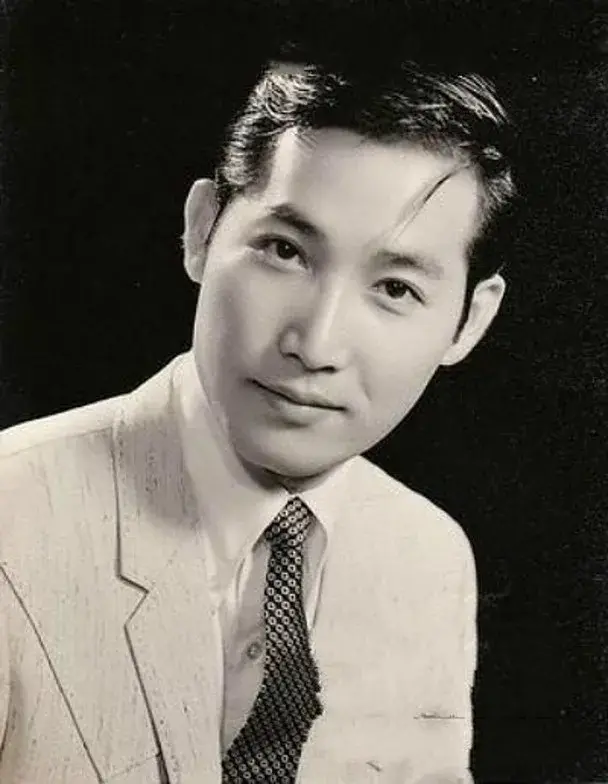
卢杞
Lu Qi (卢杞, died 785), courtesy name Ziliang, was a prominent chancellor during the mid-Tang dynasty. He belonged to the prestigious North Ancestor Great Branch of the Lu clan of Fanyang, being the grandson of Lu Huaishen, the celebrated incorruptible chancellor of the Kaiyuan era, and the son of Lu Yi, the Vice Censor-in-Chief who was martyred during the An Lushan Rebellion. Lu Qi entered officialdom through hereditary…
Lu Qi (卢杞, died 785), courtesy name Ziliang, was a prominent chancellor during the mid-Tang dynasty. He belonged to the prestigious North Ancestor Great Branch of the Lu clan of Fanyang, being the grandson of Lu Huaishen, the celebrated incorruptible chancellor of the Kaiyuan era, and the son of Lu Yi, the Vice Censor-in-Chief who was martyred during the An Lushan Rebellion. Lu Qi entered officialdom through hereditary privilege accorded to the sons of loyal martyrs. He was notoriously ugly with a ghastly blue-tinted visage, yet he possessed silver-tongued eloquence, deep cunning, and an extraordinary talent for divining and manipulating imperial intentions, becoming one of the most infamous treacherous ministers in Chinese history. In the first year of the Jianzhong era (780), following the accession of Emperor Dezong of Tang, Lu Qi was summoned to the court as Vice Censor-in-Chief. He rapidly advanced to Censor-in-Chief and, merely ten days later, was elevated to Vice Director of the Chancellery and Joint Manager of Affairs with the Secretariat-Chancellery, securing supreme control over the imperial government. During his tenure, Lu Qi ruthlessly catered to Emperor Dezong's impatient desire to suppress regional warlords and extract revenue. He orchestrated the destruction of all political rivals, orchestrating the banishment and execution of Chancellors Yang Yan and Zhang Yi as well as Censor-in-Chief Yan Ying. Most notoriously, he engineered the dispatch of the revered eighty-year-old statesman Yan Zhenqing to the rebellious warlord Li Xilie, intentionally sending him to his death. To finance Emperor Dezong's extensive military campaigns, Lu Qi and his partisan Zhao Zan instituted predatory fiscal levies, including the house tax (house beam tax) and the tax on commercial transactions (transaction turnover tax), while forcibly expropriating funds from wealthy merchants. These extortions devastated the capital economy, driving merchants to suicide and stirring widespread rebellion. In the fourth year of the Jianzhong era (783), mutinous troops from Jingyuan revolted against the extortionate taxation and captured Changan, forcing Emperor Dezong to flee to Fengtian. Veteran general Li Huaiguang marched to the emperor's rescue and openly denounced Lu Qi as a national traitor. Under military pressure, Emperor Dezong demoted Lu Qi to Sima of Xinzhou. In the first year of the Zhenyuan era (785), when Emperor Dezong attempted to rehabilitate Lu Qi as Prefect of Raozhou, Supervising Secretary Yuan Gao dramatically refused to draft the edict, supported by resolute protests from court remonstrators. Lu Qi died in terror and despair shortly thereafter in Jizhou.
Entered the imperial service as Military Officer of the Guard of Pure Paths after his father Lu Yi died defending Luoyang.
Served as Circuit Staff Secretary under Shuofang Commander Pugu Huai'en, later holding various posts in the Court of Imperial Regalia and Censorate.
Appointed Prefect of Zhongzhou; visited Jiangling where Military Commissioner Wei Boyu despised his sinister countenance, prompting Lu Qi to resign.
Following Emperor Dezong's accession, Lu Qi was named Vice Censor-in-Chief, ingratiating himself through flattery and policy compliance.
Promoted to Censor-in-Chief and within ten days was appointed Chancellor, consolidating autocratic control over the central court.
Fabricated charges of geomantic treason against Chancellor Yang Yan, engineering his exile to Yazhou and subsequent strangulation.
Dispatched the revered elder statesman Yan Zhenqing on a suicide diplomatic mission to the rebel warlord Li Xilie, resulting in his martyrdom.
Provoked the Jingyuan Mutiny through rapacious taxation; accompanied Emperor Dezong in flight to Fengtian and falsely executed General Cui Ning.
Confronted by General Li Huaiguang's ultimatums demanding his execution, Emperor Dezong was forced to demote him to Sima of Xinzhou.
Died in exile in Jizhou after Supervising Secretary Yuan Gao and censors successfully blocked Emperor Dezong's attempt to appoint him Prefect of Raozhou.
Lu Qi belonged to the illustrious Lu clan of Fanyang, tracing his pedigree to the northern ancestral line. His grandfather, Lu Huaishen, was a legendary chancellor of the Kaiyuan era renowned for his frugal integrity and personal modesty. His father, Lu Yi, served as Vice Censor-in-Chief at the end of the Tianbao era and remained steadfastly loyal when Luoyang fell to the An Lushan rebels, suffering a martyr's death. Because of his father's supreme sacrifice, Lu Qi was granted hereditary privilege at the beginning of the Zhide era, receiving his initial appointment as Military Officer of the Guard of Pure Paths.
Physically, Lu Qi possessed a bizarre and terrifying appearance, marked by a sunken, blue-tinted face and piercing, malevolent eyes that unsettled onlookers. However, he possessed a razor-sharp intellect, fluent eloquence, and an impenetrable reserve. During the Baoying era of Emperor Daizong, the prominent general Pugu Huai'en recruited Lu Qi as Staff Secretary in the Shuofang Circuit, recommending him for probationary Censorate positions. During the Dali era, Lu Qi returned to the capital as Assistant Director of the Court of Imperial Regalia and served as Palace Censor before being dispatched as Prefect of Zhongzhou.
While en route to Zhongzhou, Lu Qi passed through Jiangling to call upon Wei Boyu, Military Commissioner of Jingnan. Wei Boyu was skilled in physiognomy; upon beholding Lu Qi's ghostly visage and sinister demeanor, he was overcome with intense disgust and treated him with icy coldness. Lu Qi perceived this disdain, harbored deep resentment, and soon pleaded illness to return to Changan. Back in the capital, he held directorships in the Ministries of Justice, Revenue, and Personnel. When the venerable commander Guo Ziyi was gravely ill, court officials visited without his household concubines being excused; however, when Lu Qi arrived, Guo Ziyi ordered all women to withdraw, explaining that Lu Qi was hideous and wicked, and had the women laughed at him, he would slaughter the Guo family once in power.
In the fifth month of the fourteenth Dali year (779), Emperor Daizong passed away, and Crown Prince Li Shi ascended the throne as Emperor Dezong. Emperor Dezong was initially eager to curb the autonomy of regional military governors and eliminate bureaucratic sluggishness, but he was obstinate, impatient, and prone to paranoia. Lu Qi astutely gauged the new monarch's psychology and devoted himself to flattering the emperor's prejudices. In the first year of the Jianzhong era (780), Lu Qi was appointed Vice Censor-in-Chief.
During his tenure in the Censorate, Lu Qi reported that three thousand government pigs kept in Guozhou were consuming state grain and disturbing local peasants. When Emperor Dezong suggested relocating the swine to Tongzhou, Lu Qi objected at court, declaring that the people of Tongzhou were also imperial subjects and that relocating the burden would merely shift misfortune; he recommended slaughtering the pigs and distributing them to the impoverished. Emperor Dezong was enchanted by this apparent benevolence, convinced of Lu Qi's profound compassion for the populace. In the second month of the second Jianzhong year (781), Lu Qi was promoted to Censor-in-Chief; a mere ten days later, he was appointed Vice Director of the Chancellery and Joint Manager of Affairs with the Secretariat-Chancellery, entering the inner core of imperial decision-making.
Once installed as chancellor, Lu Qi's deceitful nature emerged in full force. Knowing that Emperor Dezong harbored deep suspicions toward the civil bureaucracy, Lu Qi cloaked his personal vendettas in the guise of unswerving loyalty. Whoever the emperor disliked, Lu Qi framed with exaggerated charges; whoever possessed real talent and imperial favor, Lu Qi sabotaged ruthlessly to safeguard his own monopoly over policy. The court fell under a suffocating pall of terror.
Lu Qi's first objective as chancellor was the complete elimination of Yang Yan, the influential chancellor who had conceived and instituted the revolutionary Twice-Yearly Tax system. Yang Yan was extraordinarily brilliant yet haughty, making him vulnerable to imperial suspicion. Lu Qi conspired with Censor-in-Chief Yan Ying, fabricating charges that Yang Yan had built an ancestral shrine atop an imperial geomantic vein and falsely linking him to the rebellious warlord Liang Chongyi. Emperor Dezong stripped Yang Yan of his chancellor post and banished him to Yazhou; along the road, Lu Qi dispatched secret imperial messengers who strangled him to death.
Having destroyed Yang Yan, Lu Qi immediately targeted Yan Ying, using trivial pretexts to demote him to Prefect of Feizhou. When Emperor Dezong began to place high trust in Chancellor Zhang Yi, Lu Qi grew jealous of Zhang Yi's administrative competence. Under the pretense of shoring up frontier defenses against Tibet, Lu Qi coerced the emperor into appointing Zhang Yi as Military Commissioner of Fengxiang, effectively removing him from the capital; Zhang Yi was later murdered in a mutiny. Against revered senior statesmen, Lu Qi showed even greater malice. In the fourth year of the Jianzhong era (783), when warlord Li Xilie rebelled and besieged Xiangcheng, Lu Qi recommended that the eighty-year-old Grand Preceptor of the Crown Prince, Yan Zhenqing, be sent to negotiate.
Yan Zhenqing was an empire-wide moral icon who had repeatedly admonished Lu Qi for his abuses, earning Lu Qi's profound hatred. Recommending Yan Zhenqing for this mission was an obvious death sentence. Aware of the plot, Yan Zhenqing embraced the fatal duty with noble dignity; held captive in Caizhou, he fiercely cursed the rebels and was ultimately strangled in Longxing Temple. The empire wept at his tragic martyrdom. Additionally, Lu Qi exiled Du You to Raozhou over treasury accounting disputes and dispatched the elderly Li Kui on an exhausting embassy to distant Tibet.
Between 782 and 783, Emperor Dezong waged multi-front wars against autonomous military warlords in Hebei and Henan, incurring astronomical military expenditures exceeding one million strings of cash monthly. Confronted with depleted state coffers, Lu Qi abandoned sustainable governance and enlisted financial henchmen Zhao Zan and Yu Qi to launch aggressive exactions. Lu Qi instituted the merchant confiscation measure, decreeing that merchants in Changan possessing over ten million cash could retain only that amount, with all surplus forcibly taken for the war effort, ruining merchants and prompting numerous suicides.
In the sixth month of the fourth Jianzhong year (783), Lu Qi and Zhao Zan introduced the catastrophic house beam tax and the transaction turnover tax. The beam tax divided homes into three classes based on roof frames, demanding up to two thousand cash per unit. Ruthless tax officials stormed private residences, flogging anyone who concealed a beam with sixty lashes and offering fifty thousand cash to informers. Concurrently, the turnover tax exacted fifty cash for every thousand cash transacted across all private and public commerce. These exactions paralyzed trade, shuttered capital markets, and ignited deep public fury.
In the tenth month of 783, five thousand troops from the Jingyuan Circuit, marching toward the front lines in Xiangcheng, halted outside Changan. Starving and drenched in rain, the soldiers anticipated standard imperial meat rewards and wine. Instead, Lu Qi's associates and the metropolitan governor provided rotting grain and no cloth. Enraged, the soldiers mutinied at Danfeng Gate, shouting that while they were marching to die in battle, their families were being ruined by the beam tax. The Jingyuan Mutiny erupted, rebels occupied Changan, and Emperor Dezong fled in panic to Fengtian accompanied only by Lu Qi, Guan Bo, and a handful of attendants.
During the desperate flight to Fengtian, Lu Qi continued his murderous political machinations. Veteran Jinwu General Cui Ning broke through rebel lines from occupied Changan to offer his services in defending the emperor. Cui Ning bluntly explained to Emperor Dezong that the catastrophe and the emperor's exile were the direct result of Lu Qi's ruinous fiscal tyranny. Terrified that Cui Ning's testimony would destroy him, Lu Qi secretly informed Emperor Dezong that Cui Ning was secretly aligned with rebel leader Zhu Ci. Without any judicial trial, Emperor Dezong ordered palace attendants to strangle Cui Ning behind the throne curtains.
Rebel forces under Zhu Ci soon surrounded Fengtian, cutting off supplies and driving the court to the brink of collapse. Veteran commander Li Huaiguang of the Shuofang Circuit marched his elite cavalry day and night from Hebei, shattering the siege and driving Zhu Ci back. Stationed at Xianyang, Li Huaiguang was filled with fury over the court's betrayal of the state. He repeatedly struck his desk in anger, publicly condemning Lu Qi, Zhao Zan, and Wang Hong as the three arch-traitors who had driven the sovereign into exile and ruined the people.
Li Huaiguang submitted formal memorials demanding the execution of Lu Qi and refused to enter the court while traitors remained in power. In sheer panic, Lu Qi sowed discord between the emperor and Li Huaiguang, urging the emperor to order Li Huaiguang into an immediate attack on Changan without providing provisions. This perfidy alienated Li Huaiguang, who eventually contemplated rebellion himself. Realizing that the entire army was in open revolt, Emperor Dezong bowed to military reality in the twelfth month of 783, stripping Lu Qi of his chancellor seals and banishing him to the remote post of Sima of Xinzhou.
The banishment of Lu Qi was hailed with immense joy throughout the empire. In the first month of the first Zhenyuan year (785), an imperial general amnesty was issued, and Emperor Dezong transferred Lu Qi closer to the capital as Administrative Assistant of Jizhou. Relying on the emperor's lingering affection, Lu Qi arrogantly boasted in exile that he would return to the imperial chancellery within weeks. Emperor Dezong indeed issued a secret decree promoting Lu Qi to Prefect of Raozhou, intending to use this prestigious governorship as a springboard for his return to central power.
When the decree reached the Chancellery, Supervising Secretary Yuan Gao was overcome with indignation. Yuan Gao resolutely refused to draft the formal appointment document, carrying the draft directly to Chancellors Lu Han and Liu Congyi. He argued that Lu Qi had nearly destroyed the dynasty through the Jianzhong catastrophe, and that granting him a major prefecture would devastate the morale of all loyal commanders. Yuan Gao exercised his statutory prerogative to block and return the imperial edict to the inner palace.
The following day in the Yanying Hall, over ten imperial remonstrators, led by Zhao Xu, Pei Ji, Yuwen Xuan, Lu Jingliang, and Zhang Jian, prostrated themselves in dramatic protest, unanimously declaring that Lu Qi was universally despised and that restoring him would re-ignite rebellion. Though Emperor Dezong attempted to defend his favorite, the united resistance of Yuan Gao and the court censors forced him to rescind the appointment. His hopes of restoration shattered, Lu Qi lived in perpetual dread and died abruptly in Jizhou later that same year.
The most disastrous hallmark of Lu Qi's premiership was the implementation of the house beam tax and the transaction turnover tax across the capital and provinces. Facing astronomical military expenditures during Emperor Dezong's war against regional warlords, Lu Qi and his subordinate Zhao Zan bypassed orthodox fiscal principles to impose an oppressive levy on domestic residences. Every two roof beams were categorized as one room, subject to heavy graded taxation. Officials aggressively invaded private homes to register beams, punishing anyone who concealed a room with sixty lashes while rewarding informants with fifty thousand cash.
Simultaneously, Lu Qi reinstated the turnover tax, extracting fifty cash out of every thousand cash transacted, and forcibly seized commercial capital from Changan merchants. This aggressive extraction caused widespread commercial bankruptcy and suicides among prominent trading houses. In the tenth month of 783, garrison troops from Jingyuan passing through the capital mutinied after receiving only spoiled provisions while watching their families crushed by the beam tax, sacking Changan and plunging the dynasty into the existential crisis of the Fengtian exile.
To establish an autocratic monopoly over imperial policy, Lu Qi executed systematic purges against eminent statesmen. In 781, Lu Qi targeted Chancellor Yang Yan, the architect of the Twice-Yearly Tax, manipulating Censor-in-Chief Yan Ying to accuse Yang Yan of treasonous geomancy and illicit communications with rebel commander Liang Chongyi, leading to Yang Yan's banishment and execution by strangulation.
Immediately thereafter, Lu Qi eliminated Yan Ying by dispatching him to the remote prefecture of Feizhou. Against Chancellor Zhang Yi, a man of profound integrity and administrative skill, Lu Qi whispered insidious rumors into the emperor's ear, asserting that only Zhang Yi could oversee the defense against Tibet in Fengxiang, thereby banishing him from the central government. Through these calculated maneuvers, Lu Qi removed all institutional checks, reducing remaining colleagues like Guan Bo to terrified compliance.
Among Lu Qi's numerous atrocities, none horrified historical posterity more than his orchestrated destruction of Yan Zhenqing, the towering cultural icon and venerable statesman of four imperial reigns. Yan Zhenqing had consistently reprimanded Lu Qi for his authoritarian abuses and ethical bankruptcy, leading Lu Qi to perceive him as a mortifying obstacle.
When warlord Li Xilie revolted in Caizhou in 783, Lu Qi seized the crisis as an opportunity for murder. He advised Emperor Dezong that Yan Zhenqing possessed immense moral stature across the realm and that sending him to remonstrate with Li Xilie would guarantee the rebel's submission. Despite recognizing the mission as a deliberate execution plot orchestrated by Lu Qi, the eighty-year-old statesman accepted the assignment with unyielding devotion. Held captive in Caizhou, Yan Zhenqing steadfastly refused to yield, dying a martyr when strangled by Li Xilie at Longxing Temple. Lu Qi's deliberate use of a rebel warlord to destroy a dynastic hero was condemned by subsequent historians as an act of singular wickedness.
During the imperial flight to Fengtian in the tenth month of 783, Jinwu General Cui Ning broke through enemy encirclement to rally to the emperor's banner. When Cui Ning bravely explained that the imperial flight was caused by Lu Qi's intolerable tax levies, Lu Qi struck back immediately, accusing Cui Ning of acting as a secret collaborator for rebel leader Zhu Ci. Emperor Dezong accepted the accusation without judicial review, having Cui Ning secretly strangled behind the throne curtains.
When Shuofang Commander Li Huaiguang broke the rebel siege of Fengtian and advanced to Xianyang, he repeatedly submitted memorials denouncing Lu Qi, Zhao Zan, and Wang Hong as the three supreme villains responsible for national devastation. Terrified of facing accountability, Lu Qi sowed distrust between the emperor and the Shuofang army, preventing the emperor from granting customary rewards and ordering the exhausted army back into combat without supplies. This perfidy shattered Li Huaiguang's loyalty, pushing him into open rebellion and compounding the disasters afflicting the Tang Empire.
FIGURES ASSOCIATED WITH THIS DYNASTY