Crown Prince's Groom
Appointed Crown Prince's Groom under Emperor Jing through family recommendation, respected for his strict dignity.
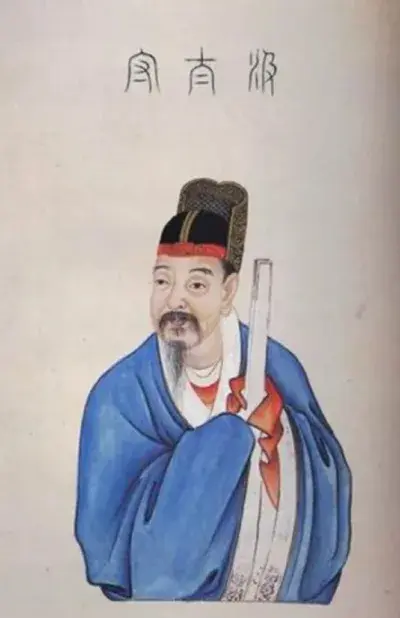
汲黯
Ji An (汲黯, died 112 BCE), styled Changru, was a prominent statesman, fearless critic, and revered high minister of the Western Han dynasty during the reign of Emperor Wu, native to Puyang (in modern Henan Province). Born into an illustrious lineage of hereditary ministers tracing back to the ancient State of Wei, Ji An entered public life through hereditary privilege and rose to become one of the most prominent moral voices…
Ji An (汲黯, died 112 BCE), styled Changru, was a prominent statesman, fearless critic, and revered high minister of the Western Han dynasty during the reign of Emperor Wu, native to Puyang (in modern Henan Province). Born into an illustrious lineage of hereditary ministers tracing back to the ancient State of Wei, Ji An entered public life through hereditary privilege and rose to become one of the most prominent moral voices in the imperial court. Throughout his career, Ji An was renowned for his unyielding integrity, fearless direct remonstrance, and adherence to Daoist Huang-Lao governance. As Governor of Donghai and later Huaiyang, he implemented non-interventionist administration, delegating routine tasks to capable subordinates and governing through broad principles, bringing peace and prosperity to his commanderies. At court, he rose to become Chief Commandant of Noble Orders, ranking among the Nine Ministers. He was famous for confronting Emperor Wu directly—famously rebuking the sovereign for "harboring boundless inner desires while displaying outward benevolence"—and vehemently resisting the expansionist campaigns against the Xiongnu and the harsh penal innovations of legalist officials such as Zhang Tang and Gongsun Hong. Despite his relentless criticism, Emperor Wu held him in profound awe and reverence, praising him as a true "pillar of the state" (sheji zhi chen). Sima Qian grouped Ji An with Zheng Dangshi in the Records of the Grand Historian, establishing him as an enduring archetype of righteous remonstrance in Chinese history.
Appointed Crown Prince's Groom under Emperor Jing through family recommendation, respected for his strict dignity.
Appointed Imperial Messenger following Emperor Wu's accession, conveying imperial decrees and diplomatic missions.
Refused to meddle in Yue tribal feuds; opened state granaries in flood-stricken Henan on his own authority to save starving victims.
Assigned to govern Donghai Commandery; applied Huang-Lao governance of quietude and achieved exemplary peace within a year.
Recalled to the capital and promoted to the Nine Ministers; delivered fearless remonstrances criticizing excessive court ambition.
Transferred to govern the capital district; administered justice strictly regardless of noble interference.
Strongly condemned the squandering of imperial wealth to reward Xiongnu defectors while executing traders; dismissed on minor charges.
Reappointed Governor of Huaiyang by Emperor Wu to calm restive regions; governed from his sickbed with great success.
Died peacefully while serving as Governor of Huaiyang; Emperor Wu honored his family with high hereditary offices.
Ji An's ancestors enjoyed high prestige and royal favor under the ancient rulers of the State of Wei. By Ji An's generation, seven consecutive generations of his clan had attained high bureaucratic rank as ministers and grand masters. During the reign of Emperor Jing, Ji An entered imperial service on his father's recommendation, serving as Crown Prince's Groom to Prince Liu Che. Endowed with strict dignity and uncompromising decorum, he earned the wary respect of palace officials and imperial courtiers from an early age.
When Emperor Jing died and Liu Che ascended the throne as Emperor Wu, Ji An was appointed an Imperial Messenger. Shortly thereafter, tribal warfare erupted in the southeast between the Minyue and the Ouyue kingdoms. Emperor Wu dispatched Ji An to inspect the southern frontier. Ji An traveled only as far as Wu before turning back to Chang'an, reporting to the throne: "The Yue tribes constantly clash among themselves as part of their indigenous customs. It is not worthy of an imperial envoy from the Son of Heaven to involve himself in such petty frontier conflicts."
Soon afterward, a massive fire broke out in Henan Commandery, destroying over a thousand civilian households. Emperor Wu again sent Ji An to investigate. Upon his return, Ji An reported: "The local families accidentally allowed a fire to spread because their homes were packed densely together; it warrants no great imperial anxiety. However, as I passed through Henan Commandery, I witnessed over ten thousand civilian households suffering from catastrophic floods and droughts, with starving parents and children resorting to cannibalism. In this desperate emergency, I took the liberty of using the imperial tally entrusted to me to open the government granaries and distribute grain to save the dying populace. I now return the imperial tally and submit myself to whatever punishment Your Majesty decrees for forging an imperial order."
Emperor Wu recognized Ji An's deep compassion and moral courage in prioritizing human life over rigid procedural protocol. The Emperor pardoned him and promoted him to Magistrate of Xingyang. However, Ji An considered serving as a mere county magistrate humiliating for a scion of an ancient ministerial house, and he retired to his hometown citing ill health. Upon learning of this, Emperor Wu summoned him back to the capital and appointed him Grand Master of the Palace.
While serving in the imperial capital, Ji An's fierce and unyielding temperament led him to repeatedly criticize court policies to Emperor Wu's face. Unable to tolerate his persistent bluntness at court, the Emperor appointed him Governor of Donghai Commandery.
Ji An was an ardent student and practitioner of the Daoist Huang-Lao philosophy. In administering Donghai, he championed quietude, minimal interference, and social recuperation. He carefully selected capable commandery assistants and clerks, entrusting them with routine judicial and administrative burdens, while he personally focused only on setting the broad overarching policy direction. Because he was chronically afflicted with poor health, Ji An frequently spent weeks resting within his private quarters without stepping out. Yet after just over a year of this non-interventionist governance, Donghai flourished with exemplary public order, civic virtue, and social prosperity, earning universal acclaim from the populace.
Impressed by these administrative achievements, Emperor Wu recalled Ji An to the capital and elevated him to Chief Commandant of Noble Orders, a prestigious post ranking among the Nine Ministers. In this role, Ji An maintained his characteristic broad-brush administrative approach, upholding fundamental imperial traditions without entangling the state in petty legal minutiae.
Ji An's personal demeanour was famously proud and aloof. He loathed hypocrisy and moral weakness, refusing to associate with men whose principles he questioned. Courtiers and scholars who lacked integrity avoided his presence. Yet beneath his austere exterior, Ji An was devoted to classical scholarship, championed chivalric loyalty, and displayed extraordinary moral courage in court debates.
When the Emperor's maternal uncle Tian Fen, the Marquis of Wu'an, became Chancellor, his authority eclipsed all others at court. Senior officials earning two thousand bushels knelt in homage when visiting his residence, and Tian Fen arrogantly accepted their subjection without returning the courtesy. Only Ji An refused to kneel, greeting the omnipotent Chancellor with nothing more than a formal standing bow with clasped hands, a show of independence that Tian Fen was powerless to punish. The Prince of Huai'nan, Liu An, who harbored treasonous ambitions, confessed to his co-conspirators that he feared Ji An alone: "Ji An loves outspoken remonstrance and would gladly sacrifice his life for dynastic righteousness; he cannot be seduced by corrupt benefits. As for Chancellor Gongsun Hong, overturning him is as effortless as brushing off a dried leaf!"
During the early and middle years of Emperor Wu's reign, the young sovereign gathered Confucian scholars and literary figures from across the empire, frequently boasting of his ambition to recreate the utopian golden ages of Yao and Shun. During one such enthusiastic imperial monologue, Ji An stood up from the ranks of ministers and sharply retorted: "Your Majesty harbors boundless inner desires while merely parading outward benevolence. How could you ever hope to replicate the genuine achievements of Emperor Yao and Shun!"
The entire court fell silent in terror. Emperor Wu's face turned crimson with anger. Without uttering a word, the Emperor abruptly terminated the court session and swept into his inner palace. The assembled ministers trembled for Ji An's life. Once inside his private chambers, Emperor Wu remarked indignantly to his attendants: "Ji An is excessively blunt and stubborn!" When senior courtiers later admonished Ji An for humiliating the Son of Heaven, Ji An replied unflinchingly: "Did the Emperor establish high ministers and counselors merely to have us flatter him, bow servilely, and push our sovereign into moral ruin? Now that I occupy the rank of the Nine Ministers, should I prize my personal life above the supreme safety of the empire's altars?"
Sometime later, Ji An was incapacitated by severe illness for three months. When the court attendant Zhuang Zhu requested an extended medical leave on his behalf, Emperor Wu asked: "What kind of man is Ji An really?" Zhuang Zhu responded: "In managing routine clerical tasks, Ji An displays no extraordinary talent. But if entrusted with assisting a youthful sovereign and guarding the dynastic heritage, no mountain of wealth could bribe him, and no threat of death could intimidate him. Even fierce warriors like Meng Ben and Xia Yu could not bend his righteous resolve." Emperor Wu sighed in admiration: "Indeed! In antiquity, men spoke of loyal ministers who protected the state altars. Ji An comes remarkably close to such men."
Emperor Wu treated Ji An with unparalleled deference. When General-in-Chief Wei Qing attended imperial audiences, Emperor Wu would casually converse with him while lounging sideways on the edge of his bed. When Chancellor Gongsun Hong requested an audience, the Emperor occasionally received him without wearing an official court cap. But whenever Ji An requested an audience, Emperor Wu would never dare meet him unless he was fully dressed in formal ceremonial robes and cap. On one occasion, the Emperor was resting inside his military pavilion when he noticed Ji An walking toward the tent with a scroll in hand. Caught without his cap, Emperor Wu hurriedly retreated deep behind the inner curtains, dispatching a palace eunuch to accept and approve Ji An's memorial from afar.
During this period, General-in-Chief Wei Qing's prestige soared after his military victories against the Xiongnu, and his elder sister Wei Zifu was installed as Empress. Courtiers and grandees obsequiously bowed before Wei Qing in total submission. Only Ji An continued to salute Wei Qing as an equal peer with a formal bow. When someone cautioned Ji An that the Emperor wished everyone to humble themselves before the General-in-Chief, Ji An replied: "Does having a friend who bows to him as an equal actually diminish the General-in-Chief's honor?" When Wei Qing learned of this exchange, he respected Ji An even more deeply, frequently visiting Ji An's residence to seek his strategic advice on military and civil administration.
Meanwhile, the legalist official Zhang Tang was appointed Commandant of Justice, gaining imperial favor by crafting convoluted legal statutes and implementing draconian penalties. Ji An despised this harsh legalism and repeatedly attacked Zhang Tang in open court: "As a senior minister, you neither promote the benevolent virtue of the founding emperors nor pacify the legitimate grievances of the common folk. Instead, you mutilate ancient laws to build your personal fame, even daring to overturn the sacred statutes established by Emperor Gaozu! A man who rules by such cruelty will surely die without descendants!" When Zhang Tang cleverly countered by citing legal loopholes, Ji An exploded with righteous fury: "The world warns that pen-pushing clerks must never be made supreme ministers, and how true that is! If your methods prevail, the people of the empire will stand frozen in terror, unable to move a step or look forward with open eyes!"
Furthermore, Ji An vehemently opposed the endless military expansions into the northern steppes, arguing that military expeditions exhausted the treasury, ruined agriculture, and impoverished commoners. He urged Emperor Wu to restore the traditional peace and marriage alliances (heqin) with the Xiongnu. Watching upstart legalists and opportunists rapidly surpass him in rank, Ji An bluntly remarked to Emperor Wu: "Your Majesty promotes ministers like stacking firewood—the latest pieces are simply piled on top!" Emperor Wu remained silent, later telling his attendants: "Ji An's stubborn directness has truly crossed all reasonable boundaries."
In 121 BCE, the Xiongnu Hunye King executed the Xiuchu King and surrendered to Han with over forty thousand nomads. Emperor Wu, overjoyed at this geopolitical victory, emptied the imperial treasury to reward the defectors and requisitioned twenty thousand civilian carriages from the Guanzhong region to transport them. When civilian horses ran short, the Emperor flew into a rage and ordered the execution of the Magistrate of Chang'an.
Ji An stepped forward boldly in court: "The Magistrate of Chang'an is blameless! If Your Majesty wishes to intimidate the realm, you need only execute me, and the people will willingly surrender their horses! The Xiongnu rebelled against their own chieftain to submit to us; it is enough for local commanderies along the road to supply them in orderly sequence. Why must the entire central realm be plunged into chaos to cater to barbarian defectors?" Later, when more than five hundred merchants in Chang'an were sentenced to death under contraband laws for trading with the arriving nomads, Ji An rushed to Weiyang Palace, protesting vehemently: "Our soldiers have bled and died fighting the Xiongnu for years at enormous imperial expense. Now, instead of distributing barbarian spoils to console the families of fallen soldiers, Your Majesty exhausts the state treasury on defectors and butchers hundreds of innocent merchants over minor commerce! This is truly sacrificing the branches to nourish the leaves!" Emperor Wu rejected his pleas with annoyance, and months later, Ji An was prosecuted on minor administrative pretexts, escaping execution through an imperial amnesty and retiring into rural obscurity.
In 118 BCE, following the introduction of the new five-zhu coins, counterfeit minting became rampant, especially in the southern regions of Chu. Recognizing Huaiyang Commandery as the strategic crossroads to Chu, Emperor Wu decided that only an official of Ji An's moral stature could stabilize the district. Summoned to court, the aging Ji An bowed to the floor, pleading that chronic illness rendered him unfit for active governance and requesting an advisory post in the palace. Emperor Wu comforted him warmly: "Do you look down upon Huaiyang? I will recall you soon. The officials and people of Huaiyang are currently in conflict; I merely need your prestige. You may govern while resting in your bed!"
Before departing, Ji An paid a farewell visit to Li Xi, the Grand Minister of Agriculture, urging him: "Zhang Tang's craftiness is sufficient to deflect criticism and his deceit is sufficient to conceal errors. He manipulates laws to flatter the sovereign and terrorize the state. If you do not impeach him soon, you will be destroyed alongside him!" Li Xi, terrified of Zhang Tang, remained silent. Upon reaching Huaiyang, Ji An governed in strict accordance with his Huang-Lao philosophy, delegating tasks and resting in his bedchamber. Within six years, Huaiyang enjoyed peace, order, and civil tranquility.
When Zhang Tang's corrupt machinations were eventually exposed, leading to his suicide, Emperor Wu recalled Ji An's earlier warning to Li Xi, punishing Li Xi for cowardice and granting Ji An the enhanced salary and dignity of a vassal chancellor. In 112 BCE, Ji An passed away peacefully in his official residence in Huaiyang. Deeply moved by his unswerving loyalty, Emperor Wu elevated his younger brother Ji Ren to the Nine Ministers and his son Ji Yan to Chancellor of a princely realm.
Sima Qian recorded in the Records of the Grand Historian (Shiji, Biography of Ji and Zheng): "Ji An's strict adherence to principle was first proven when he boldly distributed grain in Henan. He debated the Marquis of Wu'an in court and confronted the Emperor directly, revered everywhere for his solemn severity. He unmasked the deceit of Gongsun Hong and Zhang Tang and resisted the squandering of wealth on Xiongnu defectors. His sincere loyalty and moral passion made him truly an exemplar of righteous path-walking in antiquity!"
Ban Gu remarked in the Book of Han (Hanshu, Biography of Zhang, Feng, Ji, and Zheng): "Zhang Shizhi's adherence to law, Feng Tang's discourse on generalship, Ji An's uprightness, and Zheng Dangshi's recommendation of worthy men—without such virtues, how could they have attained immortal fame?"
Emperor Wu of Han once remarked to his inner court: "In ancient times, men spoke of ministers who served as true pillars of the state. Ji An comes remarkably close to them!"
The Song scholar Qian Shi noted in Notes on the Two Han Dynasties (Lianghan Biji): "Emperor Wu possessing Ji An was like having a unicorn or a phoenix—a true treasure of the age. His courageous confrontational remonstrances never wavered to accommodate imperial whim; the rock-solid stability of the Han dynastic altars relied profoundly upon the strength of such noble men."
The Ming writer Gui Youguang wrote in Collected Works of Master Zhenchuan: "A truly righteous minister causes the sovereign to rectify his demeanor, stops evil conspiracies in their tracks, and terrifies foreign enemies into submission. Among the greatest of them across history are Ji An, Xiao Wangzhi, Li Gu, Song Jing, Zhang Jiuling, and Fan Zhongyan."
FIGURES ASSOCIATED WITH THIS DYNASTY