Birth in Northern Zhili
Born into an impoverished agricultural household in Wangqingtuo, Wuqing County, Shuntian Prefecture.
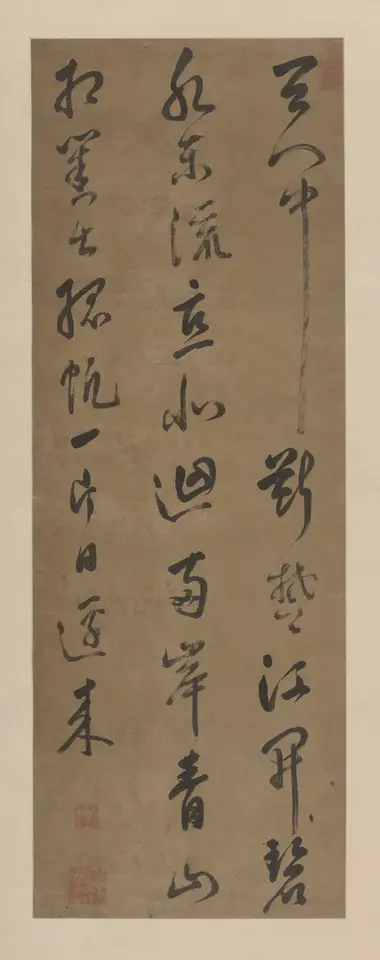
曹化淳
Cao Huachun (曹化淳, 1598–1662), courtesy name Xianmei (显美), art name Zhilin (止林), was a native of Wangqingtuo in Wuqing County, Northern Zhili (modern Wuqing District, Tianjin), and a prominent eunuch statesman who served as Eunuch Secretarial Remonstrator of the Directorate of Ceremonial and Director of the Eastern Depot during the late Ming Dynasty. Entering the inner court in his youth, he demonstrated sharp intellect and…
Cao Huachun (曹化淳, 1598–1662), courtesy name Xianmei (显美), art name Zhilin (止林), was a native of Wangqingtuo in Wuqing County, Northern Zhili (modern Wuqing District, Tianjin), and a prominent eunuch statesman who served as Eunuch Secretarial Remonstrator of the Directorate of Ceremonial and Director of the Eastern Depot during the late Ming Dynasty. Entering the inner court in his youth, he demonstrated sharp intellect and scholarly dedication, attaining proficiency in classical literature, calligraphy, and painting. His virtues and learning won him the mentorship of Wang An, the upright senior eunuch of the Directorate of Ceremonial, who assigned him to the household of Prince Xin, Zhu Youjian (the future Chongzhen Emperor), as an attendant and companion. During the Tianqi reign, the tyrannical eunuch Wei Zhongxian seized supreme domestic authority, murdered Wang An, and purged the inner court. Cao Huachun was subsequently exiled to the secondary capital Nanjing in disgrace. Following the accession of the Chongzhen Emperor in 1627 and the prompt downfall of Wei Zhongxian's faction, Cao Huachun was immediately recalled to the capital and entrusted with crucial responsibilities. Throughout the early and middle Chongzhen era, he held pivotal posts including Eunuch Secretarial Remonstrator of the Directorate of Ceremonial, Director of the Eastern Depot, and Supreme Superintendent of the Capital Garrisons. He played an instrumental role in reversing hundreds of fraudulent verdicts manufactured by the Wei clique, rehabilitating victimized scholar-officials, moderating the oppressive practices of the secret police, and reinforcing metropolitan defense forces. Renowned among court eunuchs for his modesty, literary refinement, and law-abiding moderation, he retired due to failing health in 1639. When Beijing fell in 1644, Cao Huachun had already lived in his rural home for six years; persistent rumors accusing him of opening the city gates to rebel invaders were entirely groundless, and he was officially vindicated through an imperial investigation under the Shunzhi Emperor of the Qing Dynasty. He passed away peacefully in his hometown in 1662 at the age of sixty-four.
Born into an impoverished agricultural household in Wangqingtuo, Wuqing County, Shuntian Prefecture.
Entered the inner palace around the age of twelve, demonstrating diligent scholarship and earning the patronage of Director Wang An.
Assigned to serve Prince Xin, Zhu Youjian, providing meticulous care and forging a profound bond of personal trust.
Implicated in the political purge of Wang An by Wei Zhongxian, stripped of office, and banished to Nanjing.
Recalled to the capital by the newly enthroned Chongzhen Emperor following the eradication of the Wei faction.
Elevated to Eunuch Secretarial Remonstrator of the Directorate of Ceremonial; funded the construction of Daoist and Buddhist pavilions in his hometown.
Appointed Director of the Eastern Depot, overseeing imperial secret surveillance and mitigating procedural abuses against officials.
Commissioned to supervise the Metropolitan Garrisons to upgrade military preparedness; submitted three retirement petitions due to coughing blood.
Permitted to resign on medical grounds in February, returning home to live as a reclusive scholar-gentleman.
Traveled to Beijing after the fall of the capital to petition the Qing regent Dorgon for the honorable burial of the late Chongzhen Emperor and Empress Zhou.
Submitted a memorial to clear his name regarding false allegations of opening Beijing's gates; fully exonerated following an official Qing investigation.
Passed away at his estate in Wangqingtuo at sixty-four, buried in his family ancestral cemetery in Wuqing.
Cao Huachun was born in 1598 in Wangqingtuo, Wuqing County, Shuntian Prefecture (modern Wuqing District, Tianjin). Amidst the rural economic hardships of the metropolitan periphery, sending younger sons to the palace service was a widespread social custom. Entering the imperial court around the age of twelve, Cao Huachun displayed unusual intellectual acuity and quiet scholarly devotion. Enrolled in the Neishutang (Palace Academy for Eunuchs), he not only mastered classical Confucian texts and imperial administrative codes but also developed sophisticated talents in classical poetry, calligraphy, and traditional ink painting, distinguishing himself from ordinary eunuchs.
Wang An, the leading Director of the Directorate of Ceremonial who was noted for his adherence to Confucian ethical norms and administrative rectitude, recognized Cao Huachun's moral character and erudition, taking him under his personal wing. During the Taichang and early Tianqi eras, when Prince Xin, Zhu Youjian, set up his private princely household, Wang An selected Cao Huachun to serve the young imperial prince. In the prince's residence, Cao Huachun attended to Zhu Youjian with unfailing fidelity, modesty, and discretion, assisting in daily routines and literary tutoring, which established enduring mutual trust between prince and attendant.
During the mid-Tianqi reign, the eunuch dictator Wei Zhongxian consolidated absolute autocratic power in the inner court, launching brutal persecutions against the Donglin faction and orchestrating the demotion and murder of Wang An. Determined to extinguish Wang An's former proteges, the Wei faction targeted Cao Huachun due to his deep ties to Wang An and his proximity to the heir-presumptive. Finding a pretext, Wei Zhongxian had Cao Huachun expelled from the imperial capital and relegated to secondary exile in Nanjing. During his years of forced seclusion in the southern capital, Cao Huachun withdrew from social contacts and devoted his time to scholarly and artistic pursuits, thus escaping the violent political purges of the late Tianqi court.
In autumn 1627, the Tianqi Emperor passed away without male issue, and Prince Xin, Zhu Youjian, ascended the imperial throne as the Chongzhen Emperor. Demonstrating extraordinary political resolve, the young monarch dismantled Wei Zhongxian's faction within months. Seeking incorruptible and reliable loyalists from his princely days to administer palace channels, the Chongzhen Emperor immediately issued a special edict summoning Cao Huachun back to Beijing.
Upon arriving at the capital, Cao Huachun was showered with imperial favor. In the early Chongzhen reign, the court undertook the monumental task of reviewing thousands of wrongful convictions orchestrated by the Wei clique, including the fatal framing of renowned martyrs such as Yang Lian and Zuo Guangdou. The Chongzhen Emperor appointed Cao Huachun to coordinate with the judicial ministries to re-examine confiscated archives and prison dockets. Drawing on his firsthand memory of Wei's judicial terror, Cao Huachun handled dossiers with strict equity, overturning fabricated charges and securing the exoneration and restoration of over two thousand victimized officials and their descendants, winning broad respect across the civil bureaucracy.
By 1631, Cao Huachun was elevated to Eunuch Secretarial Remonstrator of the Directorate of Ceremonial, wielding significant influence over state memorials and imperial rescripts. In the summer of that year, expressing gratitude for imperial benevolence, he funded the construction of the Xuandi Temple and Guanyin Pavilion in his native town of Wangqingtuo, composing an eloquent stone inscription himself. In the inner court, he managed memorial transmissions with scrupulous reserve and never indulged in arrogant overreach, maintaining the steadfast confidence of the emperor.
As domestic rebel uprisings multiplied and external pressures from the Later Jin (Qing) empire intensified, the Chongzhen Emperor grew deeply suspicious of civil officials and increasingly relied on inner court confidants to oversee intelligence and military operations. In 1635, the emperor commissioned Cao Huachun as Director of the Eastern Depot. Traditionally feared as a notorious instrument of arbitrary terror, the Eastern Depot under Cao Huachun saw a sharp shift away from torture and extortion. He strictly forbade depot agents from fabricating charges or shaking down civil officials and ordinary citizens, decreeing that all major cases had to be remanded to regular judicial courts for public trial, which significantly reduced social resentment.
In 1638, with Qing armies penetrating the Great Wall passes to menace Beijing's immediate surroundings and rebel armies raging in the Central Plains, metropolitan defense reached a critical juncture. The Chongzhen Emperor conferred upon Cao Huachun the supreme command over the capital metropolitan garrisons. Confronted with chronic institutional decay, extensive ghost rosters, and decrepit military materiel, Cao Huachun audited troop rolls, purged inflated pay vouchers, renovated firearms and fortifications, and revitalized drill discipline, restoring order to the defensive ring around the capital. During this period, he supported Minister of War Yang Sichang's comprehensive strategic deployment and repeatedly defended the battlefield contributions of surrendered commander Gao Jie before the throne.
The immense strain of directing the Directorate of Ceremonial, the Eastern Depot, and the Metropolitan Garrisons took a grave toll on his deteriorating health. In the winter of 1638, suffering from chronic pulmonary hemorrhage, Cao Huachun recognized the perils of the worsening dynastic crisis and sought honorable retirement. He submitted three impassioned memorials requesting release from all official posts. Reluctantly accepting his pleas, the Chongzhen Emperor granted him honorable discharge in February 1639.
In the spring of 1639, Cao Huachun departed the Forbidden City and returned to his native estate in Wangqingtuo. Adopting a quiet rural life, he tended gardens, lived simply, and conversed with local scholars, studiously refraining from interfering in local governance or imperial politics. When his elder brother Cao Huayu passed away in 1643, Cao Huachun personally managed the funeral rites and constructed a memorial pavilion.
In April 1644, Li Zicheng's Shun rebel army captured Beijing, and the Chongzhen Emperor committed suicide on Coal Hill. In June, the Qing army under Prince Regent Dorgon occupied the capital. Cao Huachun, who had been living peacefully in his hometown for six full years, was overcome with profound sorrow upon learning of the emperor's tragic demise. Disregarding his personal safety, he hastened to Beijing and submitted a formal plea to Dorgon, entreating the new authorities to accord the late Chongzhen Emperor and Empress Zhou a funeral commensurate with imperial status. The Qing administration respected his loyalty and conducted an honorable burial.
However, during the turbulent dynastic transition, certain Southern Ming polemicists and irresponsible anecdotal accounts (such as the Liehuang Xiaoji) falsely asserted that Beijing had fallen because Cao Huachun opened Zhangyi Gate to welcome rebel forces. To refute this defamatory rumor, Cao Huachun submitted an exhaustive petition to the Shunzhi Emperor in 1653, providing official copies of his 1639 imperial retirement decree and local certificates proving he had been in Wuqing for years when Beijing collapsed.
An investigation ordered by the Shunzhi Emperor through the Ministry of Rites confirmed that the eunuchs who had opened Zhangyi Gate were Du Xun and Wang Dehua, whereas Cao Huachun was completely innocent of betrayal. The Shunzhi Emperor issued an imperial decree clearing his name and forbidding the dissemination of such libels. Cao Huachun died peacefully at his home in 1662 at the age of sixty-four.
In the aftermath of Wei Zhongxian's fall, Cao Huachun worked closely with the judicial organs to systematically re-examine controversial trials from the Tianqi reign. His equitable and painstaking efforts directly resulted in the posthumous rehabilitation or legal release of more than two thousand officials, scholars, and their families, restoring moral integrity to the imperial administration.
During his tenure as Director of the Eastern Depot from 1635 onwards, Cao Huachun suppressed the pervasive culture of extortion and torture that had characterized the secret service under previous regimes. By enforcing lawful trial procedures and curbing corrupt undercover operatives, he mitigated the political oppression of the late Ming bureaucracy.
Assuming the supreme command of the Metropolitan Garrisons in 1638, Cao Huachun tackled long-standing corruption, eliminated payroll fraud, renovated weaponry, and enforced rigorous training routines. His administrative diligence substantially reinforced the defensive posture of the capital region during a critical wartime emergency.
In the catastrophic aftermath of the dynastic fall in 1644, Cao Huachun traveled to Beijing at personal peril to petition the newly established Qing regency for the honorable interment of the Chongzhen Emperor and his empress, fulfilling his duty as an imperial subject with solemn filial devotion.
FIGURES ASSOCIATED WITH THIS DYNASTY