Born in Baoshan
Born into a Muslim commercial household in Baoshan, Yunnan; adopted by his maternal aunt and took the surname Du.
杜文秀
Du Wenxiu (杜文秀; 1823–1872), original name Yang Xiu and courtesy name Xiufeng, was a native of Baoshan County, Yongchang Prefecture, Yunnan. He was the supreme commander of the multi-ethnic Panthay Rebellion and founder of the Dali Marshalate during the Xianfeng and Tongzhi eras of the Qing Dynasty. Born into a cultivated Muslim merchant family, he showed early academic brilliance, earning his licentiate (Xiucai) degree at…
Du Wenxiu (杜文秀; 1823–1872), original name Yang Xiu and courtesy name Xiufeng, was a native of Baoshan County, Yongchang Prefecture, Yunnan. He was the supreme commander of the multi-ethnic Panthay Rebellion and founder of the Dali Marshalate during the Xianfeng and Tongzhi eras of the Qing Dynasty. Born into a cultivated Muslim merchant family, he showed early academic brilliance, earning his licentiate (Xiucai) degree at fourteen and becoming a government-stipended scholar (Linshan Shengyuan) at sixteen. In 1845, when local Qing officials and gentry-led militias perpetrated the horrific Baoshan Massacre against the Muslim population, Du traveled thousands of li to Beijing to petition the Censorate, but was rejected by an indifferent imperial bureaucracy that protected corrupt officials. In 1856, after the Governor of Yunnan issued secret orders commanding local gentry to exterminate Muslim communities, Du initiated an armed insurrection in Menghua (present-day Weishan). Uniting Muslim, Han, Yi, Bai, and Dai ethnic groups, he captured the strategic western stronghold of Dali and established the revolutionary Dali Marshalate, proclaimed as "Generalissimo of the Armed Forces." Discarding the Qing calendar in favor of ancient cyclical dating and traditional Ming dress, he advocated an enlightened political doctrine: uniting Muslims and Han into an undivided alliance, expelling the Manchu dynasty, eliminating official graft, and establishing communal harmony among Confucian, Islamic, and indigenous traditions. His regime instituted fair taxation and opened civil examinations, expanding to govern fifty-three counties across western Yunnan. In 1867, he dispatched an army of two hundred thousand on an eastward expedition toward Kunming, but the campaign was ultimately compromised by the collapse of the Taiping Heavenly Kingdom and Qing counter-insurgency tactics. In 1872, Qing forces commanded by Yunnan Governor Cen Yuying besieged Dali. As food supplies ran out, Du resolved to sacrifice his life to prevent the mass slaughter of the city's inhabitants. After swallowing lethal poison, he was carried in a sedan chair to the Qing encampment, trading his life in a desperate appeal for civilian mercy. He died as he reached the enemy camp on December 26, 1872, at the age of forty-nine. His sixteen-year armed struggle stands as a momentous epic of inter-ethnic resistance against Qing feudal tyranny.
Born into a Muslim commercial household in Baoshan, Yunnan; adopted by his maternal aunt and took the surname Du.
Earned the Xiucai degree at age fourteen and became a government-funded scholar (Linshan Shengyuan) at sixteen.
Traveled to Beijing to appeal the Baoshan Massacre; stonewalled by the imperial Censorate, awakening his anti-Qing resolve.
Mobilized ethnic communities to rebel following provincial extermination orders; captured Dali and founded the Marshalate.
Abolished Qing calendars and queues, instituted multi-ethnic solidarity, and promoted agriculture across western Yunnan.
Crushed successive Qing military offensives; coordinated strategies with Taiping Prince Shi Dakai, controlling fifty-three counties.
Mobilized two hundred thousand soldiers to besiege the provincial capital of Kunming; forced to retreat when supply lines were severed.
Encircled in Dali by superior Qing armies under Cen Yuying; held the isolated mountain capital through over a year of famine.
Drank poison on December 26 and surrendered to the Qing camp to plead for the lives of Dali’s civilians; died at age forty-nine.
Du Wenxiu was originally named Yang Xiu, born into a respectable Muslim merchant household in Baoshan County, Yongchang Prefecture. At age ten, he was adopted as heir by his maternal aunt, adopting the surname Du and the personal name Wenxiu. Gifted with extraordinary intellect, he immersed himself in Confucian classical texts alongside Islamic studies. In 1837, at age fourteen, he passed the county examinations to become a Xiucai, and at sixteen, he advanced to government-stipended scholar (Linshan Shengyuan), celebrated across western Yunnan for his literary erudition.
During the late Daoguang era, ethnic conflict intensified across Yunnan over silver and copper mining monopolies. Corrupt imperial officials colluded with Han landlord militias known as the Xiangbahui to extort Muslim communities. In April 1845, the Xiangbahui, acting in concert with local magistrates, perpetrated a systematic massacre in Baoshan, murdering thousands of innocent Muslim residents. Outraged by this atrocity, the twenty-two-year-old Du Wenxiu was chosen by his community to seek justice. Braving immense hardship, he walked thousands of li to Beijing to present formal petitions to the imperial Censorate.
However, the decrepit Qing bureaucracy engaged in mutual protection. Rather than investigating the perpetrators, imperial ministers dismissed the petition as collective agitation and referred the matter back to Yunnan provincial authorities, leaving the murders unpunished. Returning home empty-handed, Du realized that judicial redress under the Qing regime was an illusion, resolving to dedicate his life to armed revolution against imperial tyranny.
In 1855, violent clashes erupted over the Shiyang silver mine in Chuxiong. Yunnan Governor-General Hengchun openly encouraged gentry militias to slaughter Muslim miners. In early 1856, the provincial governor issued secret directives ordering all regional magistrates to execute extermination campaigns against Muslim populations. When Du Wenxiu protested publicly, he was arrested by local authorities. In the autumn of 1856, rebel forces led by Cai Chunfa assaulted the local jail and liberated him.
In August 1856, Du raised the standard of revolt in Menghua (present-day Weishan), issuing passionate proclamations calling upon all ethnic groups to unite against Qing oppression. Tens of thousands of Muslims, Han, Yi, Bai, and Dai joined the movement. On September 16, Du’s army captured the strategic lakeside fortress of Dali. On October 17, tribal and rebel leaders unanimously acclaimed Du as "Generalissimo of the Armed Forces" (Zongtong Bingma Dayuanshuai), officially proclaiming the Dali revolutionary regime.
Du converted the former regional command headquarters into the Generalissimo's Palace, inscribing an iconic couplet in the central council hall: "Heaven breeds heroes to restore the world of the Han; Earth yields champions to shatter the domain of the barbarians!" In institutional statecraft, Du discarded Qing dynastic reign titles, adopting the cyclical sexagenary system, restoring traditional pre-Qing garments, and employing plain white military banners. He issued his famous political program: "Uniting Muslims and Han into one body, raising the standard of righteousness, expelling the Manchus, eradicating corruption, and rescuing the people from misery." By honoring Islamic, Buddhist, and indigenous local beliefs simultaneously, he forged an unprecedented multi-ethnic coalition.
Under Du’s leadership, the Dali Marshalate pursued enlightened social and economic policies. His forces maintained strict military discipline, trading equitably with civilian merchants and prohibiting all looting. To restore regional stability, Du lowered agrarian taxes, reopened silver mines, and held civil examinations to recruit talents from all ethnic backgrounds, appointing Han, Bai, and Yi scholars to senior administrative posts.
At its zenith, the Dali regime controlled fifty-three counties across western, southern, and northern Yunnan, maintaining diplomatic and military coordination with Taiping Prince Shi Dakai’s forces. Between 1857 and 1866, Du repeatedly repulsed massive counter-offensives launched by Qing imperial armies.
In October 1867, Du determined to crush the remaining imperial strongholds in Yunnan, marshaling two hundred thousand veteran troops to launch a grand eastward campaign against Kunming. The revolutionary armies advanced rapidly, capturing Chuxiong and Lufeng and encircling Kunming. However, following the defeat of the Taiping movement in eastern China, the Qing court funneled elite imperial forces into the southwest. Yunnan Governor Cen Yuying deployed lavish bribery and ethnic division tactics, inducing rebel general Ma Rulong to defect to the imperial side. Surrounded and outmaneuvered, the expeditionary force suffered heavy losses, forcing Du to withdraw to his Dali base.
In 1871, Governor Cen Yuying and defector Ma Rulong concentrated tens of thousands of imperial troops around Dali, constructing continuous trench lines to cut off all supply routes. Du led the garrison through a heroic defense that endured for over a year. By the winter of 1872, the outer fortifications had fallen, food reserves were completely exhausted, and the besieged inhabitants were reduced to eating leather and tree roots.
Knowing Cen Yuying’s ruthless reputation for wholesale slaughter, Du resolved to sacrifice himself to preserve the civilian population. On December 26, 1872, Du bathed, donned his formal ceremonial robes, and swallowed a lethal dose of peacock-gall poison. Entering a four-man sedan chair, he was borne into the Qing encampment, declaring to the enemy generals: "I deliver myself to your justice; dismember my flesh as you will, but spare the lives of the tens of thousands of innocent civilians within the walls!"
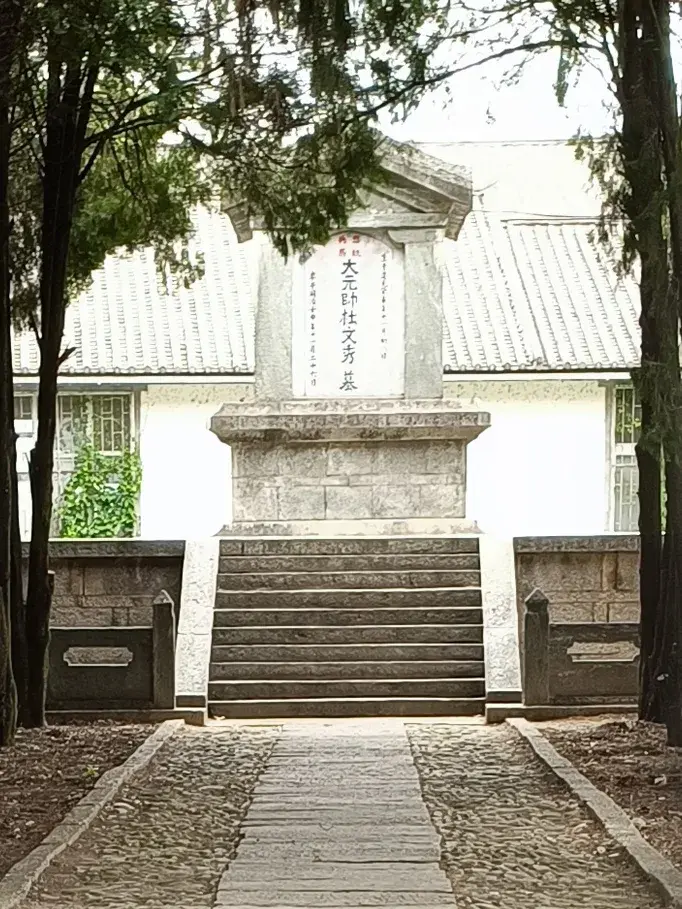
As the sedan chair reached the enemy headquarters, the poison took fatal effect, and Du passed away with serene composure. Breaching their word, Cen Yuying’s forces rampaged through Dali in a brutal three-day massacre. Cen ordered Du’s corpse decapitated, packing his head in honey and mercury to be sent to Beijing as a trophy of war. Grieving citizens secretly buried his headless remains in Xiadui Village. Du Wenxiu’s selfless martyrdom and monumental struggle for inter-ethnic harmony remain an enduring inspiration throughout southwestern China.
Rising from the scholar-gentry to command a multi-ethnic revolutionary regime, Du Wenxiu championed inter-ethnic solidarity against feudal misrule for sixteen years. In his final hours, he willingly embraced death to shield his people, standing as a heroic exemplar of self-sacrifice and integrity in modern Chinese history.
"Du Wenxiu's anti-Qing revolution embodied a brilliant operational program: uniting all nationalities on the foundation of a Muslim-Han coalition. This strategic vision represents an unprecedented milestone in the history of Chinese peasant rebellions and ethnic relations." — Bai Shouyi, eminent modern historian, Biographies of Notable Muslims (Huizu Renwu Zhi)
"Du Wenxiu took up arms as a scholar, pacifying half of Yunnan with iron discipline and deep popular benevolence. In the end, facing overwhelming odds, he gave his life to save his people; his noble soul endures forever amidst the Cangshan Mountains and Erhai Lake." — Modern Historical Consensus
FIGURES ASSOCIATED WITH THIS DYNASTY