Birth in Changqing
Born into a scholarly family in Changqing, Jinan, studying classical literature under his father.
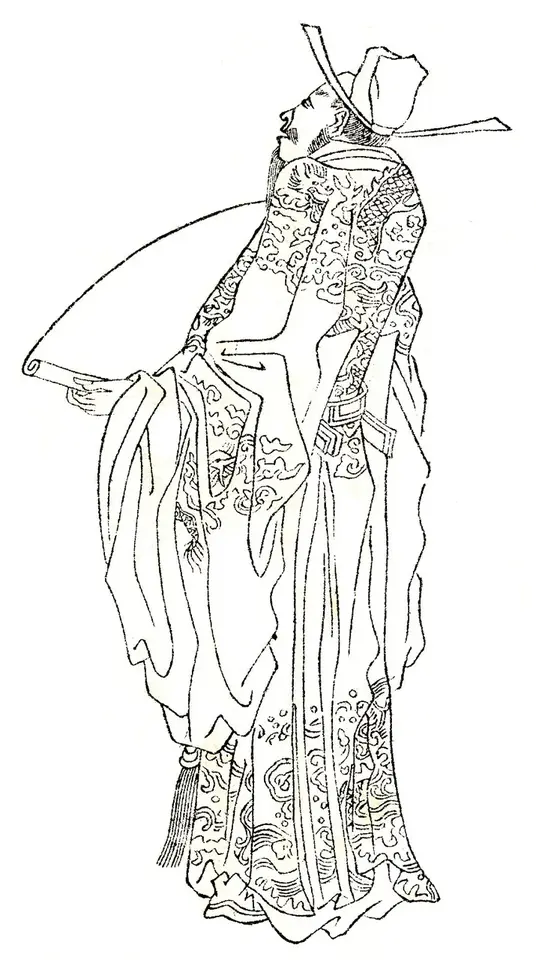
杜仁杰
Du Renjie (杜仁杰, original name Zhiyuan) was an eminent scholar, sanqu poet, and upright hermit of the Jin-Yuan transitional period, hailing from Changqing in Jinan (modern Shandong Province). Born into a distinguished scholarly household, he displayed precocious intellect and mastered classical Confucian learning alongside historical traditions. In 1224, he sat for the imperial examination in Bianjing without success,…
Du Renjie (杜仁杰, original name Zhiyuan) was an eminent scholar, sanqu poet, and upright hermit of the Jin-Yuan transitional period, hailing from Changqing in Jinan (modern Shandong Province). Born into a distinguished scholarly household, he displayed precocious intellect and mastered classical Confucian learning alongside historical traditions. In 1224, he sat for the imperial examination in Bianjing without success, during which he established a lifelong friendship with the celebrated poet Yuan Haowen. Amidst the violent wars between the Jin and Mongol forces, Du retreated to the mountains of Neixiang in Henan to escape devastation, immersing himself in poetry and music. Following the fall of the Jin Dynasty, he returned to Changqing and was invited to the Dongping secretariat of Yan Shi and his son, where Du directed the regional Confucian academy for over two decades. He revitalized rites, preserved endangered classics, and nurtured scholars, turning Dongping into a renowned cultural refuge in northern China known as the "Fairyland of the Central Plains." Kublai Khan personally summoned Du to his princely court and repeatedly offered high ministerial appointments, but Du steadfastly declined all imperial offices to preserve his moral independence. In Chinese literary history, Du Renjie was a pioneer who transformed sanqu from classical lyrics into vibrant vernacular poetry. His masterpiece The Country Bumpkin Unaware of the Theater (Zhuangjia Bu Shi Goulan) delightfully captured an illiterate farmer's first visit to an urban theater, providing an invaluable historical record of Jin and Yuan dramatic stages and performance practices.
Born into a scholarly family in Changqing, Jinan, studying classical literature under his father.
His father passed away amidst wartime turmoil, resulting in family poverty and strengthening his resolve.
Failed the imperial examination in Bianjing; formed an unbreakable brotherhood with Yuan Haowen.
Withdrew into the secluded mountains of Neixiang with friends Ma Ge and Zhang Cheng to avoid warfare.
Following the fall of Jin, accepted Yan Shi's invitation to lead the Dongping Academy, reviving Confucian education.
Summoned to Kublai Khan's princely court in Kaiping; proposed benevolent governance but firmly declined imperial appointments.
Lodged beside Jinan's Jinxian Spring, composing landscape verse and inscriptional stele at Mount Wufeng.
Authored The Country Bumpkin Unaware of the Theater and Allegory of Love, achieving immense popularity.
Passed away peacefully in Changqing at age eighty-two, widely mourned across northern intellectual circles.
Du Renjie was born in 1201 in Changqing, Jinan. His father, Du Chen, was a Jin dynasty jinshi degree holder who served as magistrate in Jingzhao before retiring home in ill health. Young Du Renjie received rigorous classical training, possessing an exceptional memory and sharp literary wit. However, during the chaotic southward invasion of Mongol forces, Du Chen died in grief in 1216, leaving the family destitute.
Experiencing dynastic collapse firsthand, Du Renjie dedicated himself to scholarly self-cultivation. In 1224, at age twenty-four, he journeyed to the Jin southern capital Bianjing for the imperial examination. Unsuccessful due to rigid examination conventions, he remained in the capital, where he met the literary giant Yuan Haowen. Recognizing each other's profound intellectual integrity and poetic depth, they forged an intimate friendship that lasted until death. As warfare consumed northern Henan, Du abandoned worldly ambitions and retreated into the Neixiang mountains with companions Ma Ge and Zhang Cheng, cultivating gardens, playing the zither, and composing poetry in pastoral seclusion.
In 1234, the final bastion of Jin collapsed at Caizhou. In the chaotic aftermath, Du returned to his native Changqing. The powerful regional warlord Yan Shi, who controlled Dongping, pursued enlightened policies by gathering surviving scholars. Yan invited Du Renjie to join his secretariat and take charge of the regional educational academy.
For more than twenty years, Du worked alongside distinguished scholars like Song Zizhen and Xu Shilong to reconstruct Confucian schools, gather hundreds of displaced youths, and teach the Confucian classics. He actively systematized regional ritual protocols, recovered endangered historical manuscripts from ruins, and protected thousands of displaced literati from enslavement. Under his guidance, Dongping flourished as a center of learning, hailed by contemporaries as the "Fairyland of the Central Plains."
Du Renjie's moral stature and profound learning attracted the attention of the Mongol leadership. In 1253, before ascending the throne, Prince Kublai established an academy in Kaiping and summoned preeminent northern Confucian elders. Du Renjie, accompanied by Yuan Haowen and Zhang Dehui, travelled north for an imperial audience. Kublai warmly received him, seeking his advice on pacifying the empire.
Du eloquently presented the necessity of adopting civil governance, reducing burdensome taxes, and protecting agricultural communities. However, when Kublai offered him high bureaucratic posts, Du firmly declined, citing old age and poor health. Recognizing his genuine desire for hermitage, Kublai respected his choice and permitted him to return home. When Kublai proclaimed the Yuan Dynasty in 1260 and repeatedly issued edicts to enlist Du into cabinet service, Du steadfastly shut his gates, exemplifying the unwavering moral integrity of a Jin loyalist.
Du spent his later years wandering the scenic mountains of Shandong. He built a quiet hermitage at the foot of Changqing's southern hills, naming it "Zhixuan" (Studio of Stopping), and styled himself "Chengxuan" after a tamarisk tree planted in his courtyard. He frequently climbed Mount Tai, Mount Wufeng, and Lingyan Temple, discussing philosophy with Daoist adepts and Buddhist monks.
In 1282, having witnessed the decline of Jin, the devastation of the Mongol conquest, and the eventual reunification under the Yuan, Du Renjie passed away peacefully at the age of eighty-two. His lifetime of incorruptible moral dignity, educational leadership, and poetic innovation made him a revered cultural patriarch of northern China.
Du Renjie's most famous artistic milestone was his groundbreaking role in developing Yuan sanqu poetry. Breaking away from the ornate conventions of Song and Jin lyric meters (ci), he injected lively northern colloquialisms, market banter, and rustic idioms into musical suites.
His magnum opus, the song suite The Country Bumpkin Unaware of the Theater (Zhuangjia Bu Shi Goulan) set to the Banshediao mode, is considered a supreme masterpiece of traditional Chinese comedic verse. Narrated from the perspective of an innocent rural farmer who enters a city theater after an abundant harvest, the suite details with hilarious humor the physical layout of wooden doors, sloping galleries, the painted faces of actors, props, orchestral accompaniments, and slapstick farces. The work is not only an artistic delight but also an irreplaceable historical document preserving the physical structure and performance atmosphere of thirteenth-century urban playhouses.
Du had a natural penchant for witty humor and loved incorporating northern folksy puns into his verse. In his suite Allegory of Love (Yuqing) set to the Shangdiao mode, he ingeniously embedded dozens of northern colloquialxiehouyu (allegorical two-part sayings) to depict the joys and heartaches of romantic love.
This linguistic experimentation harmonized peasant oral tradition with scholarly poetic craftsmanship, broadening the expressive palette of early Yuan sanqu and exerting a lasting influence on subsequent masters such as Guan Hanqing and Bai Pu.
At a time when Chinese civilization faced profound peril during the Mongol conquest, Du Renjie utilized his influence within the Dongping government to preserve the cultural lineage of northern China. He persuaded Yan Shi to grant asylum to scholar refugees, establish public academies, and sponsor lectures on traditional philosophy.
He directed large-scale efforts to collect, collate, and recarve lost Confucian commentaries and regional stele inscriptions. Many of the young scholars trained under Du, such as Wei Chu, Li Chang, and Xu Shilong, subsequently entered the Yuan imperial court and became instrumental in implementing civil bureaucratic institutions.
Du was deeply enamored of Shandong's mountainous landscape, repeatedly ascending Mount Tai and inscribing grand stone texts at the Jade Emperor Peak and South Heaven Gate, such as the Inscription on Mount Tai's Heavenly Gate.
While visiting Mount Wufeng, he composed the five-character ancient poem On Mount Wufeng on the Immortal's Terrace, vividly capturing the steep crags, rushing springs, and timeless historical lessons of dynastic rise and fall.
During his later travels through Shandong, Du composed exquisite landscape poems. While staying near Jinan's Jinxian Spring amidst continuous autumn rains, he composed Lodging at Jinxian Spring, crafting evocative lines that captured the misty melancholy of weeping woods and flowing waters.
In his shorter sanqu song suites such as Natural Beauty (Meise), he praised unadorned female elegance, writing that "without applying vermilion powder, natural grace shines forth," reflecting his lifelong aesthetic ideal of pristine natural purity.
FIGURES ASSOCIATED WITH THIS DYNASTY