Born into Eminent Clan
Born in Chang'an as the thirteenth child of his clan generation, receiving rigorous classical instruction in a family celebrated for governance and scholarship.
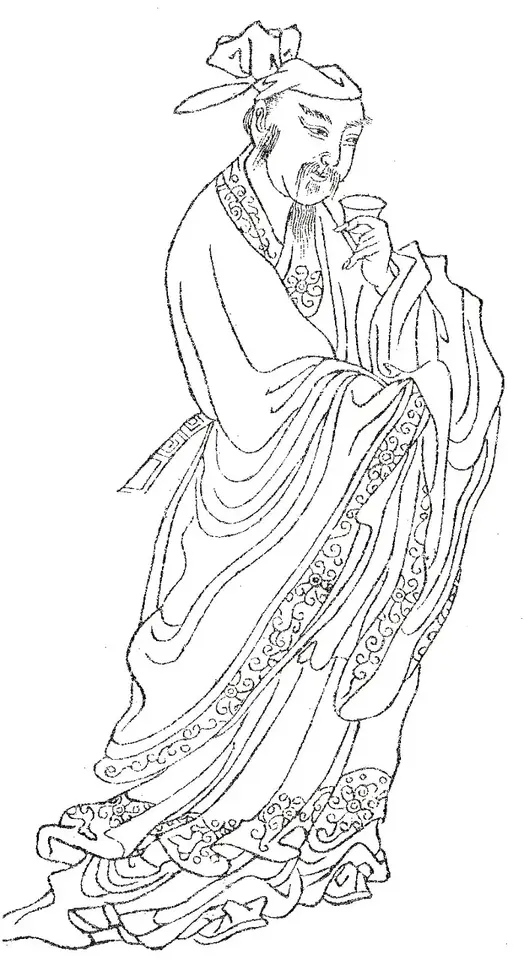
杜牧
Du Mu (杜牧, 803–852), courtesy name Muzhi (牧之), literary name Fanchuan Jushi (樊川居士) and commonly known as Du Fanchuan (杜樊川), was a native of Wannian County, Jingzhao Prefecture, and an eminent poet, prose master, and political essayist of the late Tang dynasty. He hailed from the prestigious Jingzhao Du clan, and was the grandson of Du You, grand councilor under emperors Dezong and Xianzong and the compiler of…
Du Mu (杜牧, 803–852), courtesy name Muzhi (牧之), literary name Fanchuan Jushi (樊川居士) and commonly known as Du Fanchuan (杜樊川), was a native of Wannian County, Jingzhao Prefecture, and an eminent poet, prose master, and political essayist of the late Tang dynasty. He hailed from the prestigious Jingzhao Du clan, and was the grandson of Du You, grand councilor under emperors Dezong and Xianzong and the compiler of the monumental institutional history Tongdian. In literary history, Du Mu and his contemporary Li Shangyin were celebrated as the "Lesser Li-Du", distinguished from the High Tang masters Li Bai and Du Fu. Possessing broad learning across classical texts and practical military statecraft, Du Mu aspired to revitalize the imperial state from his youth. At age twenty-three, he composed the famous prose-poetic masterpiece Rhapsody on the Epang Palace, which won instant acclaim in Chang'an for its biting allegorical critique of dynastic extravagance. In 828, he passed both the regular imperial civil service examination as an advanced scholar and the prestigious special decree examination for virtuous, upright, frank, and remonstrating scholars. He served as Collator of the Institute for the Advancement of Literature, followed by staff appointments under regional commanders in Jiangxi and Huainan. Amid the intensifying Niu-Li factional struggles and the growing domination of court eunuchs, Du Mu experienced an oscillating bureaucratic career, holding posts as Left Rectifier of Omissions, Vice Director of the Catering Bureau, and prefect in Huangzhou, Chizhou, and Muzhou. During his provincial postings, Du Mu proved to be an attentive and benevolent administrator, promoting public works and reviving local academies. Under the reign of Emperor Xuanzong, he was recalled to Chang'an, serving successively as Assistant Director in the Ministry of Personnel, Senior Compiler in the Historiography Institute, Director of the Bureau of Evaluations, Drafter of Imperial Edicts, and ultimately Secretariat Drafter. In literature, Du Mu is celebrated above all for his seven-character quatrains (qiyan jueju), marked by brisk elegance, vigorous moral tone, and profound emotional reserve. His prose essays and military treatises, notably his incisive thirteen-chapter commentary on Sunzi's Art of War, won enduring acclaim. His nephew Pei Yanhan collected his writings into the twenty-volume Fanchuan Collection.
Born in Chang'an as the thirteenth child of his clan generation, receiving rigorous classical instruction in a family celebrated for governance and scholarship.
Suffered the loss of both his grandfather Du You and his father Du Congyu, facing impoverished family circumstances while immersing himself in historical and military studies.
Wrote the celebrated Rhapsody on the Epang Palace at age twenty-three, utilizing historical allegory to admonish the imperial court against profligacy.
Composed the long five-character ancient verse Poem on Stirred Emotions, analyzing the perils of regional warlordism and advocating firm military suppression.
Passed the jinshi examination and the decree examination for frank remonstrance in the same year, receiving appointment as Collator of the Institute for the Advancement of Literature.
Accepted the invitation of Regional Surveillance Commissioner Shen Chuanshi to serve on his staff in Hongzhou, initiating a lengthy career in southern military secretariats.
Transferred to Yangzhou as secretary to Huainan Military Commissioner Niu Sengru, later becoming an Investigating Censor and encountering the courtesan Zhang Haohao.
Appointed Investigating Censor stationed in Luoyang, fortuitously avoiding the bloody Sweet Dew Incident that decimated the central bureaucracy in Chang'an.
Joined the staff of Xuan-She Surveillance Commissioner Cui Dan in Xuanzhou, embarking on extensive travels through scenic southern landscapes and writing prolific verse.
Recalled to Chang'an as Left Rectifier of Omissions, later becoming Vice Director of the Catering Bureau, repeatedly submitting policy memoranda on border defense.
Relegated to Prefect of Huangzhou due to political reverberations of the Niu-Li factional strife, rebuilding the Wenjin Academy and composing famous poems such as Red Cliff.
Transferred to Prefect of Chizhou, ascending Mount Qi during the Double Ninth Festival and achieving considerable local administrative acclaim.
Summoned back to Chang'an under Emperor Xuanzong as Assistant Director in the Ministry of Personnel and Senior Compiler in the Historiography Institute.
Promoted to Director of the Bureau of Evaluations and concurrently Drafter of Imperial Edicts, composing essential imperial proclamations and state documents.
Appointed Secretariat Drafter in the central government, residing at Anren Ward in Chang'an while meticulously editing his life's literary works.
Passed away during the winter at his Chang'an residence at age fifty, leaving instructions to be interred at the family cemetery in Sima Village on the Shaoling Plateau.
Du Mu was born into the prestigious Jingzhao Du lineage, one of the most distinguished aristocratic families of medieval China. His sixteenth-generation ancestor was Du Yu, the renowned Western Jin general and Confucian scholar who had conquered Eastern Wu and received the title Marquis of Dangyang. His great-grandfather Du Xiwang served as an accomplished frontier commander along the western borders during the Kaiyuan era of Emperor Xuanzong. His grandfather Du You served as grand councilor across three successive imperial reigns—Dezong, Shunzong, and Xianzong—receiving the title Duke of Qi and authoring Tongdian, China's foundational institutional encyclopedic history. Du Mu's father, Du Congyu, held official posts including Vice Director in the Ministry of War and Left Rectifier of Omissions.
In 803 (19th year of Zhenyuan), Du Mu was born in Wannian County within the imperial capital Chang'an. As the thirteenth child among the brothers of his extended clan generation, he was informally addressed as Du Shisan according to contemporary custom. When Du Mu was barely ten years old in 812, his grandfather Du You passed away, and shortly thereafter his father Du Congyu died of illness. With the sudden departure of its two senior political pillars, the family lost its patronal influence and suffered rapid financial distress, leaving young Du Mu and his younger brother to be raised in straitened circumstances by their widowed mother.
Faced with domestic adversity, Du Mu developed an intense sense of filial responsibility and high civic ambition. In their modest household, he studied with unwavering discipline, reading through canonical scriptures and dynastic histories while developing a keen interest in practical military and strategic matters. His youth coincided with the Yuanhe reign of Emperor Xianzong, when the central throne mounted determined military campaigns to subdue rebellious regional military governors. Deeply moved by these national struggles, Du Mu read widely in military texts, particularly Sunzi's Art of War, writing detailed chapter commentaries and multiple policy essays on defense, taxation, and dynastic stability.
In 822 (2nd year of Changqing), at age twenty, Du Mu had already acquired formidable classical erudition. At age twenty-three, witnessing the lavish building programs and moral decadence of the young Emperor Jingzong, Du Mu composed his celebrated prose poem Rhapsody on the Epang Palace. Drawing upon Qin Shi Huang's reckless expenditure on the Epang Palace and the swift collapse of the Qin dynasty, the essay used historical tragedy as a mirror to rebuke imperial indulgence. The work combined breathtaking stylistic grandeur with penetrating political diagnosis, circulating rapidly throughout Chang'an literati circles and cementing his reputation as a generational talent.
In 828 (2nd year of Dahe), twenty-six-year-old Du Mu traveled to Chang'an to sit for the imperial examinations. Vice Minister of Rites Cui Yan supervised the examinations, and Imperial Academy scholar Wu Wuling personally championed Du Mu's Rhapsody on the Epang Palace, arguing passionately that its author deserved the highest honors. Although preliminary rankings had already been fixed, Cui Yan admitted Du Mu in fifth place on the prestigious jinshi register. Later that autumn, Du Mu participated in the special decree examination for virtuous, upright, frank, and remonstrating scholars, once again passing with distinction. Achieving double examination success within a single year made him a celebrated figure in the capital, leading to his appointment as Collator of the Institute for the Advancement of Literature.
In 829 (3rd year of Dahe), Du Mu accepted an invitation from Shen Chuanshi, Regional Surveillance Commissioner of Jiangxi, traveling to Hongzhou to serve on his secretarial staff. In Hongzhou, he assisted Shen Chuanshi in managing local administrative affairs, drafting public communications, and reviewing legal cases. Shen Chuanshi was an accomplished calligrapher who cultivated a vibrant cultural salon within his headquarters. It was here that Du Mu first met the renowned singing courtesan Zhang Haohao, whose artistic brilliance and poignant life story moved him deeply, inspiring his celebrated narrative masterpiece Poem on Zhang Haohao.
In 833 (7th year of Dahe), Grand Councilor Niu Sengru was appointed Military Commissioner of Huainan and took up residence in Yangzhou. Recognizing Du Mu's literary elegance and strategic acumen, Niu Sengru requested Du Mu's transfer to his staff as chief secretary. Yangzhou was the premier commercial and cultural metropolis of southeast China, famous for its bustling canals, prosperous taverns, and lavish entertainment quarters. Du Mu discharged his official secretarial duties by day while indulging in the vibrant nightlife of the city by night, writing exuberant, romantic verse. His famous lines capturing his years in Yangzhou became immortal literary expressions of wistful nostalgia and refined melancholy.
In 835 (9th year of Dahe), Du Mu was promoted to Investigating Censor. On the eve of his departure for Chang'an, Niu Sengru hosted a farewell banquet and presented him with two heavy bamboo boxes. Upon opening them, Du Mu discovered that they contained secret surveillance reports meticulously recording all his evening visits to Yangzhou taverns and entertainment quarters. Niu Sengru gently admonished him to exercise greater personal circumspection now that he was assuming a solemn disciplinary censorial office. Overwhelmed by his superior's protective kindness, Du Mu shed tears of gratitude and pledged lifelong reform.
Upon assuming his censorial appointment, Du Mu was assigned to the branch censorate in the Eastern Capital of Luoyang. In the winter of 835, Emperor Wenzong orchestrated a secret conspiracy alongside ministers Li Xun and Zheng Zhu to eradicate dominant court eunuchs, resulting in the disastrous Sweet Dew Incident. Imperial troops and eunuch factions turned Chang'an into a bloodbath, executing several chief ministers and hundreds of senior officials. Because Du Mu was stationed in Luoyang rather than the primary capital, he narrowly escaped the purge.
While in Luoyang, Du Mu observed the decay of imperial authority with profound grief. In 836, he unexpectedly encountered Zhang Haohao selling wine in a modest urban tavern, having been cast aside by her aristocratic patron. Gazing upon the weary, impoverished entertainer, Du Mu was moved to tears by the transience of worldly fortunes. He composed his celebrated calligraphic scroll Poem on Zhang Haohao, chronicling her dramatic rise and fall while subtly reflecting his own thwarted political aspirations.
In 837 (2nd year of Kaicheng), Cui Dan, Regional Surveillance Commissioner of Xuan-She, invited Du Mu to join his staff in Xuanzhou as regional defense judge. Du Mu returned southward to the picturesque valleys of southern Anhui. Xuanzhou had long been an artistic sanctuary, celebrated since the Southern Dynasties when poets Xie Tiao and Xie Lingyun composed verses along its rivers. During his tenure, Du Mu climbed Mount Jingting, visited Kaiyuan Temple, and forged a deep intellectual camaraderie with the celebrated poet Zhang Hu.
During his nearly three years in Xuanzhou, Du Mu not only inspected regional taxes, grain transports, and salt administrations to alleviate peasant burdens, but also ascended the famous Xie Tiao Tower, meditating on the rise and fall of ancient dynasties. His poetic voice grew increasingly mature, blending effortless lyricism with historical gravity, as seen in memorable works such as Parting Gift in Xuanzhou and Lamenting the Fallen Blossoms.
In the autumn of 839 (4th year of Kaicheng), Du Mu was summoned back to Chang'an to serve as Left Rectifier of Omissions, and subsequently as Senior Compiler in the Historiography Institute. In the Tang bureaucratic system, rectifiers possessed the solemn right to remonstrate with the emperor concerning administrative abuses. Facing the declining fortune of the empire, Du Mu submitted detailed memorials analyzing the geopolitical threats posed by autonomous military governors in northern circuits, urging the throne to rebuild defensive armies and reform logistical supply lines.
In the early Huichang era under Emperor Wuzong, political factions reshuffled dramatically. Chief Minister Li Deyu rose to supreme power, executing policies aimed at marginalizing officials aligned with Niu Sengru. Because of his close personal association with Niu Sengru, Du Mu was inevitably targeted. In 842 (2nd year of Huichang), he was dispatched to the provincial periphery as Prefect of Huangzhou. Although grieved by his expulsion from policy circles, Du Mu threw himself into local governance with exemplary diligence.
In Huangzhou, Du Mu took active measures to alleviate poverty, repair irrigation works, and reduce unauthorized levies. Noting that local schools were neglected and classical traditions decaying, he allocated official funds to restore the ancient Wenjin Academy, which honored the historic site where Confucius and Zilu had inquired after the river ford. He gathered poor local youths for instruction, sparking a lasting cultural revival in the prefecture. During leisure moments, he visited the rocky promontory of Red Cliff, composing his immortal quatrain Red Cliff, which reimagined the Battle of Red Cliff with sweeping historical audacity.
In 844 (4th year of Huichang), Du Mu was reassigned as Prefect of Chizhou, an affluent prefecture framed by the peaks of Mount Jiuhua. During his governorship, he governed with compassion and efficiency, winning the deep affection of local residents. On the Double Ninth Festival, he climbed Mount Qi with friends, penning the famous lines "In this dust-filled world, rare are the moments of joyous laughter; chrysanthemums must be worn full across the head upon returning home." In 846, he moved to become Prefect of Muzhou in modern Zhejiang, continuing his record of upright provincial administration.
In 847 (1st year of Dazhong), Emperor Xuanzong ascended the throne and dismissed Li Deyu, restoring scholars connected with the Niu faction. In 848 (2nd year of Dazhong), through the strong recommendation of Grand Councilor Zhou Chi, Du Mu was recalled from Muzhou to the capital to serve as Assistant Director in the Ministry of Personnel and Senior Compiler in the Historiography Institute. Managing the evaluation of imperial honors while recording dynastic history, Du Mu produced several acute essays examining the strategic vulnerabilities of Tang border defense.
In 850 (4th year of Dazhong), Du Mu was promoted to Director of the Bureau of Evaluations and concurrently Drafter of Imperial Edicts, tasked with composing formal state decrees and imperial proclamations. His elegant prose and lucid reasoning earned high praise from Emperor Xuanzong. However, his physical health began to deteriorate, and because his younger brother Du Yi had gone blind, leaving substantial medical expenses, Du Mu repeatedly petitioned for an appointment as Prefect of Hangzhou to secure medical care for his family. The court instead appointed him Prefect of Huzhou for one year before recalling him to the central government in 851.
In the autumn of 851 (5th year of Dazhong), Du Mu was formally appointed Secretariat Drafter, a prestigious and powerful post within the Secretariat responsible for drafting imperial rescripts and military directives. He took up residence at his ancestral compound in Anren Ward in Chang'an. Because the Secretariat was traditionally referred to as the "Purple Micro Office", contemporaries honored him as Du Ziwei.
In the winter of 852 (6th year of Dazhong), Du Mu's illness worsened severely. Sensing that his life was coming to an end, he sat up in bed to review his lifetime literary manuscripts, burning those he considered imperfect and preserving only a select few hundred poems and essays. He entrusted these surviving works to his nephew, the scholar Pei Yanhan, with instructions to compile them. Shortly thereafter, Du Mu passed away peacefully at his Chang'an residence at the age of fifty. He was buried at the ancestral cemetery in Sima Village on the Shaoling Plateau, having personally composed his own epitaph, reflecting an unyielding spirit of classical integrity and philosophical tranquility.
Du Mu was one of the supreme poetic masters of the late Tang period, renowned above all for his extraordinary mastery of seven-character quatrains (qiyan jueju). While late Tang poetry often drifted toward melancholic frailty and decorative sentimentality, Du Mu introduced an invigorating tone of brisk clarity, vigorous moral energy, and soaring imaginative freedom, combining High Tang dynamic boldness with late Tang nuance and emotional depth.
His quatrains spanned historical meditation, landscape painting, and personal lyricism. His poems on historical themes were especially transformative. In Red Cliff, he overturned conventional narrative by asserting that the fate of the Three Kingdoms hung entirely on a favorable east wind; in Inscribed at Wujiang Pavilion, he criticized Xiang Yu's suicide, declaring that "bearing shame and humiliation is the mark of a true man"; in Moored on the Qinhuai, his indictment that "the singing girl knows not the grief of a fallen state, still singing Backyard Flowers across the river" pierced the decadent complacency of late Tang elites; and in Visiting Huaqing Palace, his line "One rider kicks up red dust, the imperial consort smiles, yet none know it is the lychees arriving" exposed imperial indulgence with devastating wit.
In his landscape and lyric verse, Du Mu utilized brilliant, evocative color palettes. In Spring in the South, the panoramic vision of "A thousand leagues of warblers singing amid green and red, riverside hamlets and mountain towns beneath fluttering tavern flags" is deepened by historical melancholy regarding "the four hundred and eighty temples of the Southern Dynasties"; in Mountain Travel, the autumn scene of "Stopping my carriage to admire the late maple woods, the frosted leaves redder than second-month blossoms" radiates unquenchable vitality; and in Qingming, the simple dialogue "May I ask where a tavern can be found? The shepherd boy points in the distance to Apricot Blossom Village" became one of the most widely recited verses in Chinese history.
Du Mu was also an audacious innovator in regulated verse (lvshi). Rather than adhering rigidly to conventional tonal rules, he purposefully broke standard tonal harmonies to craft rugged, forceful line structures, introducing what later critics termed "rugged elegance" (aoqiao). Song dynasty literary critic Liu Kezhuang noted in Poetic Remarks of Houchun that Du Mu's poetry surged with "magnificent billows and unbroken vitality," providing profound inspiration for Southern Song masters such as Lu You, Yang Wanli, and Jiang Kui.
Ming scholar Yang Shen observed in Poetic Remarks from Sheng'an that Du Mu's quatrains were "vigorous and soaring, standing alone in the late Tang"; Qing scholar Guan Shiming similarly affirmed that Du Mu's quatrains possessed High Tang resonance and were unmatched in his era. Alongside Li Shangyin's intricate regulated octaves, Du Mu's luminous quatrains defined the twin peaks of late Tang poetic achievement.
Beyond poetry, Du Mu made enduring contributions to the evolution of Chinese prose and rhapsody. Fully aligned with the Classical Prose Movement championed by Han Yu and Liu Zongyuan, Du Mu maintained that "prose must take moral intent as its master, vital spirit as its ally, and rhetorical phrasing as its outward retinue." He insisted that literary composition should address pressing social realities and serve governance, vehemently rejecting hollow formalist ornamentation.
Composed at age twenty-three, his Rhapsody on the Epang Palace represents a milestone in the history of the Chinese rhapsody (fu). Breaking decisively with the rigid, pedantic catalogues of Han rhapsodies and the static symmetries of Six Dynasties parallel prose, Du Mu integrated parallel phrasing with free-flowing prose cadences. The first section deploys dazzling imaginative descriptions of the sprawling palaces, warm concert halls, and vast treasures plunder from the conquered states, highlighting the sovereign's cruel exploitation of the populace.
The latter half pivots into razor-sharp political analysis, famously declaring: "It was the Six States themselves, not Qin, that destroyed the Six States; it was Qin itself, not the world, that extinguished Qin." The essay concluded with the haunting admonition that if rulers failed to take historical calamity as a mirror, they would merely cause future generations to grieve for them in vain. Celebrated by critics as the "supreme rhapsody of all ages," the work marked the transition from rigid parallel rhapsodies to the expressive prose rhapsodies of the Song dynasty, paving the way for Su Shi's later masterworks.
In political discourse, Du Mu's major treatises, including On the Sixteen Imperial Guard Armies, Letter to Grand Commander Li on River Bandits, Treatise on War, and Treatise on Defense, demonstrated formidable analytical rigor. Written in forceful, lucid prose, they diagnosed the structural flaws of warlord autonomy and military decline, establishing a benchmark of practical administrative literature praised by later historians.
Among prominent literary figures of the Tang dynasty, Du Mu stood out for his mastery of military theory and strategic geography. Confronting the prolonged fragmentation caused by unruly military governors and recurring incursions by Tibet and the Uyghur Khaganate, Du Mu believed that civil scholars had a duty to understand tactical warfare and national defense.
Du Mu devoted years of research to the ancient military classic Sunzi's Art of War, composing a comprehensive thirteen-chapter work entitled Commentary on Sunzi, accompanied by his influential Preface to the Commentary on Sunzi. In this treatise, he argued that military preparedness and martial laws could not be neglected for a single day, repudiating the conventional literati prejudice against discussing warfare and asserting that a strong national defense was essential for civilian prosperity.
Du Mu's commentary integrated practical military maneuvers with historical precedents from the Spring and Autumn period down through the Han, Wei, and Jin dynasties. He provided lucid elucidations of concepts such as tactical deceptiveness, maneuvers of surprise and orthodox forces, terrain advantages, and espionage networks. When the Song imperial court compiled the canonical Ten Commentaries on Sunzi, Du Mu's text was honored alongside the foundational commentary of Cao Cao. Military historians regard Du Mu's glosses as among the most incisive examinations of ancient military strategy ever written.
Du Mu also applied his strategic vision to active governance. When the Uyghur Khaganate fragmented during the Huichang era and its remnants raided northern borders, Du Mu submitted a comprehensive memorandum to Grand Councilor Li Deyu outlining a strategy to divide their columns, cut off desert water sources, and deploy light cavalry raids. His counsel was implemented with decisive success. His celebrated poem Early Wild Geese expressed his delicate strategic concern for displaced frontier refugees, combining political acuity with deep human empathy.
Aware of the strict standards he set for his own work, Du Mu burned many of his early drafts on his deathbed, preserving only several hundred compositions that met his exacting artistic criteria, which he entrusted to his nephew Pei Yanhan. In 853 (7th year of Dazhong), Pei Yanhan edited and published these works as the twenty-volume Fanchuan Collection, providing a comprehensive preface that preserved Du Mu's literary heritage for future generations.
The Fanchuan Collection gathered Du Mu's poems, rhapsodies, political treatises, administrative memorials, and personal letters. During the Song dynasty, scholars such as Yang Shoujing and Chao Gongwu collected additional surviving verses that had escaped Pei Yanhan's original compilation, producing the Outer Collection of Fanchuan and Supplementary Collection of Fanchuan.
Throughout the Ming and Qing dynasties, the Fanchuan Collection was repeatedly reprinted as a standard textbook of literary excellence. In the Qing dynasty, scholar Feng Jiwu produced an exhaustive commentary on Du Mu's poems, clarifying historical references and textual variants. Modern publishing houses have continued to produce critical editions based on Song woodblock printings, ensuring that Du Mu's writings remain accessible worldwide.
Du Mu was also an accomplished calligrapher. His surviving autograph manuscript, the Poem on Zhang Haohao Scroll, executed in running-cursive script across forty-six lines, displays remarkable dynamic poise and vigorous bone structure, blending the rounded strength of Yan Zhenqing with the taut discipline of Liu Gongquan. Preserved through the imperial collections of Song Huizong and Qing Qianlong, the masterpiece was donated by modern connoisseur Zhang Boju to the Palace Museum in Beijing, standing as one of the rarest surviving examples of Tang literary calligraphy.
FIGURES ASSOCIATED WITH THIS DYNASTY