Birth into Eminent Lineage
Born into the Jingzhao Du clan; her father Du Yi died shortly after her birth, and she was raised by mother Pei Mu.
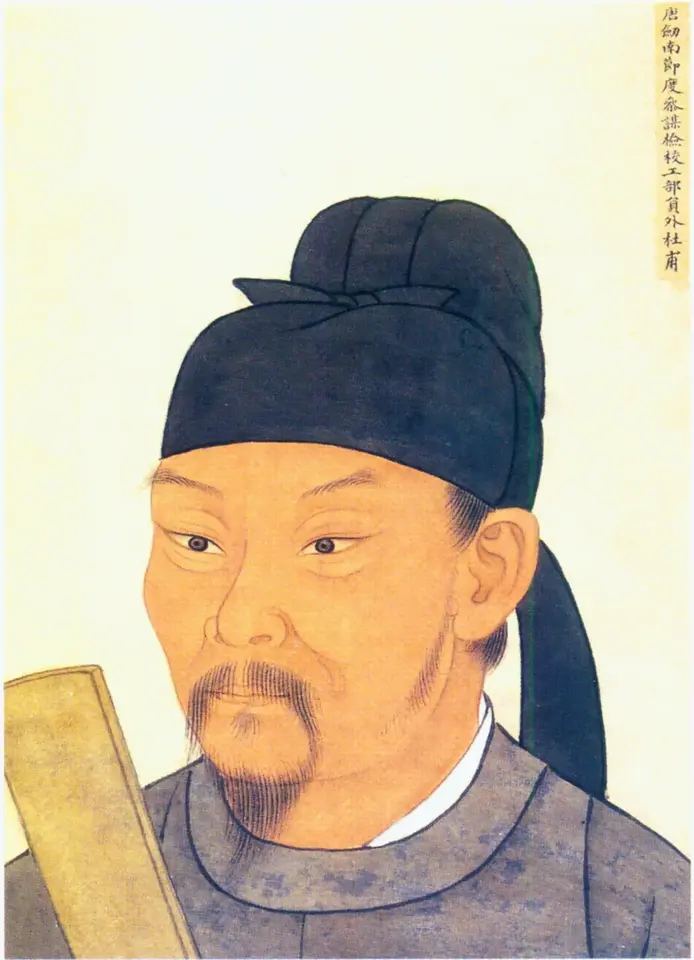
杜陵阳
Du Lingyang (, 321–341), also recorded as Du Ling and posthumously honored as Empress Chenggong, was a native of Duling County in Jingzhao Commandery (present-day southeast of Xi'an, Shaanxi) and the empress consort of Emperor Cheng of Jin (Sima Yan). Born into the elite Jingzhao Du clan, she was the great-granddaughter of the renowned Western Jin general and classicist Du Yu (Marquis of Dangyang), granddaughter of Left…
Du Lingyang (, 321–341), also recorded as Du Ling and posthumously honored as Empress Chenggong, was a native of Duling County in Jingzhao Commandery (present-day southeast of Xi'an, Shaanxi) and the empress consort of Emperor Cheng of Jin (Sima Yan). Born into the elite Jingzhao Du clan, she was the great-granddaughter of the renowned Western Jin general and classicist Du Yu (Marquis of Dangyang), granddaughter of Left Assistant Director Du Xi, daughter of Assistant Magistrate of Danyang Du Yi, and granddaughter on her mother's side of Chancellor Wang Yan. Raised in fatherless modesty by her devoted mother Pei Mu, she was celebrated for her beauty, erudition, and gentle demeanor. In 336, Emperor Cheng formally took her as his empress consort with full ancestral rites. During her six-year tenure, she managed the inner palace with exemplary austerity, mutual respect, and filial devotion, though she bore no imperial heirs. In 338, the imperial court renamed Lingyang County in Xuancheng Commandery to Guangyang County to observe her personal naming taboo. In April 341, Empress Du abruptly succumbed to illness in the Xianyang Palace at the age of twenty-one. Emperor Cheng grieved deeply, decreeing that her funeral rites strictly adhere to her personal ideals of frugality. Following Emperor Cheng's own demise the following year, the couple was jointly interred in the Xingping Mausoleum.
Born into the Jingzhao Du clan; her father Du Yi died shortly after her birth, and she was raised by mother Pei Mu.
Gained wide admiration across Jiangnan society for her classical learning, virtue, and physical grace.
Formally married Emperor Cheng with full six-fold imperial rites, receiving congratulations at the Taiji Palace.
The court issued an imperial decree changing the name of Lingyang County to Guangyang County in honor of her taboo.
Passed away from acute illness on April 17 at age twenty-one; awarded the posthumous title Empress Chenggong.
Following Emperor Cheng's death, he was interred alongside Empress Du in the Xingping Mausoleum.
Du Lingyang belonged to the illustrious Jingzhao Du lineage, one of the foremost military and literary clans of northern China. Her great-grandfather was the celebrated general and classicist Du Yu, who orchestrated the conquest of Eastern Wu under the Western Jin and authored foundational commentaries on the Zuo Zhuan, earning the sobriquet "Du the Armory" for his universal knowledge. Her grandfather, Du Xi, served as Left Assistant Director of the Masters of Writing, while her father, Du Yi (Marquis of Dangyang), was a prominent conversationalist and Assistant Magistrate of Danyang. However, Du Yi passed away shortly after Du Lingyang's birth, leaving no male heirs. Her mother, Lady Pei Mu (daughter of Pei Xia and granddaughter of Grand Commandant Wang Yan), observed strict widowhood, dedicating her life to rearing her daughter in fatherless seclusion.
Reared within a scholarly tradition, Du Lingyang mastered classical literature, history, and the arts, distinguishing herself among Jiangnan noblewomen through her dignified grace, gentle temperament, and modesty. A popular contemporary legend, known as "Empress Du's Dentition," recounted that while she was renowned for her refined beauty, she had not developed visible adult teeth until her maturity, causing prospective suitors to hesitate; however, on the very morning Emperor Cheng presented imperial betrothal gifts to wed her as Empress, a full set of perfect white teeth appeared overnight, which courtiers celebrated as a miraculous omen of imperial union.
In 336 (Xiankang 2), fifteen-year-old Emperor Cheng (Sima Yan) had attained adulthood and directed state affairs following the tumultuous trauma of Su Jun's Rebellion. Seeking a virtuous consort from a preeminent lineage with generations of moral distinction, Emperor Cheng chose Du Lingyang as his empress.
In February 336, the court executed the classical six-fold marriage rites, dispatching imperial commissioners bearing the jade seal and ceremonial tallies to welcome Du Lingyang into the palace. Emperor Cheng ascended the throne in the Taiji Front Palace, where civil ministers, generals, and imperial kinsmen gathered in grand ceremony to offer congratulations. The banquets lasted until dusk, concluding only when the palace gates were formally locked. To demonstrate deep reverence for the empress, Emperor Cheng promulgated an imperial edict in 338 (Xiankang 4) changing the name of Lingyang County in Xuancheng Commandery (present-day Qingyang, Anhui) to Guangyang County to observe her personal naming taboo.
Upon assuming direction of the inner chambers, Empress Du strictly observed ancestral precedents, treating palace maidservants and officials with firm yet benevolent dignity. She maintained warm and respectful relations with imperial kinsmen, fostering an atmosphere of domestic peace within the palace. Emperor Cheng held her in profound affection and esteem. Nevertheless, despite their affectionate cohabitation over six years, the marriage produced no surviving heirs.
In early 341 (Xiankang 7), a peculiar omen appeared across the Sanwu region: young women enthusiastically adorned their hair with pure white silk flowers resembling blossoming pear petals, accompanied by popular folk ditties lamenting that the celestial Weaving Maiden had died and mortals must observe mourning for her. Shortly thereafter, on April 17, 341, twenty-one-year-old Empress Du abruptly succumbed to an incurable illness in the Xianyang Palace.
The untimely death of Empress Du plunged Emperor Cheng into profound grief. Suspending court audiences, the emperor conferred upon her the posthumous name Empress Chenggong. In accordance with court regulations, high civil and military ministers entered the funeral hall once every five days to offer mourning sacrifices, while palace attendants offered daily devotions until the final interment.
Mindful of the economic devastation left by previous rebellions and honoring Empress Du's lifelong commitment to simplicity, Emperor Cheng issued strict instructions commanding that her tomb construction and burial artifacts remain entirely austere, strictly forbidding lavish ornamentation. Just fifteen months later, in July 342 (Xiankang 8), Emperor Cheng fell severely ill and died in the Xianyang Palace at age twenty-two. The court conducted his state funeral at the Xingping Mausoleum on the southern slopes of Mount Zijin, interring him in the same subterranean crypt alongside Empress Chenggong, uniting the imperial couple in eternal rest.
Invested as Empress in 336, she instituted strict domestic decorum and fostered reconciliation within the palace following the devastation of Su Jun's Rebellion, setting an enduring standard for modest court conduct.
Her imperial standing inspired the official renaming of Lingyang County to Guangyang County in 338, representing a prime institutional case study of imperial naming taboos in early medieval China.
Throughout her reign and in the execution of her funeral arrangements, she championed strict economic austerity, presenting a vital counterweight to the prevailing luxury of Eastern Jin aristocratic society.
FIGURES ASSOCIATED WITH THIS DYNASTY