Migration to Yi Province
Migrated westward from Nan Commandery to Yi Province, entering administrative service under Liu Zhang.
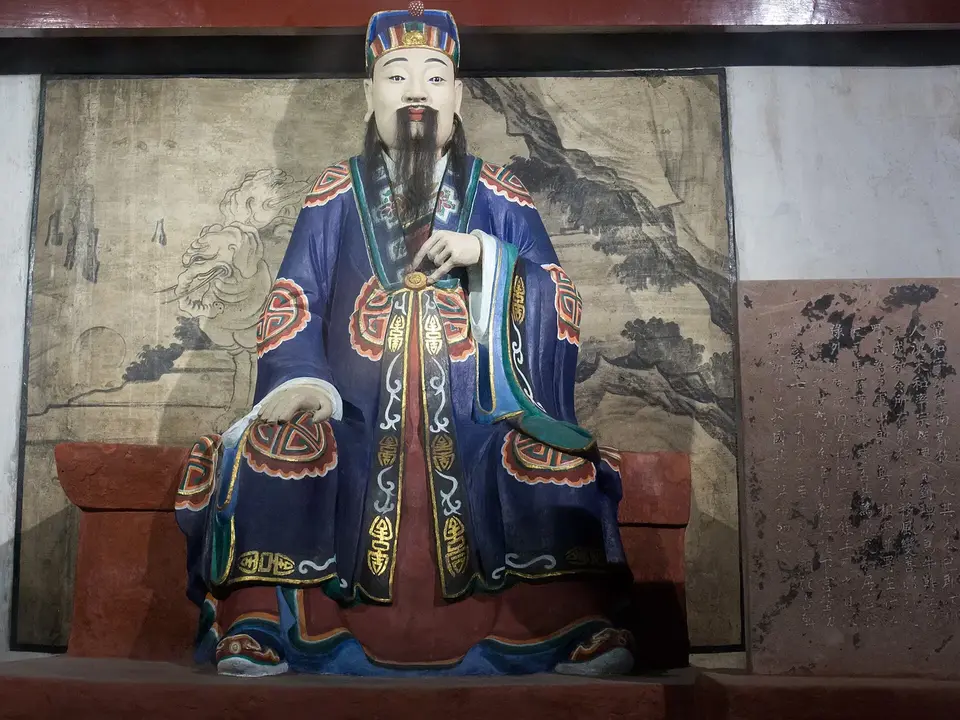
董和
Dong He (董和, ?–220), courtesy name Youzai (幼宰), was a native of Zhijiang in Nan Commandery (present-day Zhijiang, Hubei Province) and an esteemed statesman of Yi Province and founding minister of the Shu Han state during the late Eastern Han dynasty. Migrating west to avoid warfare in Jing Province, he served under Governor Liu Zhang as Chief of Niubi, Chief of Jiangyuan, and Magistrate of Chengdu. In Chengdu, Dong He…
Dong He (董和, ?–220), courtesy name Youzai (幼宰), was a native of Zhijiang in Nan Commandery (present-day Zhijiang, Hubei Province) and an esteemed statesman of Yi Province and founding minister of the Shu Han state during the late Eastern Han dynasty. Migrating west to avoid warfare in Jing Province, he served under Governor Liu Zhang as Chief of Niubi, Chief of Jiangyuan, and Magistrate of Chengdu. In Chengdu, Dong He confronted entrenched aristocratic luxury by leading a transformative campaign of extreme personal austerity, wearing coarse linen and eliminating lavish waste, which revitalized regional social customs. In 207, appointed Grand Administrator of Yizhou, he governed the southern barbarian frontiers with deep integrity and fair administration, earning universal affection from both Han settlers and indigenous tribes. Following Liu Bei's conquest of Yi Province in 214, Dong He was appointed Major General Who Controls the Army, sharing administrative leadership of the Chancellor's office alongside Zhuge Liang. For years, Dong He served as Zhuge Liang's closest advisor and fearless remonstrator, offering candid criticisms that shaped early Shu Han governance. When he passed away in 220, his household possessed no surplus property, living with broken mats and earthenware, which Zhuge Liang held up as a timeless model of incorruptibility for all ministers.
Migrated westward from Nan Commandery to Yi Province, entering administrative service under Liu Zhang.
Appointed Magistrate of Chengdu; combated aristocratic decadence through personal frugality, dramatically reforming social mores.
Appointed Grand Administrator of Yizhou, winning the profound loyalty of southern minority tribes through benevolent rule.
Appointed Major General Who Controls the Army by Liu Bei; co-managed premier state affairs with Zhuge Liang.
Offered candid advice and remonstrances to Zhuge Liang, contributing decisively to the codification of early Shu Han laws.
Passed away in office leaving an impoverished household; mourned deeply by Zhuge Liang, who issued an imperial order honoring his virtues.
Dong He's ancestral home was in Jiangyuan of Ba Commandery, though his family had relocated to Zhijiang in Nan Commandery. In the 190s, recognizing that the Central Plains and Jing Province were descending into chronic warlord warfare, Dong He led his family westward into the sheltered Sichuan basin to seek refuge under Governor Liu Zhang. Appointed Chief of Niubi and later Jiangyuan, he became renowned for his strict administrative efficiency and fair adjudication.
Under the peaceful decades of Liu Yan and Liu Zhang, the Chengdu plain had grown exceptionally wealthy, spawning widespread luxury and ostentation among the local aristocracy. Wealthy merchants and landed magnates competed in extravagant banquets, wearing delicate silks while commoners struggled. Appointed Magistrate of Chengdu, Dong He resolved to eradicate this decadence. He dressed exclusively in homespun coarse hemp, ate simple rustic fare, and rode in an unadorned wooden cart. He strictly enforced sumptuary laws, punishing haughty magnates who exceeded their station. Initially, wealthy elites petitioned Liu Zhang to remove him, but Dong He's unblemished personal integrity and impartial justice silenced all opposition. Within three years, social values in Chengdu underwent a profound transformation, with thriftiness and civic responsibility prevailing throughout the metropolis.
In 207, Liu Zhang reassigned Dong He to serve as Grand Administrator of Yizhou, stationed at Dianchi in the remote southern marches (modern Jinning, Yunnan). The southern borderlands were mountainous, culturally diverse, and dominated by powerful indigenous clans and the wealthy Yong clan. Previous governors who attempted to extort wealth or impose harsh levies had frequently been assassinated or driven out by tribal uprisings.
Dong He broke completely with past exploitative practices. He traveled among the tribal communities without armed escorts, showing deep respect for indigenous customs and establishing honest, transparent administrative agreements. He sponsored the construction of irrigation dikes, encouraged wetland rice farming, and introduced superior weaving implements. Under his enlightened governance, Han settlers and indigenous minorities lived in unprecedented harmony, and regional taxes in grain and salt were delivered punctually to Chengdu. When Liu Bei later invaded Yi Province and Liu Zhang sought to recall Dong He to defend the capital, thousands of indigenous tribespeople lined the highways, weeping and begging him not to leave.
In 214, Liu Bei captured Chengdu and assumed the governorship of Yi Province. Having long admired Dong He's immaculate reputation, Liu Bei immediately appointed him Major General Who Controls the Army (Zhangjun Zhonglangjiang). At the time, the nascent Shu Han administration required comprehensive institution-building. Liu Bei ordered Dong He to co-preside over the Grand Marshal's headquarters alongside Military Advisor General Zhuge Liang, jointly directing state secrets, legal codes, and administrative appointments.
Dong He was fearless in his dedication to the public good. Whenever he identified flaws or oversights in official policies, he did not hesitate to dispute them openly with Zhuge Liang. He debated administrative matters with unvarnished candor until absolute clarity was reached. Rather than taking offense, Zhuge Liang cherished Dong He's unflinching honesty, regarding him as an indispensable partner whose remonstrances prevented administrative errors.
Dong He served the state for over two decades, holding pivotal provincial and central posts. Yet throughout his tenure, he never amassed personal wealth. When he died in office in 220, Zhuge Liang and fellow ministers visited his home to pay respects and found a dilapidated residence containing only worn-out mats and basic earthenware pots, lacking even the means to purchase a proper coffin.
Moved to tears by his friend's supreme frugality, Zhuge Liang provided for his funeral. Later, as Chancellor of Shu Han, Zhuge Liang issued a famous directive to his administrative staff, declaring: "Formerly, when Dong Youzai shared administrative duties with me, he never failed to correct my faults or dispute my errors. In an era when men often flatter and remain silent, his complete openness and devotion to the public good were peerless. If all who share office with me could emulate Youzai's spirit of candid remonstrance, our governance would be flawless!" Dong He's upright moral legacy was carried on by his son Dong Yun, who became one of the Four Chancellors of Shu Han.
As Magistrate of Chengdu, Dong He successfully dismantled decades of entrenched aristocratic luxury through personal example and unbending legal enforcement, restoring an ethos of simplicity, thrift, and social cohesion to the Sichuan capital.
Dong He established a benchmark for benevolent frontier administration in the southern marches, harmonizing relations between Han settlers and indigenous tribes through cultural respect and practical agricultural assistance.
Sharing governance of early Shu Han with Zhuge Liang, Dong He provided fearless, constructive criticism that refined state policy, institutionalizing an administrative culture of honest remonstrance and incorruptible public service.
FIGURES ASSOCIATED WITH THIS DYNASTY