Birth in Beijing
Born in his father's official residence in Beijing, absorbing classical learning and painting techniques from childhood.
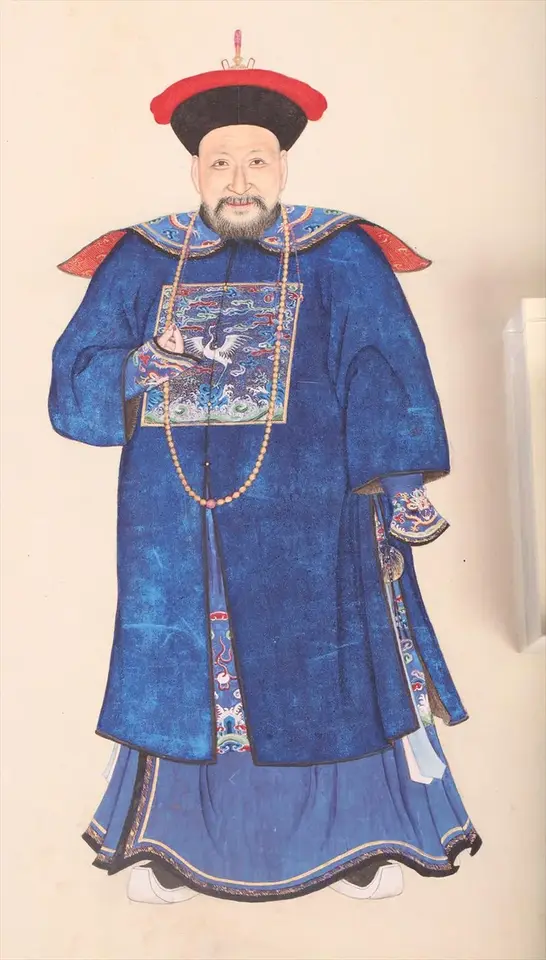
董诰
Dong Gao (1740–1818), courtesy name Zhelin and art name Jiashu, native of Fuyang, Zhejiang, was an eminent statesman, grand councilor, calligrapher, and painter serving both the Qianlong and Jiaqing emperors of the Qing dynasty. He was the eldest son of Dong Bangda, Minister of Works, and together father and son were celebrated throughout China as "Senior Dong" and "Junior Dong." Inheriting profound familial scholarship, Dong…
Dong Gao (1740–1818), courtesy name Zhelin and art name Jiashu, native of Fuyang, Zhejiang, was an eminent statesman, grand councilor, calligrapher, and painter serving both the Qianlong and Jiaqing emperors of the Qing dynasty. He was the eldest son of Dong Bangda, Minister of Works, and together father and son were celebrated throughout China as "Senior Dong" and "Junior Dong." Inheriting profound familial scholarship, Dong Gao was versed in the Confucian classics and historiography, excelling in calligraphy, landscape painting, boneless floral compositions, and micro-calligraphy. Passing the provincial examinations in 1763, Dong Gao placed third in the metropolitan palace examination the following year; the Qianlong Emperor, wishing to avoid favoritism toward ministers' sons, shifted him to first in the second class (Chuanlu), admitting him into the Hanlin Academy as a Bachelor and later appointing him Compiler. He successively held appointments as Vice Minister across several ministries, Associate Director-General of the Siku Quanshu Commission, Minister of Revenue, and Grand Secretary of the Hall of Literary Glory, participating in the supreme decision-making of the Grand Council for forty years. During the pacification of the Lin Shuangwen uprising in Taiwan and military campaigns against invading Gurkhas in Tibet, Dong Gao directed imperial logistics and fiscal allocations with consummate efficiency, earning the extraordinary distinction of having his portrait hung twice in the Ziguang Pavilion. When the notorious favorite Heshen monopolized dynastic authority during late Qianlong times, Dong Gao and Wang Jie maintained incorruptible integrity, checking arbitrary measures through constant rectifications. Upon Emperor Jiaqing's assumption of personal rule, Dong Gao served as chief confidant in prosecuting Heshen's faction and restoring bureaucratic order. In 1813, when Eight Trigrams rebels invaded the Forbidden City, Dong Gao decisively persuaded the emperor to return immediately to the capital, pacifying public panic. Retiring in 1818 with the honor of Grand Guardian, he passed away later that year at seventy-nine. Emperor Jiaqing personally attended his memorial rites, posthumously conferred the title of Grand Preceptor, enshrined him in the Temple of Eminent Statesmen, and granted the posthumous name "Wengong." Dong Gao was venerated as a paragon of incorruptibility and literary statesmanship throughout the mid-Qing era.
Born in his father's official residence in Beijing, absorbing classical learning and painting techniques from childhood.
Passed the Shuntian provincial examinations as a Provincial Graduate (Juren).
Placed first in the second class (Chuanlu); admitted to the Hanlin Academy as Compiler.
Summoned to serve in the Southern Study after concluding mourning for his father, highly favored by Emperor Gaozong.
Appointed Grand Councilor, entering the inner sanctum of imperial military and civil administration.
Promoted to Minister of Revenue, coordinating logistics for Taiwan and Gurkha campaigns; twice portrayed in Ziguang Pavilion.
Elevated to Grand Secretary of the East Cabinet; courageously defused Heshen's political entrapment against Zhu Gui.
Assumed leading role upon Qianlong's demise in arresting Heshen, elevated to Grand Secretary of the Hall of Literary Glory.
When Eight Trigrams rebels stormed the palace, he urged Emperor Jiaqing to return promptly to Beijing, calming the realm.
Retired with full salary as Grand Guardian; passed away in the tenth lunar month, posthumously honored as Grand Preceptor and canonized Wengong.
Dong Gao was born on the sixth day of the eleventh lunar month in 1740 (the fifth year of the Qianlong reign) in Beijing. His father, Dong Bangda, served as Minister of Works and was celebrated across the empire as a supreme master of landscape painting. Immersed from infancy in an atmosphere of rigorous scholarly pursuit, Dong Gao possessed a photographic memory and excelled in prose and poetry. He showed astonishing talent in micro-calligraphy; as a young man, he was capable of writing the four Chinese characters for "Universal Peace" on a single sesame seed with classical elegance, winning widespread admiration.
In 1763 (the twenty-eighth year of the Qianlong reign), twenty-four-year-old Dong Gao passed the Shuntian provincial civil examinations. The following year (1764), he took the metropolitan and palace examinations. The chief examiners ranked his palace paper third overall (Tanhua). However, because his father Dong Bangda was then incumbent Minister of Works, the Qianlong Emperor intervened to prevent accusations that sons of high dignitaries monopolized high honors, shifting Dong Gao to rank first in the second class (Chuanlu) and commissioning him a Bachelor in the Hanlin Academy. During his tenure at the academy, Dong Gao was tasked with editing the State History, the Three Encyclopedias, and the Imperial Ritual Regalia Illustrated. Following evaluations, he was formally appointed Compiler.
In 1767 (the thirty-second year of the Qianlong reign), Dong Gao was ordered to enter the Maoqin Hall to write Buddhist sutras in gold ink for the eightieth birthday celebrations of Empress Dowager Chongqing, earning an imperial grade promotion for his impeccable brushwork. In 1769, he returned home to observe ancestral mourning upon the death of his father. Upon returning to Beijing in 1771, the Qianlong Emperor, warmly recalling Dong Bangda's loyalty and painting mastery, immediately appointed Dong Gao to the Southern Study. Serving daily in close proximity to the throne, Dong Gao won profound imperial trust through his composure, meticulous work ethic, and superb calligraphy, earning steady promotions to Sub-Chancellor of the Grand Secretariat.
In 1775 (the fortieth year of the Qianlong reign), Dong Gao was appointed Vice Minister of Works, soon transferred to Vice Minister of Revenue, and took concurrent charge of Personnel, Punishments, and the Court of Imperial Music. When the imperial court initiated the monumental compilation of the Siku Quanshu (Complete Library in Four Sections), Dong Gao served as Associate Director-General, managing the publication of the Siku Quanshu Huiyao (Essential Digest) and leading the editorial committee of Origin and Development of the Manchus (Manzhou Yuanliu Kao). In 1779 (the forty-fourth year of the Qianlong reign), at age thirty-nine, Dong Gao was appointed Grand Councilor, formally entering the supreme core of state power.
In 1787 (the fifty-second year of the Qianlong reign), Dong Gao was granted the title of Junior Guardian of the Heir Apparent and elevated to Minister of Revenue. At that time, the Lin Shuangwen uprising erupted in Taiwan, threatening the coastal defenses of Fujian and Zhejiang. Dong Gao assumed total responsibility for fiscal preparations and grain procurement, dispatching millions of taels of bullion, weapons, and grain via maritime supply ships, ensuring that frontline forces under General Fuk'anggan suffered no logistical delays. Shortly thereafter, when Gurkha troops invaded Tibet across the Himalayas, Dong Gao once again orchestrated long-range transport networks across Sichuan and Qinghai, providing flawless provisioning for tens of thousands of imperial troops marching into the Nepalese foothills. To commemorate his exceptional administrative logistics, Emperor Qianlong ordered Dong Gao's portrait painted twice among the victorious commanders in the Ziguang Pavilion, composing a personal laudatory poem praising his civilian mastery over military supply lines.
During the late Qianlong era, Grand Councilor Heshen consolidated absolute autocratic sway over the imperial bureaucracy, amassing staggering personal wealth and demanding total subservience. Although forced to share duties with Heshen in the Grand Council, Dong Gao remained steadfast in moral probity. Collaborating closely with Grand Secretary Wang Jie, Dong Gao formed a vital bulwark against Heshen's excesses, continuously correcting abuses and shielding upright officials.
In 1796 (the first year of the Jiaqing reign), Emperor Qianlong formally abdicated the throne to Emperor Jiaqing. Emperor Jiaqing composed a celebratory poem to welcome his revered tutor Zhu Gui to the capital for appointment to the Grand Secretariat. Before the letter could be dispatched, Heshen seized the draft and denounced the young emperor to the retired Qianlong Emperor, alleging that the successor sovereign was currying favor with his private mentor. Qianlong grew visibly incensed and demanded of Dong Gao: "You have served long in the Grand Council and Ministry of Punishments; how does this comport with dynastic statutes?" While other officials shrank in terror, Dong Gao prostrated himself and calmly answered: "The Sagely Ruler speaks no error." This diplomatic formulation implied that Qianlong's wisdom was boundless while affirming that the new emperor had committed no crime. Qianlong fell silent for a prolonged interval, finally remarking: "You are truly a great minister; counsel my son well on my behalf." Dong Gao's composure averted a severe political purge. Recognizing Dong Gao's unmatched diligence among senior peers, Qianlong elevated him to Grand Secretary of the East Cabinet, placing him in superintendence over the Ministry of Rites and Ministry of Revenue.
In 1797, Dong Gao returned home to bury his mother. With the White Lotus Rebellion flaring across central China, Qianlong repeatedly asked his courtiers when Dong Gao would return. When Dong Gao reached Beijing the following year, Heshen attempted to conceal his arrival, but Qianlong noticed Dong Gao kneeling along the imperial roadway, instantly ordering him to resume duties in plain mourning robes as Acting Minister of Punishments to supervise military and judicial records.
In early 1799 (the fourth year of the Jiaqing reign), Qianlong passed away, and Emperor Jiaqing moved swiftly against Heshen. Dong Gao was immediately reconfirmed as Grand Councilor, drafting the indictment detailing Heshen's twenty cardinal crimes, liquidating his immense estates, and pacifying the central administration without civic unrest. After completing mourning rites, Dong Gao was promoted to Grand Secretary of the Hall of Literary Glory and concurrent Minister of Punishments, honored as Junior Preceptor of the Heir Apparent.
In the autumn of 1813 (the eighteenth year of the Jiaqing reign), Dong Gao accompanied Emperor Jiaqing to the Rehe summer resort. On October 8, Eight Trigrams sectarian rebels infiltrated the Forbidden City through collusion with eunuchs. News of the insurrection reached the imperial traveling camp en route. Panic-stricken courtiers urged the emperor to halt the entourage and summon provincial armies before advancing. Dong Gao stepped forward, adamantly advising: "These desperadoes will be crushed immediately. If Your Majesty halts your march, panic will engulf the capital and trigger far greater calamity! Our troops will present the captives before long!" Jiaqing followed his advice, resuming the march to Beijing immediately, which restored imperial tranquility.
During subsequent judicial tribunals, when harsh inquisitors sought widespread executions, Dong Gao urged judicial discrimination, submitting: "Ignorant commoners burning incense to pray for good fortune acted out of innocent delusion, as is commonly seen among the unlettered. Only those who consciously committed treason should face death." Jiaqing approved this compassionate distinction, sparing thousands of innocent households from execution.
Having served two emperors in the highest councils for four full decades, Dong Gao suffered from chronic leg ailments in his old age. Emperor Jiaqing repeatedly declined his retirement petitions, but in 1818 (the twenty-third year of the Jiaqing reign), the emperor granted him full retirement as Grand Guardian, allowing him to retain his full ministerial salary.
On November 8, 1818, Dong Gao died at his residence in Beijing at the age of seventy-nine. Deeply grieving, Emperor Jiaqing personally visited his residence to offer libations, conferred the posthumous rank of Grand Preceptor, ordered him enshrined in the Temple of Eminent Statesmen, and granted the posthumous name "Wengong." The emperor composed a famous memorial elegy celebrating the lifelong incorruptibility of Dong Bangda and Dong Gao, remarking: "Only literary writings are bequeathed to sons and nephews; not a single copper was spent on buying manors and fields."
Among the Ten Great Campaigns of the late Qianlong reign, the pacification of Taiwan under Lin Shuangwen in 1787 and the Gurkha War in 1791 represented extraordinary logistical feats across maritime and high-altitude barriers. As Minister of Revenue and Grand Councilor, Dong Gao presided over the complex fiscal and commissariat apparatus supporting both expeditions.
For the Taiwan campaign, which required transporting thousands of soldiers and immense quantities of gunpowder and grain across stormy seas, Dong Gao synchronized grain reserves in Jiangsu, Zhejiang, and Guangdong, pioneering coastal shipping networks directly into Tainan and Lukang. In the subsequent Gurkha campaign, where imperial forces marched through precipitous Himalayan valleys, Dong Gao arranged silver remittances and supply depots across Sichuan and Qinghai, maintaining continuous provisions for Qing armies as they advanced toward Kathmandu. In recognition of his strategic financial stewardship, Emperor Qianlong ordered his portrait displayed twice in the Ziguang Pavilion, a rare honor for a civilian revenue minister.
During the twilight years of the Qianlong reign, Heshen's corruption created profound perils for the dynastic succession. Serving alongside Heshen in the inner court, Dong Gao preserved upright rectitude, presenting all policy issues directly to the emperor rather than participating in factional alliances. He skillfully shielded the young Jiaqing Emperor from Heshen's slanderous traps, facilitating a seamless transfer of imperial authority.
On the day of the retired emperor's death in 1799, Dong Gao assisted Emperor Jiaqing in executing the arrest of Heshen, drafting the definitive twenty-article indictment and organizing the confiscation of Heshen's enormous fortune without triggering political panic in the capital. His steadying hand enabled the Jiaqing court to restore administrative discipline and establish royal authority.
Inheriting the artistic genius of his father Dong Bangda, Dong Gao attained preeminence as the paramount court scholar-painter of the Qianlong and Jiaqing eras. His landscapes drew upon the Yuan masters Huang Gongwang and Wu Zhen, while synthesizing the spatial theory of Dong Qichang and the Four Wangs. Employing subtle ink washes and soft blue-green palettes, his compositions radiated noble reserve and classical dignity, praised by Emperor Qianlong as embodying all six canons of Chinese painting. His floral works embraced the boneless technique of Yun Shouping, combining imperial elegance with scholarly poise.
Hundreds of Dong Gao's paintings were accepted into the imperial collections and meticulously documented in the third series of Shiqu Baoji and Bidian Zhulin. His masterwork, Ten Views of the West Lake, now preserved in the Zhejiang Provincial Museum, is revered as a pinnacle of Qing topographical landscape art. In calligraphy, Dong Gao mastered the balanced, stately brushwork of Wang Xizhi and Zhao Mengfu, setting the aesthetic benchmark for the court's administrative script. In Emperor Qianlong's advanced age, Dong Gao frequently inscribed imperial poems upon ancient masterpieces, including Wang Xizhi's Timely Clear Weather After Snow (Kuaixue Shiqing Tie), preserving an enduring artistic dialogue between sovereign and minister.
FIGURES ASSOCIATED WITH THIS DYNASTY