Birth to an Aristocratic Family
Born into the Manchu Donggo clan of the Plain White Banner to grand chamberlain Eshuo.
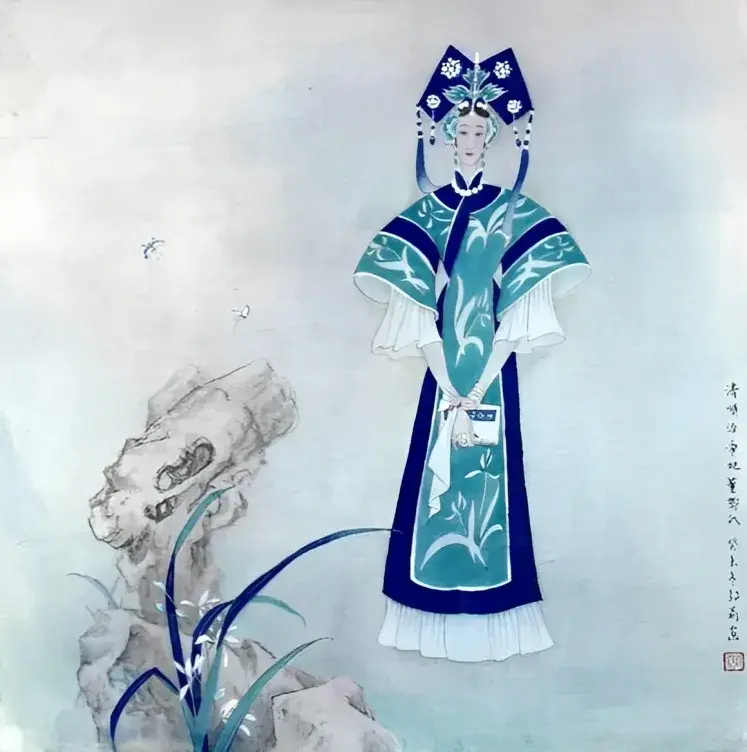
董鄂氏(孝献皇后)
Empress Xiaoxian (董鄂氏(孝献皇后), 1639 – September 23, 1660), belonging to the Donggo clan of the Plain White Banner and commonly known as Consort Donggo or Imperial Noble Consort Donggo, was the paramount beloved consort of the Shunzhi Emperor (Fulin) of the Qing dynasty. She was the daughter of Eshuo, a senior minister and grand chamberlain in the imperial court, and the elder sister of general Fiyanggu. Raised in southern China…
Empress Xiaoxian (董鄂氏(孝献皇后), 1639 – September 23, 1660), belonging to the Donggo clan of the Plain White Banner and commonly known as Consort Donggo or Imperial Noble Consort Donggo, was the paramount beloved consort of the Shunzhi Emperor (Fulin) of the Qing dynasty. She was the daughter of Eshuo, a senior minister and grand chamberlain in the imperial court, and the elder sister of general Fiyanggu. Raised in southern China where her father held military commands, she was deeply educated in classical Han Chinese literature, history, and calligraphy, developing a gentle, scholarly, and cultivated demeanor. Entering the Forbidden City in 1656 at the age of eighteen, Lady Donggo was swiftly invested as Consort Xian in October. Within barely a month, the infatuated Shunzhi Emperor promoted her to Imperial Noble Consort—the highest rank below the Empress. In celebrating her investiture in January 1657, the emperor proclaimed a nationwide general amnesty, an unprecedented honor in imperial Chinese history that had previously been reserved strictly for imperial accessions or the formal installation of an empress. In late 1657, she gave birth to the emperor's fourth son, whom the emperor hailed as his true primary heir; however, the infant died a few months later, receiving the posthumous title Prince Rong of the First Rank. Devastated by the tragic loss of her child and weakened by continuous filial duties serving Grand Empress Dowager Xiaozhuang, Lady Donggo's health rapidly failed. She passed away in the Palace of Heavenly Favor (Chengqiangong) in September 1660 at the young age of twenty-two. The Shunzhi Emperor was shattered by her death, suspending court sessions for four months, ordering the court to observe full mourning, and posthumously bestowing upon her the title of Empress Xiaoxian. The emperor personally authored a four-thousand-word eulogy, the Imperial Biography of Empress Donggo, commemorating her virtue and grace. Despondent and brokenhearted, Shunzhi contracted smallpox and died months later in early 1661. The two were interred together in the Xiaoling Mausoleum at the Eastern Qing Tombs.
Born into the Manchu Donggo clan of the Plain White Banner to grand chamberlain Eshuo.
Entered the court in October as Consort Xian; rapidly promoted to Imperial Noble Consort in November.
Honored with an unprecedented general amnesty proclaimed to celebrate her investiture.
Bore Shunzhi's fourth son in November; the emperor openly designated him his primary successor.
The unnamed infant prince passed away in February; Lady Donggo fell severely ill from sorrow.
Died in her palace quarters on September 23 at age 22; the emperor grieved inconsolably.
Conferred the posthumous title of Empress Xiaoxian under imperial decree.
The emperor penned the four-thousand-word Imperial Biography of Empress Donggo.
Shunzhi succumbed to smallpox on February 5, expressing his desire to be buried alongside her.
Interred alongside the Shunzhi Emperor and Empress Xiaokangzhang in the Xiaoling Mausoleum.
Lady Donggo was born in 1639 into an illustrious Manchu military family belonging to the Plain White Banner. Her father, Eshuo, was a meritorious veteran commander who rose to Senior Grand Chamberlain (Neidachen) and was posthumously created Earl of the Third Class. Her younger brother, Fiyanggu, became one of the foremost military strategists of the early Qing period, serving as Commander-in-Chief of the Imperial Guards and later commanding the imperial armies against Galdan.
During her childhood, Eshuo was stationed on military assignments throughout the affluent Jiangnan region. Living in the cultural center of traditional China, Lady Donggo was exposed extensively to Chinese classical literature and the arts. Naturally gifted and introspective, she attained complete fluency in both Manchu and Chinese, reading Confucian canonical histories, practicing poetry, and mastering refined calligraphy in the graceful style of the Jin and Tang masters. This synthesis of Northern aristocratic vigor and Southern intellectual elegance made her an extraordinary figure when she arrived at court.
In the early Shunzhi era, the young monarch endured an unhappy domestic life. Arranged by the regent Dorgon, his first marriage to a Borjigit princess ended in divorce when he demoted her to Consort Jing; his second empress, Empress Xiaohuizhang, was similarly a Mongol noblewoman with whom he shared little intellectual rapport. Shunzhi possessed an intense passion for Chinese philosophical and literary traditions, hungering for an emotional and cultural equal within the inner court.
In October 1656, the eighteen-year-old Lady Donggo entered the Forbidden City. Overwhelmed by her beauty, erudition, and gentle demeanor, Shunzhi immediately created her Consort Xian. Convinced that she was his true soulmate, the emperor broke all precedent just one month later, issuing a decree in November that elevated her to Imperial Noble Consort—the rank second only to the Empress.
On January 20, 1657, the court held a lavish ceremony in the Hall of Supreme Harmony to bestow golden patents and seals upon her. To signal his unparalleled devotion, the Shunzhi Emperor took the extraordinary step of proclaiming a general amnesty throughout the empire. Historically in China, imperial amnesties were restricted strictly to the ascension of a new sovereign or the formal installation of an empress. Granting a national pardon for an Imperial Noble Consort was completely unprecedented in Qing annals, emphasizing that Lady Donggo enjoyed de facto marital supremacy in the eyes of the emperor.
Residing in the Palace of Heavenly Favor (Chengqiangong), Lady Donggo became the center of the emperor's life. On November 12, 1657, she gave birth to Shunzhi's fourth son. Although the emperor already had three sons (including Xuan Ye, the future Kangxi Emperor), Shunzhi celebrated the newborn as his true firstborn and rightful heir, declaring to the court: "This is my primary son!" The emperor ordered imperial banquets and rewards across the banners and vassal states.
Tragedy struck swiftly. On February 25, 1658, before he could be formally named, the infant prince died of illness at barely one hundred days of age. The blow shattered both parents. Defying customary sumptuary regulations that forbade conferring noble ranks upon deceased infants, the emperor posthumously created him Prince Rong of the First Rank and built a monumental princely mausoleum in Jizhou. The grief-stricken Lady Donggo wept day and night, falling into a state of physical fragility from which she never recovered.
Despite her enduring sorrow, Lady Donggo conducted herself with exemplary grace, modesty, and administrative wisdom. In the Imperial Biography of Empress Donggo, the Shunzhi Emperor recorded her daily conduct in detail. Toward Empress Dowager Xiaozhuang, she acted with unswerving filial piety, attending to her during illnesses without untying her robe for nights on end. Toward Empress Xiaohuizhang, she displayed deferential respect, consistently kneeling to plead for clemency whenever the emperor was angered by the empress, thereby preserving the dignity of the central throne.
In her relationship with the emperor, Lady Donggo served as a calming and moral influence. Shunzhi was mercurial and quick-tempered, frequently punishing courtiers in anger; Lady Donggo gently intervened, reminding him that state punishments must not be governed by personal emotion, thereby saving numerous officials from wrath. As Shunzhi labored late into the night reviewing state documents, she prepared tea, trimmed lampwicks, and quietly reminded him to preserve his health, scrupulously avoiding improper interference in state governance.
In late 1659, when Empress Dowager Xiaozhuang fell ill at the Nanyuan hunting park, Lady Donggo traveled through winter snows to nurse her despite her own failing health. The prolonged strain of child loss and exhaustion fatally undermined her constitution.
By the spring of 1660, Lady Donggo was bedridden and emaciated, yet she continued to offer comforting words to the devastated emperor. On September 23, 1660, she passed away in Chengqiangong at the age of twenty-two.
Her death plunged the twenty-two-year-old monarch into inconsolable grief. Shunzhi wept hysterically, reportedly attempting self-harm before being restrained by attendants. He cancelled court sessions for four months and ordered all imperial princes, banner nobility, and ministers to observe formal mourning. Two days after her death, invoking the approval of the Empress Dowager, Shunzhi posthumously elevated her to Empress Xiaoxian.
In a poignant outpouring of grief, the emperor penned the four-thousand-word Imperial Biography of Empress Donggo, detailing her character, literary refinement, and virtuous palace life. The devastating loss permanently extinguished Shunzhi's will to live. Less than five months later, on February 5, 1661, the emperor contracted smallpox and passed away at age twenty-three. In 1663, Shunzhi was entombed alongside Empress Xiaoxian and Empress Xiaokangzhang in the Xiaoling Mausoleum.
The formal investiture of Lady Donggo as Imperial Noble Consort in early 1657 stands as an exceptional anomaly in Chinese administrative history. Imperial amnesties functioned as sovereign acts of state clemency, strictly governed by dynastic precedent.
By extending this sovereign grace across the empire on behalf of an Imperial Noble Consort, the Shunzhi Emperor demonstrated that her elevation possessed supreme state importance. This act elevated their romantic bond into a nationwide milestone, highlighting her unique standing within early Qing court politics.
The birth and premature death of Lady Donggo's son dramatically altered Qing succession dynamics. By publicly designating the fourth prince as his primary successor and subsequent posthumous investiture as Prince Rong of the First Rank, Shunzhi established a rare precedent in imperial tomb construction.
The magnificent princely tomb built in Huanghuashan, complete with towering stone steles and expansive palace structures, reflected an extraordinary deviation from the dynasty's frugal burial customs for infants, commemorating the high regard the emperor held for Lady Donggo's lineage.
The early Shunzhi court was characterized by sharp political and cultural friction between traditional Mongol aristocratic factions and the emperor's pro-Han cultural inclinations. Shunzhi's alienation from his Mongol empresses posed recurring risks of dynastic instability.
Lady Donggo functioned as an indispensable diplomatic bridge within the inner court. Through deferential service to Empress Dowager Xiaozhuang and loyal protection of Empress Xiaohuizhang, she prevented an irreparable breach between the imperial throne and the Mongol clans, maintaining court equilibrium through modesty, discretion, and moral rectitude.
The Imperial Biography of Empress Donggo, composed personally by the Shunzhi Emperor, is recognized as a masterwork of imperial mourning literature. Spanning over four thousand characters, it departs entirely from conventional bureaucratic eulogies crafted by imperial scribes.
The text reads as an intimate, emotionally raw memoir by a bereaved husband, detailing private domestic conversations, literary readings, and personal vulnerabilities. Preserved in official court archives, it offers historians an invaluable firsthand window into seventeenth-century palace life and emotional culture.
Following the fall of the Qing dynasty, popular folklore and private historical novels widely propagated the romantic legend that Lady Donggo was actually the celebrated Jiangnan courtesan Dong Xiaowan, abducted into the palace by Manchu forces.
Modern historiographical research has completely debunked this myth through rigorous archival evidence. Dong Xiaowan was born in 1624 and passed away in 1651 at the age of twenty-eight, whereas Lady Donggo was born in 1639 and died in 1660 at age twenty-two. When Dong Xiaowan died in Jiangsu, Lady Donggo was an eleven-year-old child living with her father's family. Official Eight Banner geneaological registers confirm that Lady Donggo was an authentic member of the Manchu Plain White Banner aristocracy, firmly separating factual history from later romantic fabrication.
FIGURES ASSOCIATED WITH THIS DYNASTY