Marriage to Cao Cao as Principal Wife
Born to an eminent clan in Qiao County; married Cao Cao in her youth as his lawful principal wife.
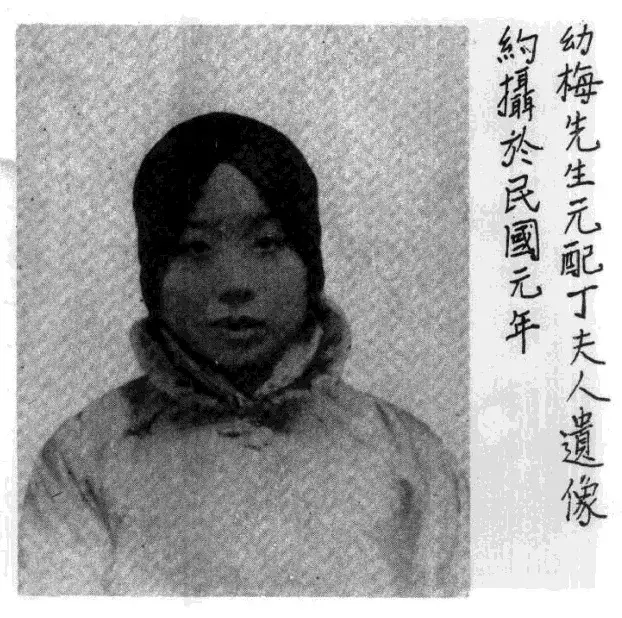
丁夫人
Lady Ding (丁夫人, birth and death dates unrecorded in standard histories) was a native of Qiao County in Pei State (present-day Bozhou, Anhui). She was the first lawful principal wife of Cao Cao, the founding warlord and King of Wei during the late Eastern Han dynasty, and the adoptive mother of Cao Cao's eldest son, Prince Min of Feng (Cao Ang), and Eldest Princess Qinghe. Lady Ding hailed from an eminent lineage in Qiao and…
Lady Ding (丁夫人, birth and death dates unrecorded in standard histories) was a native of Qiao County in Pei State (present-day Bozhou, Anhui). She was the first lawful principal wife of Cao Cao, the founding warlord and King of Wei during the late Eastern Han dynasty, and the adoptive mother of Cao Cao's eldest son, Prince Min of Feng (Cao Ang), and Eldest Princess Qinghe. Lady Ding hailed from an eminent lineage in Qiao and wed Cao Cao in her youth. When Cao Cao's concubine Lady Liu passed away prematurely, she left behind infant Cao Ang and Princess Qinghe. Having borne no children of her own, Lady Ding took Cao Ang into her chambers, raising him with total maternal devotion as her biological son. Under her guidance, Cao Ang matured into a filial, virtuous, and capable heir, nominated as Filially Pious and Incorrupt (Xiaolian) in his youth and widely regarded as Cao Cao's primary successor. In 197 (Jian'an 2), Cao Cao led an expedition against Zhang Xiu at Wancheng, where Zhang Xiu initially capitulated. However, after Cao Cao forcibly took the widowed aunt of Zhang Xiu (Lady Zou) as his concubine, Zhang Xiu launched a surprise nocturnal rebellion. In the catastrophic Battle of Wancheng, Cao Cao's army was routed; Cao Ang gave his own warhorse to his father so Cao Cao could escape, while Cao Ang himself, cousin Cao Anmin, and general Dian Wei fought to the death. The loss of her beloved son shattered Lady Ding. Weeping inconsolably day and night, she furiously denounced Cao Cao for causing Cao Ang's death without genuine remorse. Enraged by her persistent reproaches, Cao Cao sent her back to her natal household in Qiao to break her resolve. Yet Lady Ding showed fierce independence: when Cao Cao personally visited her family to reconcile, stroking her back at the loom, Lady Ding continued weaving without turning her head or speaking a word. When Cao Cao inquired outside the door if there was any hope of reconciliation, she remained utterly silent, prompting Cao Cao to sigh that their parting was absolute, leading to formal divorce. Following Lady Ding's deposition, Cao Cao elevated Lady Bian (Empress Wuxuan) as principal wife. Lady Bian acted with noble magnanimity, disregarding Lady Ding's past haughtiness as principal mistress; whenever Cao Cao was away on military campaigns, Lady Bian secretly sent seasonal gifts of food and garments and invited Lady Ding to private banquets, yielding the seat of honor to her. Lady Ding died years later and was interred south of Xuchang upon Lady Bian's petition. In 220 (Jian'an 25), lying on his deathbed in Luoyang, Cao Cao wept and confessed that throughout his life he felt no guilt in his actions, except that if the dead have souls and Cao Ang asked "where is my mother," he would have no words to answer. Lady Ding's uncompromising maternal love, unbending spine, and rejection of dictatorial authority established her as one of the most powerful and tragic female figures in Chinese history.
Born to an eminent clan in Qiao County; married Cao Cao in her youth as his lawful principal wife.
Following Lady Liu's death, adopted infant Cao Ang and Princess Qinghe, rearing them with immense love.
Supported Cao Cao following the relocation of Emperor Xian to Xu, managing the inner household as principal lady.
Cao Ang sacrificed his horse and died at Wancheng; Lady Ding wept incessantly and fiercely denounced Cao Cao.
Sent back to Qiao; ignored Cao Cao's pleas while weaving at her loom, prompting their permanent formal divorce.
Honored by successor Lady Bian with highest courtesies; upon her death, interred south of Xu with honor.
Cao Cao died in Luoyang, lamenting with tears that he had no answer if Cao Ang asked for his mother in the afterlife.
Lady Ding was born into an illustrious aristocratic family in Qiao County, Pei State (present-day Bozhou, Anhui) during the late Eastern Han dynasty. The Ding, Cao, and Xiahou lineages were the most prominent gentry clans of Qiao, bound by generations of political alliance and intermarriage. During the early career of Cao Cao, when he served as Northern Commandant of Luoyang and Magistrate of Dunqiu, Lady Ding was betrothed and married to him as his lawful, formal principal wife (diqi).
Lady Ding was known for her dignified demeanor, upright principles, and strict domestic governance. However, over their early years of marriage, she did not bear any children. During this period, another of Cao Cao's favored concubines, Lady Liu, gave birth to his eldest son Cao Ang (courtesy name Zixiu), a second son Cao Shuo, and an eldest daughter, the Eldest Princess Qinghe. Tragically, Lady Liu suffered from frail health and succumbed to illness shortly after giving birth, leaving her infant children orphaned.
Confronted with the helpless infants, Lady Ding displayed extraordinary maternal magnanimity. She embraced infant Cao Ang and Princess Qinghe, bringing them into her principal chambers and raising them with identical care and affection as if they were her biological offspring. Under Lady Ding's stern yet loving nurture, Cao Ang grew into a cultivated, modest, and courageous young man renowned for filial piety. Upon reaching adulthood, Cao Ang was recommended as Filially Pious and Incorrupt (Xiaolian) by provincial authorities. He was beloved and respected throughout the clan, universally recognized as Cao Cao's indisputable primary successor. Cao Ang reciprocal love and reverence for his adoptive mother were profound, creating an unbreakable maternal bond.
In the autumn of 196 (Jian'an 1), Cao Cao welcomed Emperor Xian to Xu (present-day Xuchang, Henan) and assumed paramount control of the imperial court as Minister of Works, initiating the era of dictating commands in the name of the emperor. Lady Ding relocated to the new capital, governing the extensive domestic administration of the Cao household with unmatched authority as the chief lady of the inner court.
However, in the first month of 197 (Jian'an 2), a devastating disaster destroyed the harmony of the family. Cao Cao led an army south to attack Wancheng in Jingzhou. The warlord Zhang Xiu recognized the disparity in military strength and surrendered without resistance. Yet following his entry into Wancheng, Cao Cao acted with reckless indiscretion, taking the widowed aunt of Zhang Xiu (Lady Zou, widow of Zhang Ji) as his private concubine. Deeply humiliated by this public disgrace to his family, Zhang Xiu conspired with his strategist Jia Xu and launched a surprise nighttime raid on Cao Cao's central military headquarters.
The night camp erupted into flames and chaos. Cao Cao's prized warhorse, Jueying (Shadowless), was killed by crossfire, and Cao Cao himself was wounded by arrows, facing imminent death. At this desperate juncture, his eldest son Cao Ang chose self-sacrifice without hesitation: he dismounted and gave his own horse to his father, enabling Cao Cao to flee the perimeter. Cao Ang, along with his cousin Cao Anmin and the vanguard commander Dian Wei, stood on foot to repel waves of enemy soldiers. Overwhelmed by superior numbers, Cao Ang fell in battle amid the stones of Wancheng.
When the disastrous news reached Xu, Lady Ding was overwhelmed with unimaginable grief. In her eyes, the death of her brilliant son was not an honorable sacrifice in a necessary war, but the horrific consequence of Cao Cao's lustful indulgence and military arrogance. Extreme sorrow transformed into volcanic rage and bitter condemnation. Day after day, Lady Ding wept openly in the palace apartments, furiously reproaching Cao Cao to his face: "You killed my son, and you show not the slightest grief or remembrance for him!" She openly held the almighty warlord accountable for pushing the young heir into an unnecessary grave while moving on with political ambition.
Lady Ding's persistent crying and public recriminations struck like daggers into Cao Cao's wounded pride and suppressed guilt. As a supreme commander leading tens of thousands of warriors and terrorizing regional warlords, Cao Cao found himself unable to pacify her grief, and his embarrassment eventually hardened into anger.
Seeking to suppress her defiance, Cao Cao ordered Lady Ding dispatched back to her natal home in Qiao. His intention was not to sever the marriage permanently, but to use banishment as a disciplinary measure, expecting that the cold isolation of her family estate would break her haughty resolve, forcing her to acknowledge her subordination before he brought her back.
However, Cao Cao completely misjudged Lady Ding's unyielding nature. Returning to Qiao, Lady Ding exhibited no self-pity or regret, nor did she make any move to seek forgiveness. She shut her gates, retreating to her inner chambers to weave silk and spin yarn day after day, treating the lost luxury of the chancellor's residence with utter indifference.
As time passed, Cao Cao's guilt over the disaster of Wancheng deepened, accompanied by a profound longing for his lawful wife. Following the pacification of regional crises, Cao Cao traveled in simple carriage to the Ding estate in Qiao, determined to personally apologize and escort her home.
When Cao Cao entered the inner weaving room, Lady Ding was seated at the loom, shuttling silk threads back and forth. Attendants outside loudly announced: "His Excellency Lord Cao has arrived!" Lady Ding remained entirely motionless, her eyes fixed on the cloth as she continued weaving with uninterrupted rhythm, refusing even to look up. Cao Cao walked to the loom, lowered his pride, and gently caressed her back, softly pleading: "Look upon me, and ride back with me in my carriage!"
Despite his repeated entreaties and humble tone, Lady Ding never turned her head, never paused her hands, and never uttered a single syllable; only the rhythmic clatter of the wooden loom broke the silence. Deeply humiliated and sorrowful, Cao Cao slowly retreated toward the door. Standing outside the threshold in the courtyard, he looked back into the room and called out one last time: "Is it truly impossible for us to reconcile?"
Inside, silence reigned unbroken except for the indifferent shuttling of the loom. Confronted by her granite resolve, Cao Cao let out a long, heavy sigh, murmuring: "This is truly farewell forever (zhen jue yi)!" The bond of decades was irrevocably severed. Returning to the capital, Cao Cao formally divorced Lady Ding and sent word informing the Ding lineage that they were free to arrange another marriage for her. Yet the Ding clan, terrified of Cao Cao's overwhelming power and aware of Lady Ding's fidelity, dared not arrange another match. Lady Ding lived out her days in peaceful solitude in Qiao.
Following Lady Ding's formal deposition and divorce, Cao Cao elevated Lady Bian (Empress Wuxuan), who had borne him four prominent sons—Cao Pi, Cao Zhang, Cao Zhi, and Cao Xiong—to the rank of principal wife.
Earlier, when Lady Ding had presided over the household as principal wife with Cao Ang as primary heir, she had harbored aristocratic pride, frequently treating Lady Bian (who came from a humble entertainer background) and her sons with haughtiness and harsh condescension. However, Lady Bian was a woman of extraordinary breadth and moral grace. Upon ascending to the position of chief wife, she harbored no resentment toward the deposed mistress; instead, she treated Lady Ding with immense reverence and kindness.
Whenever Cao Cao led military campaigns far from the capital, Lady Bian would secretly dispatch trusted servants each season to deliver lavish gifts of fine silks, warm furs, and delicacies to Lady Ding's residence in Qiao. Moreover, Lady Bian repeatedly arranged private carriages to secretly escort Lady Ding to the capital mansion for visits. During these private gatherings, Lady Bian insisted on seating Lady Ding in the central seat of honor, while placing herself in the subordinate position to serve her, maintaining the exact deference of a concubine to her former mistress.
Overwhelmed by Lady Bian's unfailing respect and generosity, Lady Ding was deeply moved and contrite, expressing her gratitude: "I am merely a deposed and discarded woman; why must Your Ladyship constantly demean yourself to honor me in this way?" Lady Bian's noble conduct won the profound admiration of the entire clan and provided comfort to Lady Ding in her solitary later years.
Years later, Lady Ding passed away peacefully in her ancestral home in Qiao. Upon hearing the news, Lady Bian petitioned Cao Cao to arrange an honorable burial. Cao Cao, long burdened by remorse over Wancheng and their bitter separation, granted the request, ordering Lady Ding interred south of Xuchang with the full funerary rites accorded to the principal wife of a prince.
In the first month of 220 (Jian'an 25), King Wu of Wei, Cao Cao, lay on his deathbed in Luoyang. The titanic warlord who had unified northern China and held the empire in his grip knew that his life was drawing to an end.
In his final moments, turning away from grand political calculations, Cao Cao reflected upon his intimate personal life. Addressing his closest ministers, consorts, and sons, the dying warlord broke into tears and uttered an unforgettable confession: "Throughout my entire life, in all my actions, I have never felt guilt in my heart. Yet, if the dead possess consciousness, and Zixiu (Cao Ang) asks me in the underworld: 'Where is my mother?', with what words could I possibly answer him!"
Recorded in Yu Huan's Weilüe, this mournful deathbed lament laid bare the profound remorse and enduring love Cao Cao held for Lady Ding and Cao Ang. Throughout his career, Cao Cao had manipulated emperors and vanquished heroes, yet before the grief of a bereaved mother and the cold silence of her wooden loom, the mighty warlord stood completely defeated. Lady Ding's uncompromising maternal love, unbending spine, and refusal to surrender her dignity to autocratic power cemented her legacy as an enduring monument of female integrity in Chinese history.
Wed Cao Cao as his lawful first wife and adopted infant Cao Ang and Princess Qinghe following Lady Liu's untimely death, rearing them with unstinting maternal love.
Instilled virtues of filial piety and courage in Cao Ang, who was nominated as Filially Pious and Incorrupt and became the universally respected heir to the Cao clan.
Following Cao Ang's sacrificial death at Wancheng caused by Cao Cao's indiscretion, she openly condemned the supreme warlord day and night, demanding accountability.
Refused to subordinate maternal grief to political decorum, displaying unprecedented moral courage in confronting the ruler of the state.
Exiled to her natal home in Qiao, she maintained utter indifference to worldly power, spending her days calmly weaving at her wooden loom.
When Cao Cao personally arrived to plead for reconciliation, caressing her back, she refused to turn her head or utter a word, compelling him to accept absolute divorce.
Her moral stature moved her successor Lady Bian to disregard past slights, secretly sending seasonal provisions and according her the seat of honor in private gatherings.
Interred with honor south of Xuchang upon Lady Bian's petition, preserving her status as the honored first wife of the Wei founder.
Drove Cao Cao to his famous deathbed lament in Luoyang in 220, where he wept that he had no answer if Cao Ang asked for his mother in the afterlife.
Stands as a historical exemplar of maternal dedication, personal sovereignty, and unyielding resistance against male autocratic dominance.
FIGURES ASSOCIATED WITH THIS DYNASTY