Vanguard Exploits
Campaigned as a daring officer under Gan Ning, Lu Xun, and Pan Zhang; captured enemy banners and rose to Lieutenant-General.
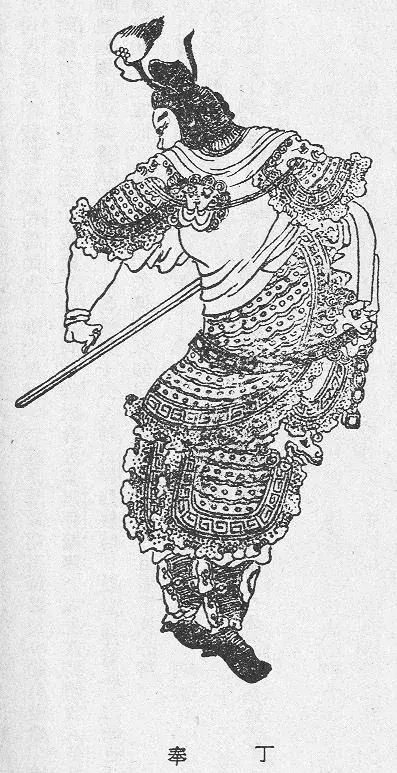
190 CE–271 CE
丁奉
Ding Feng (丁奉, ?–271 CE), courtesy name Chengyuan (承渊), was a native of Anfeng County in Lujiang Commandery (modern southeastern Gushi, Henan, and western Huoqiu, Anhui). He was a paramount military commander, Grand Minister of War, and foundational statesman of Eastern Wu during the Three Kingdoms era, celebrated by Chen Shou as one of the "Tiger-like Ministers of the Southland" (Jiangbiao Zhi Huchen). In his youth, Ding…
Ding Feng (丁奉, ?–271 CE), courtesy name Chengyuan (承渊), was a native of Anfeng County in Lujiang Commandery (modern southeastern Gushi, Henan, and western Huoqiu, Anhui). He was a paramount military commander, Grand Minister of War, and foundational statesman of Eastern Wu during the Three Kingdoms era, celebrated by Chen Shou as one of the "Tiger-like Ministers of the Southland" (Jiangbiao Zhi Huchen). In his youth, Ding Feng was renowned for his extraordinary martial valor, serving as a frontline officer under Gan Ning, Lu Xun, and Pan Zhang. Campaigning across Jingzhou and the Battle of Yiling, he consistently distinguished himself by beheading enemy commanders and capturing division banners, suffering numerous combat wounds and rising through the ranks to become Lieutenant-General. Following the death of Emperor Sun Quan and the ascension of Sun Liang, Ding Feng was appointed Champion General and ennobled as Marquis of Duting. During the Battle of Dongxing in 252 CE, when Cao Wei launched a massive invasion, Regent Zhuge Ke marched to confront them. Overriding the complacent assumptions of fellow officers, Ding Feng foresaw Wei's determined offensive and spearheaded three thousand elite troops to seize the strategic heights of Xutang. In freezing blizzards, Ding Feng ordered his men to "shed heavy armor and wield short blades," launching a sudden shock assault that routed the Wei vanguard camps, securing a decisive victory and earning promotion to General Who Destroys Bandits and Marquis of Duxiang. At the Battle of Gaoting in 255 CE, he charged alone on horseback with a spear, cutting down hundreds of Wei pursuers to rescue Wen Qin, advancing to Marquis of Anfeng. In 258 CE, when dictatorial regent Sun Chen deposed the emperor, Emperor Sun Xiu conspired with Zhang Bu to eliminate the tyrant, with Zhang Bu praising Ding Feng as possessing "unsurpassed strategic acumen and the resolve to execute monumental enterprises." At the imperial winter banquet, Ding Feng boldly orchestrated the arrest and execution of Sun Chen, stabilizing the dynasty and being promoted to General-in-Chief. Following Sun Xiu's death, Ding Feng helped enthrone Sun Hao, receiving appointment as Right Grand Minister of War and Left Military Counselor as the supreme military pillar of late Eastern Wu until his passing in 271 CE.
Campaigned as a daring officer under Gan Ning, Lu Xun, and Pan Zhang; captured enemy banners and rose to Lieutenant-General.
Seized Xutang with three thousand men; stripped off armor to assault Wei camps in heavy snow, winning the Battle of Dongxing.
Commissioned Tiger-Mighty General; charged alone with a spear to crush Wei cavalry pursuing Wen Qin, ennobled as Marquis of Anfeng.
Led vanguard divisions to fortify Lijiang in relief of Zhuge Dan; promoted to Left General for conspicuous bravery.
Conspired with Emperor Sun Xiu and Zhang Bu; orchestrated the ambush and execution of regent Sun Chen at the winter banquet, becoming General-in-Chief.
Following Sun Xiu's demise and Shu's fall, enthroned Sun Hao alongside Puyang Xing; appointed Right Grand Minister of War and Left Military Counselor.
Campaigned against Hefei; forged letters to frame Western Jin commander Shi Bao, successfully prompting the Jin court to recall him.
Secretly discussed state affairs during Sun Hao's winter expedition; died peacefully in office later that year.
Ding Feng was born in Anfeng County of Lujiang Commandery, an essential strategic march between the Huai River and the Yangtze. Throughout the late Han and Three Kingdoms periods, the region was an active battleground between Cao Wei and Sun Wu, cultivating fierce martial traditions. From his youth, Ding Feng possessed exceptional physical strength, agility, and mastery of close-quarters combat. Eager to distinguish himself in an age of upheaval, he enlisted in the Sun Wu army as an adolescent warrior.
During his early career, Ding Feng served as a frontline assault officer under renowned founding generals Gan Ning, Lu Xun, and Pan Zhang. He marched across major theaters, participating in the pacification of the Shanyue, the encirclement of Guan Yu's army in Jingzhou, and the Battle of Yiling against Liu Bei's Shu Han legions. In every engagement, Ding Feng spearheaded the vanguard, displaying reckless personal courage. He repeatedly broke through hostile formations to kill enemy commanders and seize divisional banners, sustaining deep scars across his body. These battlefield achievements earned him continuous advancements from infantry ranks to Lieutenant-General, establishing him as a proven veteran under Emperor Sun Quan.
In the fourth month of 252 CE, Emperor Sun Quan passed away, and his young son Sun Liang ascended the throne under the regency of Zhuge Ke. In recognition of his long military service, Ding Feng was appointed Champion General and ennobled as Marquis of Duting. That winter, Cao Wei regent Sima Shi sought to capitalize on Sun Quan's death by launching a three-pronged invasion of over one hundred thousand troops. While Wang Chang struck Nan Commandery and Guanqiu Jian moved against Wuchang, Grand General Zhuge Dan and Senior General Hu Zun led seventy thousand elite soldiers toward Dongxing (southeast of modern Chaohu, Anhui) to destroy the massive defensive dams constructed by Eastern Wu.
Regent Zhuge Ke mobilized forty thousand troops to relieve Dongxing. Most Wu commanders grew overly confident, assuming that the Wei army would retreat upon sighting Zhuge Ke's vanguard. Ding Feng firmly contested this view, warning: "Cao Wei has mobilized their central forces from Xuchang and Luoyang. They have committed their imperial reserves with comprehensive strategic plans and will not withdraw empty-handed. We must not rely on the assumption that the enemy will not fight; we must rely on our own complete preparation to achieve victory!"
As Wu forces came ashore, Ding Feng advanced westward through mountain paths alongside Tang Zi, Lü Ju, and Liu Zan. Observing that the main body moved slowly under heavy baggage trains, Ding Feng realized that if Wei forces occupied the commanding heights of Xutang, Eastern Wu would face disaster. Breaking away from the main column, Ding Feng hoisted sails on his light naval transports, covering two days' journey in northern gales to secure Xutang ahead of the enemy.
It was midwinter, and blinding blizzards blanketed the battlefield. Assuming the weather was too brutal for any Wu offensive, the Wei forward commanders gathered in their headquarters to drink wine and carouse. Observing their lax vigilance from the heights, Ding Feng rallied his three thousand warriors, shouting: "Nobility, rank, and glory are won today!" He ordered his men to discard their heavy iron cuirasses, keep only their helmets, strip to light undershirts, and take up short slashing blades and spears. Seeing the Wu troops clambering up the embankments half-naked, the Wei sentries pointed and laughed, completely unprepared for battle. Ding Feng raised his blade and led his commandos into the heart of the enemy camp, slashing through tents and barricades. As the Wei lines crumbled in terror, Lü Ju's supporting divisions arrived, turning the engagement into a catastrophic rout. Thousands of Wei soldiers drowned in the freezing waters or were trampled to death, and senior Wei commanders Han Zong and Huan Jia were slain. The Battle of Dongxing stabilized Eastern Wu's northern border, and Ding Feng was promoted to General Who Destroys Bandits and advanced to Marquis of Duxiang.
In 255 CE, Guanqiu Jian and Wen Qin launched an anti-Sima rebellion in Shouchun. Following their defeat, Wen Qin fled south with tens of thousands of retainers to seek refuge with Eastern Wu. Ding Feng was commissioned Tiger-Mighty General, accompanying Grand General Sun Jun to Shouchun to escort Wen Qin's forces. Elite Cao Wei cavalry pursued them relentlessly, trapping the rearguard at Gaoting. In the swirling melee, Ding Feng mounted his warhorse, gripped his long spear, and charged alone into the Wei cavalry ranks. Slashing and thrusting through waves of enemy horsemen, he decapitated several hundred enemies and captured vast stores of weaponry, shattering the pursuit and shielding Wen Qin's retreat. In reward for this valor, Ding Feng was ennobled as Marquis of Anfeng.
In 256 CE, Sun Jun passed away, and his cousin Sun Chen seized control of the government, provoking senior commanders Lü Ju and Teng Yin to revolt. Sun Chen forged imperial edicts ordering Ding Feng and Sun Xian to intercept Lü Ju's naval forces at Jiangdu, leading to Lü Ju's suicide. In 257 CE, Cao Wei Grand General Zhuge Dan rebelled in Shouchun, sending his son Zhuge Jing as a hostage to request Wu assistance. Sima Zhao marshaled over two hundred thousand troops to surround Shouchun. Sun Chen sent expeditionary forces to relieve the fortress, designating Ding Feng and Li Fei as the vanguard.
Advancing deep into enemy territory, Ding Feng fortified Lijiang south of Shouchun. Facing relentless bombardments by veteran Wei commanders Wang Ji and Shi Bao, Ding Feng repeatedly led shock assaults from his ramparts, fighting at close quarters and inflicting heavy casualties. Although Shouchun ultimately fell due to lack of coordination among allied armies, Ding Feng's tenacity on the frontline won the admiration of the Eastern Wu court, earning him promotion to Left General.
In 258 CE, young Emperor Sun Liang plotted to purge the tyrannical regent Sun Chen, but the plot leaked, and Sun Chen deposed the emperor. Sun Chen enthroned Sun Quan's sixth son, Sun Xiu, as Emperor Jingdi. Sun Chen monopolized state power as Chancellor and Shepherd of Jingzhou, feoffing his brothers as marquises and garrisoning imperial guards with his kinsmen. Aware that his imperial position was imperiled, Sun Xiu secretly consulted his confidant Zhang Bu to plan the dictator's elimination. Zhang Bu strongly recommended Ding Feng, declaring: "Though Ding Feng is not well-versed in bureaucratic clerkship, he possesses extraordinary strategic foresight, resolute courage, and the supreme capacity to resolve monumental crises!"
Emperor Sun Xiu summoned Ding Feng to a midnight council in the inner palace, tearfully detailing Sun Chen's treason. Ding Feng responded with resolute loyalty, outlining a plan: "Sun Chen's brothers control the capital garrisons and maintain tight security. We cannot strike during normal times. However, the annual winter sacrifice on the fifth day of the twelfth month approaches. By ancestral custom, Your Majesty must host a state banquet for civil and military officials. As Chancellor, Sun Chen cannot refuse to attend. Your Majesty should conceal armed guards behind the throne. When Sun Chen is seated and drinking, issue the decree to seize him on the spot!"
On the appointed day, Sun Chen feigned illness, but after Sun Xiu dispatched ten imperial emissaries to warmly urge him, he entered the palace with his personal guard. Once Sun Chen took his seat, Sun Xiu issued the arrest order. Ding Feng and Zhang Bu exchanged a decisive glance, and concealed guards rushed forward, pinning Sun Chen to the floor. Sun Chen begged to be exiled to Jiaozhou or enslaved, but Sun Xiu sternly condemned his regicide and ordered Ding Feng to execute him outside the hall. Sun Chen's entire clan was exterminated, restoring authority to the imperial house. In recognition of his decisive leadership, Sun Xiu appointed Ding Feng General-in-Chief, concurrent Protector of the Left and Right, and Shepherd of Xuzhou, placing him in supreme command of Eastern Wu's armed forces.
In 264 CE, Emperor Sun Xiu passed away just as the northern state of Shu Han was conquered by Cao Wei. Facing an unprecedented threat on the Yangtze, civil and military leaders agreed that the crisis demanded a mature sovereign. General-in-Chief Ding Feng, Chancellor Puyang Xing, and Left General Zhang Bu agreed to enthrone Sun Hao, son of former crown prince Sun He. Following his coronation, Sun Hao appointed Ding Feng Right Grand Minister of War and Left Military Counselor, elevating him to the pinnacle of ministerial rank.
However, Sun Hao quickly descended into paranoia and cruelty, executing his benefactors Puyang Xing and Zhang Bu. Despite the court's degeneration, the aged Right Grand Minister of War remained dedicated to frontier defense. In 268 CE, Sun Hao ordered Ding Feng and Zhuge Jing to attack Hefei. Recognizing that Western Jin commander Shi Bao maintained rigid defensive discipline, Ding Feng engaged in psychological warfare, sending a personal letter to Shi Bao filled with ambiguous overtures. Suspecting that Shi Bao was collaborating with Eastern Wu, Jin Emperor Sima Yan recalled Shi Bao to Luoyang for investigation, allowing Ding Feng to dismantle the Jin offensive posture without battle.
In 269 CE, Ding Feng rebuilt the fortifications at Xutang and raided Guyang, but because local inhabitants had fled beforehand, no gains were made, provoking Sun Hao to execute Ding Feng's military guide. In the spring of 271 CE, Sun Hao foolishly mobilized the imperial army, accompanied by empresses and concubines, to march toward Huali in heavy snow, proclaiming a campaign to conquer the Central Plains. As soldiers wept from frostbite and starvation, Chancellor Wan Yu secretly conferred with Ding Feng and Liu Ping: "If His Majesty reaches Huali and refuses to return, we must lead the troops back to preserve the ancestral altars!" The conversation leaked, and Sun Hao harbored deep resentment, though he withheld punishment due to Ding Feng's immense prestige. In the autumn of 271 CE, having served across four reigns for more than fifty years, the veteran general passed away peacefully.
Having held supreme honors and military commands, Ding Feng was naturally proud in his final years. Following his death, corrupt courtiers slandered him before Sun Hao. The cruel emperor retaliated by reviving the inconclusive Guyang campaign, executing Ding Feng's son Ding Wen and banishing the entire Ding clan to remote Linchuan Commandery (modern Fuzhou, Jiangxi). The tragic persecution of this founding hero's house moved the people of the Southland to profound grief.
The Battle of Dongxing in 252 CE was the masterpiece of Ding Feng's career. Facing seventy thousand Wei troops and the passive defeatism of allied commanders, Ding Feng demonstrated acute strategic prescience.
Seizing Xutang with three thousand men, he ordered his troops to shed heavy armor and storm the enemy camps with short blades through heavy snow, shattering Wei's forward lines and securing a decisive triumph that preserved Eastern Wu's sovereignty for decades.
At the Battle of Gaoting in 255 CE, confronted with elite Wei cavalry pursuing Wen Qin's surrendering divisions, Ding Feng exhibited unmatched individual combat prowess.
Charging alone on horseback with a spear, he cut down hundreds of enemy soldiers and captured substantial arms, repulsing the pursuit and establishing himself as Eastern Wu's foremost shock warrior.
In 258 CE, facing Sun Chen's usurpation and terror regime, Ding Feng demonstrated supreme political courage and operational resolve.
He devised the winter sacrifice banquet trap for Emperor Sun Xiu, personally directing the palace strike that eliminated the dictator and purged his faction, rescuing the dynastic house from collapse.
During the late wars against Western Jin, Ding Feng combined martial experience with sophisticated counter-espionage.
At the siege of Hefei in 268 CE, he exploited the paranoia of the Sima ruling house, fabricating correspondence that provoked Jin Emperor Sima Yan into recalling his most formidable frontier commander, neutralizing the Jin threat through intellect alone.
Rising from a blood-soaked junior officer under Gan Ning to the supreme rank of Right Grand Minister of War, Ding Feng served Emperors Sun Quan, Sun Liang, Sun Xiu, and Sun Hao across half a century.
Throughout his life, he remained the bulwark of the Yangtze defense line, earning Chen Shou's immortal tribute as one of the "Tiger-like Ministers of the Southland."
FIGURES ASSOCIATED WITH THIS DYNASTY