Birth in Yingqiu
Born into a commoner family in Yingqiu, Shandong, showing early passion for painting and ink play.
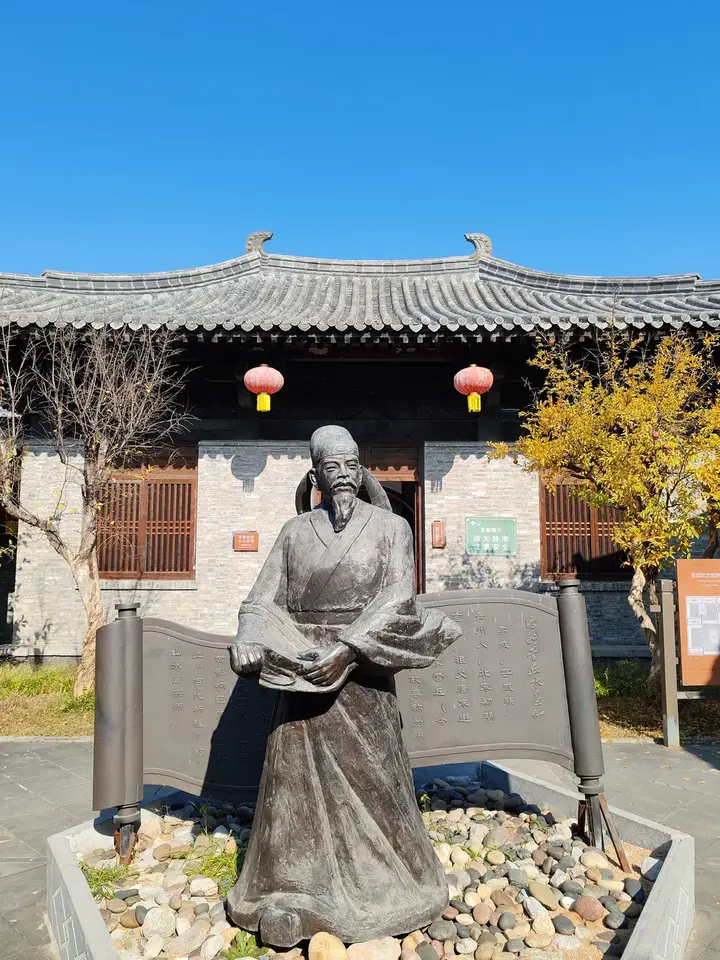
翟院深
Zhai Yuanshen (翟院深, ca. late 10th century – early 11th century) was a native of Yingqiu in Qizhou (modern Linzi, Shandong). He was a distinguished landscape painter of the early Northern Song period, hailing from the same hometown as the monumental landscape patriarch Li Cheng, and celebrated as one of the most brilliant direct heirs of the Li Cheng school. Born into humble origins, Zhai initially served as a court musician…
Zhai Yuanshen (翟院深, ca. late 10th century – early 11th century) was a native of Yingqiu in Qizhou (modern Linzi, Shandong). He was a distinguished landscape painter of the early Northern Song period, hailing from the same hometown as the monumental landscape patriarch Li Cheng, and celebrated as one of the most brilliant direct heirs of the Li Cheng school. Born into humble origins, Zhai initially served as a court musician tasked with drumming to keep tempo during official banquets. Gifted with an extraordinary instinct for painting, he constantly practiced drawing from nature. According to legend, during an official feast, Zhai was beating the drum when he became spellbound by the clouds shifting into majestic peaks outside the hall; arresting his drumsticks in midair, he interrupted the ceremony. When summoned by the prefect, Zhai explained that he was mentally absorbing the brush principles of clouds and mountains; moved by his artistic passion, the prefect freed him from menial duty to become a full-time painter. Emulating Li Cheng throughout his life, Zhai mastered the spare atmospheric manner and crystalline brushwork of northern wintriness, producing landscapes that were frequently mistaken for Li Cheng's authentic hand. His sole surviving masterpiece, Returning from the Hunt in Snowy Mountains (preserved in the Huizhou History Museum, Anhui), portrays hunters traversing snowy mountain passes, serving as an irreplaceable stylistic benchmark in the history of Song landscape painting.
Born into a commoner family in Yingqiu, Shandong, showing early passion for painting and ink play.
Served as a court musician; paused his drum to contemplate mountain clouds during an official feast.
Patronized by the local prefect and relieved from menial court musician service to paint full-time.
Deeply studied landscape scrolls of his fellow townsman Li Cheng, mastering techniques to near-perfection.
Perfected his cold-forest snowscape style, earning wide acclaim and signing Returning from the Hunt in Snowy Mountains.
Passed away in his native Shandong; his landscape style became a revered model for subsequent generations.
Zhai Yuanshen lived in the Qilu region during the early Northern Song. Born into an impoverished household, he was assigned in youth to the menial post of court musician, beating drums and clappers to regulate musical rhythm during bureaucratic assemblies. Yet Zhai possessed profound innate sensitivity to nature and landscape art.
Northern Song critic Guo Ruoxu in the Record of Experiences in Painting (Tuhua Jianwenzhi) recorded an iconic anecdote from his youth: during a lavish prefectural banquet accompanied by flutes and strings, Zhai sat beating the drum. At the musical climax, Zhai glanced up and beheld billowing clouds rolling across the blue sky, transforming into the semblance of towering crags and deep ravines. Entranced by nature's living canvas, Zhai forgot his duties, arresting his drumsticks in midair and breaking the rhythm, throwing the assembly into stunned silence.
The enraged prefect had Zhai dragged before the bench to demand an explanation. Undaunted, Zhai bowed and replied: "From childhood I have loved painting; seeing the shifting clouds resemble precipitous cliffs and waterfalls, I became lost in thought, mentally tracing the rising contours of nature, hence disrupting the performance." Moved by his absolute artistic devotion, the prefect had brush and silk brought forth to test him on the spot. Zhai brushed a magnificent landscape with transcendent ease, prompting the astonished prefect to relieve him from court musician duties and appoint him as an official painter in the prefecture.
Relieved of menial administrative burdens, Zhai Yuanshen poured his entire being into landscape creation. Because he hailed from Yingqiu, the native seat of Five Dynasties and Song master Li Cheng, Zhai was fortunate to examine numerous authentic Li Cheng silk scrolls preserved in regional collections.
Treating Li Cheng as his supreme artistic beacon, Zhai copied the master's scrolls from dawn to dusk, meticulously dissecting spatial composition, atmospheric texturing, trees, rocks, and architectural structures. Over decades of relentless dedication, Zhai thoroughly absorbed the master's ethos of sparing ink like gold and depicting a spare atmospheric manner. His northern cold forests, withered trees, and jagged cliffs possessed crisp, powerful brushwork virtually indistinguishable from Li Cheng's hand. Collectors in Bianjing and Jiangnan frequently replaced Zhai's signatures with Li Cheng's attribution, selling them at immense prices without connoisseurs detecting the substitution.
Zhai spent most of his life painting in peaceful seclusion in Qilu. Although never appointed to the imperial Hanlin Academy of Painting, he commanded immense prestige across the early Northern Song civil art world, passing away peacefully in his homeland.
Zhai Yuanshen's historical significance lies in his role as the pivotal transmitter of the Li Cheng landscape style during the early Northern Song. Li Cheng had pioneered northern landscape art characterized by a spare atmospheric manner, serene forests, and transcendent purity. Following Li Cheng's passing, countless painters attempted to emulate him, but most lapsed into rigid, wooden mannerism. Only Zhai Yuanshen truly captured the master's spiritual essence.
Guo Ruoxu observed in Tuhua Jianwenzhi: "Zhai Yuanshen studied Li Cheng to near-indistinguishable perfection; his depicted scenery is crisp and vigorous, truly capturing the bone of Yingqiu." Emperor Huizong's imperial catalogue Xuanhe Huapu also devoted a dedicated biography to Zhai, praising his mature brushwork, particularly his ability to portray the bleak, somber majesty of northern winter plains covered in snow, capturing the sublime austerity of northern Chinese geography.
Zhai Yuanshen's premier material legacy is his sole surviving monumental masterpiece, Returning from the Hunt in Snowy Mountains (Xueshan Guihu Tu), currently preserved in the Huizhou History Museum in Anhui. The work is a monumental ink-on-silk hanging scroll measuring 155 centimeters by 99 centimeters.
The painting presents an expansive panorama of northern mountain ranges emerging after a winter snowfall. In the far distance, towering snow-clad massifs and deep icy ravines are defined by graded ink washes across the sky and water, accentuating the radiant chill of the white slopes. In the middle ground, ancient withered trees twist their branches in Li Cheng's signature crab-claw technique. In the foreground along snowy trails, several hunters in winter garb carry game and lead hunting hounds on horseback, their lively animation breathing life into the silent, frozen wilderness. On the lower left, the scroll bears a firm regular script inscription reading: Painting by Zhai Yuanshen of Yingqiu. Having survived a thousand years, it remains an exceedingly rare treasure of early Chinese landscape art.
FIGURES ASSOCIATED WITH THIS DYNASTY