Resettlement in Yingzhou
Following the fall of Goguryeo, migrated with his father Qiqi Zhongxiang and Sumo Mohe tribesmen to Yingzhou.
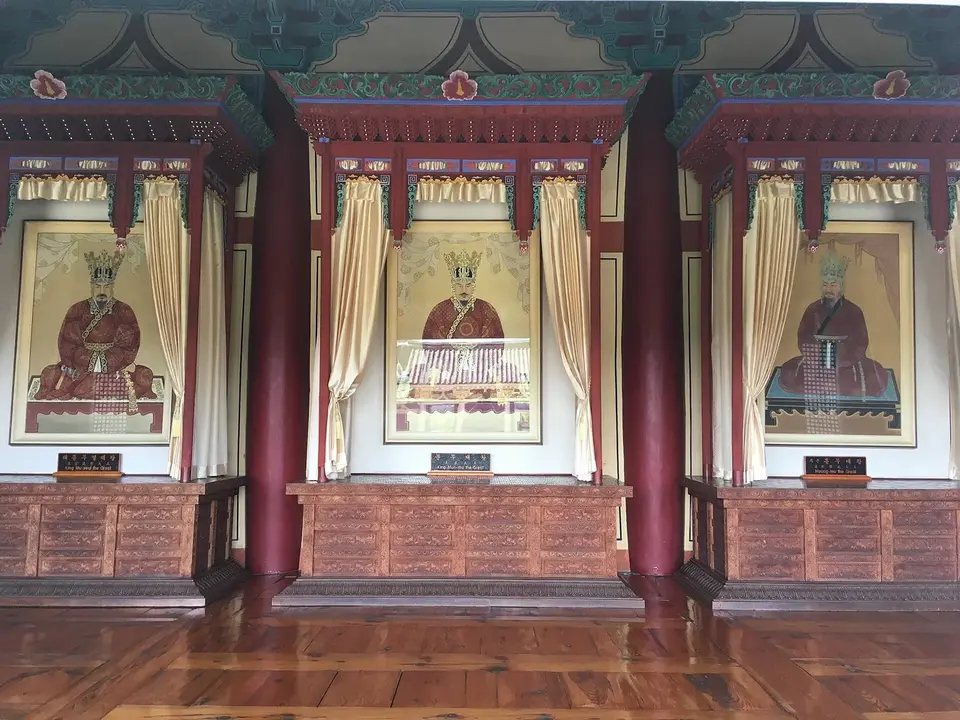
大祚荣
Da Zuorong (died 719), also known in Korean historiography as Dae Joyeong, was a native of the Sumo Mohe and the founding monarch of the ancient northeastern state of Bohai (initially styled the State of Zhen), posthumously remembered as King Gao of Bohai. Following the Tang conquest of Goguryeo, Da Zuorong and his clan were forcibly resettled in Yingzhou (modern Chaoyang, Liaoning). In 696, when Khitan chieftains Li Jinzhong…
Da Zuorong (died 719), also known in Korean historiography as Dae Joyeong, was a native of the Sumo Mohe and the founding monarch of the ancient northeastern state of Bohai (initially styled the State of Zhen), posthumously remembered as King Gao of Bohai. Following the Tang conquest of Goguryeo, Da Zuorong and his clan were forcibly resettled in Yingzhou (modern Chaoyang, Liaoning). In 696, when Khitan chieftains Li Jinzhong and Sun Wanrong rebelled against Wu Zhou rule and sacked Yingzhou, Da Zuorong and his father, Qiqi Zhongxiang, led Sumo Mohe and remnant Goguryeo populations eastward across the Liao River. In 698, at the decisive Battle of Tianmenling, Da Zuorong ambushed and annihilated the pursuing Wu Zhou legions under General Li Kaigu. He subsequently established his mountain citadel at Dongmu Mountain (modern Dunhua, Jilin), proclaiming himself King of Zhen. During his reign, Da adroitly formed defensive pacts with the Eastern Turkic Khaganate, developed metallurgy and agriculture, and solidified dynastic foundations. Following Emperor Zhongzong's restoration of the Tang dynasty in 705, Da Zuorong initiated tributary diplomacy. In 713, Emperor Xuanzong dispatched imperial commissioner Cui Xin to Dongmu Mountain, formally investing Da Zuorong as Grand General of the Left Militant Guard, Prince of Bohai Commandery, and Area Commander-in-Chief of Huhan Prefecture, permanently establishing the state as Bohai and integrating it into the Tang tributary system. Ruling for twenty-one years, Da laid the cornerstone for Bohai's historical reputation as the "Flourishing State of the Eastern Sea." He passed away in 719, receiving the posthumous title King Gao.
Following the fall of Goguryeo, migrated with his father Qiqi Zhongxiang and Sumo Mohe tribesmen to Yingzhou.
Exploited the chaotic Khitan uprising against Wu Zhou to lead his people eastward across the Liao River.
Assumed unified command over the Mohe and Goguryeo refugees following the death of Qisi Biyu and his father.
Ambushed and routed General Li Kaigu's pursuing army at Tianmenling, founding the State of Zhen at Dongmu Mountain.
Dispatched his son Da Wuyi to Chang'an to render tribute and establish formal diplomatic intercourse with the restored Tang.
Received Tang ambassador Cui Xin, being formally invested as Prince of Bohai Commandery and Commander-in-Chief of Huhan.
Expanded town fortifications, disseminated iron farm implements and sericulture, and welcomed neighboring Tungusic tribes.
Passed away after a twenty-one-year reign, receiving the posthumous title King Gao and being succeeded by his son Da Wuyi.
Da Zuorong belonged to the hereditary nobility of the Sumo Mohe, who had long maintained close ties with the kingdom of Goguryeo. In 668, when Tang armies conquered Goguryeo, imperial authorities sought to neutralize border instability by deporting thousands of Mohe and Goguryeo households to Yingzhou (present-day Chaoyang, Liaoning). Throughout three decades in Yingzhou, Da Zuorong immersed himself in Chinese institutions, administrative protocols, and frontier defense strategy, sharpening his military leadership. In 696, the tyrannical administration of Yingzhou Commander Zhao Wenhui provoked a major rebellion by Khitan chieftains Li Jinzhong and Sun Wanrong, who overwhelmed the regional seat. Capitalizing on the upheaval, Da Zuorong's father, Qiqi Zhongxiang, joined forces with Baishan Mohe leader Qisi Biyu, marshaling thousands of households to break through Khitan pickets, cross the Liao River eastward, and reclaim their ancestral lands near Mount Changbai.
Empress Wu Zetian was enraged by their flight and sought to conciliate them by enfeoffing Qisi Biyu as Duke of Xu and Qiqi Zhongxiang as Duke of Zhen. When both chieftains rejected imperial overtures, Wu Zetian dispatched General Li Kaigu with tens of thousands of elite troops in relentless pursuit. During the fighting, Qisi Biyu was slain in battle, and Qiqi Zhongxiang died of illness on the march. At this perilous juncture, Da Zuorong assumed supreme command. Uniting the disparate Mohe factions and Goguryeo remnants, he conducted an organized fighting retreat through dense mountain forests, luring Li Kaigu's exhausted troops into the defiles of Tianmenling (in modern Huinan, Jilin). In 698, Da Zuorong sprung a devastating ambush from the precipitous valley heights, annihilating the Wu Zhou army and barely allowing Li Kaigu to escape alone. The triumph at Tianmenling terminated imperial military operations in the northeast. Capitalizing on this momentum, Da Zuorong led his followers to Aodong Fortress at Dongmu Mountain (modern Dunhua, Jilin). Establishing defensive battlements, he proclaimed himself King of Zhen and inaugurated the State of Zhen.
At its inception, the State of Zhen was hemmed in by hostile powers: the militant Khitans to the west, the formidable Second Turkic Khaganate to the north, and Silla across the southern river boundary. Demonstrating sophisticated statecraft, Da Zuorong sent embassies to the northern steppes to forge an alliance with Qapaghan Khagan of the Turks, successfully neutralizing potential military threats from the Wu Zhou dynasty. Over several years of domestic peace, the realm expanded rapidly as surrounding Mohe tribes submitted, bringing over one hundred thousand households under his banner. When Emperor Zhongzong restored the Tang dynasty in 705, the imperial court sought peaceful border relations. Recognizing the strategic imperative of peace, Da Zuorong sent his eldest son, Da Wuyi, to the capital to render tribute. Between 713 and 714, Emperor Xuanzong dispatched Honglu Director Cui Xin as an imperial ambassador to Dongmu Mountain to formally invest Da Zuorong as Grand General of the Left Militant Guard, Prince of Bohai Commandery, and Area Commander-in-Chief of Huhan Prefecture. Thenceforth, the realm discarded the title Zhen and became universally known as Bohai, being incorporated into the Tang administrative framework of Jimi prefectures. Da Zuorong consistently dispatched tribute missions and students to the Tang capital, embracing Confucian classical civilization and laying the foundation for northeastern ethnic integration. In 719, Da Zuorong passed away and was granted the posthumous name King Gao, with his son Da Wuyi succeeding to the throne.
In the wake of Goguryeo's collapse and northern border turmoil, Da Zuorong successfully united the Sumo Mohe tribes and residual Goguryeo populations, creating an enduring civilization that flourished in Northeast Asia for over two hundred and twenty years. He promoted iron plow agriculture, silkworm breeding, mining, and urban fortification, transforming the remote forests of the Changbai ranges into an organized feudal state that later earned international renown as the "Flourishing State of the Eastern Sea."
Following his stunning victory at Tianmenling, Da Zuorong displayed exceptional geopolitical wisdom. Resisting the temptation of perpetual conflict that had brought about Goguryeo's destruction, he voluntarily accepted Tang imperial investiture, establishing institutionalized tribute missions and royal hostage protocols. This strategic rapprochement secured two centuries of peace for Bohai, firmly embedding the northeastern frontier within the historical orbit of the Chinese imperial dynastic system.
FIGURES ASSOCIATED WITH THIS DYNASTY