Birth in Konstanz
Born in Konstanz, Holy Roman Empire, receiving classical education in humanistic studies.
邓玉函
Johann Schreck (邓玉函, 1576 – May 11, 1630), courtesy name Hanpu, was a native of Konstanz in the Holy Roman Empire (modern Germany) and an eminent Jesuit missionary, polymath, and member of the Accademia dei Lincei. Having studied medicine and mathematics at the University of Altdorf and the University of Padua, Schreck was an accomplished physician, astronomer, linguist, and botanist. He was a close university friend of…
Johann Schreck (邓玉函, 1576 – May 11, 1630), courtesy name Hanpu, was a native of Konstanz in the Holy Roman Empire (modern Germany) and an eminent Jesuit missionary, polymath, and member of the Accademia dei Lincei. Having studied medicine and mathematics at the University of Altdorf and the University of Padua, Schreck was an accomplished physician, astronomer, linguist, and botanist. He was a close university friend of Galileo Galilei and was elected to the prestigious Accademia dei Lincei in Rome in 1611. In 1618, Schreck answered the Jesuit overseas call, sailing from Lisbon alongside Father Nicolas Trigault, Johann Adam Schall von Bell, and Giacomo Rho. Their mission brought an extraordinary cargo to China, including more than seven thousand European scientific books and a Galilean astronomical telescope. Following his arrival in Macao in 1619, Schreck conducted the earliest recorded pathological autopsy by a Western physician in China. Moving into Jiangnan, he collaborated with Christian literati Li Zhizao and Bi Gongchen in Hangzhou, translating the pioneering anatomical treatise Outline of Western Anatomy (Taixi Renshen Shuogai). Later in Beijing and Yangzhou, he partnered with Shaanxi scholar Wang Zheng to dictate and translate Illustrations and Explanations of Strange Devices from the Far West (Yuanxi Qiqi Tushuo Lu Zui), the first Chinese monograph to introduce classical Western mechanics. In 1629, following solar eclipse forecasting errors by the Imperial Astronomical Bureau, Grand Secretary Xu Guangqi recommended Schreck to the imperial court. Emperor Chongzhen appointed him to the Imperial Calendar Bureau to oversee the Chongzhen calendar reform. Schreck supervised the construction of astronomical instruments, introduced the first astronomical telescope to official Chinese observational practice, and translated fundamental mathematical treatises, including Great Measurement (Da Ce), which systematically introduced plane and spherical trigonometry into Chinese astronomy. Schreck passed away in Beijing in 1630 and was buried in the Zhalan Cemetery.
Born in Konstanz, Holy Roman Empire, receiving classical education in humanistic studies.
Studies medicine and mathematics at the University of Padua, establishing a lifelong friendship with Galileo Galilei.
Elected to the Accademia dei Lincei; formally joins the Society of Jesus in November.
Sails from Lisbon with Nicolas Trigault, carrying seven thousand European volumes and a Galilean telescope.
Lands in Macao; conducts botanical research in Goa and performs the earliest recorded autopsy in China.
Resides in Hangzhou at Li Zhizao's estate, drafting the Western anatomical treatise Outline of Western Anatomy.
Collaborates with Shaanxi scholar Wang Zheng to compile Illustrations and Explanations of Strange Devices.
Recommended by Minister Xu Guangqi to reform the imperial calendar, translating trigonometry texts.
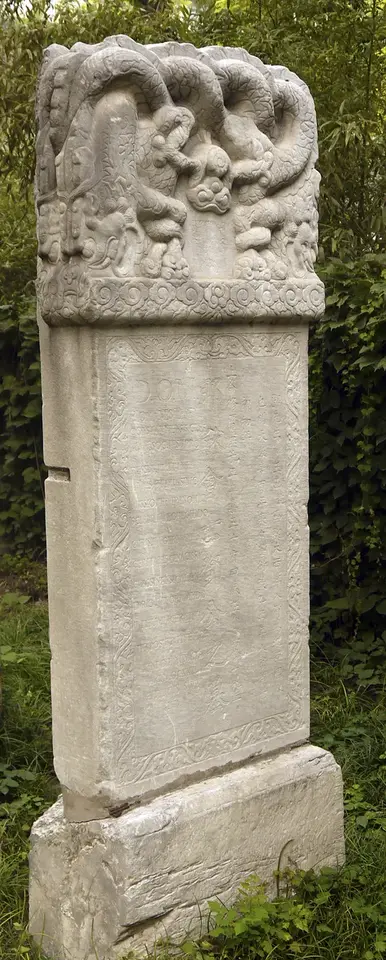
Passes away from illness in Beijing on May 11; granted an imperial funeral and buried in Zhalan Cemetery.
Johann Schreck was born in Konstanz in southwestern Germany. Reared in rigorous humanistic schooling, he achieved fluency in German, Latin, Greek, and Italian. In his youth, Schreck pursued medical studies at the University of Altdorf before proceeding to the University of Padua, then one of Europe's premier scientific centers. At Padua, Schreck excelled in clinical anatomy, pharmacology, geometry, and astronomy, befriending Galileo Galilei, who was then teaching mathematics at the institution.
Schreck and Galileo shared a passion for empirical observation, conducting telescopic stargazing experiments together in Rome. Recognized for his multidisciplinary erudition, Schreck was elected to the Accademia dei Lincei in Rome in 1611, an honor he shared with Galileo. However, rather than seeking academic comfort in Europe, Schreck was drawn to religious and scholarly mission. In November 1611, he entered the Society of Jesus.
In 1613, when Father Nicolas Trigault returned to Europe to gather resources for the China mission, Schreck was appointed scientific companion. Touring courts and religious institutions across Germany, France, and Italy, Schreck helped assemble over seven thousand European scientific books, along with mathematical instruments and a Galilean astronomical telescope presented by the Cardinal of Milan.
In April 1618, Schreck embarked from Lisbon alongside Trigault, Johann Adam Schall von Bell, and Giacomo Rho. During the voyage, Schreck led biweekly seminars in mathematics and mechanics for the crew, recording astronomical, meteorological, and magnetic measurements. When the expedition docked in Goa, India, Schreck studied local flora and fauna, collecting over five hundred specimens and authoring the two-volume botanical treatise Plinius Indicus.
In July 1619, the mission landed in Macao. Facing anti-Christian restrictions in mainland China following the Nanjing Incident, Schreck resided in Macao for nearly two years. While treating local patients, he performed a pathological autopsy on a deceased Japanese Catholic priest, noting lung tissue that was dried and spotted with dark blue lesions from excessive tobacco consumption. This operation stands as the earliest recorded human post-mortem dissection conducted by a Western physician in China.
In 1621, Schreck traveled to Jiading to study Chinese, subsequently relocating to Hangzhou at the invitation of the scholar-official Li Zhizao. In Hangzhou, Schreck dictated European physiological and anatomical theories based on the works of Caspar Bauhin and Andreas Vesalius, drafting the two-volume treatise Outline of Western Anatomy (Taixi Renshen Shuogai), which introduced Western neural and muscular anatomy to late Ming scholars.
In 1623, Schreck arrived in Beijing. In 1626, Wang Zheng, an imperial official from Shaanxi renowned for designing agricultural waterwheels and crossbows, visited Schreck to study Western engineering principles. Recognizing their complementary talents, they resolved to translate European theoretical mechanics and engineering drawings into Chinese for practical public utility.
Between late 1626 and early 1627, working in Beijing and Yangzhou, Schreck translated passages from Archimedes, Simon Stevin, and Agostino Ramelli, while Wang transcribed them into classical Chinese prose and prepared detailed mechanical engineering diagrams.
Their collaboration produced the three-volume masterwork Illustrations and Explanations of Strange Devices from the Far West (Yuanxi Qiqi Tushuo Lu Zui). The first two volumes laid out theoretical mechanics, defining gravity, center of gravity, and specific gravity, while formulating proofs for the six simple machines: the lever, wheel and axle, pulley, inclined plane, wedge, and screw. The third volume featured detailed schematic drawings of practical engineering apparatuses, including automatic grain mills, water pumps, cranes, and wood-sawing machines. This publication introduced deductive physical mechanics into traditional Chinese technology.
In May 1629, the Ming Imperial Astronomical Bureau erred in predicting a solar eclipse, whereas calculations based on Western astronomical tables proved precise to the minute. Emperor Chongzhen ordered the establishment of the Imperial Calendar Bureau, appointing Minister of Rites Xu Guangqi to direct the reform. In his memorial to the throne, Xu recommended Schreck, praising his mastery of mathematical astronomy and instruments.
Upon joining the bureau, Schreck took charge of mathematical computations and instrument fabrication, assembling celestial globes, quadrants, and the first Galilean telescope mounted at the Beijing Imperial Observatory. He translated the mathematical treatise Great Measurement (Da Ce) in two volumes and Brief Explanation of Celestial Measurement (Cetian Yueshuo), introducing trigonometric functions, including sine, cosine, tangent, and secant, along with spherical trigonometry. This provided the computational foundation for the 137-volume Chongzhen Calendar.
Exhausted by demanding mathematical calculations and weakened by illness, Schreck passed away in Beijing on May 11, 1630, at the age of fifty-four. Emperor Chongzhen granted imperial funds for his funeral, and he was laid to rest in the Zhalan Cemetery outside Fuchengmen. His Latin epitaph celebrated him as a master across broad scientific disciplines who bridged East and West.
Schreck's most enduring contribution to Chinese scientific history was his co-translation of Illustrations and Explanations of Strange Devices from the Far West with Wang Zheng. While pre-modern China possessed practical mechanical craftsmanship, it lacked deductive mathematical formulations of physical laws.
Schreck supplied the theoretical foundations of European Renaissance mechanics, introducing Chinese scholars to concepts of center of gravity, leverage ratios, and mechanical advantage. Wang Zheng noted in his preface that machines operate on principles, and Schreck's expositions uncovered the mathematical regularities governing physical phenomena.
The work paired theoretical proofs with detailed schematics of practical mechanisms, including irrigation wheels, cranes, and grain mills. The treatise circulated widely among late Ming and early Qing thinkers, directly influencing Fang Yizhi's physical investigations and being incorporated into the imperial Complete Library of the Four Treasuries.
In medicine, Schreck was the first European scientist to introduce modern anatomical and physiological knowledge to China. Having trained in the anatomical theater at the University of Padua, Schreck possessed sophisticated medical training.
Drawing upon the anatomical works of Caspar Bauhin and Andreas Vesalius, Schreck drafted Outline of Western Anatomy (Taixi Renshen Shuogai), later edited and published by scholar Bi Gongchen as Renshen Shuogai. The text described the human skeleton, muscular articulation, brain and cranial nerves, sensory organs, and the digestive system. For the first time, Chinese scholars encountered precise descriptions of neural transmission, muscular mechanics, and vascular circulation.
Accompanied by anatomical illustrations, the work challenged speculative visceral models in traditional texts. It opened empirical anatomical perspectives for Chinese medical scholars, influencing Qing dynasty medical reformers such as Wang Qingren, author of Correcting the Errors in the Forest of Medicine.
Schreck transformed late Ming observational astronomy and mathematics through his work on the Chongzhen calendar reform. With the Ming dynasty's traditional astronomical tables accumulating severe errors, Xu Guangqi relied on European planetary calculations to overhaul imperial timekeeping.
Schreck translated Great Measurement (Da Ce), introducing six trigonometric functions and spherical trigonometry into Chinese mathematics. By replacing unwieldy algebraic interpolation with trigonometric tables, his work modernized imperial calendrical mathematics.
Simultaneously, Schreck deployed a Galilean telescope at the Imperial Calendar Bureau, conducting the first systematic telescopic observations in Chinese official history. Using the telescope, astronomers recorded sunspots, lunar craters, the phases of Venus, and the Galilean moons of Jupiter, inaugurating observational astrophysics in China and providing the mathematical core for the Chongzhen Calendar.
FIGURES ASSOCIATED WITH THIS DYNASTY