Royal Birth
Born in the imperial palace at Dadu as the solitary son of Temür Khan and Empress Bulughan.
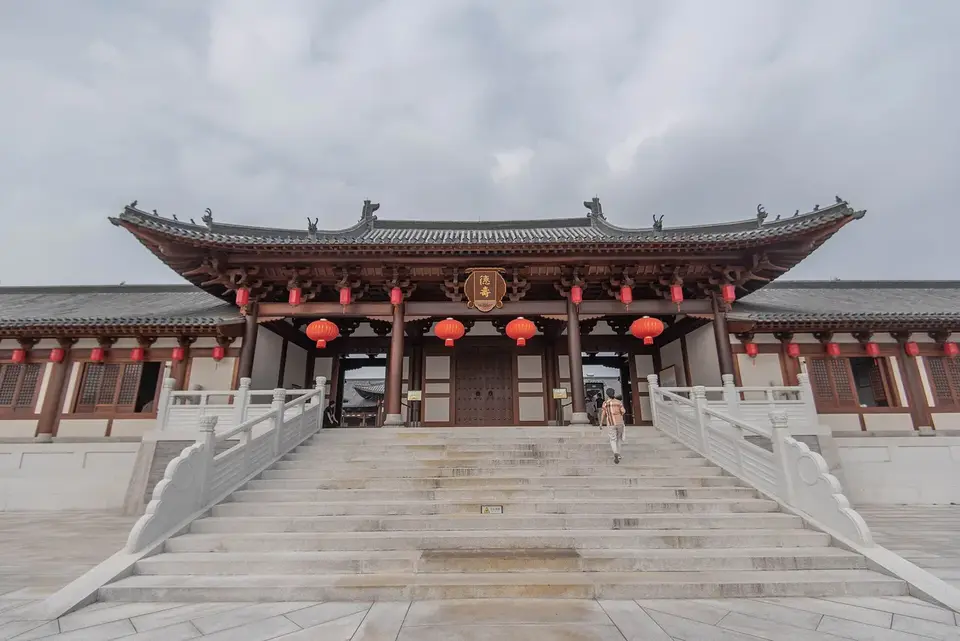
德寿
Deshou (德寿, ?–1306) was the Crown Prince of the Yuan Dynasty and the only biological son of Temür Khan (Emperor Chengzong). His mother was Empress Bulughan of the Bayaut clan, the principal consort of the sovereign. During the Dade era, Emperor Chengzong suffered from chronic physical infirmities, including gout and paralysis, which frequently incapacitated him from attending imperial audiences and left administrative…
Deshou (德寿, ?–1306) was the Crown Prince of the Yuan Dynasty and the only biological son of Temür Khan (Emperor Chengzong). His mother was Empress Bulughan of the Bayaut clan, the principal consort of the sovereign. During the Dade era, Emperor Chengzong suffered from chronic physical infirmities, including gout and paralysis, which frequently incapacitated him from attending imperial audiences and left administrative authority largely in the hands of Empress Bulughan. Because the imperial bedchamber produced few heirs, Deshou, as the emperor's solitary legitimate son, was regarded as the sole legal successor to the Mongol Empire. The imperial court appointed distinguished Confucian scholars alongside veteran Mongol nobles to the Eastern Palace to instruct the young prince in statecraft, classical Chinese philosophy, and traditional steppe martial skills. In June 1305, as Chengzong's health declined precipitously, the emperor issued an imperial edict formally designating Deshou as Crown Prince. A magnificent ceremony was held in Dadu, bestowing the golden imperial seal and proclaiming an empire-wide general amnesty. However, the prince was plagued by frail health. Barely six months after his investiture, Deshou contracted a fatal illness and passed away in January 1306. His premature demise shattered the ailing emperor emotionally, extinguished Chengzong's direct patrilineal line, and destabilized the central court. Following Chengzong's death in 1307, the resulting succession vacuum led Empress Bulughan to attempt a palace coup with Prince Ananda of Anxi, which was swiftly crushed by Prince Ayurbarwada and Grand Councilor Harghasun, altering the dynastic trajectory of the Yuan dynasty.
Born in the imperial palace at Dadu as the solitary son of Temür Khan and Empress Bulughan.
Reared under the vigilant protection of Empress Bulughan; instructed by senior Mongolian and Confucian tutors.
Officially designated Crown Prince through imperial edict; received the golden seal amidst empire-wide amnesty.
Struck by a severe illness amidst extreme winter cold, with imperial physicians attending him around the clock.
Succumbed to illness in the Eastern Palace less than seven months after his appointment, leaving the throne without an heir.
Following Chengzong's death, the void left by Deshou sparked a violent court coup that enthroned Emperor Wuzong (Külüg Khan).
Deshou was born during the Dade era of the Yuan dynasty. His father, Temür Khan, was the grandson of Kublai Khan and the third son of Crown Prince Zhenjin. Although Temür maintained a large harem, he suffered from acute fertility challenges. Only his chief consort, Empress Bulughan, bore him a surviving male heir, whom they named Deshou.
During the middle and later years of his reign, Temür Khan was afflicted by severe rheumatoid conditions and vascular ailments that left him bedridden. Consequently, state decisions and imperial decrees were increasingly vetted and approved by Empress Bulughan. Highly intelligent, fiercely ambitious, and jealous of rival royal branches, Bulughan focused her entire political strategy on safeguarding the succession for her son Deshou, viewing him as the sole anchor of her clan's continued dominance.
To prepare Deshou for the throne, the imperial court assembled a prestigious retinue of Mongolian statesmen and Chinese classical masters. The young prince was instructed in Uighur-Mongolian script, the ancestral Yassa statutes, equestrian warfare, and the core Confucian canon, living under immense imperial solicitude.
As Temür Khan's physical condition worsened, factional tensions within the Borjigin imperial clan escalated. Two formidable cousins loomed over the court: Prince Qayshan (later Emperor Wuzong), who commanded veteran tumens guarding the northern frontier, and his younger brother Ayurbarwada (later Emperor Renzong), who resided in Henan with their influential mother Daji. Both princes enjoyed strong support among the traditional military aristocracy.
Determined to eliminate any competing claims to the throne, Empress Bulughan urged the emperor to formally appoint Deshou as Crown Prince.
In June 1305, Emperor Chengzong issued an imperial proclamation naming Deshou as the heir apparent (Huangtaizi). An elaborate investiture ritual was celebrated in the Daming Hall in Dadu. Imperial envoys performed sacrifices at the ancestral temple and state altars, presenting the prince with the golden jade seal. The court decreed a realm-wide pardon, remitted unpaid agricultural taxes, and excused commoners from corvee labor. The ceremony established Deshou's paramount legal legitimacy as the future sovereign of the Mongol Empire.
Despite his elevated position, Deshou had suffered from chronic physical fragility from infancy. The demanding ceremonial duties of the Eastern Palace, combined with harsh seasonal conditions, took a rapid toll on his health.
In late 1305, an intense winter cold enveloped Dadu. Deshou was struck by a virulent infection and suffered recurring fevers. Stricken with panic, the emperor and empress mobilized the imperial medical bureau, ordering around-the-clock treatments while sponsoring Buddhist and Daoist prayer rituals across the metropolitan district.
All medical efforts proved futile. In January 1306, Crown Prince Deshou passed away in the Eastern Palace, having held the title of heir apparent for less than seven months.
The death of his only son delivered a crushing psychological blow to the bedridden Temür Khan. Stricken with grief, the emperor's condition deteriorated beyond recovery, rendering him incapable of managing state business. Crucially, Deshou's demise meant that the ruling sovereign possessed no direct male descendants to inherit the crown.
Deshou's death created an existential dilemma for Empress Bulughan. She knew that upon Chengzong's death, the succession would inevitably pass to Zhenjin's other grandsons, Qayshan or Ayurbarwada, who would swiftly dismantle her political faction.
In desperation, Bulughan banished Ayurbarwada and his mother to the provinces and plotted with Prince Ananda of Anxi, a prominent imperial cousin and devout Muslim who governed the northwestern marches. She planned to elevate Ananda to the imperial throne as a puppet ruler while retaining regency power behind the curtains.
In February 1307, Temür Khan passed away. Right Grand Councilor Harghasun, a stalwart defender of traditional succession, secretly dispatched couriers to summon Ayurbarwada and Qayshan to the capital. Ayurbarwada slipped into Dadu, staged a swift military coup with Harghasun's guards, arrested Empress Bulughan and Prince Ananda, and executed both for treason. Qayshan subsequently marched from the northern steppe to assume the throne as Külüg Khan. Deshou's brief elevation and sudden death served as the foundational catalyst that initiated decades of violent palace struggles in the middle Yuan dynasty.
Stood as the only biological son of Temür Khan and Empress Bulughan, serving as the central figure of court politics during the late Dade era.
Formally designated Crown Prince in June 1305 with the conferral of the golden seal and imperial proclamations across the empire.
Succumbed to fatal illness in January 1306 after six months as heir apparent, terminating Emperor Chengzong's direct patrilineal branch.
His passing left a power vacuum that directly incited the conspiracy of Empress Bulughan and the armed coup of Emperor Wuzong and Emperor Renzong.
FIGURES ASSOCIATED WITH THIS DYNASTY