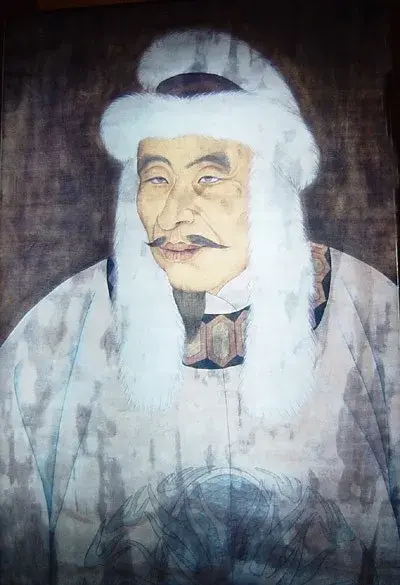
Biography
Military Service and Campaigns Against Liao
Wanyan Zongpan was born into the core ruling clan of the Jurchen people shortly before the founding of the Jin Dynasty, as the eldest legitimate son of Emperor Taizong (Wanyan Sheng). Energetic, physically imposing, and militarily capable in his youth, he quickly gained the confidence of both Emperor Taizu and Emperor Taizong. During the major wars against the Liao Dynasty, Zongpan was commissioned in 1121 (Tianfu 5) as Vice Commander of Internal and External Armies under Generalissimo Wanyan Gao. In the campaign against the Liao Central Capital (Zhongjing Dadingfu), Zongpan personally directed front-line assaults, making significant military contributions to the collapse of Liao defenses in the northern theater.
Following the destruction of the Liao state, Jin armies launched a massive two-pronged southward invasion against the Northern Song Dynasty in 1126 (Tianhui 4). Zongpan accompanied the frontline forces, participating in the encirclement and capture of Bianjing. His sustained battlefield command established his personal prestige within the Jurchen military hierarchy and furnished him with substantial political capital for entering the civil administration.
Elevation to Bojilie and Succession Struggle
In 1132 (Tianhui 10), Emperor Taizong sought to consolidate the succession rights of his direct biological descendants by elevating Zongpan to Grand Council Adjutant Minister (Guolun Hulu Bojilie), thus inducting him into the inner circle of the imperial council. At the time, Emperor Taizong was aging, and dynastic succession in the early Jin state still vacillated between traditional Jurchen fraternal succession and the Han-style agnatic primogeniture. Taizong privately favored designating Zongpan as the crown prince. However, this aspiration was firmly resisted by senior founding figures, including Taizu's eldest son Wanyan Zonggan, Grand Field Marshal Wanyan Zonghan, and veteran general Wanyan Zongbi.
Through delicate political negotiations among the founding nobility, the court ultimately selected Emperor Taizu's eldest direct grandson, Wanyan Dan (Emperor Xizong), as Crown Prince (Anban Bojilie). Failing to secure the imperial succession, Zongpan harbored intense resentment against Zonggan and Zonghan, setting the stage for irreconcilable factional strife in subsequent years.
Directing the Secretariats and Factional Hegemony
In 1135 (Tianhui 13), Emperor Taizong passed away and Emperor Xizong formally ascended the throne. To integrate aristocratic power and institutionalize administrative governance, Xizong dismantled the tribal Bojilie council in favor of the Chinese Three Departments and Six Ministries system. Emperor Xizong appointed Zongpan as Grand Preceptor (Taishi) and Director of the Department of State Affairs (Shangshu Ling), created him King of Song, and ordered him to supervise all three secretariats together with Zonghan and Zonggan. Zongpan reached the apex of bureaucratic prestige, filling key regional and metropolitan posts with personal adherents.
As the Jin empire consolidated control over the Central Plains, deep ideological fractures emerged over southern strategy. Zongpan formed an influential political alliance with Wanyan Zongjuan and Wanyan Chang (Talan), arguing that prolonged southern campaigns drained state coffers and strained Jurchen garrisons in the humid southern climate. He advocated dismantling the puppet Qi state of Liu Yu and retroceding Henan and Shaanxi territories to the Southern Song Dynasty in return for vassal declarations and regular annual tribute payments. This accommodationist strategy was adamantly opposed by Wanyan Zonggan and Wanyan Zongbi, who regarded relinquishing hard-won territory as catastrophic appeasement. In 1138 (Tianjuan 1), Zongpan leveraged his administrative dominance to summarily execute Gao Qingyi, a prominent lieutenant of the deceased Wanyan Zonghan, inflaming hostilities with the martial faction beyond repair.
Coup Conspiracy and Execution
By 1139 (Tianjuan 2), Emperor Xizong increasingly relied upon Wanyan Zonggan and Wanyan Zongbi to oversee central policy and military commands. Realizing that his administrative grip was deteriorating, Zongpan formed an armed conspiracy alongside Wanyan Zongjuan to launch a palace coup and depose Emperor Xizong. However, the plot was uncovered beforehand by Zonggan and Zongbi. Recognizing the existential threat to the throne, the two senior leaders acted swiftly and presented incontrovertible evidence of high treason to the emperor.
Emperor Xizong dispatched imperial guards to surround Zongpan's residence, summarily executing Zongpan and his conspirator Zongjuan, while ordering their peerages and titles permanently revoked. Although the subsequent usurper Wanyan Liang briefly rehabilitated Zongpan as Prince of An, Emperor Shizong rescinded the honor upon ascending the throne, permanently reducing him to Duke of Hundede and marking the final conclusion of his turbulent political career.
Major Achievements
Military Campaigns in the Conquest of Liao and Song
As the eldest son of Emperor Taizong, Wanyan Zongpan played a prominent military role during the foundational wars of the Jin state. Directing forces as Vice Commander of Internal and External Armies, he participated directly in the siege and capture of the Liao Central Capital, effectively dismantling key northern defensive lines. In the subsequent southwards campaigns against the Northern Song Dynasty, he took part in operations around Bianjing, accumulating significant combat prestige that underpinned his subsequent ascent into the imperial council.
Advocating Peace Settlements and Intensifying Court Division
During the early consolidation of the empire, Zongpan emerged as the principal architect of the accommodationist faction within the Jin court. Recognizing the physical limits of Jurchen cavalry in southern riverine networks, he sought to reduce fiscal strain by exchanging Henan and Shaanxi for Southern Song vassal status and annual tribute. Although this policy aimed at stabilization, it directly alienated the military aristocracy who had conquered those lands, resulting in explosive factional strife that ultimately brought about his downfall.