Birth in Hetu Ala
Born on the third day of the seventh lunar month in Hetu Ala as the second son of Nurhaci and Lady Tunggiya.
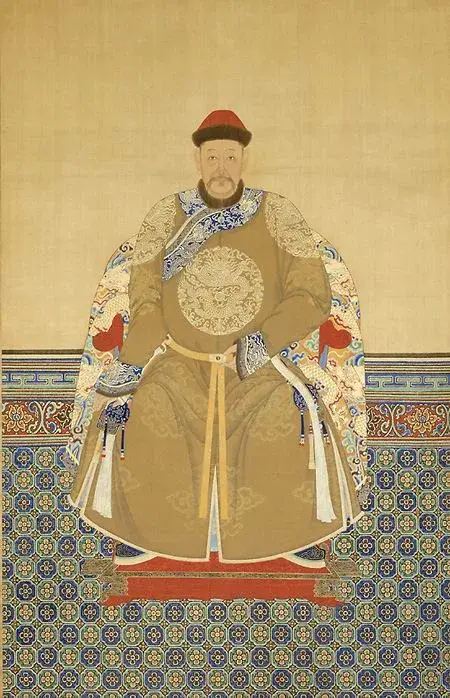
代善
Aisin Gioro Daišan (1583–1648), a member of the Manchu Plain Red Banner, was the second son of Nurhaci (Emperor Taizu of Qing), born to Nurhaci's primary consort Lady Tunggiya. Daišan was an eminent military strategist, founding statesman, and premier imperial prince of the Later Jin and early Qing dynasties. As the senior of the Four Great Beile, he was universally known as the Grand Beile. In 1636, upon the founding of the…
Aisin Gioro Daišan (1583–1648), a member of the Manchu Plain Red Banner, was the second son of Nurhaci (Emperor Taizu of Qing), born to Nurhaci's primary consort Lady Tunggiya. Daišan was an eminent military strategist, founding statesman, and premier imperial prince of the Later Jin and early Qing dynasties. As the senior of the Four Great Beile, he was universally known as the Grand Beile. In 1636, upon the founding of the Great Qing, he was created Prince Li of the First Rank (Heshuo Li Qinwang), ranking foremost among the Eight Iron-Cap Princes granted perpetual hereditary succession. From early youth, Daišan campaigned alongside Nurhaci in conquering eastern Liaodong, demonstrating extraordinary personal valor. In the critical Battle of Wujie Rock in 1607, he charged enemy formations on horseback and smashed the Ula tribal army, earning the prestigious honorific title Guyeng Baturu ("Iron-Cavalry Hero"). During the campaigns that unified the Jurchen tribes and fought the Ming Empire, Daišan achieved monumental military successes. In the Battle of Sarhu in 1619, he led forces that decimated the Ming western army under Du Song and the northern army under Ma Lin, subsequently capturing the strategic strongholds of Kaiyuan, Tieling, Shenyang, and Liaoyang. Following the deposition of his elder brother Cuyen, Daišan was entrusted with governing affairs and commanding the Two Red Banners, standing at the summit of the imperial nobility. Following Nurhaci's death in 1626, Daišan prioritized dynastic unity and led the princes in selecting his eighth brother Hong Taiji (Emperor Taizong) to succeed to the throne. In 1643, when Hong Taiji died suddenly and civil war loomed between Prince Su (Hooge) and Prince Rui (Dorgon), Daišan decisively intervened at the Dugong Palace council to arbitrate the succession, placing the five-year-old ninth prince Fulin (the Shunzhi Emperor) on the imperial throne and averting internal rupture. A veteran of countless campaigns who conducted state affairs with seasoned prudence, Daišan passed away in Beijing in 1648. He was posthumously honored with the name Lie and accorded sacrifice in the Imperial Ancestral Temple.
Born on the third day of the seventh lunar month in Hetu Ala as the second son of Nurhaci and Lady Tunggiya.
Participated in the campaign that conquered the Hada tribe and was created Beile for battlefield gallantry.
Routed the superior army of the Ula tribe at Wujie Rock, receiving the supreme warrior title Guyeng Baturu.
Commanded forces in capturing over twenty mountain forts, eliminating the military power of the Haixi Jurchen Ula tribe.
Appointed Grand Beile upon the founding of the Later Jin dynasty, ranking first among the Four Great Beile.
Ambushed Du Song's western army at Mount Jilin and crushed Ma Lin's northern army at Shangjianzhai.
Stormed Shenyang and crushed elite Ming infantry at the Hun River, securing the transfer of the capital to Liaoyang.
Following Nurhaci's death, united the princes to enthrone Hong Taiji as Khan, securing peaceful political transition.
Created Prince Li of the First Rank upon the proclamation of the Great Qing, heading the imperial princes.
Presided over the imperial assembly at the Dugong Palace, brokering a consensus to enthrone the young Fulin.
Escorted the young Shunzhi Emperor and Empress Dowager Xiaozhuang into Beijing as the capital was established.
Passed away at his residence in Beijing on the sixteenth day of the eighth lunar month at age sixty-six; was posthumously named Lie in 1671.
Daišan was born on August 19, 1583, in Hetu Ala, Jianzhou Left Guard. At the time of his birth, his father Nurhaci had just embarked upon his historic campaign to unify the neighboring Jurchen tribes with thirteen suits of ancestral armor. Daišan was the second son born to Nurhaci by his first primary wife, Lady Tunggiya Hahana Jaching, with Cuyen as his elder brother. Raised amidst incessant warfare, Daišan excelled in horsemanship and archery from childhood, developing a resolute character that earned the deep trust of his father.
In September 1599, at the age of seventeen, Daišan joined Nurhaci in the campaign that conquered the Hada tribe of the Haixi Jurchens. Charging at the front ranks under heavy arrow fire, he distinguished himself through reckless courage and was granted the rank of Beile. In January 1607, Cemuteku, chieftain of the Fio fortress of the Donghai Jurchen Warka tribe, sought to defect to Jianzhou to escape Ula oppression. Nurhaci dispatched his brother Šurhaci, eldest son Cuyen, and Daišan with commanders Fiongdon and Hūrhan to escort five hundred migrating households to Hetu Ala.
On their return journey, Prince Bujantai of the Ula intercepted them with an army of ten thousand warriors at Wujie Rock along the Tumen River basin. Facing a blinding blizzard and superior enemy numbers, Šurhaci hesitated and favored retreat, but Daišan and Cuyen vehemently insisted on combat. Daišan galloped alone into the enemy vanguard, slaying multiple opposing commanders in close hand-to-hand fighting. Inspired by his fearless example, Jianzhou warriors counterattacked violently, killing Ula commander Bokdo, beheading three thousand enemy soldiers, and capturing thousands of horses and suits of armor. Highly impressed, Nurhaci bestowed upon Daišan the Manchu warrior honorific Guyeng Baturu ("Iron-Cavalry Hero").
In March 1608, Daišan took part in another expedition against Ula, capturing the fortress of Yihan Ala. In 1612 and 1613, he accompanied Nurhaci on successive campaigns against the Ula, personally leading cavalry forces that overran northeast fortifications and shattered Bujantai's remaining armies, forcing Bujantai to flee to Yehe and bringing an end to the Ula tribal realm.
In the institutional formation of the Eight Banners, Daišan's battlefield merits secured him command over both the Plain Red and Bordered Red Banners. In 1615, his elder brother Cuyen was placed under house arrest and executed after exhibiting arrogant hostility toward his brothers and senior ministers. Daišan consequently emerged as the foremost imperial prince. On February 17, 1616, when Nurhaci proclaimed the founding of the Later Jin dynasty in Hetu Ala, Daišan was created Grand Beile, leading the Four Great Beile (Daišan, Amin, Manggūltai, and Hong Taiji) to deliberate jointly on statecraft and military affairs.
In May 1618, Nurhaci formally proclaimed the Seven Great Grievances against the Ming dynasty and initiated open hostilities. Daišan served as vanguard general, storming the border fortress of Fushun and compelling Ming commander Li Yongfang to surrender. When Ming regional commander Zhang Chengyin arrived with over ten thousand elite cavalry from Guangning to relieve the fort, Daišan organized a devastating ambush, outflanking the Ming columns and annihilating their relief force, securing the first major military triumph of the Later Jin.
In February 1622, Nurhaci led the Eight Banners westward against the strategic Ming stronghold of Guangning. Daišan commanded the Plain Red Banner in the vanguard, storming Xiping Fort and eliminating its three thousand defenders. As Later Jin forces advanced on Guangning, Ming commanders Xiong Tingbi and Wang Huazhen abandoned the city in disarray. Daišan was appointed military governor of Guangning, restoring civil order, comforting surrendered populations, and establishing permanent Later Jin military supremacy west of the Liao River. In November 1623, when the Jarud Mongols raided Later Jin frontiers, Daišan led light cavalry across hundreds of miles, slaying Jarud chieftain Orjaitu and capturing fourteen chieftains, permanently securing the empire's northwestern flank.
In March 1619, the Ming court mobilized an army of one hundred and ten thousand troops, styled as four hundred and seventy thousand, commanded by Military Commissioner Yang Hao, advancing along four converging routes against Hetu Ala. Employing the strategy of concentrating overwhelming strength against one route at a time, Nurhaci relied heavily on Daišan's tactical field command.
On April 14, the Ming western column under Regional Commander Du Song crossed the Hun River, threatening Mount Sarhu and besieging the fortress of Jilin Cliff. Recognizing the terrain's tactical importance, Daišan led elite units of the Plain Red Banner through mountain trails to seize the commanding heights of Jilin Cliff. Plunging downward into Du Song's flank in concert with frontal assaults by the main army, Daišan's cavalry shattered the Ming ranks, killing Du Song, Wang Xuan, and Zhao Menglin, and eradicating the twenty-thousand-man western force. Without pause, Daišan marched north through the night to confront Ming Regional Commander Ma Lin at Shangjianzhai, leading the cavalry assault that routed Ma Lin's firearms divisions and killed vice commander Ma Yan. The Sarhu triumph reversed the balance of power across Northeast Asia.
Following Sarhu, Daišan participated in the captures of Kaiyuan, Tieling, and the destruction of the Yehe tribe in 1619. In May 1621, Daišan spearheaded the assault on Shenyang. Drawing Ming defenders outside the city walls through feigned retreats, he destroyed the garrison and breached the gates. At the nearby Hun River, his cavalry engaged elite Sichuan white-spear units and Zhejiang musketeers under Qi Jin. Coordinating repeated charges by heavy armored cavalry, Daišan wiped out the resistance and captured Liaoyang, cementing the transfer of the Later Jin capital to the central Liaodong plain.
In 1620, domestic controversy arose when Daišan mistreated his elder sons Yoto and Sahaliyen due to the slanders of his second wife. Nurhaci stripped Daišan of his position as designated imperial heir. However, acknowledging Daišan's unmatched military record and sincere contrition, Nurhaci preserved his position as Grand Beile and commander of the Two Red Banners. From this juncture onward, Daišan adopted a markedly humble and circumspect demeanor.
On September 30, 1626, Nurhaci passed away at Aijibao without having designated a successor. As the senior surviving prince and commander of the powerful Two Red Banners, Daišan possessed the seniority and military weight to seek the khanate for himself. However, advised by his sons Yoto and Sahaliyen, and recognizing the administrative brilliance of his eighth brother Hong Taiji, Daišan made the historic decision to forgo personal ambitions.
At the general assembly of princes on October 1, 1626, Daišan took the lead in proposing Hong Taiji as Khan, winning unanimous backing. To honor the senior princes, Hong Taiji instituted a collective leadership arrangement wherein the Four Great Beile sat side by side on elevated daises to receive official homage.
During Hong Taiji's early reign, the Later Jin faced economic blockades and multi-front military pressure. Daišan supported military reforms, participating in the expedition to Joseon and campaigns against the Chahar Mongols. In the winter of 1629, Daišan accompanied Hong Taiji through the Great Wall into the outskirts of Beijing, routing Ming general Hou Shilu outside Yongding Gate.
In September 1631, Daišan participated in the decisive siege of Dalinghe. As Ming general Zu Dashou fortified the city, Daišan oversaw extensive trench networks surrounding the garrison. When Ming Assistant Minister Zhang Chun advanced with forty thousand relief troops, Daišan helped lead the counter-charge that captured Zhang Chun and forced Zu Dashou to surrender.
As Hong Taiji consolidated imperial power, Daišan recognized that joint governance hindered administrative efficiency. In 1631, Daišan proactively petitioned to abolish the practice of the four princes sitting alongside the sovereign, taking the lead in performing full prostrations before Hong Taiji. When the Great Qing was proclaimed in May 1636, Hong Taiji created Daišan Prince Li of the First Rank, placing him at the head of all imperial princes.
In December 1636, Daišan joined the imperial expedition against Joseon, cutting off reinforcement routes around Namhansanseong and compelling King Injo to surrender and enter the Qing tributary system. In 1638, while Hong Taiji campaigned on the northern frontier, Daišan and Prince Zheng (Jirgalang) remained in Shengjing to govern the capital and oversee the fortification of Duerbi. In 1639, Daišan suffered profound grief when his brilliant son Yoto died during an expedition in Shandong, following the early demise of Sahaliyen, yet Daišan continued his loyal service.
On September 21, 1643, Emperor Taizong died suddenly in the Qingning Palace without designating an heir, triggering a dangerous confrontation. Taizong's eldest son Hooge (Prince Su), supported by the Two Yellow Banners and Plain Blue Banner, was deadlocked against Dorgon (Prince Rui), who commanded the two White Banners.
On September 26, 1643, sixty-one-year-old Daišan presided over the fateful assembly of princes and ministers in the Dugong Palace. With armed imperial guards surrounding the hall, Prince Dodo and Prince Ajige pressured Dorgon to seize the throne, while Hooge left the chamber declaring himself lacking in virtue. In this perilous impasse, Daišan firmly maintained that only a son of the deceased emperor possessed legitimate succession rights, rejecting bids by non-lineal princes.
Daišan brokered a historic compromise that enthroned Hong Taiji's six-year-old son Fulin (the Shunzhi Emperor), with Dorgon and Jirgalang serving as co-regents. At the formal accession ceremony on October 8, Daišan led the princes of all Eight Banners in taking solemn oaths before Heaven and Earth to maintain eternal fidelity to the child emperor, preserving imperial cohesion and paving the way for the conquest of China.
In May 1644, Dorgon led the Eight Banners through Shanhaiguan and captured Beijing. In October, Daišan escorted the child Shunzhi Emperor and Empress Dowager Xiaozhuang into Beijing. On October 30, 1644, the formal enthronement ceremony was held at the Gate of Imperial Supremacy in the Forbidden City, inaugurating the Qing dynasty's rule over China.
In Beijing, advancing age, recurrent heart ailments, and old battle wounds forced Daišan to retire from active statecraft. He was accorded the extraordinary imperial privilege of being exempted from kneeling before the emperor in court ceremonies. On October 2, 1648, Daišan passed away peacefully at his Beijing palace at the age of sixty-six.
Emperor Shunzhi suspended court audiences for three days, granting ten thousand taels of silver for his state funeral. In 1671, the Kangxi Emperor posthumously bestowed upon him the name Lie, entitling him Prince Li Lie of the First Rank. In 1778, the Qianlong Emperor affirmed Daišan as the premier founding hero of the dynasty, granting his princely line perpetual hereditary rank without degradation and enshringing him in the Imperial Ancestral Temple.
Daišan was renowned as one of the most formidable frontline battlefield commanders in the early history of the Qing dynasty. In the Battle of Wujie Rock, he led three thousand troops against an opposing force of ten thousand, galloping solo into the enemy vanguard to spearhead a crushing victory. Nurhaci bestowed upon him the rare Manchu honorific Guyeng Baturu ("Iron-Cavalry Hero"), celebrating his peerless physical courage and martial leadership.
Throughout the subsequent campaigns that unified the Hada, Hoifa, Ula, and Yehe tribes, Daišan consistently commanded the strike force, sustaining multiple wounds in frontline charges and establishing the territorial core of the emerging Manchu state.
The Battle of Sarhu in 1619 was the turning point in the Ming-Qing conflict, and Daišan was its primary tactical hero. Executing Nurhaci's concentrated deployment strategy, Daišan led the Plain Red Banner in seizing the precipitous heights of Jilin Cliff, executing a downhill charge that crushed Du Song's twenty-thousand-man column.
Without resting his troops, Daišan completed an overnight forced march to Shangjianzhai, leading the charge that broke through Ma Lin's defensive squares and artillery lines. By destroying two full Ming armies within three days, Daišan permanently shattered Ming offensive capability in Liaodong.
Daišan was the architect and supreme commander of both the Plain Red and Bordered Red Banners within the Eight Banner system. During the capture of Shenyang and Liaoyang, his Two Red Banners broke the resistance of the most elite Ming infantry, including the Sichuan spearmen and Zhejiang musketeers.
Daišan enforced rigorous military discipline while attending to the welfare of his banner soldiers and their dependents. The Two Red Banners earned a reputation for exceptional cohesion, tactical discipline, and relentless cavalry charges, providing a central pillar of early Qing military power.
Following Nurhaci's death in 1626, the absence of an institutional succession mechanism placed the fledgling Later Jin regime in existential jeopardy. Holding supreme military authority as the commander of the Two Red Banners, Daišan was uniquely positioned to claim the khanate.
Placing imperial survival above personal ambition, Daišan deferred to the administrative and military genius of his younger brother Hong Taiji. By leading the princes in swearing allegiance to Hong Taiji, Daišan ensured a smooth political succession and preserved the collective strength of the state.
Under the original Tianming settlement, the Four Great Beile sat side by side with the Khan to administer the realm. As the empire expanded, this collegial system hindered unified command and the execution of centralized reforms.
Daišan demonstrated profound political wisdom by voluntarily submitting a memorial in 1631 requesting the abolition of the co-sitting protocol. By performing full ministerial prostrations before Hong Taiji, Daišan removed the final barrier to centralized imperial sovereignty, steering the Manchu polity from a tribal confederation toward an absolute imperial monarchy.
The sudden demise of Hong Taiji in 1643 sparked the most dangerous succession crisis in early Qing history, threatening open conflict between the factions of Hooge and Dorgon. Utilizing his unparalleled moral authority as the senior elder prince, Daišan presided over the Dugong Palace assembly.
Refusing compromises that bypassed the direct imperial line, Daišan successfully forged a consensus to crown the young Fulin under a dual regency, averting civil war. His solemn oath administered to the Eight Banners bound the imperial house together, enabling the unified conquest of China in 1644.
In 1636, Daišan was created Prince Li of the First Rank, heading the imperial princes. In 1778, the Qianlong Emperor codified the Eight Iron-Cap Princes granted perpetual hereditary succession, placing the Prince Li lineage at the head of the roll.
Daišan nurtured an extraordinary martial family: his eldest son Yoto was created Prince Keqin, also an Iron-Cap Prince; his third son Sahaliyen was created Prince Ying; and his grandson Lekedehun was created Prince Shuncheng, another Iron-Cap Prince. With three separate Iron-Cap lineages stemming directly from his household, Daišan's family became the most illustrious imperial clan of the Qing dynasty.
Daišan's capture of Xiping Fort and Guangning in 1622 was a critical strategic triumph. By routing Ming forces and occupying the primary administrative center west of the Liao River, Daišan advanced Later Jin control to the approaches of Shanhaiguan.
Following the victory, Daišan enforced strict civil protection policies that prevented widespread looting and secured essential supply depots, reassuring the local Han population and turning western Liaodong into a permanent offensive base for operations against the Ming interior.
During the early 1620s, western Mongol tribes allied with the Ming to threaten Later Jin's northern borders. In 1623, Daišan commanded an expedition that routed the Jarud Mongols, slaying chieftain Orjaitu and capturing fourteen leaders.
Rather than executing his captives, Daišan implemented lenient pacification measures that integrated Mongol elites through diplomacy and marriage alliances. This campaign laid the foundation for the enduring military partnership between the Manchu Eight Banners and the Mongol banners.
In his domestic life, Daišan overcame early familial failings after being disciplined by Nurhaci for mistreating his elder sons. Accepting his faults, he reformed his conduct, executing his second wife who had sown family discord and publicly expressing remorse before the clan.
For the remainder of his life, Daišan maintained an unimpeachable standard of filial respect and parental guidance, mentoring his sons into celebrated military leaders. The Prince Li household maintained a generational reputation for ethical conduct and loyalty, with fourteen generations holding the princely title without incurring dynastic treason charges.
FIGURES ASSOCIATED WITH THIS DYNASTY