Birth in Jiangxi
Born into an illustrious scholar-gentry lineage in Dayu County, Nan'an Prefecture, Jiangxi
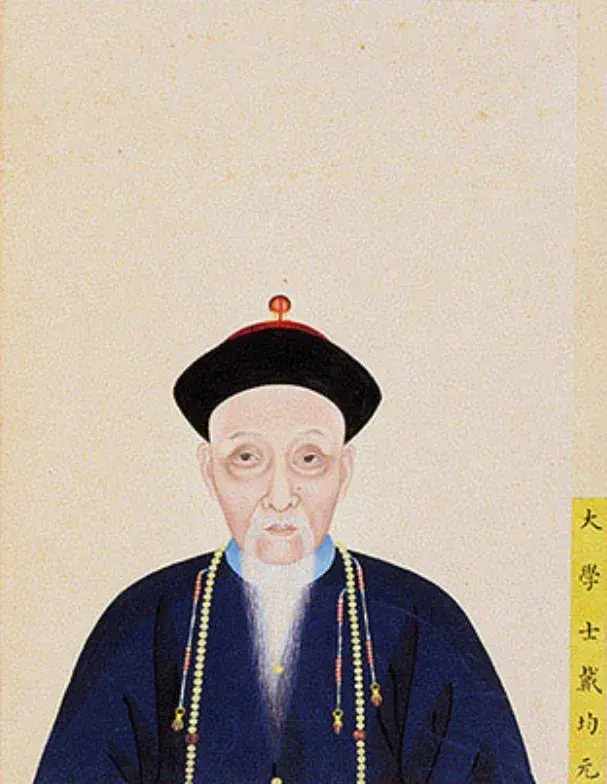
戴均元
Dai Junyuan (戴均元, 1746–1832), courtesy name Keting and posthumously canonized as Wenduan, was an illustrious statesman, Neo-Confucian scholar, and Grand Secretary serving the Qianlong, Jiaqing, and Daoguang emperors. Originating from an eminent scholar-official family in Dayu County, Jiangxi, he attained the jinshi degree in 1768, being admitted to the Hanlin Academy as a compiler. He advanced through imperial education and…
Dai Junyuan (戴均元, 1746–1832), courtesy name Keting and posthumously canonized as Wenduan, was an illustrious statesman, Neo-Confucian scholar, and Grand Secretary serving the Qianlong, Jiaqing, and Daoguang emperors. Originating from an eminent scholar-official family in Dayu County, Jiangxi, he attained the jinshi degree in 1768, being admitted to the Hanlin Academy as a compiler. He advanced through imperial education and central administrative posts, serving as Guangdong Director of Education, Grand Secretariat Sub-Chancellor, and Vice-Minister of Revenue. During the Jiaqing reign, Dai presided over the Ministries of Works, Punishments, and Civil Personnel, assisting in coordinating financial reconstruction following the White Lotus rebellion. In 1821, the Daoguang Emperor promoted him to Grand Secretary of the Wenyuan Chamber concurrently directing the Ministry of Punishments. In 1822, following dyke collapses along the Grand Canal at Gaojiayan, he accepted administrative responsibility, requesting demotion while remaining in office to repair the breaches. In 1825, upon reaching his eightieth year, he retired with honors and returned to Jiangxi. He passed away peacefully in 1832 at the age of eighty-seven, honored posthumously as Grand Guardian of the Heir Apparent. Throughout his six decades of imperial service, he was renowned for judicial leniency, personal frugality, and Neo-Confucian scholarship, heading a distinguished family lineage alongside his nephew, the imperial optimus Dai Quheng.
Born into an illustrious scholar-gentry lineage in Dayu County, Nan'an Prefecture, Jiangxi
Passed the imperial examination as a jinshi, selected into the Hanlin Academy as a compiler
Appointed Director of Education for Guangdong, reforming provincial examination protocols
Promoted to Sub-Chancellor of the Grand Secretariat following the death of the Qianlong Emperor
Governed the Ministries of Works and Punishments before becoming Minister of Civil Personnel
Assisted in drafting the Jiaqing Emperor's testamentary edict at Chengde, temporarily demoted for clerical errors
Restored to imperial favor by the Daoguang Emperor as Grand Secretary of the Wenyuan Chamber
Dispatched as imperial commissioner to superintend flood repairs along Gaojiayan dykes
Granted imperial permission to retire at age eighty with full ministerial stipend and imperial honors
Passed away at his family residence in Jiangxi at age eighty-seven, posthumously canonized as Wenduan
Dai Junyuan was born into an illustrious bureaucratic lineage in Dayu County, southern Jiangxi. His father, Dai Qihuang, served as a prefect, while his elder brother, Dai Diyuan, was a respected Reader in the Hanlin Academy. Nurtured in classical philosophy and administrative history, Dai Junyuan attained the jinshi degree in 1768 at the youthful age of twenty-two. Entering the Hanlin Academy as a compiler, he honed his abilities in drafting imperial documents and historiography.
In 1783, he was appointed Director of Education for Guangdong, overseeing civil service examinations throughout the province. He enforced strict security against examination cheating, eliminated the illicit enrollment of wealthy merchant sons, and personally reviewed manuscripts, mentoring talented scholars from impoverished rural households. Rising to Sub-Chancellor of the Grand Secretariat, he gained imperial trust through his unswerving moral uprightness and refusal to participate in factional networks.
In early 1799, following the accession of the Jiaqing Emperor and the elimination of Grand Councillor Heshen, Dai Junyuan was enlisted into inner court deliberations, helping inventory confiscated estates and rehabilitate slandered officials. Appointed Vice-Minister of Revenue and later Vice-Minister of Civil Personnel, he scrutinized regional taxation registers and curbed bureaucratic extortion.
During the decade-long suppression of the White Lotus rebellion in central China, Dai worked tirelessly alongside his nephew, Grand Councillor Dai Quheng, to provision imperial armies and organize land reclamation for displaced refugees. Promoted to Minister of Works, Punishments, and Civil Personnel, he proved an exceptional jurist. In the Ministry of Punishments, he examined capital case dossiers during autumn assizes, overturning dozens of flawed convictions. As Minister of Civil Personnel, he eliminated patronage practices, enforcing meritocratic standards throughout the empire.
In August 1820, following the sudden death of the Jiaqing Emperor at the Chengde Mountain Resort, Dai and Chief Councillor Tuojin drafted the imperial valedictory edict. The document contained a clerical error regarding the deceased emperor's birthplace, provoking the fury of the newly enthroned Daoguang Emperor. Both officials were demoted.
However, Daoguang recognized that Dai was fundamentally a venerable elder statesman whose integrity was beyond reproach. In 1821, upon his formal coronation, Daoguang elevated Dai Junyuan to Grand Secretary of the Wenyuan Chamber concurrently directing the Ministry of Punishments. In this paramount post, Dai directed the central bureaucracy, handling judicial appeals and advising on national fiscal policy.
In the autumn of 1822, catastrophic rainstorms triggered severe breaches along the Gaojiayan dykes of Lake Hongze, halting Grand Canal grain transit. Daoguang dispatched Dai Junyuan as imperial commissioner to superintend urgent repairs. Despite his advanced age, Dai traveled through the floodwaters to direct dyke reconstruction. When unpredictable water currents delayed the final breach closure, Dai took personal responsibility, petitioning for administrative demotion while remaining at the worksite.
In 1825, upon reaching eighty years of age, Dai requested permission to retire. Daoguang granted him an honorable discharge with full ministerial salary, adding the title of Junior Guardian of the Heir Apparent. Returning to his ancestral home in Dayu, Dai lived quietly, authoring Neo-Confucian commentaries and promoting local philanthropic academies. He passed away in 1832 at age eighty-seven. The Daoguang Emperor issued a decree of deep lamentation, granting him the posthumous title Wenduan.
Dai Junyuan served successively as Minister of Punishments, Minister of Personnel, and Grand Secretary of the Wenyuan Hall with concurrent oversight of the Ministry of Punishments for over a decade, functioning as the foundational pillar of Qing judicial and administrative stability during the Jiaqing and Daoguang eras. In the Ministry of Punishments, he strictly enforced the imperial legal code while balancing rigor with judicial clemency. During the Court Assizes (Chaashen) and Autumn Assizes (Qiushen), he personally reexamined capital case dossiers, overturning dozens of wrongful convictions. As Minister of Personnel and Senior Grand Secretary, he ruthlessly suppressed the illicit traffic in imperial audience recommendations and official commissions, establishing strict evaluation dossiers that underpinned the stability of the late imperial bureaucracy amid widespread rebellion.
In 1783, Dai was appointed Provincial Education Intendant of Guangdong, overseeing the civil examinations across the southern coastal province. Confronting academic superficiality and illicit patronage by wealthy merchant lineages, Dai strictly enforced examination security, locking examination hall gates in person and meticulously evaluating answer papers to select impoverished, dedicated scholars. Later serving as Senior Vice Minister of Revenue and Senior Vice Minister of Personnel, he audited provincial treasury balances and tax remittances to eliminate bureaucratic embezzlement.
From 1812 onward, as head of the Ministry of Punishments, Dai guided imperial jurisprudence with Neo-Confucian benevolence, maintaining that judicial power should prioritize equity and mercy. During the annual Autumn Assizes, he spent nights reviewing provincial capital cases, remanding any trials tainted by coerced confessions or fabricated evidence. Throughout his tenure, he overturned dozens of major judicial miscarriages in Jiangnan, Shandong, and Zhili, saving hundreds of innocent lives and earning broad public acclaim for judicial integrity.
In the second year of the Daoguang era (1822), unprecedented torrential storms caused massive mountain floods across Jiangnan, breaching the main protective dams along Lake Hongze at Gaojiayan. Grand Canal grain transit was severed, and dozens of departments across Huai'an and Yangzhou were submerged. Recognizing Grand Secretary Dai Junyuan's veteran prudence and incorruptible diligence, Emperor Daoguang appointed the seventy-six-year-old minister as Imperial Commissioner to oversee emergency barrier repairs. Disregarding frail health, Dai navigated small boats across treacherous waters to inspect breach sectors personally, supervising round-the-clock transport of quarried stone and timber alongside the Director-General of Waterways.
Confronting perilous hydraulic conditions, Dai severely punished sub-officials attempting to embezzle flood-relief appropriations, pressing forward with embankment closure. Although persistent torrential rainfalls prevented closing the breach within the strict deadline, Dai took full responsibility, requesting severe administrative demotion while remaining on duty. His courage in assuming accountability and compassion for the flood-stricken peasantry won profound respect from the imperial court and populace.
Throughout his six decades of civil service, Dai repeatedly presided over the Guangdong provincial examinations, the Shuntian metropolitan provincial examinations, and served as Chief Reader for palace examinations, standing as an eminent intellectual leader across the Qianlong, Jiaqing, and Daoguang eras. He adhered to rigorous standards of selection, opposing vacuous rhetorical ornamentation and maintaining that essays must be rooted in classical philology and oriented toward statecraft. Presiding over civil examinations in Jiangnan and Zhili, he eliminated aristocratic interference; many impoverished scholars he selected later became renowned reformist statesmen during the Tongzhi Restoration. His dedication to meritocratic equity left an enduring imprint on late imperial civil service recruitment.
Beyond his administrative statesmanship, Dai was a prominent Neo-Confucian scholar of the mid-Qing period, championing Cheng-Zhu orthodoxy and the unity of moral knowledge and practical action. The Dai lineage of Dayu achieved unparalleled civil examination success during the Qianlong and Jiaqing reigns, producing multiple Metropolitan Graduates (Jinshi) and Hanlin Academicians. His nephew Dai Quheng took first place (Zhuangyuan) in 1778, and both uncle and nephew rose to the supreme dignity of Grand Secretary, earning universal recognition as the "First Family of Jiangxi." In his later years, Dai established charitable schools and compiled ancestral lineage regulations in Dayu, bequeathing an exemplary model of gentry family ethics.
FIGURES ASSOCIATED WITH THIS DYNASTY