Birth in Chaozhou
Born on the 28th day of the 6th lunar month in Jieyang County, suffering the death of his mother at age five and enduring austere poverty.
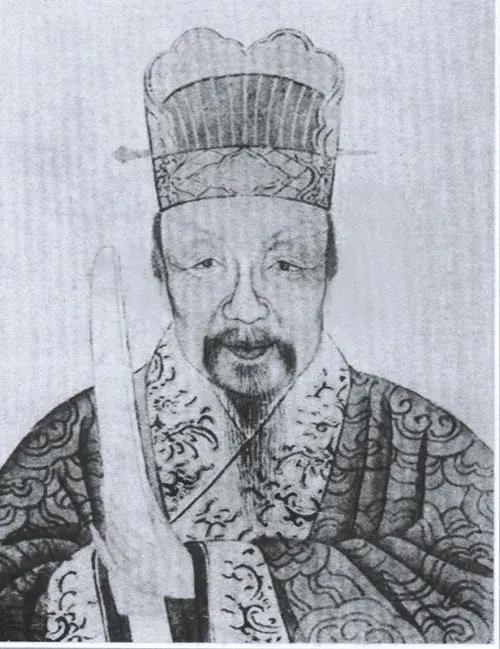
翁万达
Weng Wanda (翁万达, July 17, 1498 – November 11, 1552), courtesy name Renfu (仁夫), art name Dongya (东涯), posthumous name Xiangyi (襄毅), was a native of Tuojiangli in Jieyang County, Chaozhou Prefecture, Guangdong (modern Jinping District, Shantou City, Guangdong Province), and an outstanding military commander, border strategist, and Minister of War during the Jiajing reign of the Ming Dynasty, celebrated historically as the…
Weng Wanda (翁万达, July 17, 1498 – November 11, 1552), courtesy name Renfu (仁夫), art name Dongya (东涯), posthumous name Xiangyi (襄毅), was a native of Tuojiangli in Jieyang County, Chaozhou Prefecture, Guangdong (modern Jinping District, Shantou City, Guangdong Province), and an outstanding military commander, border strategist, and Minister of War during the Jiajing reign of the Ming Dynasty, celebrated historically as the foremost statesman of Lingnan. Rising from an impoverished rural childhood through diligent study, he attained the Jinshi degree in 1526 and began his career as a secretary in the Ministry of Revenue, establishing a reputation for uncompromising rectitude and administrative acumen. As Prefect of Wuzhou in Guangxi, he balanced military vigilance with benevolent governance, suppressing regional banditry, reconciling ethnic tensions, and advancing education. In 1539, Weng Wanda participated in the southern campaign against the Mac usurpers in Annam (modern Vietnam) alongside Supreme Commander Mao Bowen, formulating the core strategy that compelled Mac Dang Dung to surrender without bloodshed. In 1544, at a time when the Tumet Mongol leader Altan Khan was repeatedly devastating the northern frontier, the Jiajing Emperor appointed Weng Wanda as Supreme Commander of Xuanfu, Datong, Shanxi, and Baoding. Over years of frontier command, Weng Wanda overhauled military discipline, constructed hundreds of li of stone border walls, deepened moats, and reinforced watchtowers across Xuanfu and Datong, repeatedly repulsing elite Mongol cavalry incursions. In 1549, he was elevated to Minister of War. Following the passing of his father, he retired to observe mourning, but was recalled to office when northern perils intensified. He passed away from illness on his journey north in 1552 at fifty-five. During the Longqing reign, he was posthumously granted the title Junior Preceptor to the Crown Prince and conferred the posthumous name Xiangyi.
Born on the 28th day of the 6th lunar month in Jieyang County, suffering the death of his mother at age five and enduring austere poverty.
Succeeded in the imperial metropolitan examinations, receiving appointment as Secretary in the Ministry of Revenue and rising to Bureau Director.
Appointed Prefect of Wuzhou in Guangxi, pacifying ethnic unrest, clearing waterways, and repairing the city walls and Confucian academies.
Promoted to Assistant Surveillance Commissioner of Guangxi; devised the strategic doctrine that induced Mac Dang Dung to surrender without combat.
Transferred as Surveillance Commissioner of Sichuan and subsequently Right Administration Commissioner of Shaanxi, studying northwest defense.
Elevated to Vice Minister of War and Supreme Commander of Xuanfu, Datong, Shanxi, and Baoding to confront Altan Khan.
Supervised the construction of extensive defensive walls, towers, and trenches across Xuanfu and Datong, crushing Mongol cavalry assaults.
Promoted to Right Censor-in-Chief with the rank of Minister of War; petitioned for official frontier trade markets, which was obstructed by Yan Song.
Appointed Minister of War; soon vacated office to return to Guangdong to observe mourning upon the death of his father.
Altan Khan raided the outskirts of Beijing; summoned to imperial service, but demoted to commoner due to travel delays caused by severe illness.
Reinstated as Minister of War by imperial decree; departed Guangdong despite grave illness to manage northern defense.
Passed away on the 26th day of the 10th lunar month at Nanfeng, Jiangxi at fifty-five, interred at Mount Sangpu in Chaozhou, and in 1572 posthumously honored as Junior Preceptor to the Crown Prince with the posthumous name Xiangyi.
Weng Wanda was born on July 17, 1498 (28th day of the 6th lunar month) in Judeng Village, Tuojiangli, Jieyang County, Chaozhou Prefecture, Guangdong (modern Tuopu Sub-district, Jinping District, Shantou City). His ancestors had migrated to the Lingnan coastal region to escape dynastic warfare, and by the time of Weng Wanda's birth, the family fortunes had severely dwindled into poverty. His mother passed away when he was only five years old. Living under difficult domestic circumstances, Weng Wanda engaged in manual farming by day and read classical treatises late into the night beside small oil lamps. His extraordinary intellectual fortitude allowed him to master classical prose by his teens, and in 1526, at the age of twenty-eight, he passed the metropolitan examinations and obtained the Jinshi degree.
Upon entering government service, Weng Wanda was commissioned as Secretary in the Guangxi Bureau of the Ministry of Revenue, and soon advanced to Vice Director and then Director of the Shandong Bureau. During this phase of the middle Ming period, regional princes, nobility, and powerful magnates encroached extensively upon state farmland, while merchant syndicates evaded sales taxes and canal grain shipments were plagued by chronic embezzlement. Commissioned to audit tax registers and coordinate grain relief for the metropolitan capital region, Weng Wanda investigated backlogs with fearless determination. Whenever imperial kin or inner court eunuchs seized state pastures or interfered with waterway taxes, he strictly enforced statutory sanctions and confiscated unlawful holdings.
His incorruptible efficiency eliminated backlogs throughout his department. Powerful magnates were intimidated by his judicial severity and refrained from disobeying his directives. Although entrenched interests targeted him with covert slanders and malicious bureaucratic denunciations, Weng Wanda remained steadfast in his integrity, earning renown across the central ministries as an exceptionally upright and capable fiscal official.
In 1534, having concluded his service in the Ministry of Revenue, Weng Wanda was dispatched to the frontier as Prefect of Wuzhou in Guangxi. Situated at the strategic convergence of the Gui, Xun, and West Rivers, Wuzhou constituted the gateway to Guangxi. The region was characterized by complex ethnic relations among Yao, Zhuang, and Han populations, alongside entrenched river pirate networks that had long frustrated provincial authorities. Upon assuming office, Weng Wanda balanced administrative leniency with judicial rigor. He reduced arbitrary labor duties, accommodated displaced settlers, dredged waterways, reconstructed city walls, and founded community academies to instruct regional youth. Simultaneously, he enforced mutual surveillance regulations and led punitive expeditions against obstinate bandit hideouts along the Yu and Xun Rivers, restoring social tranquility throughout the prefecture.
In 1538, the Annam general Mac Dang Dung usurped the throne of the Le Dynasty and repeatedly violated the southwestern border of Ming Guangxi. Enraged by this treason, the Jiajing Emperor appointed Minister of War Mao Bowen as Supreme Commander and the Marquis of Xianning, Qiu Luan, as Field Commander to lead an expeditionary army south. Recognized for his strategic vision, Weng Wanda was promoted to Assistant Surveillance Commissioner of Guangxi and tasked with drafting operational plans and overseeing logistical supply routes.
Entering the border passes of Siling, Weng Wanda analyzed the internal political instability of the Mac regime and presented a master strategy to Mao Bowen: projecting overwhelming military deterrence while prioritizing diplomatic capitulation to achieve victory without combat. He drafted imperial proclamations delineating the legitimate authority of the Ming court and enumerating Mac's unlawful usurpations, dispatching covert operatives to distribute these declarations across Annam. Confronted with massed imperial armies at the mountain passes and trembling before the righteousness of the imperial decrees, Mac Dang Dung realized armed resistance would lead to total annihilation.
In December 1540, Mac Dang Dung led dozens of his leading civil and military officers to Zhennanguan (modern Friendship Pass). Barefoot, bound with ropes, and prostrating himself before the Ming encampment, he offered formal submission, handed over territorial registers, and ceded disputed border territories. Through Weng Wanda's foresight, the massive southern campaign concluded in total triumph without spilling a single drop of blood or expending a single arrow. For his strategic contributions, Weng Wanda was promoted to Surveillance Commissioner of Sichuan and subsequently Right Administration Commissioner of Shaanxi, where he commenced his study of northern frontier defense.
In 1544, the Mongol chieftain Altan Khan of the Tumet confederation rose to military prominence, commanding tens of thousands of mounted horsemen and executing continuous raids through the Great Wall into Shanxi, Datong, and Xuanfu. Frontier fortresses fell in rapid succession and regional generals were repeatedly executed for incompetence. Seeking a commander of iron resolve, the Jiajing Emperor promoted Weng Wanda to Vice Minister of War concurrently Right Assistant Censor-in-Chief, assigning him as Supreme Commander of Xuanfu, Datong, Shanxi, and Baoding. Taking command in a moment of existential crisis, Weng Wanda strapped on his armor and rode directly to the frontier.
Weng Wanda recognized that Mongol cavalry penetrated the interior because the frontier fortifications had deteriorated into collapsed earthen ramparts, while isolated watchtowers could neither support each other nor house defensive firepower. Disregarding extreme seasonal weather, he traveled along the rugged crests of the border ridges, mapping vulnerable gaps and passes. He secured court approval to launch an immense fortification campaign: building solid brick-faced Great Wall ramparts, digging deep anti-cavalry moats, and erecting hundreds of stone watchtowers, watchtowers, and interconnected beacon garrisons across Xuanfu and Datong.
Concurrently, Weng Wanda reformed frontier military discipline, cashiering corrupt officers who inflated payroll rolls and promoting courageous battlefield captains like Zhang Da and Zhou Shangwen. He instituted coordinated combined-arms drills combining infantry, cavalry, and wagon-mounted artillery batteries. Over the following years, whenever Altan Khan led massive mounted incursions against Xuan-Da, his cavalry crashed against impassable defensive trenches and concentrated cannon fire from the newly constructed towers. Imperial troops counterattacked decisively, scoring brilliant victories at Shuiquanying and Deshengbao and decapitating thousands of enemy invaders. Under Weng Wanda's tenure, the Xuan-Da line became an impenetrable shield, earning him the reverent title of the "True Great Wall" among border civilians.
Beyond physical fortifications, Weng Wanda possessed extraordinary strategic foresight. Observing that nomadic tribes possessed an acute economic dependence on central Chinese commodities like textiles, iron utensils, tea, and silks, he argued that military containment alone could never extinguish border warfare. Beginning in 1547, he submitted confidential memorials advocating the establishment of regulated official border trade markets ("mutual markets") along the Xuan-Da frontier. By bartering textiles and metalware for Mongol horses and livestock, the court could incorporate nomadic tribes into an economic network, divide tribal confederacies, and substitute commerce for warfare. However, this visionary policy was vehemently denounced by Senior Grand Secretary Yan Song and conservative censors, who condemned border commerce as capitulation, causing the proposal to be shelved.
In 1549, in recognition of his brilliant defense of the northern frontier, Weng Wanda was promoted to Minister of War. Shortly after his appointment, news arrived that his aged father Weng Yu had passed away. Upholding filial piety, Weng Wanda resigned all his offices and hurried home to Chaozhou to observe mourning. With his departure, the defensive readiness of the northern passes deteriorated rapidly under incompetent successors.
In autumn 1550, Altan Khan detected the lapse in border defense and led a massive cavalry force through Gubeikou, advancing directly to the suburban gates of Beijing. Mongol troops pillaged and torched the capital outskirts for days, precipitating the catastrophic "Gengxu Incident." Terrified within his palace, the Jiajing Emperor regretted neglecting Weng Wanda and dispatched express couriers to Guangdong, commanding Weng Wanda to return immediately to take charge of imperial defense.
At that moment, however, Weng Wanda was gravely afflicted with pulmonary illness and coughing blood from extreme mourning exhaustion. Struggling to prepare for the journey, he submitted a memorial detailing his physical infirmity. Seizing this opportunity, Grand Secretary Yan Song fabricated allegations that Weng Wanda was deliberately delaying his departure out of cowardice. In a fit of fury, the emperor stripped Weng Wanda of all ranks, reducing him to a commoner.
During Weng Wanda's forced retirement in Chaozhou, Mongol cavalry continued to raid northern border zones with impunity. Realizing that none of his remaining ministers possessed the strategic talent to master frontier defenses, the Jiajing Emperor recognized his mistake in 1552. The emperor issued an imperial edict rehabilitating Weng Wanda, reappointing him as Minister of War and ordering him to travel north posthaste to assume supreme command over the national armed forces.
Deeply moved by the emperor's restored trust, Weng Wanda disregarded his precarious physical condition and bid farewell to his family. Boarding his carriage, he departed for the north despite chronic illness. As autumn gave way to rain and mud on the mountainous southern trails, his condition deteriorated precipitously.
Upon reaching Nanfeng County in Jianchang Prefecture, Jiangxi, Weng Wanda was completely incapacitated and unable to swallow food. On November 11, 1552 (26th day of the 10th lunar month), the great supreme commander passed away in a roadside postal station at the age of fifty-five. On his deathbed, he uttered no words regarding personal estate or family welfare; instead, he dictated thousands of words detailing strategic measures for fortifying the northern frontier and repelling Mongol invasions, commanding his attendants to transmit the document to the emperor. His body was transported back to Guangdong and buried at Mount Sangpu between Jieyang and Chao'an. At the beginning of the Longqing reign, the court granted him posthumous rehabilitation, bestowed the title Junior Preceptor to the Crown Prince, and conferred the posthumous name Xiangyi.
During the military campaign against Annam from 1538 to 1540, Weng Wanda formulated the master strategy of psychological deterrence supported by overwhelming force. His persuasive diplomatic proclamations and logistical arrangements induced Mac Dang Dung to surrender unconditionally at Zhennanguan, securing complete victory without shedding a single life or losing a single soldier.
As Supreme Commander of Xuanfu, Datong, Shanxi, and Baoding, Weng Wanda executed a monumental engineering program along the northern frontier. Directing military and civilian laborers, he constructed and renovated hundreds of li of stone Great Wall fortifications, deep anti-cavalry moats, and numerous stone watchtowers, creating an integrated defensive barrier that transformed northern frontier strategy.
Weng Wanda eliminated corrupt payroll practices in the border garrisons, promoted competent battlefield captains such as Zhou Shangwen and Zhang Da, and instituted combined arms tactics combining infantry, cavalry, and artillery. Leveraging his newly constructed fortifications, he defeated Altan Khan's mounted armies at critical battles like Shuiquanying, earning veneration as the "True Great Wall" of the Ming empire.
Possessing exceptional geopolitical insight, Weng Wanda broke through contemporary taboos to advocate official border trade markets with Mongol tribes. His vision of using economic barter to divide nomad confederacies and neutralize frontier warfare laid the foundational blueprint for the eventual Longqing Peace and the formal investiture of Altan Khan two decades later.
FIGURES ASSOCIATED WITH THIS DYNASTY