Birth in Qinzhou
Born into an impoverished farming household in Qinzhou, orphaned young, and developing immense physical strength and martial skill.
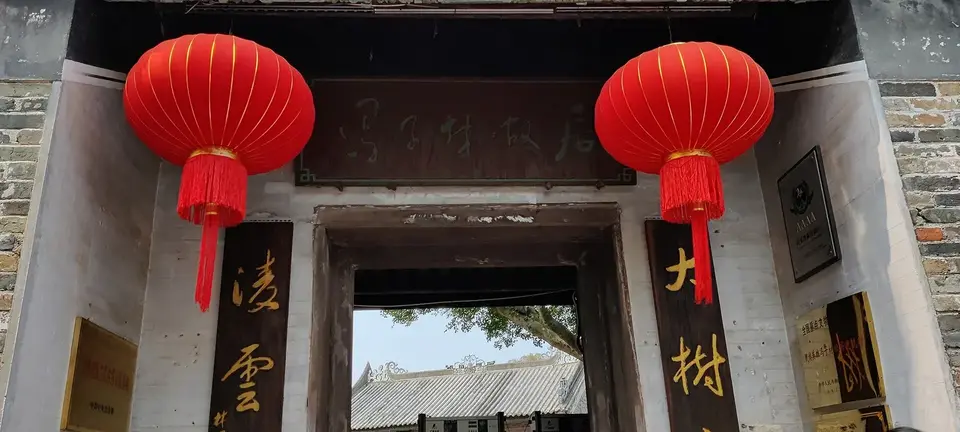
冯子材
Feng Zicai (1818–1903), courtesy name Nangan and art name Cuiting, was a native of Qinzhou, Guangdong, and an illustrious patriotic general and national hero of the late Qing dynasty. Enlisting as a common soldier in his youth, he demonstrated exceptional martial courage, rising through the ranks to brigade general before being promoted to Provincial Military Commander of Guangxi in 1862, governing regional defense with…
Feng Zicai (1818–1903), courtesy name Nangan and art name Cuiting, was a native of Qinzhou, Guangdong, and an illustrious patriotic general and national hero of the late Qing dynasty. Enlisting as a common soldier in his youth, he demonstrated exceptional martial courage, rising through the ranks to brigade general before being promoted to Provincial Military Commander of Guangxi in 1862, governing regional defense with strict discipline. In 1882, he retired to his hometown due to age. With the eruption of the Sino-French War in 1884, French expeditionary forces captured Lang Son in Vietnam and blew up Zhennanguan Pass, plunging the southwestern border into crisis. Viceroy of Liangguang Zhang Zhidong recalled the septuagenarian general, placing Feng in supreme command of frontline divisions and his personally recruited "Cui Army." In early 1885, as French general François de Négrier launched a full-scale assault on the pass, Feng constructed fortified stone walls and led from the front, brandishing a spear and leaping out of the trenches into hand-to-hand combat. His leadership secured the momentous Victory of Zhennanguan (Battle of Bang Bo), leading to the recapture of Lang Son, severely wounding the French commander, and precipitating the collapse of Jules Ferry's government in Paris. In his final years, he served as Provincial Military Commander of Yunnan and Guizhou. At the age of eighty-six in 1903, he answered another imperial call to oversee military operations in Guangxi, dying of illness in his encampment at Nanning. He was posthumously granted the title Junior Guardian of the Crown Prince and the posthumous name Yongyi.
Born into an impoverished farming household in Qinzhou, orphaned young, and developing immense physical strength and martial skill.
Enlisted in the Qing army at Nanning, serving under Xiang Rong and Zhang Guoliang across the empire, rising to brigade general.
Promoted to Provincial Military Commander of Guangxi, garrisoning Liuzhou and Guilin to pacify regional banditry.
Retired from military office due to advanced age, returning to Qinzhou to establish charitable academies and relief clansmen.
With French troops destroying Zhennanguan, appointed frontline director by Zhang Zhidong, recruiting the volunteer Cui Army.
Erected stone defensive works before the pass, charging with spears into close combat, winning the battle and taking Lang Son.
Awarded the title Junior Guardian of the Crown Prince and appointed Provincial Military Commander of Yunnan to secure borderlands.
Dispatched to direct Guangxi frontier pacification at age eighty-six, dying in camp at Nanning with the posthumous title Yongyi.
Feng Zicai was born in 1818 into an impoverished peasant family in Baishi Village, Qinzhou, Guangdong. Orphaned at an early age, he wandered through market towns working as a day laborer while mastering traditional martial arts, mounted archery, and close-quarters combat. In 1851, Feng enlisted in the Nanning garrison of the Qing Green Standard Army, serving under Commander Xiang Rong against rebellious forces across the Yangzi basin. In battle, Feng consistently spearheaded the attack, sustaining multiple wounds while rallying his troops. He rose steadily from squad leader to major and brigade general. In 1862, the imperial court elevated him to Provincial Military Commander of Guangxi. Over his tenure of more than a decade, he emphasized strict troop drill, reduced extortionate levies, and prohibited his soldiers from harassing commoners, earning the deep respect of the populace. In 1882, due to political frictions with superiors and advancing age, he retired to Qinzhou.
In 1883, the Sino-French War erupted. Having occupied Vietnam, the French colonial military sought to force open the southwestern gateway to China. In the winter of 1884, French forces routed defending Qing units in Tonkin, captured Lang Son, and in early 1885 advanced to the border, bombarding and burning Zhennanguan (present-day Friendship Pass). Amid national panic, newly appointed Viceroy of Liangguang Zhang Zhidong recommended that Feng Zicai be recalled. Nearly seventy years old, Feng accepted the commission with fiery enthusiasm, enlisting his two sons and recruiting over ten thousand veteran soldiers from Guangdong and Guangxi to form the "Cui Army." Upon arriving at the front, he sternly rebuked hesitant commanders, declaring that anyone who retreated would face execution. Surveying the terrain before the pass, he directed his men to erect a stone rampart eight feet high and three leagues long, reinforced with deep trenches to create an impenetrable defensive redoubt.
On March 23, 1885 (the eighth day of the second month of the eleventh year of the Guangxu reign), French commander François de Négrier launched an all-out assault against the ramparts with elite infantry and heavy artillery. When French artillery battered breaches in the ramparts and infantry surged forward, the sixty-seven-year-old Feng Zicai discarded his outer coat, gripped a long spear, roared a battle cry, and leaped out of the trenches into the enemy ranks. His two sons, Feng Xiangrong and Feng Xianghua, followed wielding broadswords. Electrified by their commander's suicidal bravery, the entire Cui Army surged forward with bayonets and spears into savage melee combat.
Concurrently, the Black Flag Army under Liu Yongfu and auxiliary Qing units executed flanking ambushes from surrounding wooded ridges. Overwhelmed in close-quarters fighting, French lines broke into panic, and General de Négrier was severely wounded by gunshot, abandoning his artillery in retreat. Feng pursued the retreating forces relentlessly, recapturing Wen Yuan, Lang Son, and surrounding bastions, winning the greatest land victory in modern Chinese anti-imperialist resistance: the Battle of Zhennanguan (Bang Bo). News of the disaster precipitated the immediate downfall of French Prime Minister Jules Ferry's expansionist cabinet in Paris. Following the peace treaty, Feng served as military commander in Yunnan and Guizhou. In 1903, the eighty-six-year-old warrior was called back to active duty in Guangxi, dying of illness in his military camp at Nanning. The Qing court posthumously bestowed upon him the rank of Junior Guardian of the Crown Prince and the posthumous name Yongyi.
The Victory at Zhennanguan was the most decisive land triumph achieved by Chinese forces against Western imperialist invaders in the nineteenth century. Confronted by modern French breech-loading rifles and field artillery, Feng expertly utilized terrain to construct interlocking field fortifications, while deploying traditional spear-and-broadsword charges to neutralize the enemy's technological firepower, definitively shattering French aspirations to annex China's southwestern provinces.
Feng Zicai's willingness to abandon peaceful retirement in his seventies and lead his sons onto the battlefield symbolized the indomitable spirit of the Chinese people against foreign invasion. His heroic spear charge at the front trenches electrified the nation and triggered the collapse of Jules Ferry's pro-war government in France, marking a celebrated chapter in modern global military history.
FIGURES ASSOCIATED WITH THIS DYNASTY