Lineage Birth
Born into a scholarly family in Taiyuan County, Shanxi.
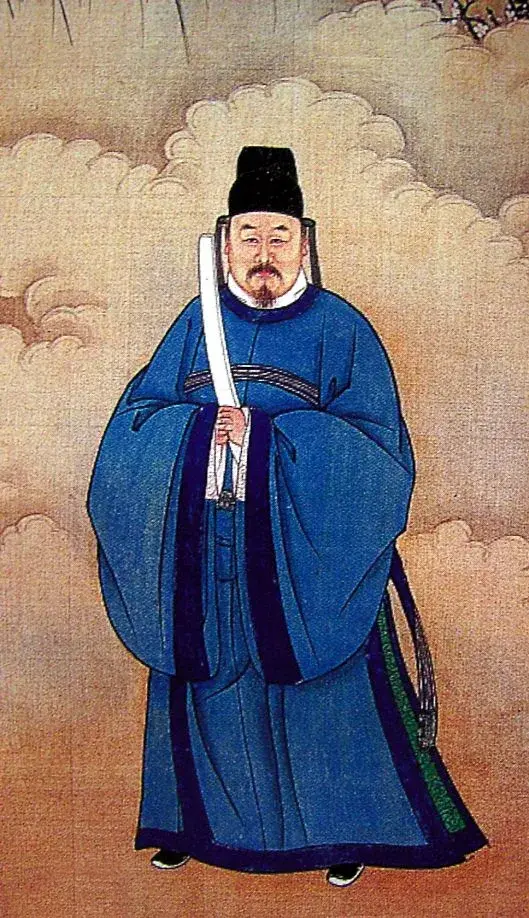
王琼
Wang Qiong (王琼, 1459–1532), courtesy name Dehua and art name Jinxi, was a distinguished statesman, administrative reformer, and paramount military strategist during the mid-Ming dynasty. Passing the metropolitan civil service examinations in 1484, he initially distinguished himself in overseeing grand canal transportation and river conservancy across the Huai-Yang region. Under the Zhengde Emperor, Wang served successively as…
Wang Qiong (王琼, 1459–1532), courtesy name Dehua and art name Jinxi, was a distinguished statesman, administrative reformer, and paramount military strategist during the mid-Ming dynasty. Passing the metropolitan civil service examinations in 1484, he initially distinguished himself in overseeing grand canal transportation and river conservancy across the Huai-Yang region. Under the Zhengde Emperor, Wang served successively as Minister of Revenue and Minister of War. As Minister of War, displaying remarkable strategic foresight, he identified the treasonous machinations of Zhu Chenhao (Prince of Ning) and made the critical decision to promote Wang Yangming (Wang Shouren) to govern southern Jiangxi with broad executive autonomy, which enabled the rapid suppression of the Prince of Ning's Rebellion in 1519. Despite temporary political eclipse and exile at the start of the Jiajing reign due to court rivalries with Yang Tinghe, Wang was reinstated in 1528 as Supreme Commander of the Three Frontiers in Shaanxi and Gansu, successfully pacifying Turpan border incursions. He subsequently directed the Ministry of Personnel until his death in 1532, receiving the posthumous title Grand Preceptor and the honorific Gongxiang.
Born into a scholarly family in Taiyuan County, Shanxi.
Obtained the jinshi degree and received appointment as a Secretary in the Ministry of Works.
Served as Administration Vice Commissioner and Provincial Commissioner in Henan and Shandong.
Elevated to Minister of Revenue, auditing imperial estates and rectifying fiscal deficits.
Transferred to Minister of War, directing nationwide defense arrangements and frontier garrisons.
Deployed Wang Yangming to southern Jiangxi, successfully neutralizing the Prince of Ning's rebellion.
Impeached by Grand Secretary Yang Tinghe's faction following Shizong's accession and exiled to northern borders.
Recalled to govern the Three Frontiers in Shaanxi and Gansu, stabilizing northwestern borders.
Returned to the capital to direct civil service appointments at the Ministry of Personnel.
Passed away while serving in office at age seventy-four; posthumously honored as Grand Preceptor.
Wang Qiong achieved the metropolitan degree of jinshi in 1484 during the reign of Emperor Xianzong. He commenced his career as a Secretary in the Ministry of Works and was later promoted to Director of the Division of Waterways. At that time, grand canal transportation between the Huai and Yangtze rivers suffered perpetual siltation, causing severe hardship for local corvee laborers and recurrent disruptions to metropolitan grain shipments. Wang personally conducted meticulous field surveys across the waterways, engineered innovative water-conserving sluice systems, and instituted regular seasonal dredging procedures. His reforms substantially reduced logistical costs and guaranteed the punctual arrival of grain tribute in Beijing. During his later provincial assignments in Henan and Shandong, Wang demonstrated outstanding administrative governance by balancing peasant levies and establishing granary reserves for famine relief.
Promoted to Minister of Revenue in 1513, Wang Qiong confronted mounting imperial expenditures and rampant land encroachments by imperial manor holders. Through resolute memorials, he curtailed redundant appropriations and reestablished basic fiscal order. In 1515, he assumed leadership of the Ministry of War. Convinced that Zhu Chenhao, the Prince of Ning in Jiangxi, harbored rebellious ambitions, Wang acted proactively. Bypassing conventional bureaucratic seniority, he forcefully recommended the relatively obscure philosopher-statesman Wang Yangming to serve as Governor of Southern Jiangxi. He secretly granted Wang Yangming emergency military authority and arranged the strategic redeployment of troops and weapons in adjacent prefectures. When Zhu Chenhao openly revolted in Nanchang in June 1519, Wang Yangming was able to assemble military contingents immediately, cut off the rebels' eastward retreat along the Yangtze, and capture Zhu Chenhao within thirty-five days at Lake Poyang.
Following the sudden demise of the Zhengde Emperor and the enthronement of the Jiajing Emperor, Grand Secretary Yang Tinghe and censorate officials launched sweeping purges against officials who had collaborated with the late emperor's palace favorites. Because Wang Qiong had coordinated defense matters with inner palace marshals to ensure military functionality, he was impeached, stripped of official ranks, and banished to frontier exile in Suide. In exile, Wang maintained scholarly discipline, compiling critical reflections on statecraft. In 1527, aggressive raids by Turpan confederations breached the Gansu frontiers, throwing northwestern border commands into panic. Recognizing Wang's unmatched strategic capability, the Jiajing Emperor recalled the seventy-year-old statesman in 1528, naming him Right Censor-in-Chief and Supreme Commander of the Three Frontiers in Shaanxi and Gansu. Wang fortified over two thousand watchtowers, revitalized border cavalry garrisons, and negotiated diplomatic surrenders, restoring stability along the entire Hexi Corridor.
In 1531, in recognition of his exceptional frontier accomplishments, Emperor Shizong recalled Wang Qiong to the capital to head the Ministry of Personnel. As supreme arbiter of civil appointments, Wang instituted rigorous merit-based evaluations and curtailed private patronage, revitalizing administrative morale across metropolitan bureaus. In August 1532, Wang died from illness while diligently discharging his official duties, aged seventy-four. The Jiajing Emperor suspended court sessions in mourning, granted state funeral honors, and posthumously conferred upon him the title of Grand Preceptor and the posthumous honorific Gongxiang.
Wang Qiong's decision to place Wang Yangming in command of southern Jiangxi constitutes one of the most brilliant strategic appointments in Ming history. By overcoming court skepticism and delegating full military initiative, Wang laid the institutional and logistical foundation that extinguished a catastrophic dynastic rebellion in just over a month.
During his tenure as Supreme Commander of the Three Frontiers, Wang completely restructured the regional defense infrastructure of Shaanxi and Gansu. His strategic manual, Illustrated Discourse on the Three Frontiers (Sanbian Tushuo), documented military fortifications, terrain bottlenecks, and garrison supply lines, providing an authoritative blueprint for Ming northwestern security policy.
FIGURES ASSOCIATED WITH THIS DYNASTY