Birth in Tangyin
Born on July 14 in Xiangzhou into the agrarian household of Yue Fei and Lady Liu.
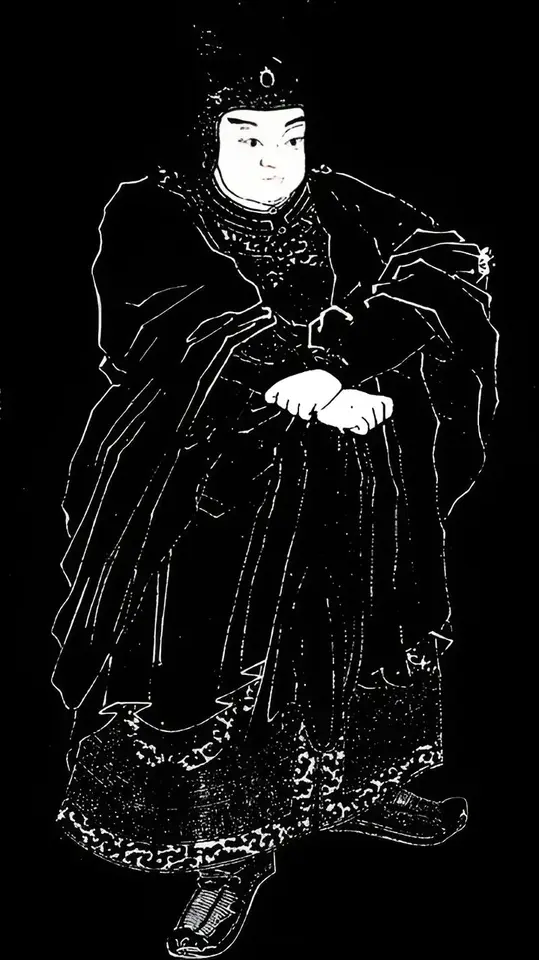
岳云
Yue Yun (July 14, 1119 – January 27, 1142), courtesy name Yingxiang, art name Huiqing, was a native of Tangyin County, Xiangzhou (present-day Tangyin County, Henan Province). He was an illustrious military general of the Southern Song Dynasty, the eldest son of national hero Yue Fei, and the vanguard shock commander of the elite Beiwei cavalry units within the Yue Family Army. Entering active campaigning at the age of twelve…
Yue Yun (July 14, 1119 – January 27, 1142), courtesy name Yingxiang, art name Huiqing, was a native of Tangyin County, Xiangzhou (present-day Tangyin County, Henan Province). He was an illustrious military general of the Southern Song Dynasty, the eldest son of national hero Yue Fei, and the vanguard shock commander of the elite Beiwei cavalry units within the Yue Family Army. Entering active campaigning at the age of twelve under senior commander Zhang Xian, Yue Yun was renowned throughout the army for his peerless courage, endurance, and mastery of twin heavy iron spears, earning the military sobriquet "The Winning Official" (Ying Guanren). In 1134, at age sixteen, Yue Yun spearheaded the campaign to recover the six prefectures of Xiangyang, scaling city walls under arrows and boulders to seize Suizhou and Dengzhou, ranking first in battlefield merit throughout the army. In 1135, he played a leading role in suppressing the insurgent forces of Yang Yao at Dongting Lake. Despite his achievements, Yue Fei consistently obscured his son's feats on official reports to prevent charges of nepotism, requesting that promotions be bestowed upon common soldiers. During the monumental campaigns of 1140, Yue Yun led the elite Beiwei cavalry against Jurchen supreme commander Wanyan Zongbi (Jin Wuzhu) at the Battle of Yancheng and the Battle of Yingchang. Charging through heavy armored "Iron Pagoda" cavalry formations dozens of times while sustaining over a hundred wounds, he decapitated Jurchen grand commander Alibu and routed thousands of enemy warriors, securing decisive triumphs for the Southern Song. In late 1141, seeking to appease the Jurchen Jin dynasty during peace negotiations, Chancellor Qin Hui and General Zhang Jun fabricated treason charges against Yue Fei and Zhang Xian. Yue Yun was arrested and subjected to brutal torture in Dali Temple, refusing to endorse false accusations. Although judicial officials recommended a three-year prison sentence, Emperor Gaozong issued an imperial directive commanding immediate execution under military law. On January 27, 1142, Yue Yun was executed in Lin'an alongside his father and Zhang Xian at the age of twenty-three. Following Emperor Xiaozong's accession in 1162, he was fully exonerated, posthumously granted the military commissionership of Wu'an Circuit, and ennobled as Marquis of Jizhong under Emperor Ningzong, immortalized in Chinese history as an enduring symbol of filial devotion and martial heroism.
Born on July 14 in Xiangzhou into the agrarian household of Yue Fei and Lady Liu.
Traveled south to join his father's army; assigned to the front division under General Zhang Xian, dubbed "The Winning Official."
Spearheaded the recapture of Suizhou and Dengzhou; ranked first in army battle merits, which Yue Fei concealed from court dispatches.
Stormed rebel water redoubts during the pacification of Yang Yao; ranked first in merit and promoted to Military Officer.
Commanded the Beiwei shock cavalry against Wanyan Zongbi's Iron Pagoda heavy horsemen, sustaining over a hundred wounds while breaking the enemy line.
Reinforced Yingchang with eight hundred cavalrymen; decapitated Jurchen commander Alibu and routed five thousand enemy troops.
Falsely accused of conspiring with Zhang Xian to stage a mutiny; tortured in Dali Temple but steadfastly maintained innocence.
Executed in the Lin'an marketplace under Emperor Gaozong's special rescript alongside Yue Fei and Zhang Xian on January 27 at age twenty-three; later rehabilitated by Emperor Xiaozong and posthumously enfeoffed as Marquis of Jizhong by Emperor Ningzong.
Yue Yun was born into an agrarian military family in Tangyin County, Xiangzhou, in the summer of 1119. Following the outbreak of the Jingkang Incident and the collapse of the Northern Song, his father Yue Fei joined the resistance, campaigning continuously across northern China. Left behind in his occupied ancestral village under the care of his grandmother Lady Yao, young Yue Yun endured the hardships of war, displacement, and deprivation, forging an unyielding and stoic character.
In 1130, at the age of twelve, Yue Yun traveled south across the Yangtze River to rejoin his father's army at Yixing. Demonstrating strict impartiality, Yue Fei refused to grant his eldest son any family privileges, placing him under the command of frontline general Zhang Xian as a common recruit. Endowed with immense natural strength, Yue Yun trained relentlessly in horsemanship, archery, and the use of twin heavy iron spears. In skirmishes against regional bandit coalitions and Jurchen border outposts, Yue Yun always spearheaded the charge. Because his unit consistently prevailed in combat, officers and soldiers affectionately referred to him as "The Winning Official" (Ying Guanren).
Yue Fei held his son to standards of extraordinary severity. During a cavalry drill requiring riders to leap across deep drainage ditches in full battle armor, Yue Yun's mount stumbled, throwing him to the ground. Infuriated by what he viewed as unacceptable negligence, Yue Fei roared before the assembled troops: "On the battlefield, a stumbled horse forfeits the lives of thousands!" He ordered his son punished with one hundred lashes of the military rod, terrifying the army and instilling flawless operational discipline across the Yue Family Army.
In May 1134, Emperor Gaozong commissioned Yue Fei to launch an offensive to reclaim the six strategic prefectures of Xiangyang from puppet Qi and Jurchen armies. Sixteen-year-old Yue Yun served as an assault commander. During the siege of Suizhou, confronting formidable defensive walls and volleys of arrows and stones, Yue Yun wielded twin iron spears, scaled the siege ladders ahead of all troops, cut down the defending commander on the parapet, and opened the city gates. Shortly after, at Dengzhou, he led the cavalry vanguard into tens of thousands of allied enemy troops, routing opposing formations and securing the commandery.
When the high command evaluated battle merits following the campaign, commanders unanimously declared Yue Yun's feats to be the finest in the army. However, in his official dispatches to the imperial court, Yue Fei deliberately erased his son's name, reporting no merits for him. Rebuking Yue Yun privately, Yue Fei stated: "You are the son of the commanding general; serving the state is your natural duty. How dare you compete with common soldiers for bureaucratic rank!"
In 1135, Yue Yun participated in the campaign to suppress the waterborne rebellion of Yang Yao at Dongting Lake. Facing heavily fortified paddle-wheel warships, Yue Yun led elite amphibious commandos across the marshlands, storming the central rebel stockade and decapitating dozens of insurgent chieftains. Recognizing his unmatched performance, the court promoted him to Military Officer. Yue Fei immediately memorialized the throne to decline the appointment, asserting that common foot soldiers who shed blood on the frontier remained unrewarded and that his son's minor contributions did not warrant special promotion. Impressed by Yue Fei's selflessness, Emperor Gaozong rejected the petition, confirming the rank.
In 1140, the Jurchen Jin dynasty abrogated the peace treaty and launched a full-scale invasion under supreme marshal Wanyan Zongbi (Jin Wuzhu). Yue Fei drove the Yue Family Army northward into the Central Plains, liberating Zhengzhou and Luoyang. Seeking to destroy the Song command center, Wanyan Zongbi marshaled fifteen thousand heavy armored cavalrymen known as the "Iron Pagodas" (Tiefutu), supported by light cavalry wings known as "Guaizima," advancing directly on Yancheng.
On August 21, 1140, the climatic clash took place outside Yancheng. Yue Fei ordered Yue Yun to lead the elite Beiwei and Youyi cavalry units into the center of the enemy lines, issuing a stern command: "Duel the enemy today; if you fail to triumph, your head shall answer for it!" Wielding his twin iron spears, Yue Yun charged into the heavy cavalry arrays. Following his tactical instructions, Song foot soldiers wielded broad chopping blades and two-handed axes to sever the legs of the armored warhorses, while Yue Yun spearheaded cavalry thrusts that disrupted the Jurchen formations. Sustaining over a hundred lacerations and puncture wounds, Yue Yun fought with demonic intensity, breaking the Iron Pagodas and securing the historic victory of Yancheng.
Regrouping his forces, Wanyan Zongbi massed thirty thousand cavalry and one hundred thousand infantry outside Yingchang, trapping Song garrison general Wang Gui. Yue Fei dispatched Yue Yun with eight hundred elite Beiwei cavalry on a forced night march to relieve the siege. At daybreak on August 27, confronting endless ranks of Jurchen soldiers, Wang Gui wavered and contemplated retreat. Yue Yun stepped forward in the frontline, halted the retreat with a thunderous roar, and led his eight hundred horsemen in a direct spearhead assault aimed at Wanyan Zongbi's command banners.
During hours of brutal melee combat, Yue Yun's armor was drenched in blood, his warhorse wounded in multiple places. Cutting his way through the dense enemy host, Yue Yun personally engaged and decapitated the Jurchen supreme field general Alibu. Inspired by his valor, the Song garrison sallied from the walls, slaughtering over five thousand Jurchen warriors and capturing three thousand horses. Utterly broken by Yue Yun's ferocity, Wanyan Zongbi wept before his officers, lamenting that never since the founding of the Jin Empire had he witnessed such terrifying adversaries, and abandoned his camp under cover of night.
Following the victory at Yingchang, the Yue Family Army advanced to Zhuxianzhen, merely forty-five li from the ancient northern capital of Kaifeng. However, desperate to conclude a humiliating peace agreement with the Jin, Emperor Gaozong and Chancellor Qin Hui issued twelve golden plaques commanding Yue Fei to halt his advance. Shortly thereafter, the three top loyalist marshals were stripped of their military commissions.
In late 1141, Wanyan Zongbi sent a secret letter to Qin Hui stating: "You must execute Yue Fei; only then can peace be concluded." Qin Hui coerced senior generals Zhang Jun and Wang Gui to forge false testimonies, alleging that frontline commander Zhang Xian had plotted to seize Xiangyang in mutiny, while claiming that Yue Yun had sent secret letters to orchestrate the revolt in order to restore Yue Fei's military command.
In October 1141, Yue Yun and Zhang Xian were arrested and cast into Dali Temple prison. Remonstrance officials Moqi Xie and Luo Ruji subjected Yue Yun to horrific tortures, including head clamps and red-hot branding irons, attempting to force a confession. Battered and bleeding, twenty-three-year-old Yue Yun stood erect, denouncing the traitors and refusing to endorse false statements.
Finding no evidence of treason, Dali Temple judges Li Ruopu and He Yanyou protested the lack of proof, only to be dismissed by Qin Hui. The judicial bureau drafted a verdict sentencing Yue Fei to strangulation and condemning Zhang Xian and Yue Yun to three years of exile and hard labor. However, Emperor Gaozong intervened directly, issuing an imperial rescript: "Yue Fei is granted death; Zhang Xian and Yue Yun are to be executed under military law, and their properties confiscated."
On January 27, 1142, on the eve of the Lunar New Year, Yue Fei was poisoned in Fengbo Pavilion, while Yue Yun and Zhang Xian were bound and led to the Lin'an marketplace, where they were decapitated. Yue Yun met his death with serene dignity at the age of twenty-three, mourned with tears by the citizens of Lin'an.
In 1162, upon ascending the throne, Emperor Xiaozong formally rehabilitated the martyrs. Yue Yun's official ranks were restored, and he was posthumously granted the title Defense Commissioner of Anyuan Circuit, later amended to Wu'an Circuit. In 1204, Emperor Ningzong posthumously created Yue Fei Prince of E and enfeoffed Yue Yun as Marquis of Jizhong. Yue Yun's remains were reinterred beside his father's mausoleum beneath Qixia Ridge by West Lake in Hangzhou, revered across generations as an immortal paragon of Chinese chivalry and patriotism.
During the 1134 campaign to recover Xiangyang, sixteen-year-old Yue Yun demonstrated peerless assault bravery. Facing fortified battlements, he scaled the walls under heavy defensive fire to kill enemy commanders and breach Suizhou and Dengzhou, earning the premier battle merit in the army and establishing his reputation as the premier shock vanguard of the Southern Song restoration.
At the Battle of Yancheng in 1140, Yue Yun commanded the elite Beiwei cavalry in an epic confrontation against the Jurchen heavy armored shock cavalry. Sustaining over a hundred wounds, he repeatedly charged into the center of the enemy lines, executing coordinated infantry-cavalry tactics that shattered the legendary Iron Pagoda formations and delivered a crushing defeat to Wanyan Zongbi.
Confronting overwhelming enemy odds outside Yingchang, Yue Yun led eight hundred Beiwei horsemen in a desperate counter-assault that saved the city. Charging directly into the enemy command division, he personally decapitated Jurchen grand commander Alibu, slaughtering thousands of enemy troops and forcing Wanyan Zongbi into headlong flight.
Despite his status as the supreme commander's eldest son, Yue Yun submitted to the harshest military discipline without complaint. Enduring severe training punishments and witnessing his own military achievements concealed by his father to prevent charges of nepotism, he remained humble, disciplined, and devoted to common soldiers.
Subjected to brutal torture during the Fengbo Pavilion conspiracy in 1141, Yue Yun maintained unbending integrity, refusing to compromise his honor or bear false witness against his father and comrades. His martyrdom at age twenty-three enshrined him as an eternal archetype of martial fidelity in Chinese history.
FIGURES ASSOCIATED WITH THIS DYNASTY