Birth in Ba County
Born into a scholarly family in Ba County, Chongqing; dedicated himself to Confucian scholarship and legal codes from early youth.
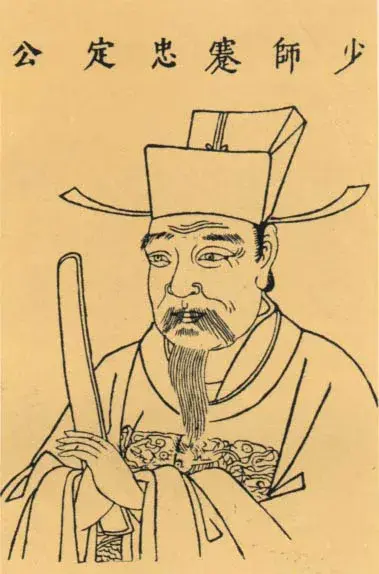
蹇义
Jian Yi (蹇义, 1363 – February 12, 1435), originally named Jian Rong (蹇瑢), courtesy name Yizhi (宜之), was personally bestowed the name "Yi" (meaning righteousness) by Emperor Taizu (Zhu Yuanzhang). Hailing from Ba County, Chongqing Prefecture (modern Banan District, Chongqing), he was a towering elder statesman who served across six successive imperial reigns—Hongwu, Jianwen, Yongle, Hongxi, Xuande, and Zhengtong—and served…
Jian Yi (蹇义, 1363 – February 12, 1435), originally named Jian Rong (蹇瑢), courtesy name Yizhi (宜之), was personally bestowed the name "Yi" (meaning righteousness) by Emperor Taizu (Zhu Yuanzhang). Hailing from Ba County, Chongqing Prefecture (modern Banan District, Chongqing), he was a towering elder statesman who served across six successive imperial reigns—Hongwu, Jianwen, Yongle, Hongxi, Xuande, and Zhengtong—and served as a principal architect of early Ming bureaucratic institutions. Working in close partnership with Minister of Revenue Xia Yuanji for decades, the two were celebrated throughout the empire as "Jian and Xia," providing the administrative backbone for both the Yongle Prosperity and the Rule of Renxuan. Jian earned his jinshi degree in 1385 (the 18th year of the Hongwu era) and was appointed Secretariat Drafter. Emperor Taizu took great favor in his honesty and diligence, personally changing his name to "Yi." During the Jianwen era, Emperor Jianwen exceptionally promoted him to Right Vice Minister of Personnel. Following the Jingnan Campaign of 1402, when Zhu Di ascended the throne as Emperor Chengzu (Yongle), Jian was elevated to Minister of Personnel, entrusted with the supreme authority over bureaucratic evaluations and appointments, and concurrently made Supervisor of the Household of the Heir Apparent. Whenever Emperor Chengzu conducted northern military campaigns or resided at Beijing, Jian was commanded to assist Crown Prince Zhu Gaochi in managing central state affairs in Nanjing, ensuring administrative stability and disciplined governance. Upon the accession of Emperor Renzong (Zhu Gaochi) in 1424, Jian was appointed Junior Preceptor and Minister of Personnel, leading the civil bureaucracy and directing the compilation of the Veritable Records of Taizong. Under Emperor Xuanzong, the emperor revered the seasoned elder who had served five reigns, commanding him to remain constantly by the throne to advise on critical military and civilian policies. Shortly after the accession of Emperor Yingzong in early 1435, Jian passed away in Beijing at the age of seventy-three. The imperial court suspended audiences in mourning, posthumously bestowing upon him the titles of Grand Guardian and Senior Official of Splendid Happiness, awarding the posthumous name Zhongding, and decreeing an imperial funeral in his native Chongqing. Diligent, upright, and thoroughly versed in imperial statutes, Jian governed the selection of civil officials for decades with impeccable fairness, establishing the institutional norms of early Ming statecraft.
Born into a scholarly family in Ba County, Chongqing; dedicated himself to Confucian scholarship and legal codes from early youth.
Passed the metropolitan examination and appointed Secretariat Drafter; Emperor Taizu appreciated his sincerity and renamed him "Yi."
Promoted by Emperor Jianwen to Right Vice Minister of Personnel; mastered bureaucratic registers and civil personnel procedures.
Promoted to Minister of Personnel by Emperor Chengzu; assumed supreme control over civil nominations and appointments.
Concurrently appointed Supervisor of the Household of the Heir Apparent, assisting Crown Prince Zhu Gaochi alongside Xia Yuanji.
Oversaw central governance at Nanjing while Emperor Chengzu visited Beijing, managing grain transport and executive decrees.
Imprisoned after the emperor became suspicious of the crown prince due to court slander; quickly exonerated and restored to office.
Elevated by Emperor Renzong to Junior Preceptor and Minister of Personnel; awarded an imperial silver seal to rectify government errors.
Accompanied Emperor Xuanzong in quelling the rebellion of Zhu Gaoxu; venerated as the premier moral pillar of the realm.
Died of illness in Beijing on February 12 at seventy-three; posthumously honored as Grand Guardian with the posthumous name Zhongding.
Jian Yi was born into a scholarly farming family in Ba County, Chongqing Prefecture. His father, Jian Jing, was widely admired for his benevolence and filial piety. From childhood, Jian Yi displayed a grave, reserved temperament, dedicating himself to the study of the Confucian classics, historical annals, and imperial penal statutes.
In 1385 (the 18th year of the Hongwu era), at the age of twenty-three, Jian passed the triennial metropolitan examinations and was appointed Secretariat Drafter by Emperor Taizu (Zhu Yuanzhang). Secretariat Drafters were responsible for drafting and transcribing confidential imperial rescripts and attending daily audiences. Jian discharged his duties with meticulous fidelity, keeping watch through long hours within the palace, submitting clear memorials, and conducting affairs with exceptional prudence.
Emperor Taizu, known for his harsh scrutiny of officials, showed unusual appreciation for the young drafter. After repeatedly testing Jian's literary talents and moral integrity, the emperor praised his transparent honesty and absence of deceit. Taizu addressed him: "Your given name is Rong, which does not suggest great destiny. I bestow upon you the name 'Yi' (Righteousness), urging you to devote your life to great righteousness and never betray my expectations!" Profoundly moved, Jian adopted the name Yi for the remainder of his life, embodying its virtue in all public service.
In 1399 (the 1st year of the Jianwen era), Emperor Jianwen ascended the throne and reformed bureaucratic systems. Recognizing Jian's administrative competence and mastery of personnel registers, Jianwen exceptionally elevated him from a sixth-rank drafter to Right Vice Minister of Personnel, a third-rank post. In this capacity, Jian strictly enforced administrative disciplines and streamlined nationwide official archives.
In 1402, Prince of Yan Zhu Di seized Nanjing through the Jingnan Campaign and mounted the throne as Emperor Chengzu. Seeking to stabilize the shattered civil bureaucracy, Chengzu summoned Jian to query him regarding nationwide vacancies and official rosters. Jian answered from memory with complete precision, recounting thousands of candidates without a single error. Deeply astonished, Chengzu immediately promoted him to Left Vice Minister of Personnel, advancing him to Minister of Personnel mere months later. In 1404 (the 2nd year of the Yongle era), Chengzu designated Zhu Gaochi as Crown Prince and concurrently named Jian Supervisor of the Household of the Heir Apparent, entrusting him with the guidance of the heir.
During Emperor Chengzu's reign, the monarch launched five personal military expeditions into the northern steppes and spent extended periods residing in Beijing to oversee the construction of the new capital. During each imperial absence, Crown Prince Zhu Gaochi was commanded to supervise state affairs at Nanjing, assisted primarily by Jian Yi and Minister of Revenue Xia Yuanji. Jian displayed profound statesmanship, handling military supply logistics, bureaucratic appointments, judicial reviews, and grain shipments with decisive clarity. Under their joint supervision, the provisional administration functioned smoothly, prompting contemporaries to celebrate them as "Jian and Xia."
In the late Yongle era, Prince of Han Zhu Gaoxu schemed to usurp the succession, submitting fabricated accusations against Crown Prince Zhu Gaochi. In 1422 (the 20th year of the Yongle era), Emperor Chengzu returned from a northern campaign and, in a fit of suspicion toward the crown prince's retinue, cast counselors Yang Pu and Huang Huai into imperial prison. Jian was also briefly implicated and detained. However, Emperor Chengzu was well aware of Jian's incorruptible loyalty and soon ordered his release, restoring him to his ministerial rank.
In the autumn of 1424, Emperor Chengzu died at Yumuchuan, and Crown Prince Zhu Gaochi mounted the throne as Emperor Renzong. On the day after his accession, Renzong granted Jian a private audience, patted his back, and exclaimed: "When the late emperor visited Beijing and I supervised state affairs for over twenty years, had it not been for your and Xia Yuanji's devoted assistance, how could I have preserved my station!" Renzong elevated Jian to Junior Preceptor and Minister of Personnel, placing him at the head of civil officials. He presented Jian with a special silver seal inscribed "Rectifying Errors and Sins," authorizing him to submit private memorials to correct imperial policy blunders. Concurrently, Jian was named director-general for compiling the Veritable Records of Taizong.
In 1425 (the 1st year of the Hongxi era), Emperor Renzong died after less than a year on the throne, succeeded by Emperor Xuanzong (Zhu Zhanji). Xuanzong held the seasoned statesman in supreme reverence, consulting Jian, Xia Yuanji, and the "Three Yangs" (Yang Shiqi, Yang Rong, Yang Pu) on all strategic affairs. When Zhu Gaoxu rebelled at Le'an in 1426, Xuanzong led an expedition in person, taking Jian along to advise on campaign logistics, which swiftly induced the rebel army to surrender. Considering Jian's advanced age, Xuanzong granted him the privilege of riding a palanquin into the Forbidden City and excused him from routine clerical paperwork, keeping him by his personal side as an imperial counselor.
In early 1435, Emperor Xuanzong died suddenly at the age of thirty-six, and the nine-year-old Crown Prince Zhu Qizhen ascended the throne as Emperor Yingzong, with Grand Empress Dowager Zhang guiding the court. Gravely ill, Jian struggled to attend court ceremonies to pay homage to the new sovereign and arrange imperial mortuary protocols.
Twelve days later, on February 12, 1435 (the 15th day of the 1st lunar month, 1st year of the Zhengtong era), Jian passed away peacefully at his official residence in Beijing at seventy-three. Emperor Yingzong and Grand Empress Dowager Zhang suspended court audiences in profound sorrow, issuing an imperial decree posthumously promoting him to Grand Guardian and Senior Official of Splendid Happiness, awarding the posthumous name Zhongding, and dispatching officials from the Ministry of Rites to escort his casket back to Ba County for an imperial funeral. Jian had served six successive Ming monarchs, directing the personnel ministry for over thirty years and grooming pivotal statesmen such as Yu Qian and Zhou Chen, leaving an enduring institutional imprint on early Ming statecraft.
Directing the Ministry of Personnel for over three decades, Jian presided over the golden era of early Ming bureaucratic institutionalization. He established detailed merit evaluations, documentary clearance procedures, and equitable geographical appointment quotas, eliminating patronage abuses and establishing the Ministry of Personnel as the premier administrative hub among the Six Ministries.
During Emperor Chengzu's prolonged absences on northern military expeditions and Beijing inspections, Jian and Xia Yuanji managed central governance in Nanjing, securing domestic order, grain logistics, and fiscal stability while defending Crown Prince Zhu Gaochi from succession plots, directly establishing the foundation for the flourishing Rule of Renxuan.
Jian served as chief director for the compilation of the Veritable Records of Taizong and the Veritable Records of Renzong, supervising the historical records of the Yongle and Hongxi reigns with rigorous factual fidelity, preserving vital historical records for subsequent generations.
As Minister of Personnel, Jian promoted talent without favoritism or factional bias. He identified and elevated extraordinary statesmen, including Yu Qian (heroic Minister of War), Zhou Chen (Governor of South Zhili), and Kuang Zhong (celebrated upright magistrate), whose leadership proved indispensable during subsequent national crises such as the Tumu Crisis.
Entering imperial service under Emperor Taizu in 1385, Jian weathered the civil war of the Jingnan Campaign, the fraught succession disputes of the Yongle reign, and regional rebellions across six reigns, consistently maintaining unbending personal integrity and selfless devotion, celebrated by court and populace as the ideal Confucian statesman.
FIGURES ASSOCIATED WITH THIS DYNASTY