Birth in Chang'an
Born in the imperial capital Chang'an to the aristocratic Hedong Liu lineage; received rigorous early education from his mother.
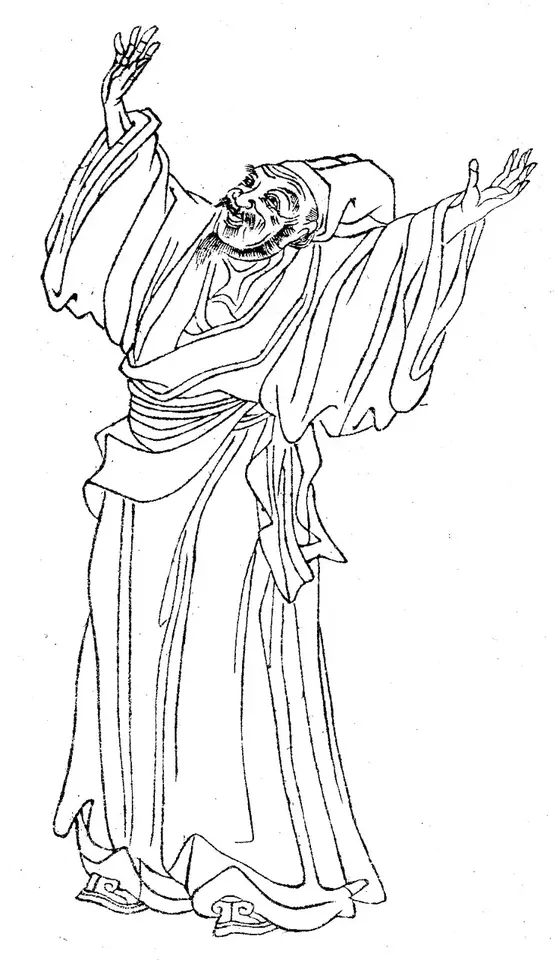
柳宗元
Liu Zongyuan (柳宗元) (773 – 819 AD), styled Zihou (子厚) and known historically as Liu Hedong (柳河东) or Liu Liuzhou (柳柳州), was ancestral to Xie County in Hedong Commandery (modern Yongji, Shanxi Province) and born in Chang'an (modern Xi'an, Shaanxi Province). He was an eminent writer, philosopher, materialist thinker, and political reformer of the Tang dynasty, celebrated as one of the Eight Great Prose Masters of the Tang and…
Liu Zongyuan (柳宗元) (773 – 819 AD), styled Zihou (子厚) and known historically as Liu Hedong (柳河东) or Liu Liuzhou (柳柳州), was ancestral to Xie County in Hedong Commandery (modern Yongji, Shanxi Province) and born in Chang'an (modern Xi'an, Shaanxi Province). He was an eminent writer, philosopher, materialist thinker, and political reformer of the Tang dynasty, celebrated as one of the Eight Great Prose Masters of the Tang and Song, and honored alongside Han Yu as the joint founders of the mid-Tang Classical Prose Movement, known collectively as Han-Liu. Born into the prestigious Hedong Liu clan, Liu possessed exceptional intellect and broad ambition from youth, passing the imperial examinations at age twenty-one and subsequently excelling in the Decree Examination for Extensive Learning and Grand Style, serving in imperial posts including Collator in the Academy of Scholarly Worthies and Defender of Lantian County. Following the accession of Emperor Shunzong of Tang in 805 AD, Liu joined the inner circle of Wang Shuwen to champion the Yongzhen Reform, holding office as Vice Director of a Bureau in the Ministry of Rites. The reformers vigorously curbed military governors, dismantled palace eunuch monopolies, and purged predatory officials. However, the reform threatened entrenched factions and collapsed abruptly when the incapacitated Shunzong was forced to abdicate. Branded among the Two Princes and Eight Sima, Liu was demoted to Military Adjutant of Yongzhou, spending ten years in provincial exile. Amidst political hardship, he poured his energies into literature and philosophy, authoring masterpieces such as Eight Records of Yongzhou, River Snow, The Snake Catcher, Discourse on Heaven, and Discourse on Feudalism, elevating classical Chinese landscape travelogues to their pinnacle. In 815 AD, Liu was briefly recalled to Chang'an, only to be banished again as Prefect of Liuzhou. In Liuzhou, he governed with profound compassion: restoring defenses, founding state academies, eradicating archaic superstitions, and establishing a redemption fund that freed thousands of impoverished bonded servants. Overcome by malaria and administrative exhaustion, Liu died in office in 819 AD at the age of forty-seven. Mastering diverse literary genres with profound philosophical rigor and structural balance, his materialist cosmological thought and progressive evolutionary view of history remain enduring monuments in Chinese intellectual and literary heritage.
Born in the imperial capital Chang'an to the aristocratic Hedong Liu lineage; received rigorous early education from his mother.
Fled south with his family during Zhu Ci's rebellion; witnessed regional devastation and the harsh realities of predatory warlords.
Passed the imperial jinshi examination at age twenty-one; gained wide literary acclaim and formed a lifelong bond with Liu Yuxi.
Passed the Erudite Literati Examination; appointed Collator in the Palace Library and later Defender of Lantian.
Promoted to Acting Investigating Censor; served alongside Han Yu in the censorate, known for upright integrity.
Joined Wang Shuwen's reform cabinet as Vice Director in the Ministry of Rites; exiled to Yongzhou as Military Adjutant following court coup.
Explored the southern wilderness during his decade of exile; composed Eight Records of Yongzhou, River Snow, and The Snake Catcher.
Completed Discourse on Feudalism and Discourse on Heaven, refuting theological fatalism and defending the historical necessity of prefectures.
Recalled to the capital and quickly banished as Prefect of Liuzhou; emancipated debt slaves, reformed customs, and advanced public education.
Died of exhaustion at forty-seven; his literary manuscripts were entrusted to Liu Yuxi to be compiled into Liu Hedong Ji.
Liu Zongyuan was born in the imperial capital of Chang'an in the eighth year of the Dali era of Emperor Daizong of Tang (773 AD). His ancestral house, the Hedong Liu clan, stood as one of the most prominent noble houses of northern China since the Northern and Southern Dynasties. His seventh-generation ancestor Liu Qing had served as a grand minister in Western Wei and Northern Zhou, and his granduncle Liu Shi had served as chancellor under Emperor Gaozong of Tang. His father, Liu Zhen, was a man of unyielding moral character who served as an investigating censor and bureau director, maintaining steadfast imperial allegiance amidst regional warlord rebellions. His mother, Lady Lu, hailed from the prestigious Fanyang Lu clan, possessing broad erudition and personally instructing the young boy in the Confucian classics and historical treatises.
In 783 AD (the fourth year of the Jianzhong era), mutinous soldiers of the Jingyuan army occupied Chang'an and proclaimed Zhu Ci emperor. Ten-year-old Liu Zongyuan fled south alongside his family to Xiakou (modern Wuhan, Hubei Province), where his father held an administrative post. Traveling through war-torn regions along the Yangtze, Liu witnessed the horrific desolation inflicted by warlord conflict, where human bones covered open fields and local populations suffered under arbitrary military plunder. This traumatic youthful experience permanently shattered any aristocratic illusions, instilling within him a passionate determination to champion central imperial authority, suppress predatory regional governors, and alleviate peasant misery.
Following the restoration of order in the capital, Liu returned to Chang'an, immersing himself in intensive study of canonical classics, political history, and statecraft. In 793 AD (the ninth year of the Zhenyuan era), the twenty-one-year-old prodigy passed the imperial civil examinations on his first attempt, astounding the scholar-elite of the capital. Among his successful cohorts was Liu Yuxi, marking the inception of a profound intellectual brotherhood that lasted their entire lives. Three years later, in 796 AD, he passed the challenging Erudite Literati Examination, earning appointment as a Collator in the Palace Library.
In 800 AD, Liu was dispatched to serve as Defender of Lantian County within the metropolitan prefecture. Demonstrating judicial impartiality and refusing to defer to powerful magnates, he earned the admiration of superiors and commoners alike. In 803 AD, thirty-one-year-old Liu was elevated to Acting Investigating Censor within the Censorate. Han Yu entered censorate service at the same period; while the two men held diverging philosophical and political stances, they forged common ground in advocating for the restoration of classical prose against the ornate parallelism of late imperial style. Within the Censorate, Liu's uncompromising honesty and insightful memorials earned him widespread acclaim as one of the brightest young minds in the empire.
In the first month of 805 AD, Emperor Dezong died, and Crown Prince Li Song ascended the throne as Emperor Shunzong. Having spent over two decades as heir apparent, Shunzong was acutely aware of the systemic decay undermining the Tang state: the imperial government was held hostage by palace eunuchs commanding the Divine Strategy Armies, while provincial governors acted as independent tyrants. Prior to his accession, the prince had gathered a core group of talented intellectuals led by Wang Shuwen and Wang Pi. Upon taking the throne, Shunzong placed executive power in Wang Shuwen's hands, and Liu Zongyuan was appointed Vice Director of a Bureau in the Ministry of Rites, joining the inner council of state reform.
Under the direction of Liu, Wang Shuwen, and their colleagues, the Yongzhen Reform unleashed a sweeping campaign of renewal: abolishing the deeply hated palace market system through which imperial eunuchs arbitrarily seized goods from commoners; terminating extra tributary levies extorted by regional governors; prosecuting corrupt officials; and striving to transfer control over imperial guards from eunuchs back to capable state generals. These enlightened policies were celebrated across the streets of Chang'an. However, they directly threatened the entrenched prerogatives of palace eunuchs and powerful provincial commanders, triggering fierce factional resistance.
Emperor Shunzong suffered from severe paralysis and lost the ability to speak, enabling powerful eunuchs headed by Ju Wenzhen to orchestrate a palace coup. In the eighth month of 805 AD, they compelled Shunzong to abdicate in favor of his eldest son, Li Chun (Emperor Xianzong). Once in control, the conservative faction launched a vicious purge against the reformers: Wang Shuwen was ordered to commit suicide, Wang Pi perished in exile, and eight leading reformers—including Liu Zongyuan and Liu Yuxi—were stripped of office and exiled as provincial military adjutants, an event remembered as the Two Princes and Eight Sima Incident. Liu was initially reassigned as Prefect of Shaozhou, but during his journey south was further demoted to Military Adjutant of Yongzhou.
Yongzhou was an isolated, malarial outpost south of the Five Ridges. The post of military adjutant was a sinecure designed for political exiles, stripping Liu of all administrative authority and placing him under constant official surveillance. Arriving in Yongzhou with his sixty-year-old mother, Liu had no permanent lodgings and resided in a dilapidated pavilion of Longxing Temple. Within six months, his mother died from illness and distress, plunging Liu into profound sorrow. Over ten grueling years of political exile, afflicted by chronic diseases and psychological isolation, Liu refused to submit to despair, channeling his intellect and sorrow into timeless prose and philosophical works.
Throughout his decade in Yongzhou, Liu traversed local hills, gorges, and waterways, discovering an emotional resonance between the pristine, neglected beauty of the wilderness and his own cast-off political existence. In this remote setting, he composed the immortal Eight Records of Yongzhou, including Record of My First Excursion to the Western Hill, Record of the Cobalt Basin, Record of the Little Hill West of the Cobalt Basin, and The Small Stone Pond. Utilizing crystalline prose, rigorous spatial composition, and profound psychological reflection, he elevated classical landscape travelogues from mere geographical documentation into an independent literary genre of sublime beauty.
During this fertile period, Liu also penned River Snow, an iconic five-character quatrain capturing the solitary fisherman enduring winter isolation, as well as renowned fables and political allegories including The Snake Catcher, Biography of the Fuban, Discourse on Feudalism, and Discourse on Heaven. In The Snake Catcher, he lamented that the scourge of predatory taxation was far deadlier than venomous vipers. In Discourse on Feudalism, he applied a materialist view of historical development to prove that the replacement of feudal fiefdoms by the commandery-county administrative system was an inevitable historical necessity (the trend of historical momentum, not the design of ancient sages). In Discourse on Heaven, he directly countered Han Yu's metaphysical teleology, demonstrating that the cosmos functions according to inherent natural laws devoid of divine moral intent.
In the spring of 815 AD, political tides shifted, and Liu Zongyuan and his fellow exiles were summoned back to Chang'an. However, within a month of their return, hostile ministers led by Chancellor Wu Yuanheng engineered their immediate redeployment to even remoter frontiers. Liu Yuxi was dispatched to Bozhou; recognizing that Bozhou was exceptionally primitive and that Liu Yuxi had an eighty-year-old mother, Liu Zongyuan submitted a memorial offering to exchange his own posting for Bozhou, an act of loyalty that moved the entire court. Following the intervention of Chancellor Pei Du, Liu Yuxi was reassigned to Lianzhou, while Liu Zongyuan traveled to Liuzhou as prefect.
Liuzhou (modern Guangxi) was an impoverished frontier region steeped in archaic practices and predatory debt bondage, where poor families were routinely sold into slavery to satisfy usurious loans. Rather than surrendering to depression, Liu embraced his duties with heroic compassion. He instituted a state redemption system that permitted bonded servants to offset their debts with labor wages, requiring masters to burn indentures upon fulfillment, thereby emancipating over ten thousand enslaved peasants. Furthermore, he sank public drinking wells, founded state schools to educate indigenous youth, constructed defensive fortifications, and organized agricultural reclamation and afforestation, transforming the frontier city into a thriving and orderly society.
Prolonged exposure to southern epidemics and tireless public labor exhausted Liu's remaining vitality. In the tenth month of 819 AD, following vigorous appeals from Pei Du, Emperor Xianzong finally issued an edict recalling Liu Zongyuan to the imperial court. However, before the imperial messenger could reach Liuzhou, Liu passed away in his official quarters on the eighth day of the eleventh month, at the age of forty-seven. In his final hours, he entrusted his complete writings to Liu Yuxi, tasking him with their editorial preservation and the care of his orphan sons.
Upon hearing of his passing, the citizens of Liuzhou filled the streets in mourning, closing markets and weeping openly. The populace voluntarily erected the Luochi Temple to commemorate his virtues, establishing seasonal sacrifices that endured for centuries. In 820 AD, his coffin was returned to Chang'an for burial in Wan'nian County. Liu Yuxi meticulously edited his manuscripts into thirty fascicles, published as Liu Hedong Ji, and raised his sons to adulthood. During the Song dynasty, Emperor Huizong posthumously ennobled him as Marquis Wenhui. Through his brilliant literary creations, indomitable spirit, and humane governance, Liu Zongyuan built an eternal monument in the cultural memory of China.
Alongside Han Yu, Liu Zongyuan initiated the transformative Classical Prose Movement, which fundamentally altered the course of Chinese literary history. Countering the decadent, overly parallel prose styles inherited from the Six Dynasties, Liu advocated that literature must illuminate fundamental moral truth (wen yi ming dao) and be grounded in authentic conduct. Synthesizing the critical spirit of the Classic of Poetry with the lyrical richness of the Elegies of Chu, he forged a prose style distinguished by structural precision, unadorned strength, and rigorous dialectical logic. His essays shattered ornamental constraints, endowing Chinese prose with unprecedented philosophical depth and realistic social consciousness.
Liu Zongyuan is celebrated as the supreme master and founding theorist of Chinese landscape travelogue prose. In Eight Records of Yongzhou, composed during his southern exile, he liberated the travelogue from its subsidiary status as local chorography, fusing delicate objective description with poignant existential contemplation. Whether depicting schools of minnows appearing to suspend motion in mid-air in The Small Stone Pond, or experiencing spiritual fusion with the cosmos in Record of My First Excursion to the Western Hill, Liu achieved a consummate synthesis of scene and emotion. His travel literature directly shaped subsequent generations of prose masters, including Ouyang Xiu, Su Shi, Yuan Hongdao, and Xu Xiake.
Liu Zongyuan made foundational contributions to Chinese philosophical and historical theory. In Discourse on Heaven and Answers to Heaven, he mounted a decisive assault against the theological worldview of interaction between Heaven and mankind, proposing that all natural phenomena emerge spontaneously from primordial qi without divine intervention or moral retribution. In Discourse on Feudalism, he broke through traditional backward-looking ancestor worship, demonstrating through rigorous historical analysis that the progression from aristocratic feudalism to bureaucratic commanderies was an organic necessity driven by historical forces rather than individual sage rulers. His rationalist and materialist thought represents a landmark in classical Chinese philosophy.
Liu Zongyuan's administrative record in Liuzhou offers a radiant archetype of practical statecraft and populist governance in ancient China. Confronted with the barbaric debt-slavery system entrenched on the southern frontier, he enacted redemption regulations that permitted impoverished laborers to amortize debt through wages, forcing creditors to annul contracts and restoring civil freedom to over ten thousand individuals. Concurrently, he modernized sanitation through well-drilling, disseminated education through public schools, and expanded agricultural reclamation, leaving an unblemished standard of honest, benevolent administration.
FIGURES ASSOCIATED WITH THIS DYNASTY