Biography
Auspicious Birth and Early Tutelage
Zhu Zhen was born in Yingtian (modern Nanjing) on April 5, 1364 (the third day of the third lunar month in the twenty-fourth year of the Zhizheng era). His mother was Consort Hu Chongfei, the daughter of Guard Commander Hu Quan. At the very moment of his birth, a courier rushed into Zhu Yuanzhang's headquarters bearing a victory dispatch announcing that Ming forces had successfully captured Wuchang, the stronghold of rival warlord Chen Youliang. Overjoyed by the coincidence, Zhu Yuanzhang laughed heartily and remarked to his assembled generals: "Heaven favors our cause! A fortified city has fallen and a noble son is born. When this child reaches adulthood, I shall enfeoff him with the broad realm of Chu!" Thus was the title of the Chu princely line decided at his birth.
Endowed with a handsome bearing and an inquisitive intellect, Zhu Zhen demonstrated a quiet, serious demeanor from early childhood, showing a passion for canonical literature and historical annals. In April 1370, when Zhu Yuanzhang conducted the grand enfeoffment of the imperial princes, the seven-year-old Zhu Zhen was formally invested as Prince of Chu. In 1379, the emperor ordered Zhu Zhen, along with Crown Prince Zhu Biao, Prince of Qin Zhu Shuang, and Prince of Jin Zhu Gang, to attend imperial lectures at the Wenhua Hall. Zhu Zhen took classical precepts deeply to heart, transcribing the emperor's commentary on the Great Plan (Hongfan) and Zhang Jiuling's Admonition on the Imperial Treasure (Dabao Zhen) to display beside his study desk as lifelong moral guides.
Establishing the Fiefdom at Wuchang
In 1381, at the age of eighteen, Zhu Zhen completed his court education and prepared to take up residence in his provincial fief at Wuchang. To protect the vital middle Yangtze basin and maintain military vigilance over southwestern indigenous groups, Zhu Yuanzhang assigned veteran commander Zhou Dexing, Marquis of Jiangxia, to escort and advise the young prince. En route to Wuchang, local hill tribes launched cross-border raids along the river valleys; Zhu Zhen coordinated with Zhou Dexing to trap and eliminate several roving raiding bands, demonstrating impressive operational command on his maiden campaign.
Upon his arrival in Wuchang, Zhu Zhen oversaw the construction of the Chu Princely Palace on the southern slope of Mount She. Wuchang commanded a vital strategic position, linking Sichuan to the west, Hunan and Guangxi to the south, and Jiangxi to the east. Adhering strictly to imperial instructions, Zhu Zhen exercised rigorous oversight over his princely guards, promoted sericulture and agriculture, and funded water control dykes across the surrounding plains. Under his stewardship, the Huguang basin flourished, transforming the Chu fief into one of the most stable and prosperous princely domains of early Ming China.
Southwestern Expeditions and Imperial Commendation
Throughout the middle and late Hongwu reign, mountainous regions across Guizhou, western Hunan, and northern Guangxi witnessed recurrent rebellions by non-Han tribal chieftains resisting Ming taxation and military garrisons. Stationed at Wuchang, Zhu Zhen was repeatedly entrusted with imperial commissions to coordinate regional forces and lead counter-insurgency campaigns into remote mountain redoubts.
In 1382, when indigenous insurgents in Dayong (modern Zhangjiajie, Hunan) severed river transport and killed imperial magistrates, Zhu Zhen marshaled provincial garrisons in a multi-pronged offensive that swiftly encircled the rebel headquarters, capturing the leaders and pacifying the valleys.
In April 1385, major tribal confederacies erupted in open revolt across Tonggu Guard (modern Jinping, Guizhou) and Sizhou (modern Yanhe, Guizhou). Tens of thousands of armed tribesmen occupied precipitous passes, cutting off military roads. Viewing the situation with grave concern, Zhu Yuanzhang appointed senior general Tang He, Duke of Xingguo, as General for Subduing the South, paired with Zhou Dexing, while granting Prince Zhu Zhen supreme command and operational authority over all campaigning forces. In June, Zhu Zhen advanced into Jingzhou and Shanghuang. Navigating through malarial mountain valleys, he cut off rebel supply lines and employed coordinated incendiary assaults to overrun defensive palisades, taking more than ten thousand prisoners. Tang He was lavish in his praise of Zhu Zhen's decisive leadership upon returning to court. An elated Zhu Yuanzhang sent an imperial rescript commending him: "Veteran General Tang He reports that you possess outstanding strategic brilliance and fearless valor; you are indeed a true son of Our own!"
In 1387, Zhu Zhen supported Duke Fu Youde during southwestern operations, leading cavalry units into Yunnan's highland border to capture insurgent chieftain Alutu. In 1391, he directed further campaigns against western mountain tribes. Between 1394 and 1395, when extensive tribal rebellions engulfed Daozhou, Quanzhou, and Guiyang along the border between Hunan and Guangdong, Zhu Zhen deployed mobile cavalry formations that swept through the highlands, systematically crushing local insurgent bases and securing communications with the southern coast.
In August 1396, indigenous chieftains in Luxi and Qianyang launched an insurrection, fortifying mountain cliffs atop Mount Tianzhu. Zhu Zhen marched his forces from Yuanzhou (modern Zhijiang), fording raging mountain rivers and scaling near-vertical precipices under torrential downpours. Ming soldiers stormed the mountain redoubts, destroying dozens of stockades and capturing the rebel ringleaders, securing enduring peace for western Hunan.
Princely Prudence and Dynastic Transition
In 1389, when Zhu Yuanzhang created the Court of the Imperial Clan to oversee dynastic lineage affairs, he appointed Zhu Zhen as Right Associate Director, entrusting him with the maintenance of princely discipline.
During the turbulent Jianwen reign, when Emperor Jianwen launched his aggressive campaign to strip the feudatories of their powers, many princes were demoted, exiled, or driven to suicide, including Zhu Zhen's younger brother Zhu Bai, Prince of Xiang, who immolated himself. In this precarious climate, Zhu Zhen conducted himself with consummate restraint, closing his palace gates and avoiding factional entanglements while strictly observing imperial protocol, thereby shielding the people of Huguang from the devastating fires of internal war.
Following Zhu Di's accession as the Yongle Emperor in 1402, the new monarch showed profound deference toward his respected elder brother Zhu Zhen, immediately appointing him Director of the Court of the Imperial Clan. In 1410, Zhu Zhen journeyed to Beijing for an imperial audience, where Zhu Di feted him warmly at the Fengtian Gate and presented him with gold, fine silks, and ceremonial gifts. Zhu Zhen returned to the capital in 1416 to reaffirm dynastic solidarity. In the winter of 1417, to support the emperor's massive military expeditions into Mongolia, Zhu Zhen donated two thousand superior warhorses from his personal breeding grounds, a gesture for which Zhu Di issued a special edict commending the Chu prince as an unshakeable pillar of the realm.
Demise and Legacy at Mount Longquan
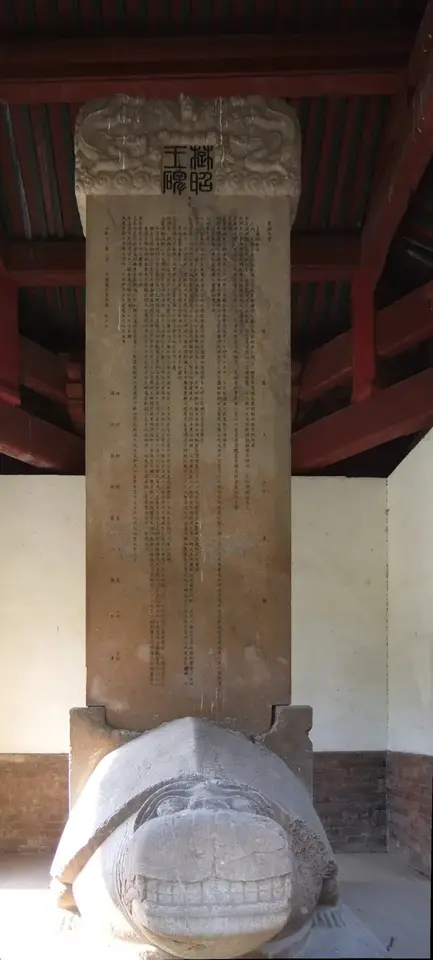
On March 22, 1424 (the twenty-second day of the second lunar month in the twenty-second year of the Yongle era), Zhu Zhen passed away in his princely palace at Wuchang at the age of sixty-one. Upon receiving the news, the Yongle Emperor suspended court audiences in deep mourning, dispatching high officials from the Ministry of Rites to arrange a state funeral and conferring upon him the posthumous title of Zhao. Later that year, Zhu Zhen was interred beneath Tianma Peak at Mount Longquan, southeast of Wuchang. His expansive mausoleum complex, built against the mountain ridges with monumental stone sculptures, is recognized today as a Major National Historical and Cultural Site. The Chu princely title passed to his third son, Zhu Mengwan (Prince Zhuang of Chu). The Chu lineage endured across eight generations and nine princes until the fall of the dynasty, standing as one of the most long-lived and influential princely houses in Ming history.
Major Achievements
Supreme Commander of the Southwestern Frontier
Among the early Ming imperial princes, those stationed along the northern Great Wall frontier (such as the princes of Yan, Jin, and Ning) defended against northern Mongol incursions, while Zhu Zhen at Wuchang was the sole imperial prince invested with substantial military command to oversee the vast and volatile southwestern marches.
Over two decades during the Hongwu era, Zhu Zhen commanded campaigns across rugged, mountainous territories in Huguang, Guizhou, and Yunnan. Coordinating with veteran commanders like Tang He and Zhou Dexing, he subdued major tribal uprisings in Tonggu, Sizhou, and Mount Tianzhu. His military successes helped establish the Ming garrison system (weisuo) and laid the groundwork for the progressive administrative integration of non-Han indigenous regions.
A Model of Political Prudence and Dynastic Balance
In an era defined by fierce power struggles between central imperial authority and feudatory princes, Zhu Zhen managed to navigate the perilous transitions of the Hongwu, Jianwen, and Yongle reigns with unwavering stability.
His devotion to classical scholarship, respectful adherence to dynastic statutes, and generous support for state defenses—exemplified by his donation of two thousand warhorses for the northern campaigns—earned him the enduring trust of successive emperors. As Director of the Court of the Imperial Clan, he personified princely propriety, providing a model of political sagacity and familial loyalty for the Ming imperial family.