Distinction at Zhaoyi
Commanded Shatuo horsemen against rebel general Liu Zhen, earning promotion to Prefect of Shuozhou and Daibei Military Commander.
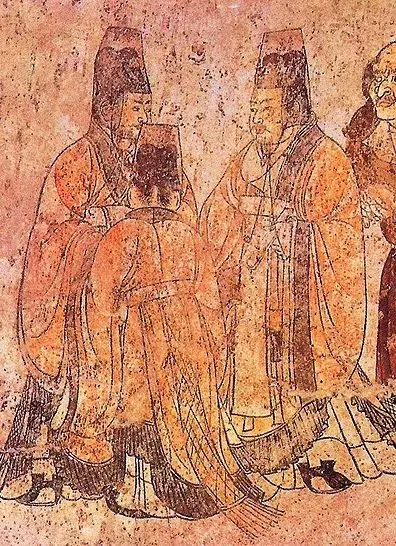
李国昌
Li Guochang (died 887), originally named Zhuye Chixin, courtesy name Dexing, was a native of Daizhou (present-day Dai County, Shanxi Province). He was the supreme chieftain of the Shatuo Turkic tribes during the late Tang dynasty, a prominent frontier cavalry general, and a foundational ancestor of the Later Tang imperial dynasty. The son of Zhuye Zhiyi, who had led the Shatuo eastward into Tang allegiance to escape Tibetan…
Li Guochang (died 887), originally named Zhuye Chixin, courtesy name Dexing, was a native of Daizhou (present-day Dai County, Shanxi Province). He was the supreme chieftain of the Shatuo Turkic tribes during the late Tang dynasty, a prominent frontier cavalry general, and a foundational ancestor of the Later Tang imperial dynasty. The son of Zhuye Zhiyi, who had led the Shatuo eastward into Tang allegiance to escape Tibetan domination, Li inherited command over elite nomadic cavalry in northern Shanxi. During the Huichang era under Emperor Wuzong, he fought alongside imperial armies against remnant Uighur raiders and the Zhaoyi rebellion, earning promotions to Prefect of Shuozhou and Commander of Daibei Forces. Under Emperor Xuanzong, he campaigned against allied Tibetan and Dangxiang incursions into the Hexi corridor, securing further appointments as Prefect of Weizhou and Defender of Yunzhou. In 868, when the Pang Xun Rebellion erupted in Xuzhou and severed southern grain shipments, Emperor Yizong deployed Li as Tribal Army Commander of the Three Shatuo Divisions under Kang Chengxun. Li's armored cavalry spearheaded decisive charges at Liuzi and Shifoshan, shattering Pang Xun's infantry and suppressing the uprising. In recognition of this supreme merit, Emperor Yizong bestowed upon him the imperial surname Li and the given name Guochang, incorporating the Zhuye lineage into the imperial genealogy and elevating him to Grand Protector-General of Shanyu and Military Governor of Zhenwu. As imperial central control weakened, Li Guochang and his son Li Keyong grew increasingly autonomous. In 872, Li defied an imperial transfer to Datong. In 876, Li Keyong slew the Datong commissioner Duan Wenchu. Tang forces under Luolong, Zhaoyi, and Tuyuhun commanders launched a joint encirclement, defeating Li Guochang in 877 and driving father and son into exile among the northern Dada (Tatar) tribes beyond the Gobi. Following Huang Chao's capture of Chang'an in 880, the desperate Tang court pardoned the Shatuo leaders and summoned them to restore the dynasty. Li Keyong's cavalry recaptured Chang'an, leading to Li Guochang's restoration as Military Governor North of Yanmen. Li Guochang died in Daibei in 887. When his grandson Li Cunxu established the Later Tang dynasty in 923, Li Guochang was posthumously honored with the temple name Xianzu and the posthumous title Emperor Wenjing.
Commanded Shatuo horsemen against rebel general Liu Zhen, earning promotion to Prefect of Shuozhou and Daibei Military Commander.
Campaigned under Wang Zai to crush allied Tibetan and Dangxiang forces encroaching upon western border routes.
Appointed Prefect of Weizhou and Defense Commander of Yunzhou following the pacification of the western frontier.
Led elite Shatuo cavalry to destroy Pang Xun's rebel host; granted imperial surname Li and title Military Governor of Zhenwu.
Growing increasingly autonomous in Daibei, feigned illness and refused imperial assignment as Defense Commissioner of Datong.
Defeated by Tuyuhun commander Helian Duo and regional armies; fled across the northern desert to seek sanctuary among the Tatars.
Son Li Keyong routed Huang Chao and reclaimed Chang'an; court pardoned Li Guochang and created him Military Governor North of Yanmen.
Passed away in his northern headquarters; later posthumously elevated as Xianzu Emperor Wenjing by Later Tang.
Li Guochang was born with the nomadic name Zhuye Chixin into the ruling aristocracy of the Western Turkic Shatuo tribe. During the Yuanhe era of Emperor Xianzong, his father, Zhuye Zhiyi, broke away from oppressive Tibetan vassalage and led the entire Shatuo populace eastward to pledge fealty to the Tang Empire. The Tang court resettled the tribe in northern Shanxi around Daizhou and Dingxiang, granting Zhuye Zhiyi the command of the Yinshan Area Command. Reared amid harsh nomadic migrations and constant frontier combat, Zhuye Chixin became renowned for supreme horsemanship, archery, and heavy cavalry shock tactics, earning reverence among tribal warriors.
During the Huichang era under Emperor Wuzong, the northern steppe collapsed into disorder with the disintegration of the Uighur Khaganate. Remnant Uighur hordes raided the northern border, while military governor Liu Zhen rebelled in Zhaoyi. Zhuye Chixin led Shatuo auxiliary cavalry at the front of imperial forces, repeatedly routing Uighur raiders and scaling rugged mountain defiles in Shangdang. Following the pacification of Zhaoyi in 844, the court promoted him to Prefect of Shuozhou and Daibei Military Commander. In 847, when Tibetan armies allied with Dangxiang tribes to ravage the Hexi corridor, Chixin marched under Hedong military governor Wang Zai, routing the invaders. In 849, he was elevated to Prefect of Weizhou and Defense Commander of Yunzhou, anchoring the northern border.
In 868, garrison troops from Xuzhou stationed far to the south in Guilin mutinied under Pang Xun, rapidly capturing Xuzhou, seizing Jiangnan waterways, and cutting off metropolitan grain transport. Imperial armies repeatedly suffered defeat against the veteran mutineers. Desperate for effective shock cavalry, the Tang court accepted recommendation from commander Kang Chengxun to mobilize Zhuye Chixin and his northern tribesmen.
In 869, Zhuye Chixin was appointed Tribal Army Commander of the Three Shatuo Divisions. Leading several thousand heavily armored horsemen south, Chixin shattered the rebel vanguard at Liuzi and Shifoshan. His thunderous cavalry charges repeatedly trampled Pang Xun's entrenched infantry formations, culminating in Pang Xun's death and the restoration of imperial control over the Grand Canal. At the victory ceremonies, Emperor Yizong rewarded Chixin with the highest imperial grace, conferring the imperial surname Li and given name Guochang, enrolling the clan in the imperial genealogical register. Li was made Grand Protector-General of Shanyu and Military Governor of Zhenwu, transforming the Shatuo leadership into an imperial princely faction.
With imperial authority waning in the late ninth century, Li Guochang leveraged his prestige to consolidate autonomous military dominance over Daibei. Surrounding regional warlords viewed the ferocious Shatuo cavalry with dread, and the Li family grew increasingly contemptuous of court directives. In 872, attempting to dislodge Li from Zhenwu, the court reassigned him as Defense Commissioner of Datong. Discerning the political trap, Li feigned severe illness and flatly refused to obey the edict.
In 876, famine struck Daibei. When Datong commissioner Duan Wenchu withheld rations, Li Guochang's fiery twenty-year-old son, Li Keyong, led a military mutiny, executed Duan Wenchu, and seized Yunzhou. Viewing this as open rebellion, the Tang court mobilized a grand coalition including Zhaoyi governor Li Jun, Luolong governor Li Keju, and Tuyuhun chieftains Helian Duo and Bai Yicheng. In late 877, Luolong forces routed Li Keyong at Yao'erling, while Helian Duo launched a surprise assault that shattered Li Guochang's main camp at Weizhou. With their territorial base pulverized, Li Guochang and Li Keyong were forced to abandon their homeland, galloping across the Yinshan mountains into the Gobi desert to seek sanctuary among the Tatar tribes.
The Li family spent years among the nomadic Tatars, earning their deep respect through hunting exploits and martial charisma. In 880, the peasant rebellion led by Huang Chao sacked Chang'an, forcing Emperor Xizong to flee to Chengdu. When provincial armies failed to dislodge the rebels from the imperial capital, chancellor Wang Duo urged the court to recall the exiled Shatuo cavalry.
Emperor Xizong issued a sweeping pardon for Li Guochang and Li Keyong, appointing Li Keyong military governor of Yanmen. In 883, Li Keyong led his famous "Black Crow Army" south, annihilating Huang Chao's principal divisions and liberating Chang'an. For his son's epochal achievement, Li Guochang was restored to high imperial favor, receiving the title Expeditionary Military Governor North of Yanmen. The veteran warlord returned in triumph to Daibei to oversee tribal affairs. In 887, Li Guochang passed away quietly in camp. Decades later, when his grandson Li Cunxu destroyed Later Liang and proclaimed the Later Tang dynasty, Li Guochang was elevated as Xianzu Emperor Wenjing, his cavalry lineage having forged the dominant political-military dynasty of the Five Dynasties era.
Li Guochang's deployment of mobile armored Shatuo cavalry during the Xuzhou campaign in 869 constituted a decisive turning point in late Tang military history. By breaking the tactical impasse against Pang Xun's entrenched infantry through overwhelming cavalry shock warfare, he reopened the essential Grand Canal lifeline, rescuing the Tang dynasty from immediate financial collapse and winning imperial clan status for his lineage.
During decades of frontier warfare in Daibei, Li Guochang transformed disparate nomadic clans into a disciplined, professionalized equestrian military corps. His tactical doctrine, emphasis on heavy armor and rapid flanking maneuvers, and charismatic clan cohesion preserved the Shatuo elite even during devastating defeat and foreign exile, providing the foundational martial human capital that powered the Later Tang, Later Jin, and Later Han dynasties.
Historiography of the Five Dynasties period universally credits Li Guochang as the martial patriarch whose personal bravery and tactical acumen elevated the Shatuo people into supreme arbiters of northern China. Xue Juzheng in the Old History of the Five Dynasties praised his exceptional martial talent and valor against foreign and domestic foes, noting that while his pride led to temporary exile, his lineage ultimately established imperial dynastic power. Ouyang Xiu in the New History of the Five Dynasties highlighted how the hereditary martial excellence passing from Chixin to Keyong and Cunxu transformed a small northern nomadic clan into an imperial ruling house that reunited northern China.
FIGURES ASSOCIATED WITH THIS DYNASTY