Birth in the Capital
Born into a prominent Manchu Bordered Yellow Banner aristocratic lineage, showing exceptional intellectual precocity from youth.
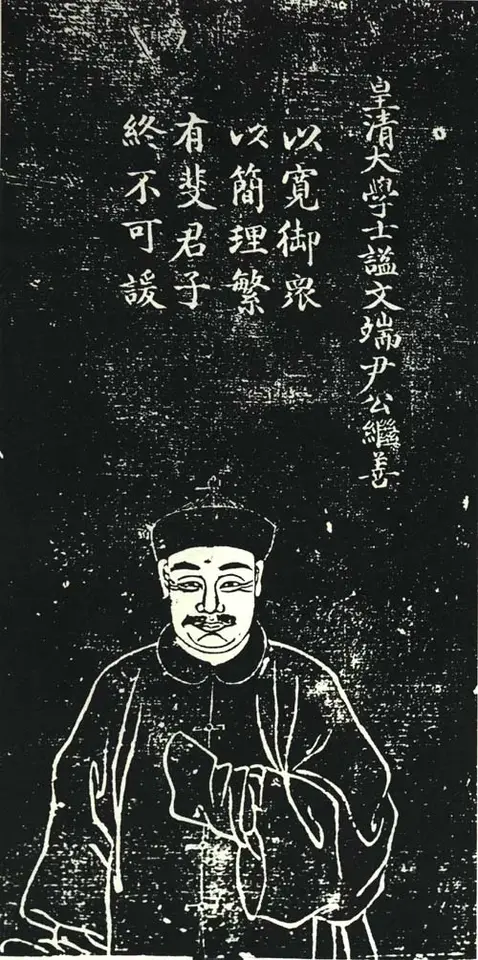
尹继善
Yin Jishan (尹继善, 1696–1771), of the Manchu Bordered Yellow Banner and the Janggiya clan, courtesy name Yuanchang (元长), pseudonym Wangshan (望山), posthumously honored as Wenduan (文端), was an eminent statesman, premier regional viceroy, and Grand Secretary during the Yongzheng and Qianlong reigns of the Qing Dynasty. He was the fifth son of Grand Secretary Yin Tai and was canonized by the Qianlong Emperor as one of the…
Yin Jishan (尹继善, 1696–1771), of the Manchu Bordered Yellow Banner and the Janggiya clan, courtesy name Yuanchang (元长), pseudonym Wangshan (望山), posthumously honored as Wenduan (文端), was an eminent statesman, premier regional viceroy, and Grand Secretary during the Yongzheng and Qianlong reigns of the Qing Dynasty. He was the fifth son of Grand Secretary Yin Tai and was canonized by the Qianlong Emperor as one of the celebrated "Five Great Viceroys." Passing the metropolitan examinations in 1723 (the first year of the Yongzheng reign) as a Jinshi scholar, he entered state service through the Hanlin Academy, serving as Imperial Diarist. Appreciated by the Yongzheng Emperor for his dignified presence, profound classical learning, and acute intellect, he advanced with unprecedented speed, becoming Governor of Jiangsu at thirty-two and Governor-General of Liangjiang at thirty-five, achieving the highest regional gubernatorial rank within eight years of his Jinshi degree. Across a fifty-year official career, Yin Jishan governed Liangjiang four separate times, spanning more than two decades, while also serving as Governor-General of Yun-Gui, Governor-General of Chuan-Shaan, Acting Governor-General of Shaan-Gan, and ultimately Grand Secretary of the Wenhua Palace concurrently managing the Ministry of Personnel and the Palace Academy. Renowned for his benevolent philosophy that "cherishing the common people is the primary duty of governance," he systematically eliminated corrupt surcharge exactions on the grain tribute, dredged the Taihu Lake basin and Huangpu River, reinforced hundreds of miles of stone sea walls, and distributed emergency grain during famines, earning the affectionate title "Yin the Blue Sky" among the millions of southeastern residents. In grand strategic affairs, he fearlessly maintained administrative independence, refusing to flatter powerful courtiers like Li Wei and Tian Wenjing; in Shaan-Gan, he organized the vast logistical network that supplied the western campaigns to pacify Dzungaria and unify Xinjiang. A distinguished patron of letters who nurtured cultural luminaries such as Yuan Mei and Shen Deqian, he passed away in 1771, was posthumously granted the title of Grand Guardian, and was enshrined in the Temple of Eminent Statesmen.
Born into a prominent Manchu Bordered Yellow Banner aristocratic lineage, showing exceptional intellectual precocity from youth.
Prince Yinzhen (the future Yongzheng Emperor) lodged at Yin Tai's estate in Mukden, expressing high admiration upon learning of Yin Jishan's provincial degree.
Obtained the Jinshi degree in the inaugural Yongzheng examination; praised by the emperor as a pillar of the realm and commissioned as Imperial Diarist.
Elevated to Expositor in the Hanlin Academy, swiftly promoted to Bureau Director in Revenue, mastering national fiscal registers.
Commissioned as Acting Governor of Jiangsu at thirty-two, winning universal acclaim in Suzhou as "Little Yin."
Concurrently directed river conservancy, boldly opposing Li Wei's hazardous plan to open the Tianran Dam.
Appointed Governor-General of Liangjiang at thirty-five, setting a dynastic record by attaining viceregal rank within eight years of graduation.
Yongzheng dispatched palace maidservants to grant his biological mother Lady Xu first-rank consort status; transferred to Governor-General of Yun-Gui.
Reappointed Governor-General of Liangjiang by the Qianlong Emperor, executing sweeping reforms of tribute grain surcharges.
Commanded Liangjiang for the third time, overseeing massive dredging operations in the Taihu and Wusong water systems.
Transferred to Governor-General of Chuan-Shaan, fortifying mountain passes, restructuring Green Standard garrisons, and pacifying ethnic disputes.
Appointed Acting Governor-General of Shaan-Gan, establishing supply depots across the Hexi corridor for the conquest of Dzungaria.
Governed Liangjiang for over a decade in his fourth tenure, beloved by southeastern society and praised as a "Lucky Star" by the emperor.
Summoned to the capital as Grand Secretary of the Wenhua Palace and Minister of Personnel, heading the Grand Secretariat.
Passed away in Beijing on May 10 at seventy-six; posthumously conferred the rank of Grand Guardian and the name Wenduan, enshrined in the Temple of Eminent Statesmen.
Yin Jishan was born in 1696, belonging to the Janggiya clan of the Manchu Bordered Yellow Banner. The Janggiya surname originated from an ancient locality near the Omohosulu River in the Changbai Mountains. His founding ancestor Mudu Bayan had five sons; the third son, Yueta, led his branch to Yihan'ala and pledged allegiance to Nurhaci during the Tianming era of the Later Jin, where the clan was incorporated into the elite Bordered Yellow Banner. Yueta's great-grandson Yin Tai rose to become Chancellor of the National Guozijian Academy under Emperor Kangxi, retiring to Mukden in 1713 as a senior scholar of Manchu institutions.
Yin Jishan was the fifth son of Yin Tai, demonstrating remarkable physical and intellectual gifts from early childhood. Historical annals describe him as possessor of a fair, radiant complexion, sparse and elegant beard, broad mouth, and eyes of deep, tranquil benevolence measuring over an inch in length. His voice was unusually clear and resonant, carrying distinctly over dozens of paces, while his skin displayed auspicious cinnabar-red marks. Gifted with a photographic memory, he mastered both Manchu script and classical Chinese, reading extensively in the Zizhi Tongjian, Tongjian Gangmu, and the Confucian Five Classics under his father's strict discipline, combining traditional Manchu martial values with the erudition of a high Confucian statesman.
In 1721 (the 60th year of Kangxi), an auspicious encounter transformed Yin Jishan's life. Prince Yinzhen (the future Yongzheng Emperor) was dispatched by Emperor Kangxi to offer sacrifices at the ancestral imperial tombs in Mukden. Stranded by heavy autumn storms that washed out the highway, the prince sought overnight shelter at Yin Tai's private residence. During an evening discussion by the fireplace, Yinzhen inquired about Yin Tai's sons. Yin Tai replied that his fifth son, Yin Jishan, had recently attained his provincial degree in the Shuntian triennial examination. Impressed by the elder's account, Yinzhen remarked warmly: "This youth must be a splendid talent; when he comes to the capital for the metropolitan examination, he must call upon my palace."
The following year, Yin Jishan arrived in Beijing to sit for the metropolitan examinations. Before he could call upon Prince Yinzhen, Emperor Kangxi passed away, and Yinzhen ascended the throne as the Yongzheng Emperor. In the spring of 1723, during the special inaugural palace examination, Yin Jishan secured his Jinshi degree and was selected as a Hanlin bachelor. When the new scholars were presented in the Qianlong Hall, Emperor Shizong recognized him immediately, exclaiming in delight: "Are you indeed the son of Yin Tai? Truly a great vessel of the state!" Commissioned as Imperial Diarist, Yin Jishan was kept close to the throne, drafting secret imperial rescripts and mastering nationwide administrative affairs.
Unlike the conservative tenure norms of the Kangxi reign, the Yongzheng Emperor promoted capable officials with audacious speed. Appreciating Yin Jishan's combined administrative brilliance and serene demeanor, the emperor elevated him to Hanlin Expositor in 1727, and soon after to Bureau Director in the Ministry of Revenue to oversee regional provincial accounts.
In 1728, at the age of thirty-two, Yin Jishan received an extraordinary imperial appointment as Acting Governor of Jiangsu. In Qing administrative history, appointing a thirty-two-year-old official to govern Jiangsu—the wealthiest and most complicated province in the empire—was an unprecedented political marvel. The gentry and commoners of Jiangnan, seeing their handsome, refined young governor, affectionately called him "Little Yin." Arriving in Suzhou, Yin Jishan avoided bureaucratic arrogance. He traveled simply through fields and markets, investigated tax arrears, eliminated illegal fees, and stabilized commodity prices. His balanced blend of administrative firmness and genuine compassion won immense acclaim across southern China.
From 1729 to 1731, having performed brilliantly as Governor of Jiangsu and Acting Director-General of Waterways, Yin Jishan was formally commissioned as Governor-General of Liangjiang in 1731 at thirty-five. Attaining the most prestigious viceregal post in the empire within eight years of passing the civil service examination established an all-time record, prompting Emperor Qianlong to compose the admiring verse: "Attaining viceregal rank in eight short years—who else could ever meet such rare fortune?"
Yin Jishan's father Yin Tai was an authoritarian Manchu patriarch. Yin Jishan's biological mother, Lady Xu, was a secondary concubine who, despite her son's exalted viceregal rank, remained dressed in coarse robes serving behind the screens in the patriarchal household without receiving official noble titles. In the winter of 1732, during an imperial audience in Beijing, the Yongzheng Emperor asked Yin Jishan whether his mother had received imperial honors. Yin Jishan wept and confessed that dynastic statutes prevented secondary wives from receiving noble patents. Moved by his filial grief, Emperor Yongzheng dispatched four palace matrons bearing first-rank coronets and emerald robes directly to Yin Tai's mansion, seating Lady Xu on the central divan, commanding banner noblewomen to kowtow before her, and formally conferring upon her the patent of First-Rank Lady (Yipin Gaoming Furen). This extraordinary imperial grace deeply touched Yin Jishan, cementing his lifelong devotion to dynastic duty.
In late 1732, the court transferred Yin Jishan to become Governor-General of Yun-Gui, succeeding Grand Secretary E'ertai. Following extensive "bureaucratization of native chieftaincies" (Gaitu Guiliu), southwestern frontier regions remained volatile, with frequent unrest among the Miao tribes in Guzhou and Taigong. Recognizing that border stability required sympathetic pacification rather than heavy-handed militarism, Yin Jishan reversed punitive policies.
Throughout Yunnan and Guizhou, Yin Jishan reduced burdensome tribal requisitions and forbade military garrisons from mistreating ethnic villages. He founded hundreds of charitable community schools across frontier prefectures, encouraging the sons of indigenous chieftains to study Confucian classics with generous examination quotas. He supervised road construction, developed copper mining in Dongchuan to supply the imperial mints, and promoted cross-border tea trade, restoring lasting peace throughout the southwestern highlands and winning formal commendations from Emperor Shizong.
In 1737, the newly enthroned Qianlong Emperor reappointed Yin Jishan as Governor-General of Liangjiang. The three provinces of Jiangsu, Anhui, and Jiangxi were the economic heartland of imperial grain tribute. Decades of clerk malfeasance had resulted in exorbitant surcharges labeled "wastage allowances" and "porterage fees," where corrupt inspectors rejected standard grain unless heavily bribed.
Yin Jishan enacted sweeping reforms across the grain transport administration. He computed the authentic transit costs from southern depots to Beijing, establishing fixed and transparent wastage quotas carved onto stone steles at prefectural gates. He introduced public weighing stations, punished dishonest clerks, and implemented the "fair sale method" (Pingtao Fa), opening state granaries during seasonal grain price spikes to protect the urban poor. His transparent administration relieved millions of peasant households and cemented his reputation as the foremost administrator of the southeast.
Throughout his career, Yin Jishan repeatedly managed the complex hydraulic systems connecting the Yellow River, Huai River, and Grand Canal. During the Yongzheng and early Qianlong eras, governors like Li Wei and Tian Wenjing enjoyed supreme imperial favor, and courtiers rarely dared to question their assertions. Yet Yin Jishan maintained fearless intellectual independence.
In 1729, while acting as Director-General of Waterways, Yin Jishan met Zhejiang Governor Li Wei at Qingjiangpu. Li Wei claimed he had secured imperial approval to open the Tianran Dam to divert Yellow River floodwaters. Having personally surveyed the local hydrography, Yin Jishan refused, pointing out that opening the dam would deposit silt into the Grand Canal and sever national tribute navigation. Similarly, in the winter of 1732, when Henan Governor Tian Wenjing concealed a severe drought in Shandong to boast of regional surpluses, Yin Jishan testified candidly before Emperor Yongzheng that Shandong was suffering acute famine and could not spare relief grain. Emperor Yongzheng praised Yin Jishan's unyielding honesty and integrity, observing that he never compromised public welfare for personal careerism.
In 1743, as geopolitical tensions escalated across the northwestern and southwestern frontiers, Emperor Qianlong appointed Yin Jishan Governor-General of Chuan-Shaan, overseeing Sichuan, Shaanxi, and Gansu. Yin Jishan reorganized the regional Green Standard armies, promoted military agricultural colonies, and repaired ancient timber trestle roads across the Qinling and Daba mountain ranges.
In Chuan-Shaan, he reconciled ethnic disputes between Han and Hui communities in Xunhua and Guyuan with scrupulous impartiality, punishing instigators while safeguarding Muslim religious institutions. By constructing vast reserve granaries in Hanzhong and Chengdu, he ensured stable supply corridors connecting the central plains to the Tibetan borderlands, securing a decade of tranquility across the western approaches of the empire.
In the spring of 1753, political fracturing within the Dzungar Khanate presented the Qing Dynasty with a historic window to pacify the western frontier. Recognizing that logistics across thousands of miles of arid desert would decide the campaign, Emperor Qianlong commissioned Yin Jishan as Acting Governor-General of Shaan-Gan to direct the supreme military supply commission.
Yin Jishan traveled to forward headquarters in Lanzhou and Suzhou, orchestrating supply networks across the Hexi Corridor to Hami. Within months, he mobilized millions of bushels of grain, secured tens of thousands of transport camels and horses, and established twenty-four fortified supply depots equipped with water wells and leather rain coverings. His logistical mastery ensured that expeditionary forces advanced across the Gobi Desert without suffering grain shortages, laying the foundation for the historic Qing liberation of the Ili River Valley and the unification of Xinjiang in 1755.
In 1754, Emperor Qianlong reappointed Yin Jishan as Governor-General of Liangjiang for the fourth time. He presided over the region until 1765, serving over a decade in this final tenure and accumulating more than twenty years of viceregal service in Jiangnan.
During this period, Yin Jishan supervised the comprehensive dredging of the Wusong River and Huangpu River, and reinforced hundreds of miles of stone sea walls along the coasts of Changshu and Songjiang, shielding the Jiangnan delta from devastating typhoon storm surges. When Emperor Qianlong embarked on his historic southern inspection tours in 1757 and 1762, Yin Jishan arranged imperial ceremonies while strictly shielding local merchants from predatory fiscal requisitions. The populace placed his portrait in local shrines, revering him as a guardian spirit. Emperor Qianlong bestowed an inscribed stone tablet upon him, praising his four decades of unblemished service.
In 1764, recognizing his lifetime of service, Emperor Qianlong summoned Yin Jishan to Beijing, appointing him Grand Secretary of the Wenhua Palace concurrently serving as Minister of Personnel. Relinquishing his regional command the following year, he settled permanently in the capital to lead the Grand Secretariat, concurrently serving as Chief Preceptor of the Imperial Academy (Shangshufang) and Chancellor of the Hanlin Academy.
In the cabinet, Yin Jishan guided state affairs with prudent moderation, reforming personnel evaluations and stabilizing banner livelihoods. As Chief Preceptor, he instructed imperial princes, including the future Jiaqing Emperor (Prince Yongyan), instilling in them classical Confucian ethics and compassionate statecraft. Despite holding supreme rank, he preserved unassuming humility, winning universal respect throughout the capital.
On May 10, 1771 (the 27th day of the 3rd lunar month in the 36th year of Qianlong), Yin Jishan passed away of exhaustion at his Beijing residence at the age of seventy-six. Emperor Qianlong was profoundly moved, composing imperial elegies mourning his passing, posthumously conferring the supreme rank of Grand Guardian, granting five thousand taels for funerary expenses, bestowing the posthumous name Wenduan, and ordering his tablet enshrined in the Temple of Eminent Statesmen.
On the day his funeral procession departed for the ancestral cemetery in Mukden, countless disciples, officials, and commoners lined the highway in grief. In 1779, Emperor Qianlong composed his Poems of Reminiscence, placing Yin Jishan at the summit of the "Five Great Viceroys" and celebrating him as the foremost scholar of the Eight Banners. His fourth son, Qinggui, subsequently rose to Grand Secretary under Emperor Jiaqing, preserving the glorious legacy of the Janggiya clan.
Yin Jishan's four terms as Governor-General of Liangjiang, totaling more than twenty years, established an enduring benchmark for regional governance in imperial China. Upholding the creed that "cherishing the people is the supreme priority," he eliminated corrupt surcharges, disciplined bureaucrats, and stabilized society. His benevolent stewardship catalyzed the economic and cultural flourishing of the Jiangnan region during the High Qing era.
Recognizing that arbitrary fees on the imperial grain tribute placed an unbearable burden upon southeastern peasants, Yin Jishan instituted radical transparency reforms. By computing authentic transport costs and establishing fixed wastage quotas published on stone steles, he eliminated the extortionate practices of grain clerks. His reforms saved millions of taels annually for peasantry across Jiangsu and Anhui.
Yin Jishan executed far-reaching water conservancy projects across the Yangtze River Delta. He dredged critical drainage outlets along the Wusong, Liu, and Lou rivers, and directed the construction of hundreds of miles of stone sea walls along the Jiangsu and Zhejiang seaboards. These engineering works successfully prevented sea-water inundation and secured the agricultural prosperity of the empire's prime rice basket.
Throughout his service under Emperor Yongzheng, Yin Jishan demonstrated extraordinary moral fortitude. When imperial favorites Li Wei and Tian Wenjing advocated flawed hydraulic policies or concealed famine conditions in Shandong, Yin Jishan spoke the unvarnished truth at court, preventing catastrophic canal flooding and securing life-saving relief grain for millions of drought victims.
As Acting Governor-General of Shaan-Gan in 1753, Yin Jishan designed and executed the comprehensive logistics system for the Qing campaign against Dzungaria. Establishing a chain of twenty-four fortified supply depots across the Hexi Corridor and utilizing weather-proof transport containers, he ensured uninterrupted provisions for tens of thousands of troops across the Gobi Desert, making an indispensable contribution to the reunification of Xinjiang.
Serving as Governor-General of Yun-Gui, Yin Jishan replaced coercive military suppression with cultural education and enlightened administration. He established hundreds of free community schools in tribal regions, integrated chieftain sons into the imperial examination system, and resolved ethnic land disputes, laying the foundation for enduring multi-ethnic cohesion in southwestern China.
Yin Jishan was a towering patron of Qing letters. As Governor-General of Liangjiang, he established celebrated literary salons, providing lifelong patronage and friendship to the poet Yuan Mei at Suiyuan, and encouraging scholars like Shen Deqian and Qian Chenqun. His patronage fostered the golden age of mid-eighteenth-century Jiangnan literature.
Throughout his regional career, Yin Jishan prioritized public grain reserves as the foundation of social tranquility. He reformed granary procurement by mandating fair market prices, eliminating the practice of forced grain requisitions from farmers. During famines, he promptly opened state granaries to sell grain at subsidized prices, defeating speculative grain hoarding and safeguarding the livelihood of the poor.
Yin Jishan was celebrated for scrupulous judicial mercy. Throughout his tenures in Liangjiang and Chuan-Shaan, he personally reviewed capital cases, forbidding torture and overturning hundreds of wrongful convictions engineered by corrupt local clerks. In an era of heightened literary surveillance, he sheltered innocent scholars from political persecution.
In his final years as Grand Secretary and Chief Preceptor of the Imperial Academy, Yin Jishan supervised the education of imperial princes, including the future Jiaqing Emperor. Emphasizing classical moral statecraft and empathy for commoners, his pedagogical guidance left an indelible imprint upon late eighteenth-century imperial administration.
FIGURES ASSOCIATED WITH THIS DYNASTY