Shock Assault at Zhua
Served under Zhang Xutuo against rebel leader Lu Mingyue; infiltrated the enemy rear redoubt with Luo Shixin and set fire to thirty camps, achieving a decisive victory.
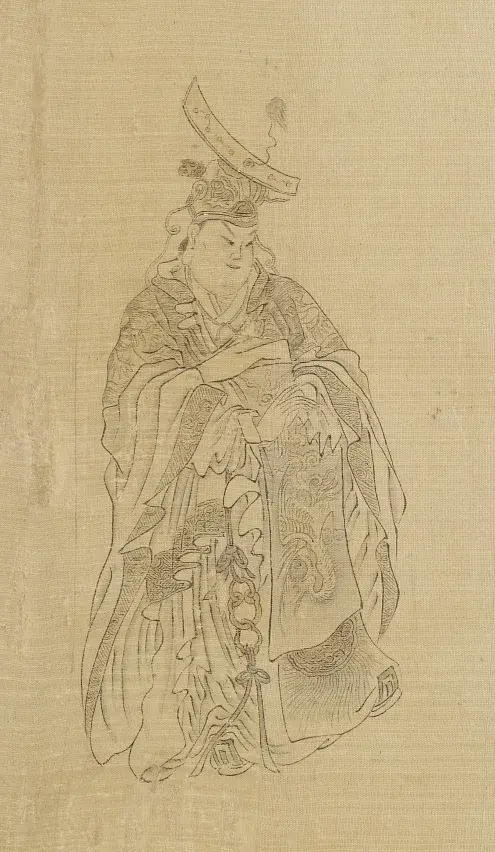
秦琼
Qin Qiong (died 638), courtesy name Shubao, was a native of Licheng, Qizhou (present-day Licheng District, Jinan, Shandong Province). He was a paramount founding military general of the Tang Dynasty, renowned for his peerless individual valor, tactical audacity, and unswerving martial loyalty. Qin Qiong originally served the Sui Dynasty under prominent commanders Lai Hur'er and Zhang Xutuo, earning widespread acclaim for his…
Qin Qiong (died 638), courtesy name Shubao, was a native of Licheng, Qizhou (present-day Licheng District, Jinan, Shandong Province). He was a paramount founding military general of the Tang Dynasty, renowned for his peerless individual valor, tactical audacity, and unswerving martial loyalty. Qin Qiong originally served the Sui Dynasty under prominent commanders Lai Hur'er and Zhang Xutuo, earning widespread acclaim for his shock tactics against rebel forces. Following the disintegration of Sui rule, he joined Li Mi's Wagang Army as a general of the elite inner cavalry. After the downfall of Wagang, Qin briefly submitted to Wang Shichong but departed in disgust over Wang's deceitful nature. In 619, he led his trusted associates to pledge allegiance to the Tang Dynasty, subsequently serving as a core Vanguard commander under Prince of Qin Li Shimin. Qin Qiong played an indispensable role in crushing major rivals, including Liu Wuzhou, Song Jingang, Wang Shichong, Dou Jiande, and Liu Heita. Throughout these campaigns, he personally charged into enemy battle formations with heavy lances, striking down opposing generals and inspiring his men. For his monumental contributions to the reunification of the empire, he was appointed General of the Left Militant Guard and created Duke of Yi. Suffering from chronic wounds sustained over hundreds of battles, Qin Qiong retired from active duty in his final years and passed away in the twelfth year of the Zhenguan reign (638). He was posthumously honored as Commander-in-Chief of Xuzhou, invested with the posthumous title Zhuang, and subsequently ranked among the Twenty-Four Meritorious Officials of Lingyan Pavilion. In later centuries, Qin Qiong evolved into one of the most prominent Door Gods (Menshen) in Chinese folk religion, revered across generations alongside Yuchi Jingde as an enduring guardian spirit and exemplar of righteousness.
Served under Zhang Xutuo against rebel leader Lu Mingyue; infiltrated the enemy rear redoubt with Luo Shixin and set fire to thirty camps, achieving a decisive victory.
Following Zhang Xutuo's death in battle against Wagang forces, Qin rallied the remnants under Pei Renji and formally pledged allegiance to Li Mi.
Li Mi was wounded and unhorsed during the Battle of Mount Tong against Yuwen Huaji; Qin single-handedly defended his fallen master and rallied troops to force a withdrawal.
Abandoned Wang Shichong at Jiushui alongside Cheng Zhijie; traveled to Chang'an to surrender to Emperor Gaozu of Tang, receiving assignment to Li Shimin.
Intercepted Song Jingang and his elite general Yuchi Jingde at Meiliangchuan, beheading two thousand enemies and securing Tang control over Hedong.
Spearheaded the Tang elite armored cavalry against Dou Jiande's army at Hulao, penetrating deep formations and planting imperial banners.
Accompanied Li Shimin in routing Liu Heita's rebel forces at Lieren, pacifying the Hebei plains.
Supported Li Shimin during the political succession crisis and eliminated rival princely factions; promoted to General of the Left Militant Guard.
Passed away after enduring long-term battle-wound illnesses; granted an imperial escort burial at Zhaoling with monumental stone statues, and in 643 painted among the Twenty-Four Meritorious Officials in Lingyan Pavilion.
Qin Qiong was born into an official lineage in Licheng, Qizhou. His great-grandfather Qin Xiaoda had served as county magistrate of Guangnian under Northern Wei, his grandfather Qin Fangtai held office as palace recorder under Northern Qi, and his father Qin Ai served as an administrative adjutant before retiring during the chaotic transition from Sui to Tang. In his youth, Qin Qiong entered military service as an aide under the prominent Sui general Lai Hur'er. When Qin's mother passed away, Lai Hur'er personally dispatched condolence messengers to her funeral. When questioned by staff why he paid such extraordinary respects to an ordinary junior officer, Lai prophesied that Qin possessed unmatched valor and exalted aspirations that would inevitably carry him to great noble rank.
During the late Daye era of the Sui Dynasty, peasant uprisings erupted across the country. Qin Qiong was subordinated to Zhang Xutuo, the Commander of Qizhou, who led campaigns against rebel forces in the Central Plains. In 614, the rebel chieftain Lu Mingyue commanded more than one hundred thousand troops encamped at Zhua. Zhang Xutuo, commanding only ten thousand men, found himself surrounded and facing severe food shortages. Zhang devised a strategy of tactical withdrawal while sending a secret assault unit into the undefended rebel base. Amid silence across the ranks, only Qin Qiong and Luo Shixin volunteered for the perilous mission.
While Zhang feigned retreat to lure the main rebel host into pursuit, Qin Qiong and Luo Shixin led one thousand shock troops into the reeds, waiting in ambush. When Lu Mingyue's forces rushed forward, Qin and Luo scaled the defensive palisades, eliminated the sentries, and set fire to thirty encampments. Terrified by the billowing smoke in their rear, the rebel army collapsed into panic, allowing Zhang Xutuo's returning main column to crush them completely. For his gallantry, Qin was promoted to Adjutant General. He subsequently took part in the suppression of Sun Xuan'ya at Haifeng, personally decapitating enemy leaders and receiving promotion to Commander.
In 616, Zhang Xutuo was ambushed and killed at Xingyang by the Wagang Army led by Li Mi and Zhai Rang. Qin Qiong assembled the scattered imperial remnants and rallied under Pei Renji. Recognizing the irrecoverable collapse of Sui authority, Pei surrendered to Li Mi, and Qin Qiong accompanied him. Li Mi treated Qin Qiong with exceptional honor, placing him in command of the elite Inner Cavalry Guard, an elite vanguard of eight thousand handpicked warriors tasked with protecting the supreme headquarters.
In 618, Yuwen Huaji led the rebellious Sui elite Xiaoguo army northward from Jiangdu. Li Mi confronted him at Mount Tong near Liyang. During fierce fighting, Li Mi was struck by an arrow, thrown from his warhorse, and knocked unconscious. With enemy cavalry closing in, Qin Qiong charged forward alone, standing astride Li Mi's body and slaying numerous assailants. He defended the master until reinforcements arrived, subsequently regrouping the retreat into a counterattack that drove Yuwen Huaji from the field.
Following Li Mi's eventual defeat by Wang Shichong at Beimang Mountain, Qin Qiong was captured. Wang Shichong, eager to harness Qin's military prowess, treated him with lavish courtesy and appointed him General of Dragon Cavalry. However, Qin Qiong and his close friend Cheng Zhijie soon observed that Wang Shichong was superstitious, narrow-minded, and prone to empty oaths. In 619, while deployed on the frontlines against Tang armies at Jiushui, Qin Qiong, Cheng Zhijie, Wu Heita, and dozens of followers halted their mounts, bowed toward Wang Shichong's camp, and openly declared their departure before spurring their horses toward the Tang lines.
Emperor Gaozu of Tang welcomed Qin Qiong with great enthusiasm and assigned him to the headquarters of Li Shimin, Prince of Qin. Qin was appointed Commander of the Qin Prince's Vanguard Cavalry and stationed on the frontlines of the Hedong theater. In late 619, Liu Wuzhou and his formidable general Song Jingang overran Shanxi, capturing Tang princes and imperial commanders. Li Shimin initiated a counter-offensive from Boxi. Qin Qiong executed an ambush against Yuchi Jingde and Xun Xiang at Meiliangchuan, beheading two thousand elite soldiers and cutting off the enemy's logistics.
Overjoyed by this critical turn of events, Emperor Gaozu rewarded Qin Qiong with a golden bottle and praised him, stating that he would willingly slice his own flesh to feed such a loyal champion. Qin subsequently pursued Song Jingang to Jieshi, spearheading assaults that culminated in the recovery of Shanxi. Yuchi Jingde thereafter surrendered to the Tang and joined Qin Qiong under Li Shimin's banner.
In 621, Qin participated in the monumental campaign against Wang Shichong in Luoyang. When Dou Jiande marched more than one hundred thousand troops from Hebei to relieve the siege, Li Shimin advanced to Hulao Pass to block his path. Qin Qiong, Cheng Zhijie, and Yuchi Jingde commanded the armored Xuanjia cavalry. During the climatic clash, Qin plunged deep into the dense formations of Dou Jiande's forces, shattering their lines and raising imperial banners behind the enemy rear. This psychological blow caused widespread collapse across Dou's army, leading to his capture and the surrender of Wang Shichong. For his decisive achievements, Qin Qiong was granted the rank of General of the Left Militant Guard and enfeoffed as Duke of Yi. He subsequently led forces against Liu Heita in Shandong, annihilating rebel remnants.
During the political climax of 626, Qin Qiong assisted Li Shimin during the Xuanwu Gate Incident, securing imperial authority for the Prince of Qin. Following Li Shimin's enthronement as Emperor Taizong, Qin was awarded extensive fiefs and confirmed as General of the Left Militant Guard.
Decades of brutal hand-to-hand combat had exacted a heavy toll on Qin's body. He remarked to family and colleagues that he had fought in hundreds of engagements and sustained countless lance and blade wounds, losing dozens of hu of blood over his lifetime, which naturally resulted in chronic frailty. Consequently, he largely retired from active campaigns and lived quietly in the capital during the Zhenguan reign.
In 638 (Zhenguan 12), Qin Qiong passed away in Chang'an. Emperor Taizong deeply mourned his loss, issuing an imperial decree granting him posthumous honors as Commander-in-Chief of Xuzhou and conferring the posthumous title Zhuang (Vigorously Gallant). He was granted a prestigious burial at Zhaoling, where stone statues of horses and armed warriors were carved and arranged in front of his tumulus to commemorate his martial triumphs. In 639, his title was amended to Duke of Hu. In 643, when Emperor Taizong commissioned Yan Liben to paint the Twenty-Four Meritorious Officials in Lingyan Pavilion, Qin Qiong was enshrined among them, ensuring his immortal status in imperial historiography.
The Battle of Zhua in 614 established Qin Qiong's reputation as a peerless shock tactician. Faced with overwhelming enemy numbers, Qin displayed absolute calm and spatial awareness. By infiltrating the rear encampments with Luo Shixin while the enemy pursued a feigned retreat, Qin paralyzed a force tenfold his own size. This tactical infiltration dismantled the command nerve center of the rebel coalition and became a classic textbook example of asymmetric shock warfare during the Sui-Tang transition.
During the clash at Mount Tong, Qin Qiong single-handedly altered the fate of the Wagang Army. With Li Mi wounded and defenseless on the ground, Qin stood firm against waves of elite Xiaoguo shock troops. His refusal to abandon his commander under catastrophic conditions reflected supreme personal honor, preserving the core leadership of Wagang and solidifying his renown as an archetype of martial chivalry.
The encounter at Meiliangchuan was the turning point of the Shanxi campaign. By neutralizing Song Jingang's elite units and forcing Yuchi Jingde into isolation, Qin Qiong halted the southward invasion of Northern Han factions into the Tang heartland. This victory secured Guanzhong's northern border and established the strategic baseline from which Li Shimin swept across Hedong.
At Hulao Pass, Qin Qiong demonstrated the devastating potential of shock heavy cavalry. Leading a compact wedge of Xuanjia horsemen directly through Dou Jiande's defensive lines, Qin executed a breakthrough that disrupted the entire Hebei army. His daring maneuver of raising Tang standards behind enemy lines catalyzed total operational paralysis across the opposing ranks, enabling the dual pacification of Henan and Hebei in a single day.
Official dynastic histories record that whenever Li Shimin encountered an arrogant enemy commander displaying superior armor and prowess on the opposing line, he would dispatch Qin Qiong to eliminate the threat. Qin would gallop forth alone, pierce through defensive ranks, strike down the enemy champion with his heavy lance, and return unscathed. His exceptional individual prowess bolstered Tang frontline morale and provided the historical foundation for his later legendary status as an invincible champion.
Qin Qiong's historical legacy transcended dynastic records to achieve iconic status in Chinese folk religion. The legendary narrative of Qin Qiong and Yuchi Jingde standing guard outside Emperor Taizong's bedchamber to repel malevolent spirits became deeply ingrained in folk culture. Through Yuan, Ming, and Qing literature, such as Romance of Sui and Tang and Journey to the West, Qin was immortalized as a golden-mace-wielding Door God. Paired on residential doorways across the Chinese cultural world, his image symbolizes unwavering fidelity, righteous protection, and peace.
FIGURES ASSOCIATED WITH THIS DYNASTY