Birth in Silla
Born in the royal capital of Gyeongju into a family of the sixth head-rank nobility.
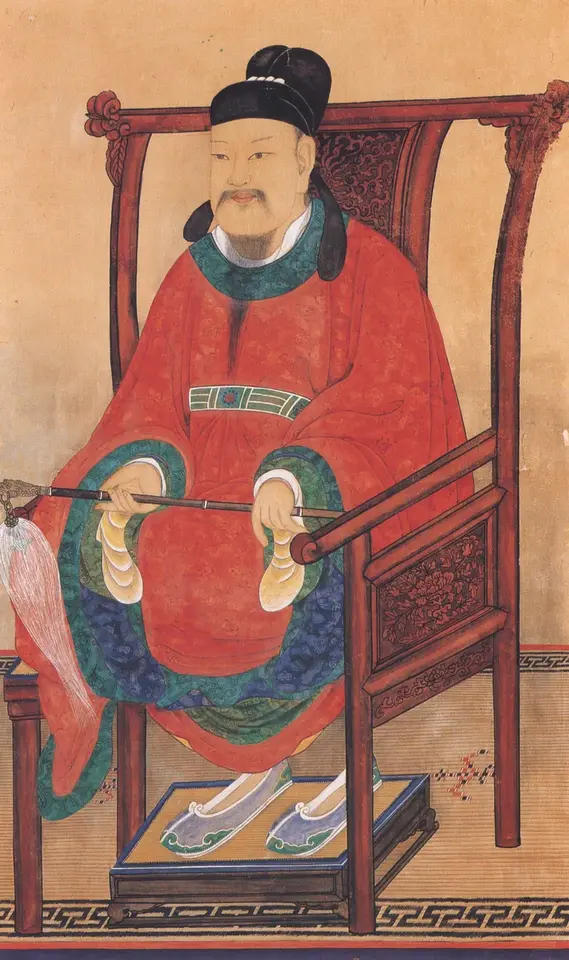
崔致远
Cui Zhiyuan (Choe Chiwon / 崔致远, b. 857), courtesy name Guyun, pseudonym Haiyun, posthumous title Marquis of Wenchang, was a native of the Saryang District in the royal capital of Silla (modern Gyeongju, South Korea). He was a distinguished scholar, poet, and statesman of late Silla and an official in Tang China, revered across Korean history as the founding ancestor of Sino-Korean literature and the "Patriarch of Eastern…
Cui Zhiyuan (Choe Chiwon / 崔致远, b. 857), courtesy name Guyun, pseudonym Haiyun, posthumous title Marquis of Wenchang, was a native of the Saryang District in the royal capital of Silla (modern Gyeongju, South Korea). He was a distinguished scholar, poet, and statesman of late Silla and an official in Tang China, revered across Korean history as the founding ancestor of Sino-Korean literature and the "Patriarch of Eastern Confucianism." In 868, at the age of twelve, he crossed the Yellow Sea to Chang'an on his father's strict instructions to pursue classical studies. In 874, during the reign of Emperor Xizong, he passed the imperial examinations to earn the guest-candidate jinshi degree. He subsequently received his first administrative posting as County Commandant of Lishui, serving for three years and compiling the literary anthology Collection of Overturning a Basket at Zhongshan (Zhongshan Fuqui Ji). As the Huang Chao Rebellion engulfed northern China, Cui Zhiyuan entered the military staff of Gao Pian, Military Commissioner of Huainan, serving successively as patrol officer, commissioner of courier stations, Gentleman for Rendering Service, and Investigating Censor as Palace Attendant, receiving the coveted imperial decoration of the Scarlet Fish Bag. Acting as Gao Pian's primary literary draughtsman, he composed over ten thousand military and administrative documents, including the celebrated "Proclamation against Huang Chao", which shook the rebel leadership and resounded across the empire. In 884, appointed as imperial envoy by the Tang throne, Cui Zhiyuan returned to Silla, presenting his twenty-volume Collected Works of the Laurel Garden (Guiyuan Bigeng Ji) to King Heongang. This work stands as the earliest surviving individual literary collection in Korean history. In Silla, he was appointed Royal Reader, Hanlin Academician, and Vice Minister of War. Witnessing the collapse of royal governance and entrenched aristocratic corruption under the bone-rank system, he submitted his famous Ten Recommendations on Current Affairs to Queen Jinseong, advocating comprehensive administrative reform. Facing severe hostility from conservative aristocrats, he was marginalized to regional commanderies. In his later years, he retired to Haeinsa Temple on Mount Gaya, dedicating himself to reconciling Confucianism, Buddhism, and Daoism. In 1023, King Hyeonjong of Goryeo conferred upon him the posthumous title Marquis of Wenchang, enshrining his spirit tablet in the National Confucian Temple as an eternal teacher of generations.
Born in the royal capital of Gyeongju into a family of the sixth head-rank nobility.
Journeyed westward to Chang'an at age twelve to enroll in the imperial Directorate of Education.
Passed the imperial examinations at age eighteen to earn the guest-candidate jinshi degree.
Appointed County Commandant of Lishui, serving three years and authoring Collection of Overturning a Basket at Zhongshan.
Traveled to Yangzhou to escape warfare, joining Military Commissioner Gao Pian's regional administration.
Penned "Proclamation against Huang Chao", earning promotion to Palace Attendant Investigating Censor with the Scarlet Fish Bag.
Appointed imperial envoy to return to Silla, presenting the Collected Works of the Laurel Garden to King Heongang.
Appointed Royal Reader, Hanlin Academician, and Vice Minister of War, promoting Confucian statecraft.
Submitted Ten Recommendations on Current Affairs to the throne, but was sidelined by aristocratic opposition.
Resigned from public office, retiring to Haeinsa Temple on Mount Gaya to write and lecture on the harmony of the Three Teachings.
Cui Zhiyuan was born in 857 during the late reign of King Heonan of Silla (the eleventh year of the Dazhong era of Emperor Xuanzong of Tang) in the royal capital of Gyeongju. His family belonged to the sixth head-rank, an educated aristocratic stratum whose members were legally barred from ascending to top ministerial posts under Silla's rigid bone-rank system. Seeking to transcend these hereditary ceilings and elevate his clan, his father, Choe Gyeon-ji, resolved to dispatch his twelve-year-old son across the seas to the Tang empire. In 868, as the boy boarded a merchant vessel, his father issued a severe admonition: "If you fail to pass the Jinshi examination within ten years, do not call me your father, nor will I acknowledge you as my son! Go forth with relentless diligence and never yield to indolence!"
Upon arriving in Chang'an, Cui Zhiyuan enrolled in the imperial Directorate of Education as an international student. Keeping his father's ultimatum constantly in mind, he studied with unflagging discipline while other youths indulged in leisure. In 874, at the youthful age of eighteen, he participated in the imperial examinations administered by the Ministry of Rites, successfully passing on his first attempt to attain the prestigious guest-candidate jinshi degree. Following dynastic regulations requiring foreign scholars to wait two years before administrative selection, he relocated to Luoyang, supporting himself through professional writing and copying, while associating with contemporary poets and honing his literary craft.
In the winter of 876, having passed the civil selection tests conducted by the Ministry of Personnel, the twenty-year-old scholar was appointed County Commandant of Lishui in Xuanzhou (modern Lishui and Gaochun districts of Nanjing). In this capacity, he took charge of local policing, grain tax archives, and judicial inquiries, winning the esteem of colleagues and local citizens for his integrity and impartiality. During his three-year tenure, inspired by Confucius's maxim on persevering like a laborer adding a basket of earth to a mound, he devoted his leisure hours to literary composition, producing hundreds of regulated verses, prose essays, and memorial tablets.
He compiled these writings into a five-volume anthology titled Collection of Overturning a Basket at Zhongshan (Zhongshan being an ancient name for Lishui). While inspecting regional boundaries around Gucheng Lake, he visited the tomb of two virtuous maidens at Flower Mountain and lodged at the Zhaoxian Post Station. Moved by their tragic fate, he composed the prose narrative Record of the Twin Maidens' Tomb and the tale The Fairy's Red Bag, recounting a mystical nocturnal poetic communion between a living scholar and departed spirits. This narrative was later incorporated into the classic Korean anthology Strange Tales of Silla (Silla Suyi Ji), acclaimed by scholars as a foundational masterpiece of East Asian fantasy fiction.
In the spring of 879, having completed his term in Lishui, Cui Zhiyuan planned to return to Chang'an to seek promotion. However, the rebel forces of Huang Chao had captured Luoyang and severed transportation along the Grand Canal. Following recommendations by his friend Gu Yun, Cui Zhiyuan traveled to Yangzhou to seek service under Gao Pian, Military Commissioner of Huainan and Commander-in-Chief of Imperial Campaign Armies. Recognizing his brilliant prose style, Gao Pian appointed Cui as patrol officer in his military headquarters, charging him with drafting campaign documents.
Over the next five years, amidst the national conflagration of the Huang Chao Rebellion, Cui Zhiyuan served as Gao Pian's foremost administrative drafter. He produced over ten thousand official documents, managing troop mobilizations, diplomatic missives, and victory reports. In May 881, as Gao Pian mobilized loyalist armies, Cui Zhiyuan penned the immortal "Proclamation against Huang Chao". Characterized by devastating moral authority and razor-sharp phrasing, the text included the famous warning: "Not only do all men under Heaven contemplate your public execution, but the spirits within the earth have already decreed your secret destruction." Legend records that upon reading this couplet in the Daming Palace, Huang Chao fell from his couch in terror. In recognition of this literary feat, Emperor Xizong bestowed upon Cui Zhiyuan the civil rank of Gentleman for Rendering Service and appointed him Palace Attendant Investigating Censor, accompanied by the prestigious Scarlet Fish Bag.
During his service in Yangzhou, Cui Zhiyuan edited his extensive collection of military memorials, correspondence, and personal poetry into the twenty-volume Collected Works of the Laurel Garden. The collection provided an invaluable eyewitness chronicle of military deployments, diplomatic maneuvers, and civil distress during the collapse of the late Tang. However, as the rebellion dragged on, Gao Pian withdrew from active military operations, turning toward Daoist alchemy and trusting unscrupulous sorcerers. Disillusioned by this decay, Cui Zhiyuan resolved to return to his homeland.
In the autumn of 884, his younger brother Choe Seo-won arrived from Silla bearing letters to welcome him home. Emperor Xizong formally designated Cui Zhiyuan as imperial envoy to Silla, sanctioning his return after sixteen years abroad. In 885, King Heongang received him with grand state ceremony in Gyeongju, appointing him Royal Reader, Hanlin Academician, Vice Minister of War, and Supervisor of the Bureau of Auspicious Writings. Cui Zhiyuan presented the twenty volumes of the Collected Works of the Laurel Garden along with classical scriptures to the throne. King Heongang ordered the texts disseminated, establishing Cui as the supreme literary authority of the realm.
Aspiring to implement Tang institutional reforms and civil service selection to revitalize Silla, Cui Zhiyuan met entrenched resistance from hereditary true-bone aristocrats. Following the deaths of King Heongang and King Jeonggang, Queen Jinseong ascended the throne, and the dynasty descended into rural insurrections and bureaucratic paralysis. In 894, Cui Zhiyuan submitted his famous Ten Recommendations on Current Affairs, proposing the elimination of aristocratic privilege, fair land distribution, and meritocratic recruitment.
The conservative ruling elite vehemently condemned his proposals, pressuring the queen to reject the memorial. Sidelined from the capital, Cui was demoted to govern distant provinces, serving as governor of Taishan Commandery and later Fucheng Commandery. Recognizing that Silla's dynastic decline was irreversible, he resigned from officialdom in 899 at the age of forty-two. Accompanied by his family, he toured the mountains and rivers of the peninsula before entering permanent seclusion at Haeinsa Temple on Mount Gaya. In his hermitage, he engaged in philosophical discourse with Buddhist masters and developed his theory on the harmony of the Three Teachings, writing and lecturing until his death.
Cui Zhiyuan is universally acknowledged as the founding father of Sino-Korean literature and the earliest writer on the Korean peninsula to leave a comprehensive personal literary corpus. Before him, Korean literature was primarily preserved in vernacular songs and fragmented records. Cui fully transplanted the sophisticated prosody of Tang regulated verse, parallel prose, and classical essays to his homeland. His five-character regulated poem On an Autumn Night in the Rain (Autumn wind brings only painful chanting; in this mortal world few understand my tune) became an enduring classic of East Asian literature. Scholar Seo Geo-jeong celebrated him as the "Father of Eastern Literature."
During his tenure on Gao Pian's staff, Cui Zhiyuan achieved imperial fame through his masterly drafting of the "Proclamation against Huang Chao" in 881. Blending uncompromising moral righteousness with electrifying rhetoric, the manifesto demoralized the rebel leadership and circulated widely across the Tang empire. This achievement dispelled contemporary prejudices against foreign scholars and secured his stature as a premier prose master of the late Tang era.
The Collected Works of the Laurel Garden (Guiyuan Bigeng Ji) in twenty volumes preserves vital primary documentation concerning late Tang military strategy, provincial administration, and Sino-foreign tributary diplomacy during the Huang Chao Rebellion. Containing accurate records absent from the Old Book of Tang, the New Book of Tang, and the Comprehensive Mirror in Aid of Governance, the work was praised by modern historian Fan Wenlan as an indispensable primary source for medieval Chinese and Korean history.
Returning to Silla, Cui Zhiyuan emerged as the foremost champion of Confucian reform, presenting his Ten Recommendations on Current Affairs to challenge aristocratic privilege. In his later years on Mount Gaya, he synthesized Confucian ethics, Daoist naturalism, and Buddhist metaphysics into his doctrine of the harmony of the Three Teachings, known historically as the Pungryu tradition. His philosophical framework exerted an enduring impact on Goryeo and Joseon intellectual history.
FIGURES ASSOCIATED WITH THIS DYNASTY