Birth in Kaifeng
Cui Hao is born in Bianzhou, demonstrating precocious intellectual brilliance and extraordinary poetic fluency.
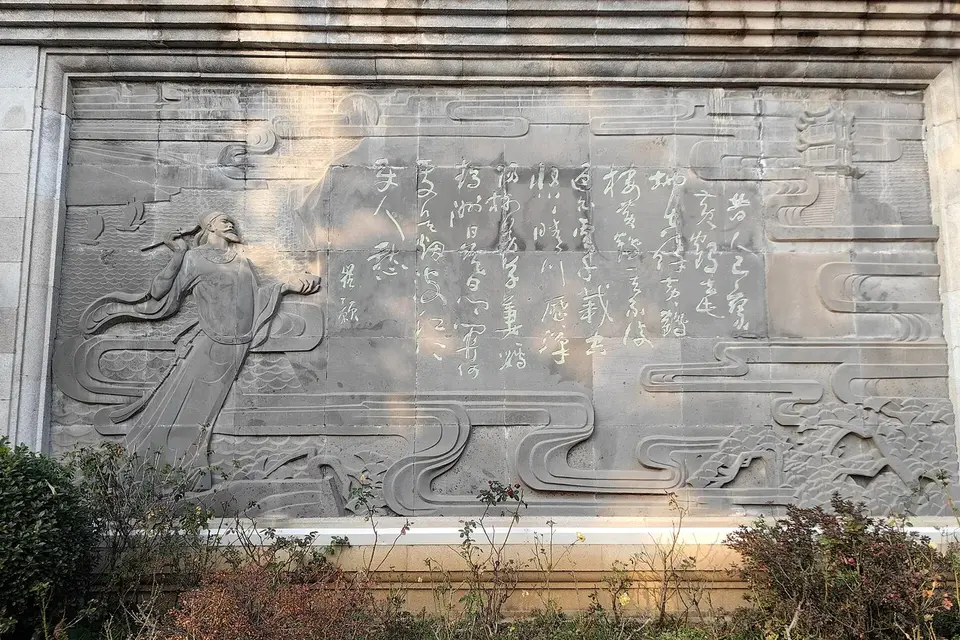
崔颢
Cui Hao (崔颢) was one of the paramount poets of the High Tang era, celebrated during the Kaiyuan and Tianbao reigns as a towering master of regulated verse. His immortal masterpiece "Yellow Crane Tower" (Huanghe Lou) was universally acclaimed by traditional critics as the finest seven-character regulated poem (qiyan lüshi) of the Tang Dynasty. Tracing his ancestral lineage to the aristocratic Boling Cui clan, he was born…
Cui Hao (崔颢) was one of the paramount poets of the High Tang era, celebrated during the Kaiyuan and Tianbao reigns as a towering master of regulated verse. His immortal masterpiece "Yellow Crane Tower" (Huanghe Lou) was universally acclaimed by traditional critics as the finest seven-character regulated poem (qiyan lüshi) of the Tang Dynasty. Tracing his ancestral lineage to the aristocratic Boling Cui clan, he was born in Kaifeng, Bianzhou. In 723, at the extraordinary young age of twenty, Cui achieved the jinshi examination degree. In his mature career, he entered the central administration, serving as Assistant in the Court of the Imperial Stud and concluding his life in Chang'an as Assistant Director in the Ministry of Personnel within the Ministry of Personnel in 754 at the age of fifty-one. Cui Hao's poetic evolution represented one of the most dramatic stylistic transformations in classical Chinese literary history. His youth was marked by romantic extravagance and courtly hedonism, producing verses preoccupied with boudoir intimacy and musical entertainment. However, after extensive travels across the northern frontier along the Shanxi and Hebei borderlands, the grandeur of the wilderness and the martial heroism of frontier garrisons fundamentally revolutionized his creative vision. His verse transformed into heroic, sweeping, and monumental expressions of national vitality. His crowning work, "Yellow Crane Tower", seamlessly fused ancient Daoist immortality myths, the vast expanses of the Yangtze River, and profound universal homesickness into an unconstrained, torrent-like flow of language. Legend records that even the peerless Li Bai, visiting the tower, stayed his brush in humbled admiration, declaring: "Before my eyes is scenery I cannot describe / For Cui Hao's poem is inscribed above." Standardized by traditional commentators across the Yuan, Ming, and Qing dynasties as the premier model of seven-character regulated verse, Cui Hao holds an immortal stature in Chinese literature.
Cui Hao is born in Bianzhou, demonstrating precocious intellectual brilliance and extraordinary poetic fluency.
Earns the prestigious jinshi degree at age twenty, achieving instant metropolitan renown amidst a flamboyant private lifestyle.
Travels extensively across the northern frontiers of Taiyuan and Daizhou, shifting his poetic style from courtly romance to heroic grandeur.
Climbs Yellow Crane Tower in Wuchang, brushing his immortal masterpiece that legend asserts silenced Li Bai's brush.
Summoned to central office as Assistant in the Court of the Imperial Stud, handling state equine administration with diligence.
Promoted to Assistant Director in the Ministry of Personnel in the Ministry of Personnel, supervising dynastic merit evaluations.
Passes away in his official residence in Chang'an on the eve of the An Lushan Rebellion at the age of fifty-one.
Full Name: Cui Hao; Native Place: Kaifeng, Bianzhou (Modern Kaifeng, Henan); Date of Birth: 704 (Chang'an 4, Wu Zhou); Date of Death: 754 (13th Year of Tianbao, Tang Dynasty); Age at Death: 51; Highest Office: Assistant Director in the Ministry of Personnel (司勋员外郎); Major Offices: Assistant in the Court of the Imperial Stud (太仆寺丞), Assistant Director in the Ministry of Personnel (司勋员外郎); Principal Identity: High Tang Poet, Supreme Master of Seven-Character Regulated Verse;
Cui Hao traced his ancestry to the venerable Boling Cui clan, but was born and raised in the bustling commercial and cultural junction of Kaifeng in Bianzhou. Possessing an exceptional intellect and dazzling literary facility, he composed polished verse effortlessly from early adolescence. In 723, during the flourishing Kaiyuan reign of Emperor Xuanzong, Cui attained the jinshi degree at the remarkably young age of twenty. In a status-conscious society where candidates often spent decades pursuing examination success, this precocious achievement brought him instant celebrity across the twin capitals of Chang'an and Luoyang.
Flushed with youthful fame, Cui Hao lived an untrammeled and unconventional life. Unlike typical bureaucratic climbers, he openly disdained rigid courtly decorum, indulging in drinking, gambling, and romantic liaisons with courtesans and dancing girls. His early poetry reflected this hedonistic milieu, characterized by intricate descriptions of female beauty, domestic chambers, and romantic yearning. Traditional biographical sources noted with reproof that in his early years he was brilliant but morally erratic, frequently wedding beautiful women only to divorce them when his affections cooled. This controversial reputation alienated influential court patrons, stalling his official career for nearly two decades.
During the middle Kaiyuan era, seeking to liberate himself from metropolitan triviality and broaden his spiritual horizons, Cui Hao departed Chang'an and journeyed north into the border regions of Hedong, Taiyuan, and the Daibei frontier. At this time, the Tang court was actively strengthening its military commands against nomadic incursions by the Turks, Khitans, and Xi. Cui immersed himself in the life of frontier garrisons, enduring desert sandstorms, winter blizzards, and military maneuvers.
The stark grandeur of the northern steppe and the stoic valor of ordinary soldiers stripped away all residual superficiality from Cui's poetry. His verse underwent a revolutionary transformation, producing celebrated frontier masterworks such as Song of the Yanmen Barbarian and Songs of the Frontier. In place of delicate boudoir tropes, his brush commanded rugged, galloping rhythms, heroic fortitude, and profound patriotism. Through this breakthrough, Cui Hao established himself as an indispensable pioneer of the High Tang frontier poetry school (biansai shipai).
Following his northern travels, Cui Hao embarked on an extensive journey through the riverways of the middle Yangtze. Around 741, he arrived in Wuchang (modern Wuhan) and ascended Yellow Crane Tower, which crowned the heights of Snake Hill overlooking the convergence of the Yangtze and Han rivers. Looking out across the surging currents, the verdant vegetation of Hanyang, the emerald expanse of Parrot Island, and the endless drift of white clouds, Cui integrated historical legend with cosmic melancholy to brush his monumental eight-line poem "Yellow Crane Tower".
A famous literary anecdote recounts that several years later, the celebrated poet Li Bai visited Yellow Crane Tower with the intention of composing a dedication. Reading Cui Hao's inscription upon the wall, Li Bai was struck with genuine awe, setting down his brush and reciting: "Before my eyes is scenery I cannot describe / For Cui Hao's poem is inscribed above." Li Bai subsequently modeled his famous masterpieces Ascending Phoenix Terrace in Jinling and Parrot Island directly upon the syntactic and rhythmic architecture of Cui's poem, an homage that confirmed Cui's premier standing among contemporary masters.
In the early Tianbao era, Cui Hao's matured character and towering literary reputation won him official recognition from Emperor Xuanzong's court. He was appointed Assistant in the Court of the Imperial Stud (Taipu Si Cheng), managing state transport and equine resources with meticulous competence. Tempered by military campaigns and regional travels, Cui shed his youthful flippancy, earning the respect of senior ministers for his steady administrative judgment.
In 752, he was promoted to Assistant Director in the Ministry of Personnel (Sixun Yuanwailang) within the Ministry of Personnel, an influential post responsible for auditing and conferring meritorious honors and aristocratic ranks across the empire. Cui discharged these duties with fairness and incorruptible neutrality. In 754, on the eve of the catastrophic An Lushan Rebellion, Cui Hao died of illness at his residence in Chang'an at the age of fifty-one. Dying before the devastation of the empire he loved, his life was spared the tragedy of dynastic ruin, while his surviving poems remained the gold standard of High Tang literature.
Cui Hao's supreme contribution to Chinese poetry was the composition of "Yellow Crane Tower" (Huanghe Lou), universally acknowledged by classical critics as the greatest seven-character regulated verse in Tang history. The poem achieves a transcendent synthesis of mythological distance, geographic expanse, and deep existential nostalgia.
Structurally, the work boldly defies the rigid constraints of regulated verse. The first four lines deploy irregular, unconstrained phrasing comparable to ancient-style poetry: the characters "Yellow Crane" appear three times in rapid succession, the third line utilizes five consecutive oblique tones, and the fourth line concludes with three level tones ("kong youyou"). Having released this torrent of spontaneous emotion, the second half reverts to immaculate parallelism: "The sunlit river distinctly reveals the trees of Hanyang / Fragrant grasses flourish luxuriantly upon Parrot Island." Concluding with the poignant image of evening mist over the river stirring homesick melancholy, the poem attained an organic perfection that set the eternal standard for Chinese regulated verse.
Within the broader trajectory of Tang literary history, Cui Hao provided the most compelling historical paradigm for the transition from the decadent, ornate courtly style of the early Tang to the robust, heroic vigor (fenghu) of the High Tang.
By turning his creative gaze from the sheltered domestic quarters of metropolitan courtesans toward the harsh realities of northern border warfare, Cui demonstrated that classical poetry derived its vitality from direct engagement with national destiny. His frontier verses, characterized by unadorned momentum and martial energy, helped forge the heroic spiritual ethos that came to define the Golden Age of Chinese civilization.
Cui Hao's daring metric innovations exerted an immediate, decisive impact upon the greatest poets of the High Tang. Li Bai, notoriously confident in his own genius, rarely deferred to contemporaries, yet openly revered Cui's "Yellow Crane Tower", repeatedly modeling his own major thematic works upon Cui's structural design.
Furthermore, Du Fu's later development of unorthodox regulated verse (aolü) during the tragic upheavals of the An Lushan Rebellion—exemplified in Autumn Meditations—drew direct inspiration from Cui Hao's principle that syntactic vitality and profound emotion must take precedence over mechanical tonal conformity. By expanding the expressive elasticity of regulated verse, Cui Hao liberated Chinese poetry from sterile formal rigidity.
FIGURES ASSOCIATED WITH THIS DYNASTY