Artisan Apprentice
Worked as a lacquer painter in Taicang and Suzhou, displaying remarkable talent in fine-line brushwork.
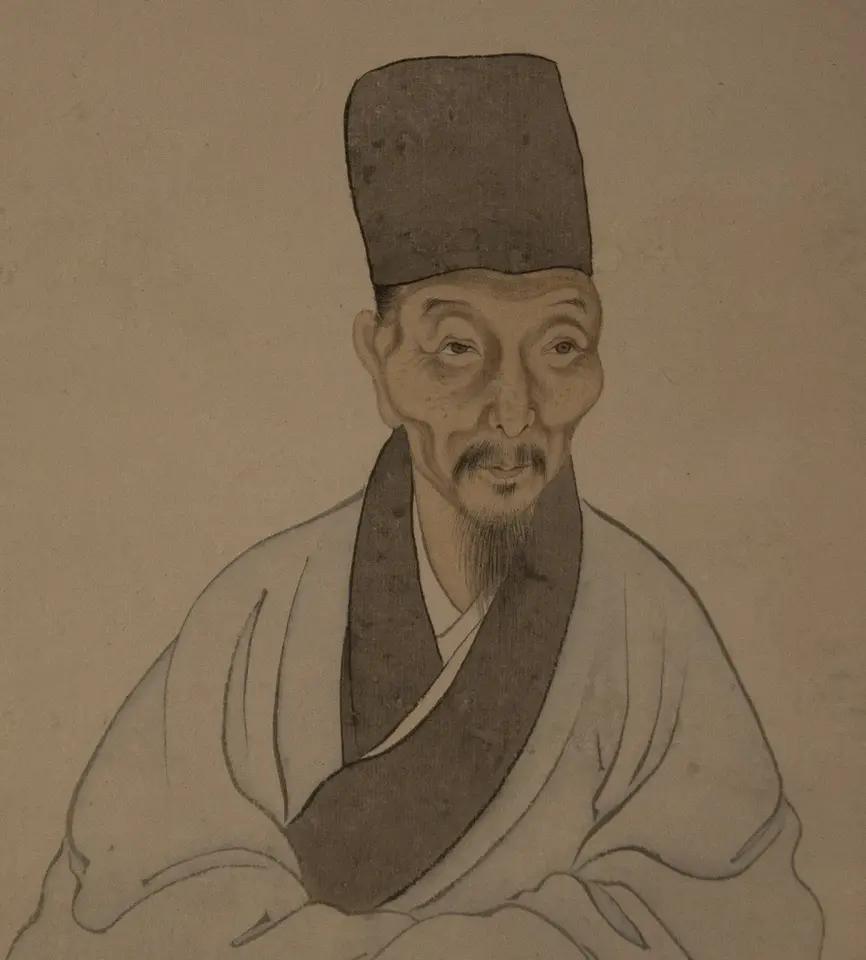
仇英
Qiu Ying (仇英) was a peerless master painter of the mid-Ming Dynasty, whose courtesy name was Shifu and literary name was Shizhou, originally hailing from Taicang and later settling in Suzhou. Originating from humble artisan origins as a lacquer craftsman painting wooden utensils, his extraordinary visual precocity caught the attention of professional Suzhou master Zhou Chen, under whom Qiu rigorously mastered Song dynasty…
Qiu Ying (仇英) was a peerless master painter of the mid-Ming Dynasty, whose courtesy name was Shifu and literary name was Shizhou, originally hailing from Taicang and later settling in Suzhou. Originating from humble artisan origins as a lacquer craftsman painting wooden utensils, his extraordinary visual precocity caught the attention of professional Suzhou master Zhou Chen, under whom Qiu rigorously mastered Song dynasty academic techniques. Eminent Wu School literati patriarchs Wen Zhengming and Tang Yin recognized his exquisite brushwork and recruited him into their inner intellectual circle, enabling him to achieve a historic transformation from a commercial artisan into a towering literati master. Qiu Ying devoted his life entirely to painting, never seeking bureaucratic office. He resided for long periods as a guest artist in the estates of wealthy connoisseurs, most notably Xiang Yuanbian of Jiaxing and Zhou Fenglai of Kunshan, where he scrutinized and copied hundreds of priceless Jin, Tang, Song, and Yuan masterpieces preserved in private collections. Alongside Shen Zhou, Wen Zhengming, and Tang Yin, he was revered as one of the "Four Masters of the Ming" (the Wu School Four Masters). His artistic versatility was encyclopedic, encompassing landscapes, figures, boundary paintings (jiehua), and birds-and-flowers, reaching the highest summit in meticulously colored court figure compositions (gongbi zhongcai) and blue-and-green landscapes (qinglü shanshui). His works harmonized the rigorous academic realism of Song painters with the evocative poetics of Ming literati. Surviving masterpieces such as Spring Morning in the Han Palace (Hangong Chunxiao Tu), Peach Blossom Spring Fairy Land, Red Cliff, and Jade Cave Fairy Spring are universally venerated as supreme treasures of traditional Chinese painting.
Worked as a lacquer painter in Taicang and Suzhou, displaying remarkable talent in fine-line brushwork.
Apprenticed under master Zhou Chen in Suzhou, mastering Southern Song academic painting techniques.
Discovered and mentored by Wen Zhengming and Tang Yin, joining the Suzhou literati artistic circle.
Resided at Kunshan collector Zhou Fenglai's estate, painting the monumental One Hundred Beauties scroll.
Invited by premier collector Xiang Yuanbian to reside in Jiaxing, copying rare Song and Yuan scrolls.
Completed his celebrated handscroll Spring Morning in the Han Palace, achieving national acclaim.
Painted his blue-and-green landscape masterpiece Peach Blossom Spring Fairy Land, reaching artistic maturity.
Passed away from lifelong exhaustion in his Suzhou residence at around age fifty-five, deeply mourned by the art world.
Qiu Ying was born in Taicang during the Hongzhi era of the mid-Ming Dynasty. Born into an impoverished commoner family, he received no formal classical examination education. To earn a livelihood, young Qiu worked as an artisan painter in Suzhou, decorating lacquered screens, wooden furniture, and tableware with delicate motifs. In this craft, he displayed an extraordinary instinct for line and mineral pigment, sketching birds, flowers, and human figures with uncanny lifelike realism.
Yearning to master fine art, Qiu apprenticed himself to Zhou Chen, the foremost professional painter in Suzhou. Zhou was an heir to the heroic academic styles of Northern and Southern Song masters Li Tang and Liu Songnian. Under Zhou's rigorous mentorship, Qiu spent years practicing heavy-axe texture strokes (daxu pi cun), fine architectural boundary painting (jiehua), and mineral color application, acquiring formidable foundational craftsmanship.
Around 1525, Wu School leaders Wen Zhengming and Tang Yin encountered Qiu's silk paintings and were awestruck by their structural precision and untainted purity. Wen Zhengming admired his diligent, humble character, recognizing that beneath his artisan technique lay a rare artistic soul. Disregarding class barriers, Wen invited Qiu to literati gatherings, composed poetic inscriptions on Qiu's paintings, and collaborated with him on handscrolls.
Mentored by Wen Zhengming, Qiu absorbed the refined aesthetic ideals of the Suzhou scholarly elite. He learned to temper the rigid precision of academic painting with the lyrical restraint, atmospheric space, and emotional depth championed by literati painters, completing his historic transition into an elite master.
The pivotal turning point in Qiu's career was his relationship with Xiang Yuanbian of Jiaxing, the greatest private collector in Ming China. Xiang's Tianlai Studio held an incomparable treasury of ancient masterpieces by Gu Kaizhi, Yan Liben, Li Sixun, Dong Yuan, Li Gonglin, and Zhao Mengfu. Recognizing Qiu's genius, Xiang invited him to reside as a resident guest master for over a decade, copying and restoring treasured scrolls.
Immersed in this peerless collection, Qiu copied ancient masterpieces with astonishing fidelity, producing replicas so exact that contemporary connoisseurs could scarcely distinguish them from originals. More importantly, this exposure allowed him to synthesize diverse historical traditions: the brilliant gold-and-green mineral pigments of the Tang masters, the elegant blue-and-green washes of Song brothers Zhao Boju and Zhao Boshu, the delicate monochrome line work of Li Gonglin, and the structural economy of Ma Yuan and Xia Gui.
Qiu Ying painted with painstaking concentration. On a single five-meter handscroll, he would deliberate for months, applying dozens of subtle mineral color washes and drawing hundreds of figures and intricate pavilions with single-hair brushes. Between 1545 and 1550, he produced his supreme masterpieces including Spring Morning in the Han Palace, Peach Blossom Spring Fairy Land, Red Cliff, and Tribute Bearers, eagerly sought after by the empire's wealthiest patrons.
Decades of painting under dim lamplight exacted a fatal physical toll. In 1552, Qiu passed away in his Suzhou residence at approximately fifty-five years of age. Theorist Dong Qichang mourned his early passing, proclaiming him "the master who, through his solitary brush, established the everlasting laws of Chinese fine-line painting."
In Ming art history, Qiu Ying is revered alongside Shen Zhou, Wen Zhengming, and Tang Yin as one of the "Four Masters of the Ming." While Shen Zhou represented bold brushwork, Wen Zhengming scholar elegance, and Tang Yin romantic flair, Qiu Ying stood unique as the consummate master of fine-line colored painting (gongbi zhongcai).
At a time when scholar-amateur monochrome ink wash dominated the art world and fine-line coloring was sliding into decay, Qiu revitalized the classical academic tradition. Blending Song academic realism with literati poetic sentiment, he created a luminous new blue-and-green aesthetic that earned him universal recognition as the greatest decorative painter of the Ming era.
Qiu Ying's figure painting represents the zenith of traditional Chinese courtly depiction. His handscroll Spring Morning in the Han Palace (Hangong Chunxiao Tu), now in the National Palace Museum in Taipei, is universally ranked among the ten greatest masterpieces of Chinese painting.
Measuring over five meters in length, the scroll illustrates a fresh spring morning inside the Han imperial palace, depicting over a hundred royal ladies, concubines, princes, and court painters engaged in embroidery, chess, music, dancing, and portraits. Qiu used iron-wire (tiexian miao) and orchid-leaf (lanye miao) lines to render flowing robes with delicate elegance, achieving vibrant, luminous colors devoid of gaudiness.
Qiu's blue-and-green landscapes represent the pinnacle of classical mineral coloration. His masterpiece Peach Blossom Spring Fairy Land (Taoyuan Xianjing Tu), preserved in the Tianjin Museum, takes its inspiration from Tao Yuanming's classic prose.
The composition features towering azure crags veiled in drifting clouds and ancient pines. Applying azurite and malachite in layered washes over warm ochre bases, Qiu created a radiant, glowing palette. In the secluded valley, three scholars play the zither beside rushing streams, translating the literati ideal of hermit seclusion into breathtaking visual splendor.
Qiu was also the last supreme master of Chinese boundary painting (jiehua). In monumental works such as his version of Along the River During the Qingming Festival and Tengwang Pavilion, he utilized ruled straightedges with precision. Every bracket, beam, railing, and boat was rendered in exact proportions, with structural joints clearly discernible.
In narrative scrolls, Qiu displayed astounding compositional control. His Red Cliff (Liaoning Provincial Museum), inspired by Su Shi's second ode, depicted sheer red cliffs towering above turbulent river currents, with a solitary skiff carrying Su Shi and his companions.
His One Hundred Beauties (Baimei Tu), painted for Zhou Fenglai to honor his mother's birthday, portrayed one hundred legendary women with tender grace and historical precision, broadening the emotional range of traditional Chinese figure painting.
FIGURES ASSOCIATED WITH THIS DYNASTY