Aristocratic Birth
Born in Beijing into the prominent Bordered White Banner Manchu Wanyan clan
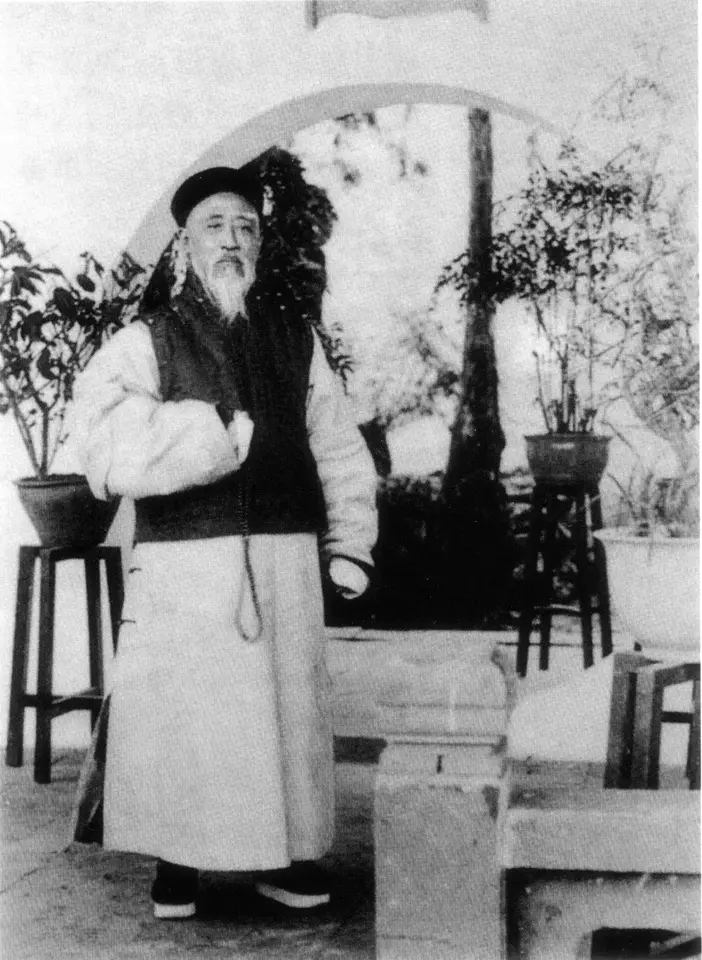
崇厚
Chonghou (崇厚, October 1826–March 26, 1893), courtesy name Dishan, was a prominent Manchu noble belonging to the Bordered White Banner and the illustrious Wanyan clan, serving as a late Qing diplomat and Self-Strengthening (洋务) official. He was the second son of Wanyan Linqing, a renowned Director-General of River Conservation. Attaining the juren degree in 1849, he advanced through provincial legal and fiscal offices,…
Chonghou (崇厚, October 1826–March 26, 1893), courtesy name Dishan, was a prominent Manchu noble belonging to the Bordered White Banner and the illustrious Wanyan clan, serving as a late Qing diplomat and Self-Strengthening (洋务) official. He was the second son of Wanyan Linqing, a renowned Director-General of River Conservation. Attaining the juren degree in 1849, he advanced through provincial legal and fiscal offices, becoming Judicial Commissioner of Zhili and Changlu Salt Controller. In 1860, following the Convention of Beijing, the Qing court established the office of Superintendent of Trade for the Northern Ports (Three Ports Superintendent) in Tianjin; Chonghou held the post for a decade, directing northern foreign trade and diplomacy, and founding the landmark Tianjin Arsenal in 1867. In 1870, following the violent Tianjin Massacre in which French Consul Henri Fontanier was killed by an enraged populace, the court appointed Chonghou as imperial envoy to travel to Paris to deliver an official apology. Enduring the chaos of the Franco-Prussian War and the Paris Commune, he eventually presented imperial letters of apology to French President Adolphe Thiers in 1871, executing the first high-level Chinese diplomatic mission to Europe. In 1878, Chonghou was named Imperial Envoy Plenipotentiary to Russia to negotiate the restitution of the Ili valley in Xinjiang, which had been occupied by Russian forces during the Yakub Beg rebellion. Succumbing to Russian diplomatic intimidation and ignorance of border topography, Chonghou unilaterally signed the disastrous Treaty of Livadia in 1879, ceding strategic mountain valleys and paying a five-million-ruble indemnity. The treaty provoked nationwide fury led by scholar-official Zhang Zhidong. Upon returning to China in 1880, Chonghou was stripped of rank and condemned to execution. Spared after Western diplomatic intervention and family indemnities, he lived in disgrace until his death in Beijing in 1893 at age sixty-six.
Born in Beijing into the prominent Bordered White Banner Manchu Wanyan clan
Passed the Shuntian provincial civil examination, obtaining the juren degree
Appointed the inaugural Superintendent of Trade for Northern Ports stationed in Tianjin
Directed the construction and initial operation of the Tianjin Arsenal
Dispatched to Paris as imperial special envoy following the violent Tianjin Massacre
Formally delivered imperial apology letters to French President Adolphe Thiers
Reassigned as Tartar General of Shengjing, superintending defense in Manchuria
Appointed Imperial Envoy Plenipotentiary to Russia to negotiate the restitution of Ili
Unilaterally signed the humiliating Treaty of Livadia, ceding extensive Xinjiang territory
Imprisoned and condemned to beheading upon arrival in Beijing; reprieved after international appeals
Passed away in retirement in Beijing at the age of sixty-six
Chonghou was born into an illustrious banner lineage; his father, Wanyan Linqing, was a respected scholar-official who served as Governor of Henan and Director-General of River Conservation. Cultivating both classical scholarship and administrative matters, Chonghou passed the provincial examination as a juren in 1849. He served as Assistant Prefect of Shuntian, Prefect of Yongping, and in 1858 was elevated to Judicial Commissioner of Zhili concurrently superintending the Changlu Salt Monopoly.
In October 1860, Anglo-French allied armies captured Beijing, compelling the Qing court to sign the Convention of Beijing and designate Tianjin an open treaty port. To handle diplomatic, maritime customs, and trading relations across Tianjin, Niuzhuang, and Dengzhou, the throne instituted the Three Ports Superintendency. Chonghou was appointed to this strategic office, establishing his headquarters in Tianjin. For the next ten years, he functioned as the primary northern coordinator of foreign affairs, managing concession demarcations and supervising customs receipts alongside regional viceroys.
In 1867, recognizing that imperial ground forces were completely dependent upon foreign arms imports, Chonghou championed the creation of the Tianjin Arsenal at Haiguang Temple. Employing British engineers and modern steam-powered machinery, the facility produced artillery shells, gunpowder, rifles, and small gunboats. The arsenal grew into the largest military manufacturing complex in northern China, supplying weapons to Huai Army divisions and laying the technical foundation for northern industrial modernization.
In June 1870, public rumors regarding child abductions by foreign Catholic orphanages triggered violent tensions in Tianjin. The arrogant French consul, Henri Fontanier, discharged firearms in public, fatally provoking an assembled crowd. Rioting citizens stormed the French consulate and orphanage, killing Fontanier and numerous European priests and nuns, in what became known as the Tianjin Massacre. Confronted with joint gunboat ultimatums from Western powers, the Qing throne punished local officials and appointed Chonghou as imperial special envoy to travel to Paris to present an official apology.
Chonghou departed China in late 1870, arriving in Marseilles during the height of the Franco-Prussian War. The collapse of Napoleon III's Second Empire and the rise of the Paris Commune disrupted his itinerary, leaving the Chinese mission stranded for months. In the autumn of 1871, as administrative order was restored under the Third Republic, Chonghou secured an audience at Versailles with President Adolphe Thiers, officially presenting the imperial state papers. Despite enduring foreign condescension, the mission averted armed hostilities with France and constituted China's first direct diplomatic legation to a Western European power. Upon his return, Chonghou was reassigned in 1872 as Military General of Shengjing.
In the early 1870s, as the Muslim warlord Yakub Beg established an insurgent state in Xinjiang, imperial Russian forces seized the opportunity to invade and occupy the strategic Chinese border basin of Ili. Following General Zuo Zongtang's reconquest of northern and southern Xinjiang in 1878, the Qing court resolved to recover Ili through diplomatic negotiations, dispatching Chonghou to St. Petersburg as Imperial Envoy Plenipotentiary.
Arriving in Russia, Chonghou exhibited staggering incompetence, possessing neither geographical knowledge of the Central Asian frontier nor an understanding of international treaties. Russian foreign ministry officials, perceiving his timid character and desperation to conclude negotiations, subjected him to intense diplomatic pressure. On October 2, 1879, at Livadia in the Crimea, Chonghou exceeded his imperial instructions and unilaterally signed the Treaty of Livadia.
The treaty granted China possession of the evacuated city of Ili, but surrendered the fertile Tekes Valley and vital western passes of the Tian Shan to Russia. Furthermore, it permitted Russian merchants to trade duty-free throughout Xinjiang and interior provinces as far as Xi'an and Hankou, while committing the Qing treasury to pay a indemnity of five million rubles. The agreement stripped Xinjiang of its natural defense barriers, rendering the newly pacified territory utterly defenseless against future Russian aggression.
When the treaty text reached Beijing, a storm of fury engulfed the court. Censor Zhang Zhidong submitted passionate memorials decrying Chonghou as a traitor who had capitulated without military defeat, demanding that the treaty be annulled and Chonghou executed. General Zuo Zongtang deployed forward detachments to Hami, declaring his determination to fight rather than accept territorial mutilation. In January 1880, the court formally rejected the Treaty of Livadia and stripped Chonghou of all titles.
Chonghou was arrested immediately upon his arrival in Beijing, cast into the prison of the Ministry of Punishments, and condemned to decapitation after the autumn assizes. The prospect of an imperial envoy's execution provoked immediate Russian mobilization along the border, prompting British and French ministers to petition the court for clemency. Meanwhile, newly appointed envoy Zeng Jize reopened negotiations in St. Petersburg, skillfully concluding the 1881 Treaty of Saint Petersburg, which recovered the Tekes River valley. In June 1880, as diplomatic prospects stabilized and Chonghou's affluent family donated one hundred thousand taels to the military treasury, Empress Dowager Cixi granted him an imperial reprieve. Released from prison, Chonghou lived in obscurity in Beijing until his death in 1893 at sixty-six.
As Superintendent of Trade for Northern Ports in 1867, Chonghou established the Tianjin Arsenal, inaugurating modern mechanized defense manufacturing in northern China. Financed through salt and maritime customs levies, the facility introduced steam-powered metalworking lathes, modern chemistry laboratories, and assembly lines. The arsenal supplied standardized gunpowder, modern percussion shells, and rifles to northern garrisons, providing the industrial base later expanded by Viceroy Li Hongzhang into the northern military modernization network.
Chonghou's public career was defined by two historic diplomatic engagements. His 1870 mission to France established the earliest precedent for direct imperial apologies to Western sovereign states, inaugurating permanent Chinese overseas representation. Conversely, his unauthorized conclusion of the 1879 Treaty of Livadia catalyzed China's first major public foreign policy debate. The nationwide resistance ignited by his capitulation forced the court to embrace military mobilization and diplomatic renegotiation, ultimately leading to the recovery of Xinjiang's borders under Zeng Jize.
FIGURES ASSOCIATED WITH THIS DYNASTY