Birth
Born in Dong'e, Dong Commandery, growing into an imposing figure of martial intellect.
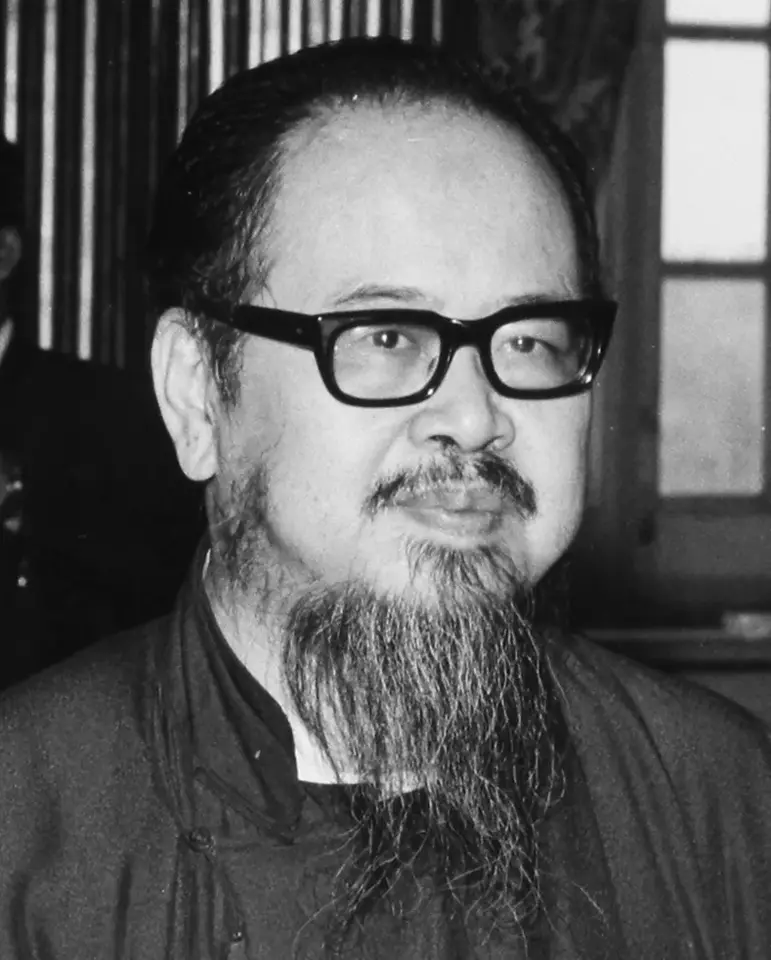
141 CE–220 CE
程昱
Cheng Yu (程昱, 141–220 AD), originally named Cheng Li with the courtesy name Zhongde, was a native of Dong'e in Dong Commandery, Yan Province, and an illustrious military strategist, field commander, and founding statesman of Cao Wei during the Three Kingdoms Period. Standing eight feet three inches tall with an imposing beard and resolute demeanor, he first achieved renown during the Yellow Turban Rebellion by devising…
Cheng Yu (程昱, 141–220 AD), originally named Cheng Li with the courtesy name Zhongde, was a native of Dong'e in Dong Commandery, Yan Province, and an illustrious military strategist, field commander, and founding statesman of Cao Wei during the Three Kingdoms Period. Standing eight feet three inches tall with an imposing beard and resolute demeanor, he first achieved renown during the Yellow Turban Rebellion by devising deceptive ambushes that preserved Dong'e from destruction. In 192 AD, Cao Cao assumed governance of Yan Province and recruited Cheng Yu as Magistrate of Shouzhang. During Cao Cao's expedition against Tao Qian in 194 AD, Zhang Miao and Chen Gong rebelled in support of Lu Bu, causing virtually the entire province to defect. Working in close concert with Xun Yu, Cheng Yu rode alone to stabilize Fan County and Dong'e, preserving the final three loyal cities and safeguarding Cao Cao's only foothold in central China. During the Battle of Guandu in 200 AD, he held Juancheng with merely seven hundred men, adamantly refusing reinforcements and using psychological deception to deter Yuan Shao's grand army, which prompted Cao Cao to praise his courage as surpassing the legendary champions of antiquity. Cheng Yu displayed brilliant foresight throughout his career, urging Cao Cao to escort Emperor Xian to Xu County, repeatedly warning that Liu Bei would become a dangerous rival if not eliminated early, and discerning Huang Gai's false surrender before the fire attack at Red Cliffs. He later served as Minister of the Guards and was ennobled as Marquis of Anguo. Renowned for his uncompromising character and personal integrity, he voluntarily relinquished his military commands in his twilight years and lived in quiet seclusion. Following his passing at the age of eighty, he was posthumously honored as General of Chariots and Cavalry and Marquis Su, and was subsequently enshrined in Cao Cao's ancestral temple.
Born in Dong'e, Dong Commandery, growing into an imposing figure of martial intellect.
Ambushed and crushed rebel leader Wang Du, saving the county seat from Yellow Turban raiders.
Recruited by Cao Cao as Magistrate of Shouzhang, participating in military and political strategy.
Rallied Fan County and Dong'e alongside Xun Yu, preserving Cao Cao's base against Lu Bu.
Coordinated with Xun Yu to urge Cao Cao to escort Emperor Xian to Xu County, securing legitimacy.
Repeatedly warned Cao Cao that Liu Bei was too ambitious to remain a subordinate and urged his execution.
Defended Juancheng with seven hundred soldiers, deterring Yuan Shao's army through calculated psychological weakness.
Devised the Ten-Sided Ambush strategy at Cangting, devastating the remnants of Yuan Shao's forces.
Launched a nighttime amphibious assault with Li Dian to defeat Gao Fan and reopen vital supply waterways.
Identified Huang Gai's grain ships as combustible fire rafts at Red Cliffs by noting their shallow draft.
Advised Cao Pi at Ye City to deploy a modest light force to quickly suppress the rebellion of Su Bo.
Appointed Minister of the Guards by Cao Pi, died at eighty, posthumously promoted to General of Chariots and Cavalry, and enshrined in the temple of Emperor Wu in 233.
Cheng Yu was born Cheng Li in Dong'e County of Dong Commandery. He was an imposing figure who measured eight feet three inches in height, with a magnificent beard and a commanding martial presence. In his youth, he experienced a vivid dream in which he ascended Mount Tai and held up the sun with both hands, an auspicious vision that foresaw his eventual eminence. In 184 AD, the Yellow Turban Rebellion erupted across the empire, throwing northern China into profound chaos. In Dong'e, local insurgent leader Wang Du took up arms, burning administrative buildings and driving the county magistrate to abandon his post in panic.
The civilian population fled to Qiqiu Mountain east of the town to seek refuge. Wang Du led his insurgents into the empty town and fortified himself on the western outskirts. Cheng Yu dispatched covert scouts to reconnoiter the enemy, discovering that the rebels were plagued by food shortages and lacked tactical cohesion. Cheng Yu assembled the heads of the prominent local lineages, urging: "Wang Du and his followers have pillaged the district but possess no logistical stores; they cannot maintain their positions for long. If we remain hidden in the mountains, we will face starvation while the rebels loot our homes. The town ramparts remain intact and the granaries are full; we must return and hold the fortifications." When local magnates hesitated, Cheng Yu acted decisively.
He dispatched trusted retainers to plant banners on the western ridges, instructing light horsemen to gallop forward and shout: "The rebel main army is advancing from the west!" Believing an overwhelming hostile host was bearing down upon them, the villagers panicked and rushed back into the fortified town under Cheng Yu's direction. Once inside, Cheng Yu organized several hundred brave townsmen into ambush squads outside the walls. When Wang Du approached to assault the gates, Cheng Yu sprung the trap, launching a coordinated strike that slew Wang Du and scattered thousands of rebels, preserving the town from ruin. Hearing of his tactical brilliance, Inspector of Yan Province Liu Dai repeatedly summoned Cheng Yu to join his administration, but Cheng Yu declined on grounds of illness.
In 192 AD, Liu Dai was killed in combat against the Qingzhou Yellow Turbans. Regional commanders Bao Xin and Chen Gong invited Cao Cao to assume the governorship of Yan Province. Aware of Cheng Yu's profound civil and military capabilities, Cao Cao dispatched emissaries bearing lavish gifts to recruit him. Cheng Yu accepted the summons without hesitation, preparing to depart immediately. Local elders inquired with surprise: "Previously, Lord Liu summoned you repeatedly and you adamantly refused; why do you now answer Lord Cao's call so promptly?" Cheng Yu laughed and replied: "This is beyond your comprehension." Following an extensive overnight discussion with Cheng Yu, Cao Cao was elated and appointed him Magistrate of Shouzhang.
In 194 AD, Cao Cao launched a major eastward campaign against Tao Qian in Xu Province to avenge the murder of his father Cao Song, leaving Xun Yu and Cheng Yu to defend his primary headquarters at Juancheng. During his absence, trusted general Chen Gong and Administrator of Chenliu Zhang Miao betrayed Cao Cao, welcoming Lu Bu to seize the province. Within days, commanderies and counties across Yan Province surrendered, and the entire territory fell into rebel hands.
Amid the catastrophe, only Juancheng, Fan County, and Dong'e remained loyal, though their garrisons trembled on the verge of collapse. Lu Bu sent envoys to demand their surrender, while his forces seized the family of Jin Yun, Magistrate of Fan County, holding his mother and younger brother hostage. Stricken with grief, Jin Yun prepared to surrender his town. Learning of the crisis, Cheng Yu conferred with Xun Yu: "Formerly, Tian Dan preserved the State of Qi with only the single city of Jimo. Today, our three cities form mutually supportive bastions. If Fan County falls, Dong'e will be lost and Juancheng will be isolated." Cheng Yu immediately rode alone into Fan County to confront Jin Yun.
Cheng Yu reasoned with Jin Yun with luminous clarity: "Lu Bu is a reckless brute without strategic design; though he temporarily occupies Yan Province, he will inevitably meet ruin. Lord Cao possesses grand strategic vision and will unify the realm. If you surrender your town to Lu Bu, you may temporarily shield your family, but you will face eternal damnation as a traitor; if you uphold righteous fidelity alongside Lord Cao, you will achieve immortal merit." Weeping, Jin Yun swore fealty, executed Lu Bu's emissary, and locked the gates. Cheng Yu then galloped to his native Dong'e, deploying troops to sever the Changting Ferry and burn the river transports, thwarting Chen Gong's river crossing. Working in flawless synergy, Cheng Yu and Xun Yu held the three bastions, preserving the indispensable base that allowed Cao Cao to return and reconquer Yan Province.
In 196 AD, Emperor Xian escaped from chaotic factional strife in Chang'an and returned to the ruins of Luoyang. Cheng Yu and Xun Yu recognized the supreme importance of geopolitical legitimacy, fiercely urging Cao Cao to escort the emperor to Xu County. Cao Cao adopted their proposal, thereby gaining the immense political advantage of upholding imperial authority to command insubordinate warlords. For his counsel, Cheng Yu was appointed Chancellor of Dongping and concurrently Imperial Secretary, restoring public order and tax revenues across his jurisdiction.
In 199 AD, Liu Bei arrived to seek sanctuary under Cao Cao after being defeated by Lu Bu in Xu Province. Cao Cao treated him with lavish honors, naming him Governor of Yu Province. Cheng Yu observed Liu Bei's deep ambition and privately cautioned Cao Cao: "Liu Bei possesses heroic talent and commands deep loyalty from men; Guan Yu and Zhang Fei are champions capable of matching ten thousand warriors. Observing his demeanor, he will never remain content as a subordinate. It is far better to eliminate him now before his wings are fully grown." Cao Cao declined to execute him out of concern for his reputation among intellectuals. Shortly thereafter, when Yuan Shu attempted to flee north, Cao Cao dispatched Liu Bei with an army to intercept him. Returning from an outside mission, Cheng Yu and Guo Jia rushed to warn Cao Cao: "Failing to execute Liu Bei was already a mistake; now granting him an independent army will inevitably lead to rebellion!" Realizing his error, Cao Cao dispatched cavalry to recall him, but Liu Bei had already crossed into Xiapi, where he slew Che Zhou and rebelled.
In 200 AD, the Battle of Guandu erupted between Cao Cao and Yuan Shao. With Yuan Shao advancing with one hundred thousand elite troops, Cao Cao deployed his main army at Guandu, assigning Cheng Yu to hold Juancheng with a depleted garrison of merely seven hundred men. Recognizing that Juancheng sat directly along Yuan Shao's southern line of advance, Cao Cao sent word offering to send two thousand veteran reinforcements. Cheng Yu adamantly declined, memorializing: "Yuan Shao commands a massive host and regards Juancheng as an insignificant outpost. Seeing that our numbers are so few, he will consider us harmless and bypass the walls; if we increase our garrison to thousands, he will view it as a threat and commit his main force to besiege us. I beg Your Lordship to rest easy; I will defend this post with my life."
Cao Cao admired his profound insight. When Yuan Shao's host crossed the Yellow River from Liyang, reconnaissance confirmed that Juancheng was held by merely a few hundred soldiers, and Yuan Shao marched past without attacking. Hearing the news, Cao Cao marveled: "Cheng Yu's courage eclipses even the ancient champions Meng Ben and Xia Yu!" In 201 AD, during the pursuit of the Yuan brothers at Cangting, Cheng Yu devised the famous Ten-Sided Ambush, stationing ten elite detachments along terrain choke points to draw in and annihilate the northern forces, cementing Cao Wei hegemony over the central plains.
During the campaigns against Yuan Tan and Yuan Shang at Liyang in 202–203 AD, northern operations depended upon river transport along the Yellow River. Cao Cao placed Cheng Yu and Li Dian in joint command of the logistics fleet. Yuan Shang dispatched Gao Fan, Administrator of Wei Commandery, with a powerful army to fortify the riverbanks and sever the water supply line.
Confronting the crisis, Cao Cao issued an edict allowing the logistics fleet to revert to overland cart transport if the waterway proved impassable. Cheng Yu conferred with Li Dian, arguing: "Gao Fan occupies an advantageous position, but his defenses are slack because he relies upon the river as a barrier. If we revert to overland transport, carts will be slow and costly, compromising forward combat operations. Speed is paramount in warfare, and surprise is the soul of strategy." Cheng Yu insisted on an immediate attack. Leading commandos in a nighttime river crossing, Cheng Yu and Li Dian launched a ferocious surprise assault on Gao Fan's encampments. Caught in total disarray, Gao Fan's army collapsed, suffering over a thousand casualties while Gao Fan fled northward. The waterway was reopened, allowing logistical supplies to flow smoothly to the Liyang front lines.
In 211 AD, western warlords Han Sui and Ma Chao revolted, threatening Tong Pass. Cao Cao marched west to lead the campaign, entrusting metropolitan security and logistical reserves at Ye City to Cheng Yu to assist Five Officials General of the Household Cao Pi. While the central field army was engaged in Guanzhong, Su Bo and Tian Yin instigated a major rebellion in Hejian, raising thousands of armed rebels who raided surrounding districts.
Officials in Ye City were terrified, and Cao Pi prepared to deploy the entire metropolitan garrison to suppress the revolt. Cheng Yu intervened with measured counsel: "Su Bo and his followers are bandits and commoners lacking strategic design or external alliances. Exploiting the army's westward campaign, they rose in opportunism but possess no inner resolve. Ye City is the political core of northern China; if we strip its defenses, metropolitan morale will be shaken. Deploying a few thousand light infantry under an experienced subordinate general will be more than sufficient to eradicate them within days." Cao Pi followed his advice, dispatching a mobile force that completely eradicated the uprising within a few days, keeping Ye City entirely stable.
In 208 AD, Cao Cao marched south into Jing Province, receiving Liu Cong's surrender. When Sun Quan and Liu Bei formed an alliance, northern advisors assumed Sun Quan would execute Liu Bei to appease Cao Cao. Cheng Yu alone predicted: "Sun Quan is young but possesses resolute courage; Liu Bei is an established hero flanked by formidable commanders. Confined to the south, they know that mutual conflict will destroy them both; Sun Quan will inevitably support Liu Bei to resist our army." Events unfolded precisely as he foresaw.
During the subsequent Battle of Red Cliffs, Wu general Huang Gai sent secret letters offering surrender, agreeing to sail across the river with grain vessels. Observing the approach of dozens of assault ships propelled by strong southeastern winds, Cheng Yu stood beside Cao Cao on the flagship and sounded the alarm: "If Huang Gai's vessels were laden with heavy grain, they would sit deep in the water and move slowly; yet these ships ride exceptionally high and sail with alarming speed. Their holds must be filled with dry reeds and oil to execute a fire attack. We must prepare at once!" Before defensive measures could be executed, Huang Gai's incendiary vessels rammed the chained northern fleet, incinerating the armada. Cheng Yu, Xu Huang, and other commanders fought fiercely to escort Cao Cao through the inferno back to the north.
Cheng Yu was renowned throughout his life for his unbending principles and strict conduct, refusing to flatter court favorites. During an earlier famine when northern forces lacked supplies, Cheng Yu had procured provisions through severe methods, earning the enmity of several colleagues. Malicious rivals later submitted secret memorials accusing him of treason. Cao Cao dismissed the slander with total trust, bestowing even richer imperial gifts upon him. Following the pacification of the north, Cheng Yu recognized the wisdom of retirement. He voluntarily resigned his military commands, shut his gates to visitors, and lived in quiet scholarly contemplation.
Upon ascending the throne in 220 AD, Emperor Wen of Wei, Cao Pi, elevated Cheng Yu to Minister of the Guards and ennobled him as Marquis of Anguo. Cao Pi prepared to name him to the supreme Three Excellencies, but before the decree was issued, Cheng Yu passed away at the advanced age of eighty. Cao Pi wept bitterly, posthumously promoting him to General of Chariots and Cavalry and awarding him the posthumous title Marquis Su. In 233 AD, Emperor Ming of Wei, Cao Rui, issued an imperial edict enshrining Cheng Yu in the ancestral temple of Emperor Wu, honoring him as an immortal architect of the realm.
The preservation of Juancheng, Fan County, and Dong'e in 194 AD represents Cheng Yu's crowning strategic achievement. With Lu Bu capturing almost the entirety of Yan Province while Cao Cao was campaigning abroad, the survival of the nascent regime hung by a thread.
Cheng Yu displayed unmatched courage and political conviction. Rather than seeking personal safety, he recognized that the three bastions formed an unbreakable geographical triangle. Riding alone into Fan County, he persuaded Jin Yun to resist through moral duty and strategic foresight, while simultaneously destroying river transports at Dong'e to halt Chen Gong's river crossing.
His coordination with Xun Yu preserved the territorial anchor and logistical reserves that allowed Cao Cao's expeditionary force to return and launch a counteroffensive. Without his resolve, Cao Cao would have lost his only territorial base and faced political annihilation.
Cheng Yu's refusal of reinforcements while holding Juancheng with seven hundred soldiers in 200 AD stands as a masterpiece of psychological warfare. Situated along the primary invasion path of Yuan Shao's hundred thousand troops, the garrison seemed destined for destruction.
Cheng Yu correctly diagnosed Yuan Shao's arrogant yet indecisive character. He recognized that a microscopic garrison would appear contemptible to the northern warlord, whereas a reinforced post would invite an immediate, overwhelming siege. By deliberately demonstrating calculated weakness, he induced Yuan Shao to bypass the stronghold.
This audacious gamble diverted an entire hostile army away from a vulnerable rear hub, enabling Cao Cao to concentrate his forces at Guandu without worrying about communications being severed. Cao Cao immortalized this feat by comparing Cheng Yu's valor to ancient titans.
The tactical river crossing at Liyang in 203 AD demonstrated Cheng Yu's proactive combat leadership. When Gao Fan entrenched his forces along the northern banks of the Yellow River to cut off the food supply, Cao Cao had already authorized a costly reversion to overland routes.
Recognizing that overland transport would fatally delay combat operations, Cheng Yu collaborated with Li Dian to execute a bold amphibious night assault. By exploiting the enemy's complacency, they crushed Gao Fan's superior forces and reopened the riverway.
Cheng Yu's tactical initiative and willingness to adapt military directives according to battlefield realities ensured the unbroken logistical lifeline that enabled Cao Cao's armies to capture Liyang.
Throughout half a century of turbulent history, Cheng Yu was distinguished by his extraordinary capacity to perceive reality beneath superficial appearances. From his early identification of Liu Bei's untamed ambitions to his split-second deduction of Huang Gai's incendiary trick at Red Cliffs based on hull displacement, his operational assessments were consistently vindicated by events.
In political life, he preserved rigorous self-discipline. Understanding the perils of overstaying political power, he voluntarily relinquished his military commissions once peace was secured across northern China.
By withdrawing from factional intrigues and devoting his final years to classical study, he secured the unreserved trust of both Cao Cao and Cao Pi, concluding a long life of martial eminence with honor and peace.
FIGURES ASSOCIATED WITH THIS DYNASTY